
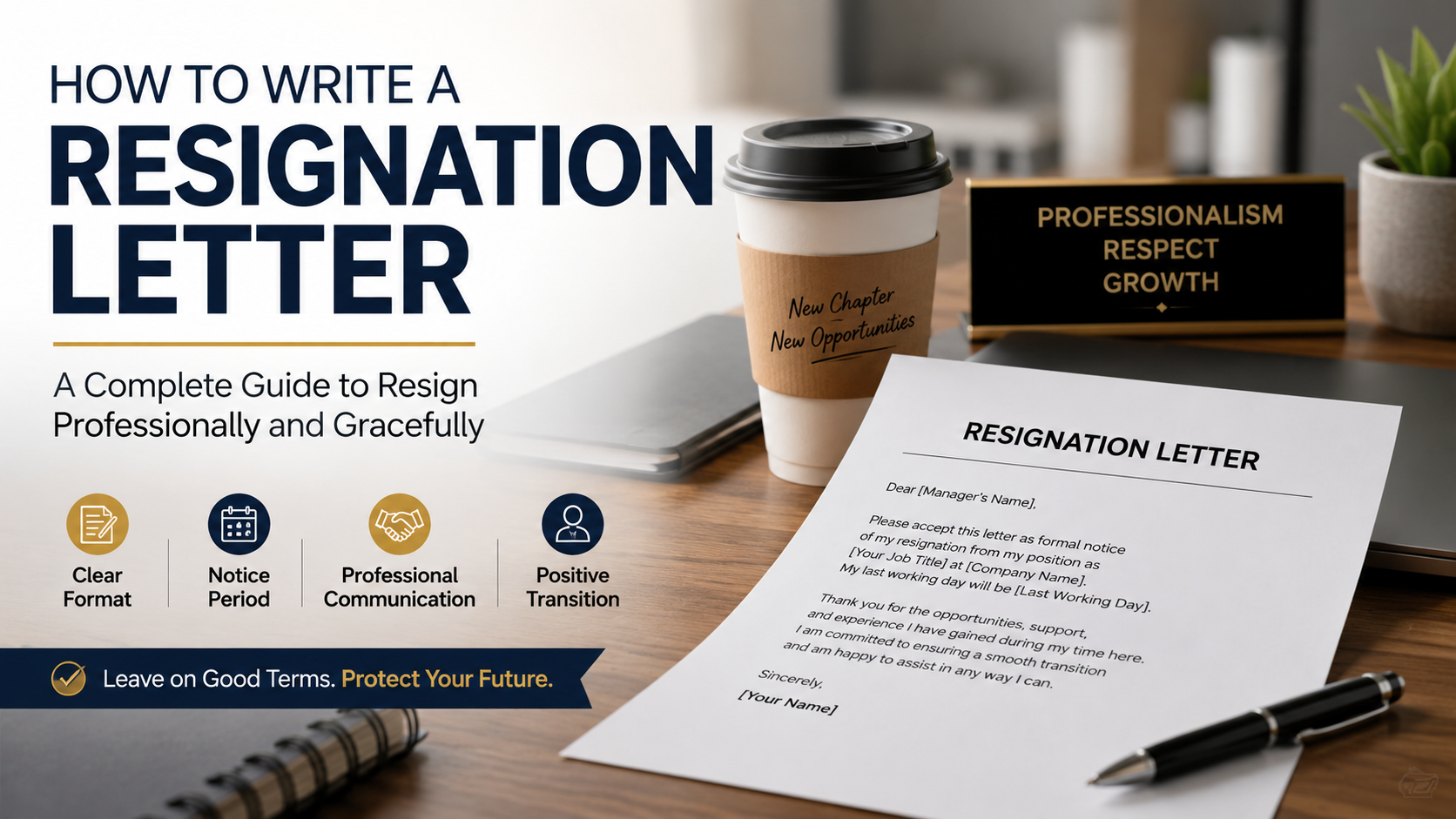
How to Write a Resignation Letter
Leaving a job is a major career milestone that requires tact, clarity, and professionalism. Knowing how to write a resignation letter ensures you depart on positive terms while keeping your professional network intact. A formal written notice serves as an official company record, establishes your final working day, and details your transition timeline.
According to workplace guidelines from the U.S. Department of Labor, clear communication regarding your separation helps streamline final compensation, benefits continuation, and administrative handoffs. Mishandling this step can damage valuable relationships with managers, colleagues, and potential future references.
This comprehensive guide walks you through every stage of drafting your formal notice. You will learn how to write a resignation letter for your job, maintain professional grace, select essential details, adopt the proper 2026 format, and deliver your notice smoothly via email.

How do I write a resignation letter for my job?
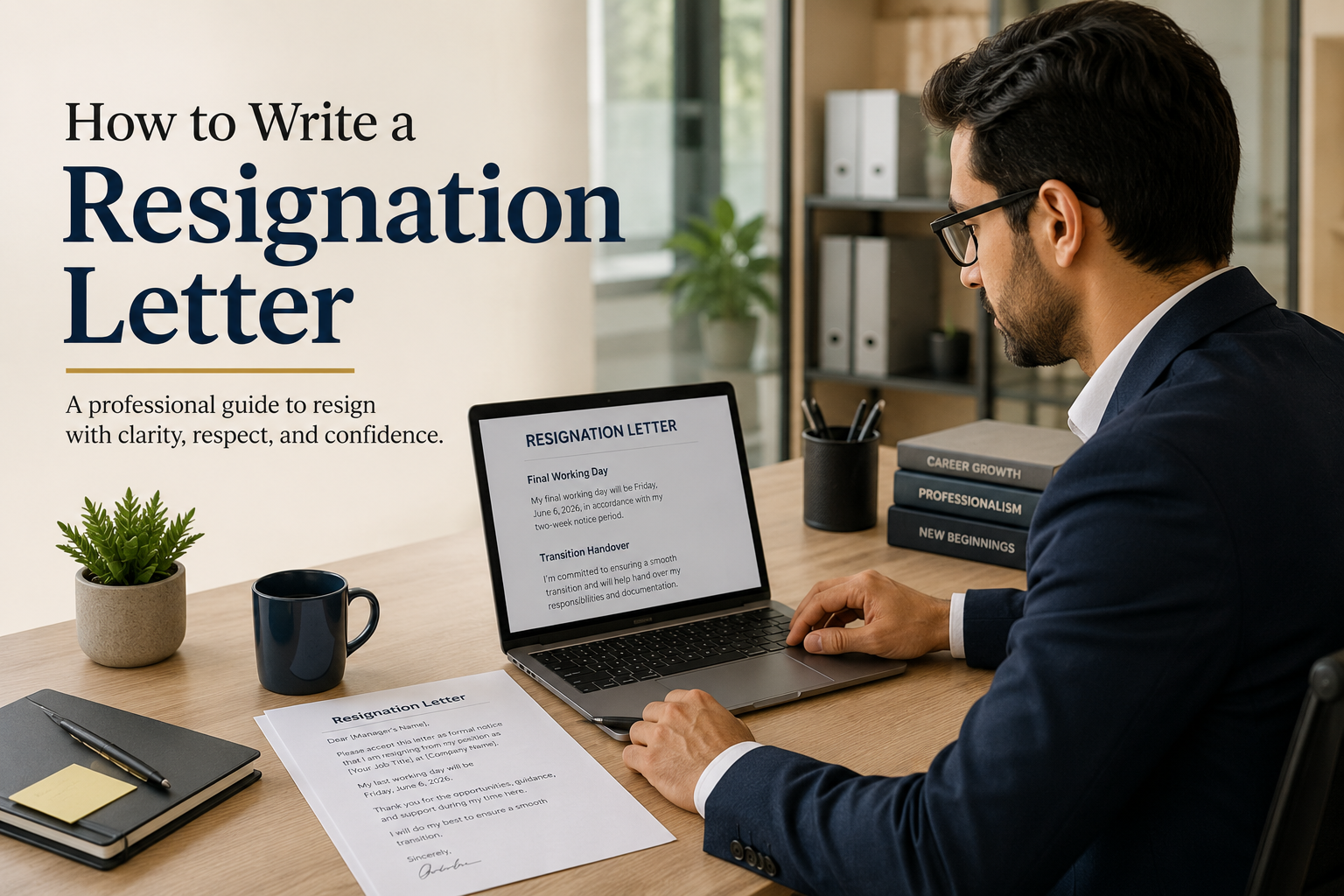
Writing an effective resignation letter starts with directness and clarity. Begin by stating your formal intention to resign from your position. Include your job title and your expected final working day. This immediately tells your employer why you are writing and when the employment relationship will end.
Keep the tone courteous and professional throughout the letter. You can briefly thank your employer for the opportunities, skills, experience, or mentorship you received. You do not need to provide a detailed explanation for your decision. A resignation letter is an official notice, not a personal essay or complaint.
It is also useful to offer reasonable support during the transition. You might mention that you are willing to document processes, transfer knowledge, or help organize current projects. However, avoid promising more than you can realistically complete before leaving.
A strong resignation letter usually includes:
- A clear statement of resignation
- Your job title
- Your final working date
- A brief expression of appreciation
- An offer to support the transition
- Your professional sign-off
Keep the document concise. A short and focused letter is easier for your manager and human resources team to process. Most importantly, make sure your final date matches the notice period required by your employment agreement or workplace policy.
Key Details to Include
Your resignation letter should contain the information your employer needs to process your departure without confusion. Start with your name and contact information if you are submitting a formal business letter. Add the date of submission and the name and title of your manager or relevant recipient.
The most important detail is your final working day. State the date clearly instead of using vague phrases such as “two weeks from today.” This reduces the risk of misunderstandings between you, your manager, and human resources.
Your letter should also identify your current position. This is especially useful when an organization has multiple employees or departments. A brief statement offering transition assistance can also demonstrate professionalism.
Depending on your workplace, you may include:
- Your full name and contact details
- The submission date
- Your manager’s name and title
- Your job title or department
- Your final employment date
- A brief thank-you statement
- An offer to assist with handover tasks
- A professional closing and signature
Avoid adding unnecessary personal information. Your employer generally needs confirmation of your resignation and departure date, not extensive details about your future plans. Before sending the letter, check the spelling of names, dates, and job titles carefully.
How do I resign gracefully?
Resigning gracefully requires more than knowing how to write a resignation letter. The way you communicate your decision can influence your final weeks and your future professional relationships. Start by speaking privately with your direct supervisor when possible. Give them the news before announcing it broadly to colleagues or sending wider communications. If your departure involves a negotiated exit, understanding when and how to take a voluntary severance package can also help you evaluate your options.
During the conversation, stay calm and direct. You can explain that you have decided to move on without criticizing management, coworkers, or company policies. If you choose to share your reasons, keep the explanation professional and appropriate for the situation.
After the conversation, provide your written resignation notice. Continue handling your responsibilities carefully throughout the notice period. Complete important tasks, organize files, and document processes that someone else may need to manage.
A graceful resignation also involves protecting relationships. Avoid gossip, public complaints, or unnecessary arguments during your final days. Your current colleagues may become future managers, clients, references, or professional contacts.
Focus on making the transition easier rather than proving why you are leaving. Professionalism matters even when your experience with the organization has been difficult. Leaving with composure can preserve relationships that may benefit your career later.
Managing the Final Two Weeks
Your final two weeks should remain focused on completing responsibilities and supporting an orderly handover. Do not treat the notice period as time when normal standards no longer apply. Continue meeting deadlines where possible and communicate clearly when a task cannot be completed before your departure.
Create useful handover notes for recurring responsibilities, active projects, important contacts, and upcoming deadlines. If appropriate, help train the person taking over your duties. Keep the documentation practical and easy for another employee to follow. This is especially important when preparing for employment history and background verification, which may require accurate information about your previous role and dates of employment.
You should also maintain professional behavior around coworkers. Avoid office gossip, negative social media posts, or emotional conversations about workplace problems. Written comments can be shared long after you leave, so think carefully before putting criticism in writing.
Before your final day, consider sending personalized farewell messages to colleagues who supported you. A short note can express genuine appreciation without becoming overly emotional.
You may also provide personal contact information to people you want to remain connected with. This can help preserve valuable professional relationships after your employment ends.
Use your final days to leave organized files, clear instructions, and minimal unfinished work. A professional handover is one of the most practical ways to end your employment on good terms.
What should you write in a letter of resignation?
A formal resignation letter should contain precise information rather than a lengthy explanation. The first priority is to state clearly that you are resigning from your position. Include your exact job title and your intended final date of employment.
After stating your decision, add a brief expression of appreciation. You might thank your employer for the experience, professional development, training, or opportunities you received. Keep this section sincere and concise. You do not need to exaggerate your appreciation if your experience was mixed.
The final part should address the transition. Offer reasonable assistance with documenting responsibilities, transferring knowledge, or completing important handover tasks. This shows that you are considering the needs of the organization while preparing to leave.
You generally do not need to include details about your next employer. You also do not need to disclose your new salary, benefits, or personal reasons for leaving. These details are usually unnecessary for a formal resignation notice.
A professional resignation letter should therefore be:
- Direct about your decision
- Clear about your final working date
- Courteous toward your employer
- Brief and factual
- Focused on transition support
- Free from unnecessary personal information
The goal is simple: create a clear official record while maintaining professional goodwill.
What to Omit from Your Letter
A resignation letter is not the right place to document every frustration you experienced at work. Avoid emotional complaints, personal attacks, accusations, or detailed criticism of management. Even when your concerns are legitimate, a resignation letter may not be the appropriate channel for expressing them.
You should also avoid lengthy salary complaints or comparisons with your new employer. Your written notice should focus on your decision to leave and the practical details surrounding your departure.
Think carefully before including information about workplace conflicts. Written communication can be retained, forwarded, or reviewed later. Statements made during an emotional moment may create unnecessary professional problems.
Instead, keep the language neutral and constructive. If you need to provide formal feedback about your employment experience, consider whether your organization’s exit interview or human resources process is more appropriate.
Avoid including:
- Angry or emotional language
- Personal criticism
- Accusations against coworkers
- Detailed salary complaints
- Information about your future compensation
- Unnecessary details about your next employer
- Threats or sarcastic comments
Your resignation letter should demonstrate composure. A concise, professional document is usually more useful than a detailed explanation of everything that went wrong. Keep sensitive discussions separate from the formal resignation notice whenever possible.
What is the format of a resignation letter in 2026?
The standard resignation letter format in 2026 remains simple, professional, and easy to scan. Digital workplaces have made resignation notices more flexible, but the basic business structure has not changed significantly.
For a formal letter, begin with your contact information and the submission date. Add your manager’s name, title, and relevant company information when appropriate. Follow this information with a professional salutation.
The body can usually be organized into three short sections. First, clearly state your resignation and final working date. Second, briefly express appreciation for your experience. Third, offer reasonable assistance with the transition.
Finish with a professional closing and your typed name. If you are submitting a physical letter, include your signature. For a PDF document, you can use an appropriate digital signature if your workplace accepts one.
Use clean formatting throughout. Standard fonts such as Arial or Calibri are easy to read. Keep the document single-spaced with clear paragraph breaks and consistent alignment.
A practical structure looks like this:
- Contact information
- Date
- Manager or recipient information
- Professional salutation
- Resignation statement
- Final working date
- Appreciation
- Transition offer
- Professional closing
- Signature and typed name
The format should support clarity rather than distract from the message.
Modern Hybrid Formatting Standards
Modern workplaces often combine office-based and remote communication. Your resignation letter should therefore work equally well as a printed document, PDF attachment, or email message.
If you submit a physical letter, use consistent margins, readable typography, and clean spacing. Avoid decorative fonts, graphics, colored backgrounds, or complicated layouts. A resignation notice should look like a professional business document.
A PDF can be useful when your employer requests a formal attachment. It helps preserve the document’s formatting across different devices and applications. It can also provide a convenient record when a signed document is required.
For digital submissions, check whether your employer has a specific resignation process. Some organizations require employees to submit notices through an internal human resources system. Others may request an email to a manager or HR representative.
Do not assume that a PDF or email automatically satisfies every workplace requirement. Review your employment agreement, company handbook, or internal instructions when available.
Your formatting priorities should be:
- Clear headings and spacing
- Consistent alignment
- Readable font size
- Professional typography
- Accurate dates
- Easy digital viewing
- A clear signature when required
The document should look polished without appearing overly designed.
How to write a resignation letter by email
Learning how to write a resignation letter by email requires the same professional approach as a printed notice. The main difference is that your email must communicate its purpose immediately.
Start with a direct subject line. Include the word “Resignation” and, when useful, your name or job title. This helps your manager and human resources team identify and archive the message quickly.
Address your manager professionally. State your resignation and final working date near the beginning of the email. Do not bury the main information beneath several paragraphs of background.
Keep the body concise. Include a short thank-you statement and offer reasonable support during the transition. If your workplace requires a formal attachment, mention the attached resignation letter clearly.
You can include your personal email address or phone number if you want the company or colleagues to contact you after departure. However, avoid adding unnecessary personal information.
Before sending the email, check the recipient list carefully. Make sure your manager receives the notice before forwarding it to a wider group. If company policy requires HR to receive a copy, follow those instructions.
A professional resignation email should be:
- Clear from the subject line
- Direct in the opening paragraph
- Specific about your final date
- Courteous but concise
- Focused on the transition
- Carefully checked before sending
The email should function as an official notice, not an emotional farewell message.
Optimizing Your Email Subject Line
Your subject line should make the purpose of the email immediately obvious. Avoid vague subjects such as “Important Update,” “My Plans,” or “A Quick Note.” These phrases force the recipient to open the message before understanding its purpose.
A direct subject line is easier to process and archive. Simple options include “Resignation – Firstname Lastname” or “Formal Resignation – Firstname Lastname – Job Title.”
Choose the version that fits your workplace culture. A formal corporate environment may benefit from a more explicit subject line. A smaller workplace may only require your name and the word “Resignation.”
Keep the subject professional and neutral. Do not include emotional language, complaints, salary information, or details about your new employer.
Before sending, confirm that the name and job title are accurate. If your company’s HR process requires a particular subject format, follow that requirement instead.
Effective subject lines should:
- Clearly identify the email as a resignation
- Include your name when useful
- Include your job title when relevant
- Avoid emotional wording
- Remain short and searchable
- Match internal HR requirements when applicable
The subject line is a small part of the resignation process, but it establishes the tone immediately. A clear subject helps your manager understand the message without unnecessary effort.
Frequently Asked Questions
How much advance notice should I provide when resigning?
Standard professional etiquette requires two weeks of advance notice. However, you should always review your employment contract or employee handbook first. Some executive, specialized, or technical roles require thirty to sixty days to complete extensive knowledge transfers and recruit suitable replacements.
Should I tell my employer where I am going next?
You are not legally or professionally required to disclose your next company. If you prefer privacy, politely state that you are pursuing a new opportunity that aligns with your personal goals. Keeping your next move private prevents unnecessary workplace speculation and boundary crossing.
Can an employer terminate me immediately after I resign?
Yes, in at-will employment arrangements, an employer may accept your resignation effectively immediately. Prepare for this possibility by securing your personal files, organizing your contact lists, and reviewing company policies regarding unused paid time off compensation before submitting your formal letter.
Do I need to provide a reason for quitting my job?
No, you do not need to provide specific reasons for leaving in your formal letter. A simple, polite statement declaring your decision to step down from your role is sufficient for company records and protects your personal boundaries.
Conclusion
Mastering how to write a resignation letter allows you to navigate career changes smoothly while preserving valuable professional networks. A concise, well-structured letter confirms your departure date, expresses sincere gratitude, and outlines a practical handover strategy. Approaching this process with clarity, discretion, and composure ensures you leave a positive, lasting impression on management and colleagues alike.
Use the formatting guidelines and advice outlined above to craft a message tailored to your role. By handling your departure with dignity and organization, you reinforce your professional reputation and set a confident foundation for the next chapter of your career. If that next chapter involves building a professional presence without traditional experience, learning how to build a portfolio without work experience can be a useful next step.