
Should You Buy a Robot Vacuum Right Now? (2026 Guide)
Keeping floors clean can feel like an endless battle against fine dust, dropped crumbs, and stubborn pet hair. If daily chores consume too much of your time, choosing to buy a robot vacuum could simplify your cleaning routine.
Modern robot vacuums offer better navigation, improved obstacle detection, and automated cleaning features. Unlike older models, many can map rooms and navigate around furniture. Some also recognize common obstacles and return to their charging stations automatically.
However, premium models can be expensive, and cleaning performance varies by home layout, floor type, and household needs. Features that benefit pet owners may not matter as much to someone living in a small apartment.
Before spending your money, consider the convenience, maintenance costs, and expected lifespan. This guide explains whether a robot vacuum cleaner is worth buying in 2026, which features matter most, and when you might find better prices.
Is It Really Worth Getting a Robot Vacuum?
A robot vacuum is worth considering if you want cleaner floors without sweeping every day. These devices handle everyday dust, crumbs, and loose pet hair on many hard surfaces. They can also maintain low-pile rugs, depending on their suction power and brush design.
The biggest advantage is convenience. You can schedule cleaning sessions while working, sleeping, or running errands. This helps maintain cleaner floors between deeper cleaning sessions.
However, robot vacuums have limitations. They may struggle with thick carpets, tangled cables, cluttered rooms, and narrow corners. Following simple tips for clearing household clutter can help reduce obstacles and make it easier for your robot vacuum to navigate. Most models also cannot replace manual cleaning for stairs, upholstery, or stubborn dirt.
Consider these factors before buying:
- Your flooring: Hard floors and low-pile rugs generally suit robot vacuums well.
- Your household: Pets, children, and high foot traffic increase the value of frequent automated cleaning.
- Your budget: Include replacement filters, brushes, batteries, and other maintenance costs.
- Your expectations: A robot vacuum reduces routine work but does not eliminate cleaning altogether.
For busy households, the main benefit is consistent maintenance rather than completely hands-free cleaning.
The Value of Time Reclaimed Daily
One of the strongest reasons to buy a robot vacuum is the time it can save. Instead of manually sweeping every evening, you can schedule cleaning sessions around your routine and explore practical ways to clean your surroundings on a hectic schedule.
Daily cleaning helps prevent dust, crumbs, and loose hair from accumulating in frequently used rooms. It can also reduce the effort needed during weekly cleaning sessions.
For example, you could schedule the vacuum to clean your living room while you work. You could also run it after everyone leaves home, provided the floors are clear and the device can operate safely.
The actual time saved depends on your home’s size, layout, and cleaning habits. You may still need to move chairs, pick up cables, and clean areas the robot cannot reach.
Best approach: Use a robot vacuum for regular floor maintenance and keep a traditional vacuum or mop for occasional deep cleaning.
Are Robot Vacuums Better Now?
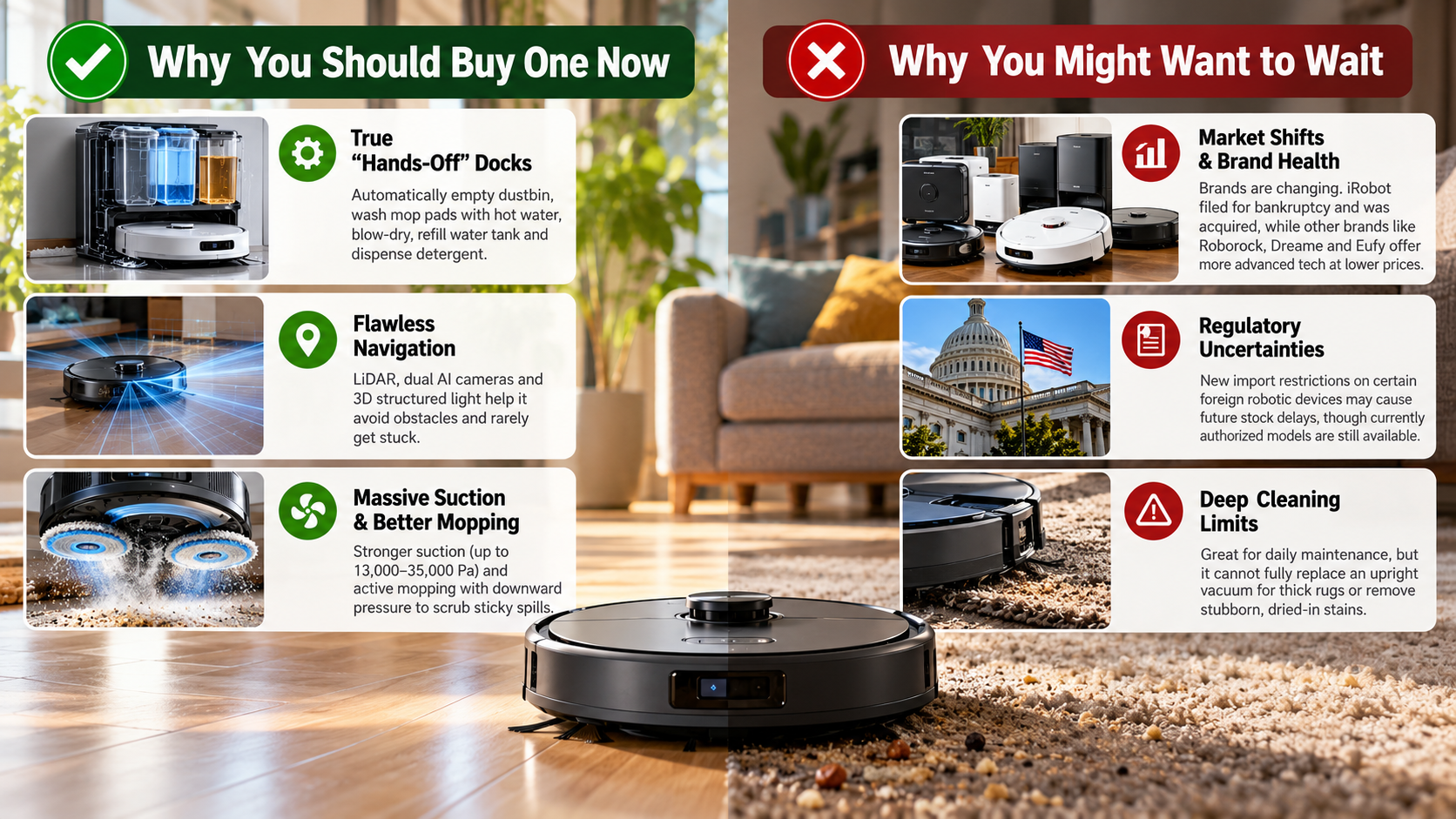
Modern robot vacuums have improved considerably in navigation, obstacle detection, and cleaning automation. Many models use LiDAR navigation, cameras, or other sensors to map rooms and plan efficient routes. These systems can reduce random movement and repeated passes.
Some models also recognize common obstacles, such as shoes and cables. However, recognition capabilities vary by model, and small objects can still cause problems.
Cleaning features have improved, too. Depending on the model, you may find stronger suction, anti-tangle brushes, automatic dirt disposal, and integrated mopping systems. Premium docking stations can empty dustbins, wash mop pads, and refill water reservoirs.
These features can reduce daily maintenance, but they introduce additional costs and potential points of failure. A basic model may be sufficient for a small home with mostly hard flooring.
Before paying more for advanced automation, compare the features you will actually use. Navigation quality, pickup performance, and reliable obstacle avoidance often matter more than a long list of smart features.
Advanced Obstacle Avoidance Keeps Cleaners Moving
Obstacle avoidance helps a robot vacuum navigate around everyday objects without stopping repeatedly. Depending on the model, cameras, infrared sensors, or other detection systems identify obstacles and help the machine adjust its route.
Some advanced models can recognize shoes, cables, and pet-related obstacles. However, performance varies with lighting, object size, floor color, and sensor design. Thin charging cables and small objects can remain difficult to detect.
Good obstacle avoidance is especially useful in busy homes. It reduces the need to prepare every room before each cleaning session. However, it does not make a robot vacuum completely independent.
To improve results, keep floors reasonably clear and check manufacturer guidance about obstacles the device can recognize. Avoid assuming that every model offers the same level of detection.
When comparing robot vacuums, look beyond marketing claims. Check independent reviews and real-world tests that evaluate cable detection, navigation accuracy, and cleaning performance.
A reliable navigation system can make everyday use easier, but no obstacle avoidance system is foolproof.
Is It Worth Buying a Robot Vacuum Cleaner in India?
Buying a robot vacuum in India can be worthwhile, particularly for homes with tiled, marble, or other hard floors. Dust entering through windows and balconies can accumulate quickly. Cooking crumbs, hair, and everyday foot traffic also create regular cleaning needs.
Many robot vacuums combine dry cleaning with wet mopping. These models can help maintain hard floors between manual cleaning sessions. However, their mopping systems generally work best for light surface dirt rather than stubborn stains or heavy spills.
Before choosing a model, consider your home’s layout and daily cleaning requirements. Doorstep thresholds, thick doormats, loose cables, and floor clutter can affect navigation. Some models handle small height differences better than others.
Also consider local service availability and replacement-part costs. A cheaper machine may become expensive if its battery, brushes, or sensors are difficult to replace.
For Indian households, prioritize practical performance over unnecessary features. Reliable navigation, effective dust pickup, suitable mopping, and accessible after-sales service can matter more than premium specifications alone.
Managing Marble Floors and Dust Loads
Marble and other smooth hard floors can work well with robot vacuums. Regular dry cleaning helps collect fine dust, loose hair, and small particles before they spread across the floor.
If you want wet mopping, check whether the model supports adjustable water flow and washable mop pads. These features can help with routine maintenance, although they will not replace manual scrubbing for dried stains or sticky spills.
Homes with balconies or frequently opened windows may benefit from scheduled cleaning. However, dust levels vary by location, season, ventilation, and household activity. Choose a schedule that matches your actual needs.
Pay attention to thresholds and floor transitions. Some robot vacuums can climb small obstacles, while others may struggle with raised doorways or thick rugs. Check the manufacturer’s stated obstacle-climbing height before purchasing.
For marble floors, use cleaning solutions only when the manufacturer approves them. Avoid assuming that every robot mop is suitable for every floor finish.
Practical tip: Choose a model with dependable mapping, adequate dust collection, and mopping settings suited to your flooring.
When’s the Best Time to Buy a Robot Vacuum?
The best time to buy a robot vacuum depends on your budget, preferred features, and local sale calendar. Major shopping events can offer discounts, but advertised reductions do not always represent the lowest available price.
In India, compare prices during festive sales, including Diwali promotions, as well as Amazon and Flipkart shopping events. International shopping events such as Black Friday and Cyber Monday may also affect prices on eligible products, depending on the retailer.
Older flagship models can offer good value when manufacturers introduce replacements. However, check whether the older model still receives software updates and whether replacement parts remain available.
Before purchasing, track the price for a few weeks. Compare the same model across retailers and check the warranty, delivery terms, and return policy.
Avoid choosing a product solely because it has a large discount. A basic model with reliable cleaning performance may suit your home better than an expensive flagship.
The goal is to find the right features at a fair price, not simply to buy during the biggest sale.
Leveraging Generational Clearance Cycles
When manufacturers release new robot vacuums, retailers sometimes reduce prices on older models. These discounts can make premium features more accessible without paying the latest launch price.
However, an older model is not automatically the better deal. Some products may have weaker obstacle detection, less effective mopping, or limited support compared with newer alternatives.
Before buying a previous-generation vacuum, compare its specifications with those of current models. Pay particular attention to navigation, suction performance, battery capacity, docking features, and replacement-part availability.
Also check the release date and software support policy. A model that no longer receives meaningful updates may become less useful if its mapping app or connected features stop working reliably.
Use these steps to evaluate a clearance offer:
- Compare the current selling price with the product’s recent price history.
- Check independent cleaning tests and long-term owner reviews.
- Confirm the warranty and availability of replacement parts.
- Calculate whether the discounted model offers the features you actually need.
A previous-generation flagship can be a sensible purchase when its performance, support, and price justify the trade-off.
What Is the Average Lifespan of a Robot Vacuum?
A robot vacuum’s lifespan depends on its build quality, usage frequency, maintenance, and repairability. Some models may remain useful for several years, while others develop battery, sensor, or mechanical problems sooner.
The battery is one component that gradually loses capacity with repeated charging and use. As the battery ages, the vacuum may need to recharge more often or struggle to finish cleaning larger rooms.
However, battery life is not the only factor. Worn brushes, clogged filters, damaged wheels, failing sensors, and docking-station problems can also affect performance.
Regular maintenance helps reduce avoidable wear. Remove tangled hair, clean sensors, empty dustbins, and replace filters according to the manufacturer’s recommendations.
Before buying, check whether the manufacturer sells replacement batteries and other essential parts. A model that can be repaired affordably may offer better long-term value than one that requires replacement after a minor component fails.
Rather than relying on a fixed lifespan estimate, consider the device’s warranty, repair options, and maintenance requirements. Long-term value depends on both durability and the cost of keeping the vacuum working.
Routine Maintenance Protects Internal Motors
Regular maintenance helps a robot vacuum clean effectively and reduces unnecessary strain on its moving parts. Even an advanced model needs occasional attention to keep its brushes, sensors, and airflow pathways clear.
Follow the manufacturer’s instructions because cleaning schedules and replacement intervals vary by model. A simple routine can prevent many common problems.
Use these maintenance tips:
- Clean the main brush: Remove tangled hair and threads regularly, especially if you have pets.
- Check the side brushes: Clear debris and replace damaged brushes when necessary.
- Maintain the filters: Clean washable filters as directed and replace non-washable filters at the recommended intervals.
- Wipe the sensors: Use a soft, dry cloth to remove dust that could interfere with navigation.
- Inspect the wheels: Remove trapped debris that could affect movement.
- Check the battery: Monitor runtime and investigate unusual charging behavior.
Do not wash electronic components or non-washable filters. Allow washable parts to dry completely before reinstalling them.
If your vacuum has an automatic-emptying dock, clean its dust pathway and replace disposable bags when needed.
Consistent maintenance can extend useful service life, improve cleaning performance, and help you get more value from your purchase.
Final Verdict: Should You Buy a Robot Vacuum in 2026?
A robot vacuum can be a worthwhile investment if you want cleaner floors with less daily effort. Modern models offer improved navigation, scheduled cleaning, and convenient features such as automatic dirt disposal and wet mopping. However, the best choice depends on your home’s layout, flooring, cleaning needs, and budget.
Before you buy a robot vacuum, compare cleaning performance, battery life, maintenance costs, warranty coverage, and replacement-part availability. You can explore independent product reviews and buying advice from Consumer Reports to better understand how different vacuum cleaners perform.
You also do not need to buy the most expensive model to get useful results. Compare prices, read independent reviews, and consider older models with reliable performance and ongoing support.
Ultimately, buy a robot vacuum for the convenience it provides, not just the features it advertises. Choosing a model that matches your actual needs will help you get better long-term value.