

Reduce Electricity Bill Naturally
Summer heat can be brutal, and relying constantly on HVAC systems quickly drains your wallet. If you want to reduce electricity bill naturally, you are in the right place. High energy costs force many homeowners to seek alternative, sustainable cooling methods. In fact, according to the U.S. Department of Energy, space cooling accounts for a massive portion of annual household energy expenses. By adopting passive cooling techniques, you can keep your living space comfortable while significantly cutting costs.
This article explores practical, everyday strategies to keep your home cool. You do not need expensive smart home devices to beat the heat. Instead, simple changes in how you manage airflow, sunlight, and appliances can make a dramatic difference. We will cover window optimization, cross-ventilation, and thermal mass management. Moreover, these methods are highly eco-friendly and drastically lower your carbon footprint.
Many people assume that surviving summer without an AC is impossible. However, human beings have cooled their homes for centuries using brilliant, low-tech solutions. By the end of this guide, you will have a clear, actionable plan. You will understand how to leverage your home’s natural design to block out the harsh summer sun. Say goodbye to shocking utility bills and hello to a naturally refreshing home environment. Let us dive into the best practices for natural cooling and reclaim your budget today.
What Is the Best Way to Reduce My Electric Bill?
The best way to reduce your electric bill is to focus on the appliances that consume the most electricity. In most homes, these include heating, cooling, and water heating systems. Small daily changes can significantly reduce your energy use without requiring expensive upgrades.
Start by sealing air leaks around doors and windows. This prevents conditioned air from escaping and reduces the workload on your HVAC system. You should also unplug devices that continue drawing electricity when they are not in use. These phantom loads quietly increase your monthly bill.
Take advantage of natural ventilation whenever outdoor temperatures are comfortable. Open windows during cool mornings and evenings instead of relying on air conditioning. Use natural light during the day to reduce the need for electric lighting.
These simple habits work together to lower overall energy consumption. They also provide consistent, long-term savings while making your home more energy-efficient.
Focus on Smart Thermostat Scheduling
A programmable thermostat or smart thermostat makes it much easier to manage your home’s temperature efficiently. Instead of adjusting the thermostat throughout the day, you can automate temperature changes based on your daily routine. This prevents unnecessary energy use while maintaining indoor comfort.
Set the thermostat to increase the temperature slightly when you leave for work or while you sleep during summer. In winter, lower the heating temperature during those same periods. These automatic adjustments reduce the workload on your heating and cooling system without affecting your comfort when you’re home.
Many smart thermostats also learn your habits and provide energy reports. Some models even adjust settings based on local weather conditions. These features help improve efficiency over time.
Consistent thermostat scheduling is one of the easiest and most effective ways to reduce your electricity bill naturally while keeping your home comfortable throughout the year.
Does Keeping AC at 28 Degrees Reduce Electricity Bill?
Yes, setting your air conditioner to 28°C can help reduce your electricity bill, especially in warm climates. When you increase the thermostat setting, your AC compressor runs less frequently. This lowers electricity consumption while still maintaining a comfortable indoor environment.
Each degree above a lower cooling setting can reduce energy use by a noticeable amount. Although 28°C may feel warm at first, most people adjust quickly after a few days. Using ceiling fans alongside your air conditioner improves comfort by creating a cooling breeze without significantly increasing electricity use.
This combination allows you to stay comfortable while reducing cooling costs throughout the season. It also places less strain on your air conditioning system, which may extend its lifespan and reduce maintenance needs.
Choosing a slightly higher thermostat setting is a practical, low-cost strategy that supports long-term energy savings and helps lower monthly electricity bills.
Utilize Ceiling Fans for Enhanced Comfort
Ceiling fans improve air circulation and make rooms feel cooler without lowering the actual temperature.
Key benefits include:
- Improved air circulation throughout the room.
- A natural cooling effect on occupants.
- Reduced dependence on air conditioning.
- Lower electricity consumption compared to AC units.
- Better comfort at higher thermostat settings.
Remember that fans cool people, not rooms. Turn them off when leaving the room to maximize energy savings.
How Can I Reduce My Electricity Bill?
You can reduce your electricity bill by making small changes to your daily routine. These habits lower energy consumption without sacrificing comfort.
Whenever possible, run energy-intensive appliances during off-peak hours if your electricity provider offers time-of-use pricing. This can lower your energy costs while reducing demand on the power grid.
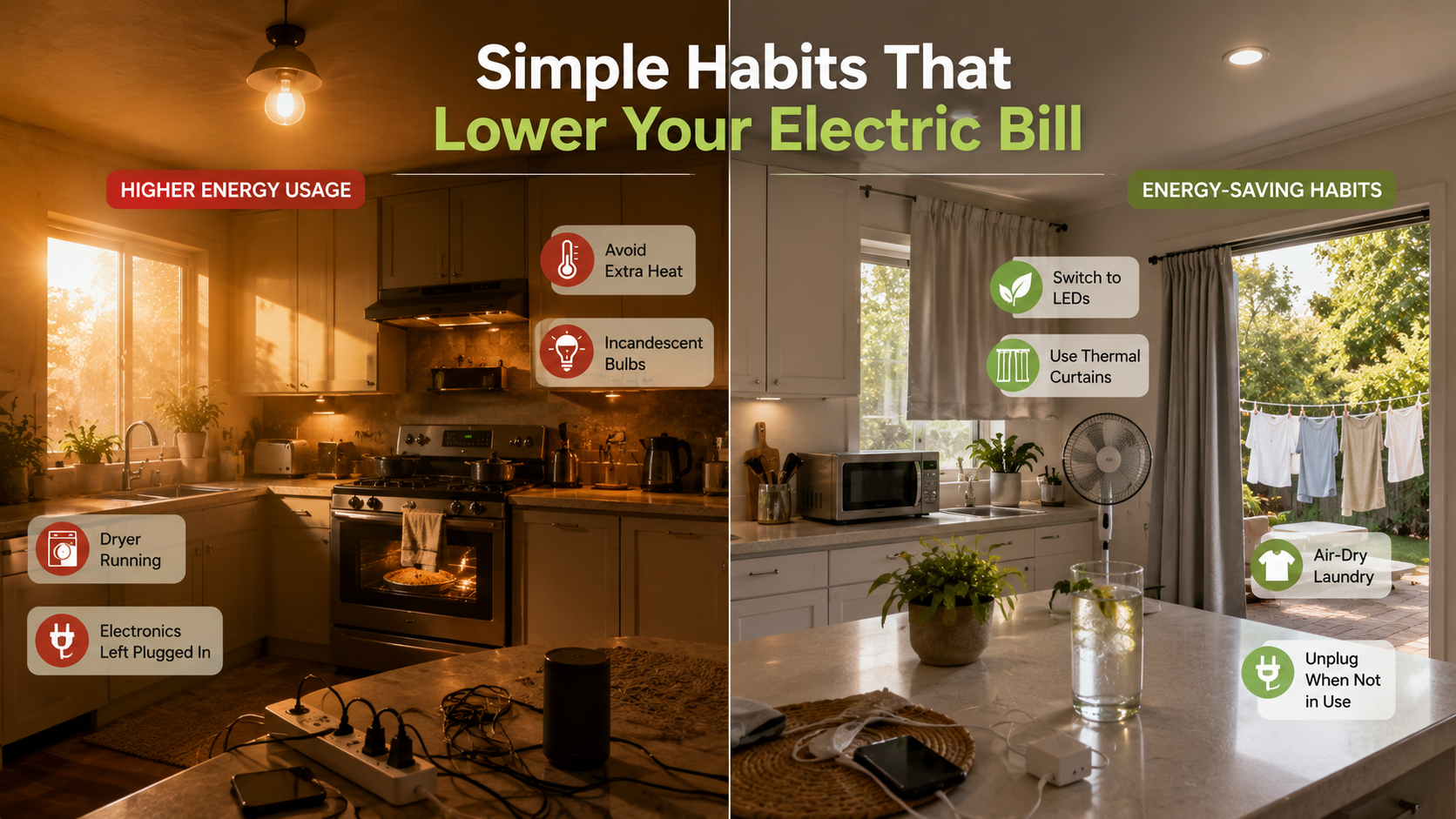
Replace old incandescent bulbs with LED lighting, which uses far less electricity and lasts much longer. During the day, open curtains and blinds to maximize natural daylight instead of turning on indoor lights.
Limit unnecessary appliance use during the hottest part of the day. This helps keep your home cooler and reduces the workload on your air conditioner.
Although each change seems minor, combining multiple energy-saving habits creates noticeable monthly savings. Over time, these simple adjustments make your home more energy-efficient while lowering your utility expenses.
Harness Natural Daylight and Task Lighting
Natural daylight is free and can greatly reduce daytime electricity use.
For the best results:
- Open curtains and blinds during daylight hours.
- Arrange workspaces near windows whenever possible.
- Use task lighting instead of lighting an entire room.
- Turn off lights in unused rooms.
- Choose energy-efficient LED desk lamps for focused activities.
These simple lighting habits reduce electricity consumption while maintaining a comfortable indoor environment.
How Much AC Bill in 1 Hour?
The electricity cost of an air conditioner depends on its capacity, energy efficiency, usage pattern, and your local electricity tariff. A standard 1.5-ton split AC typically consumes between 1.2 and 1.8 kWh (units) of electricity per hour. The exact cost is calculated by multiplying the number of units consumed by your electricity provider’s per-unit rate.
For example, if your AC uses 1.5 units per hour and your electricity rate is ₹8 per unit, the operating cost is about ₹12 per hour. Inverter ACs usually consume less electricity because they adjust compressor speed instead of repeatedly switching on and off. In contrast, non-inverter models often use more power during continuous operation, especially in hot weather. Choosing an energy-efficient AC and using it wisely can significantly reduce your monthly electricity bill.
The Impact of Thermostat Settings on Hourly Power Consumption
Your thermostat setting has a direct impact on AC power consumption. Setting the temperature extremely low forces the compressor to run longer, increasing electricity usage and placing extra strain on the cooling system. This not only raises your energy costs but may also shorten the lifespan of the appliance.
A temperature setting between 24°C and 26°C offers an effective balance between comfort and energy efficiency. At this range, the compressor cycles more efficiently and consumes less electricity. Combining this setting with ceiling fans can make the room feel cooler without increasing energy use.
Simple habits such as closing doors, sealing air leaks, and cleaning AC filters regularly also improve cooling performance. These small adjustments help lower hourly power consumption while keeping your indoor environment comfortable throughout the day.
Why Is the ADANI Electricity Bill High?
A higher-than-expected ADANI electricity bill can result from increased electricity usage, seasonal weather conditions, tariff slab changes, or estimated meter readings. During summer, air conditioners, coolers, and refrigerators operate for longer periods, causing household electricity consumption to rise significantly.
Many electricity providers also use progressive tariff slabs, where the cost per unit increases after certain consumption levels. As your monthly usage grows, each additional unit may be charged at a higher rate, increasing your total bill.
In some cases, delayed or estimated meter readings may temporarily affect billing. When actual readings are recorded later, the difference may appear as an adjustment on a future bill. If you believe your bill contains an error, review your meter reading, compare previous bills, and contact your electricity provider for clarification.
Seasonal Demand and Progressive Tariff Slabs
Electricity demand rises sharply during hot and humid seasons because cooling appliances run for longer hours. Increased consumption can quickly move your household into a higher electricity tariff slab, where each additional unit costs more than the previous one.
This combination of higher energy usage and increased per-unit pricing often explains why electricity bills rise during summer. Monitoring your monthly consumption helps you stay aware of these thresholds and adjust your usage when necessary.
Using energy-efficient appliances, limiting unnecessary AC operation, and shifting certain activities to cooler hours can reduce overall electricity consumption. These simple strategies help control costs while maintaining comfort throughout the year.
Is There Any Way to Reduce Electricity Bills?
Yes. You can lower your electricity bill by adopting energy-efficient habits and improving your home’s cooling efficiency. Begin by sealing window gaps and keeping curtains closed during the hottest part of the day to reduce indoor heat. This allows your air conditioner to work less while maintaining a comfortable temperature.
Replacing traditional bulbs with LED lighting reduces electricity consumption significantly. You should also unplug unused electronics, as many devices continue drawing power even when turned off. Regular maintenance of appliances, including cleaning AC filters and servicing cooling systems, improves efficiency and reduces unnecessary energy use.
Combining these practical habits with smart energy management creates long-term savings. Small daily changes often produce noticeable reductions in monthly electricity bills without sacrificing comfort.
Utilizing Natural Cross-Ventilation for Cooling
Natural cross-ventilation is an effective way to cool your home while reducing dependence on air conditioning. Opening windows on opposite sides of a room allows fresh air to circulate, removing trapped indoor heat during cooler mornings and evenings.
This natural airflow improves indoor comfort without increasing electricity consumption. Ceiling fans can further enhance ventilation by distributing cool air more evenly throughout your living space.
Using natural ventilation whenever outdoor temperatures are comfortable reduces AC operating hours and lowers monthly electricity costs. Combined with proper insulation and energy-efficient cooling practices, it offers a simple and sustainable way to reduce household energy usage.

Frequently Asked Questions
How much can I save by turning off lights?
Turning off lights whenever you leave a room provides immediate energy savings. The amount depends on the type of bulbs you use and how often they remain on unnecessarily. Replacing traditional bulbs with LED bulbs can reduce lighting electricity use by up to 75%. Combining LED lighting with good habits creates noticeable annual savings without requiring a large investment.
Do standby power devices really waste energy?
Yes. Many electronic devices continue using electricity even when switched off. This is known as standby power or phantom load. Common examples include televisions, gaming consoles, phone chargers, and streaming devices. Using smart power strips or unplugging devices when they are not needed helps eliminate this hidden electricity consumption and lowers your monthly energy bill.
Is cold water washing effective for laundry?
Yes. Cold water washing works well for most modern clothing and detergents. Since heating water accounts for most of a washing machine’s energy use, switching to cold cycles can dramatically reduce electricity consumption. It also helps preserve fabric quality and minimizes wear on many types of clothing.
How often should I clean air conditioner filters?
Clean or replace air conditioner filters every one to two months, depending on usage and indoor air quality. Dirty filters restrict airflow, forcing the system to work harder and consume more electricity. Regular maintenance improves cooling performance, lowers energy costs, and extends the lifespan of your air conditioning system.
Conclusion
Beating the summer heat does not require you to drain your bank account or harm the environment. As we have explored, you can absolutely reduce electricity bills naturally while keeping your home incredibly comfortable. By taking a proactive approach to your home’s thermal management, you can maintain a cool living space all season long. The key lies in understanding how heat enters your home and using simple, passive strategies to block it. For even more practical ways to cut household expenses, explore these tips for saving money on your electricity and water bills.
Remember that consistency is vital. Closing your blinds during peak sunlight hours, mastering cross-ventilation, and minimizing the use of heat-generating appliances are daily habits that deliver significant financial savings. You can further enhance your comfort by staying hydrated, using breathable fabrics, and employing creative tricks like the DIY fan-and-ice setup. These small adjustments add up over time, leading to noticeable reductions in energy consumption.
Ultimately, embracing these natural cooling techniques empowers you to take control of your energy use. When you reduce electricity bills naturally, you also lower your carbon footprint and ease the demand on the local power grid. Start implementing these strategies today by choosing one or two methods—such as installing thermal curtains or optimizing your window ventilation schedule—and measure the results. With consistent effort, you can enjoy a cooler home, lower utility costs, and a more sustainable lifestyle throughout the summer.