
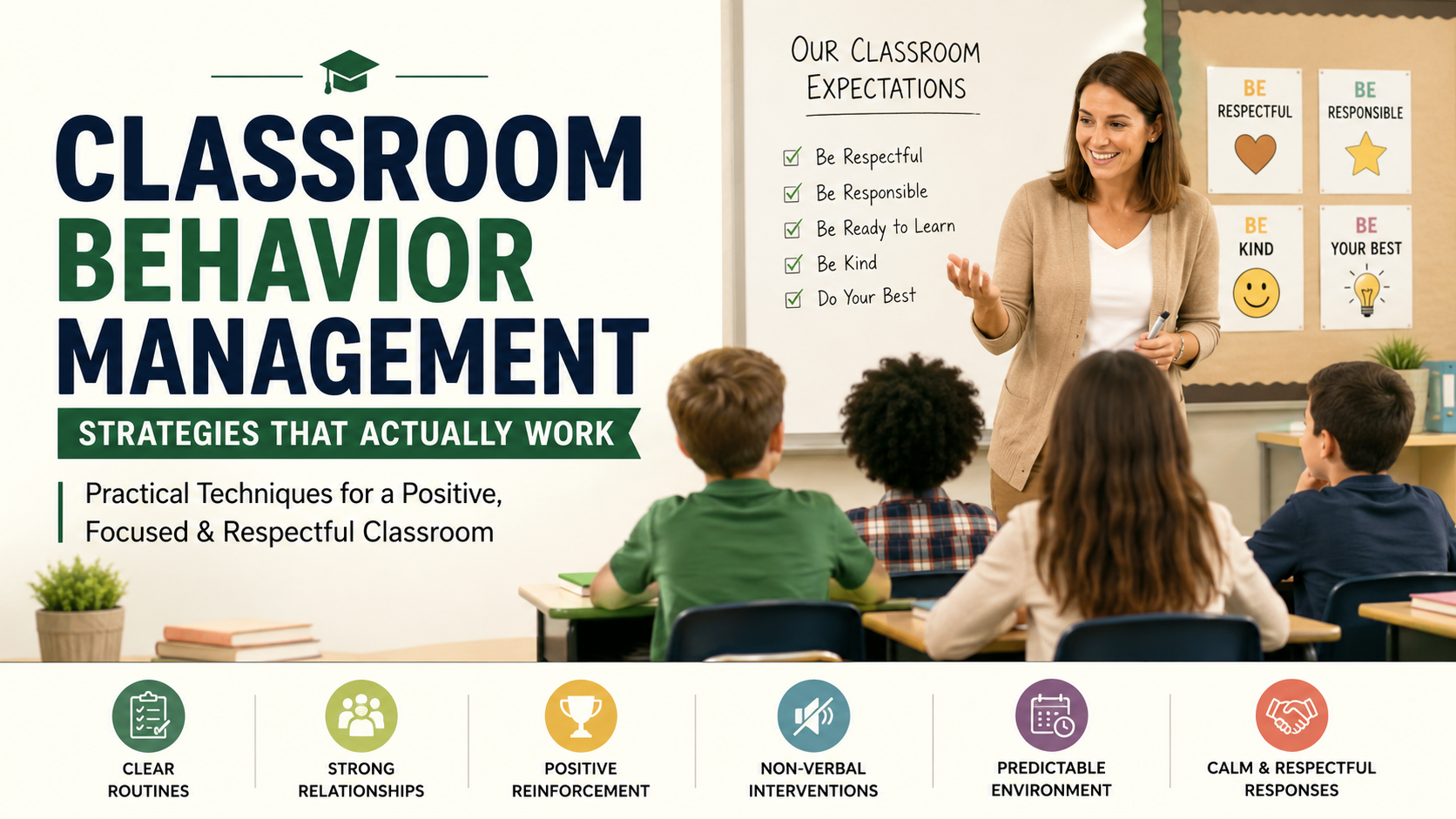
Classroom Behavior Management Strategies
Every teacher knows the feeling of spending hours planning the perfect lesson, only to have it derailed by constant interruptions. Finding effective classroom behavior management strategies is the absolute key to turning a chaotic room into a calm, focused learning environment. Without them, both educators and students suffer from immense frustration and lost instructional time.
In fact, the American Psychological Association explicitly notes that well-managed classrooms directly correlate with higher academic achievement and better social-emotional development. But what actually works in today’s modern educational landscape? Old-school, punitive punishments simply do not cut it anymore. Instead, teachers need proactive, positive approaches that build mutual respect and keep students actively engaged in learning.
In this comprehensive guide, we will explore practical, proven methods you can implement immediately. We will cover how to establish clear routines, build stronger relationships with your students, and use positive reinforcement effectively. You will also learn exactly how to handle minor disruptions gracefully before they escalate into major problems. Whether you are a first-year teacher or a seasoned veteran, these techniques will help you reclaim your instructional time and create a highly positive, thriving classroom culture.
What Are the 5 C’s of Classroom Management?
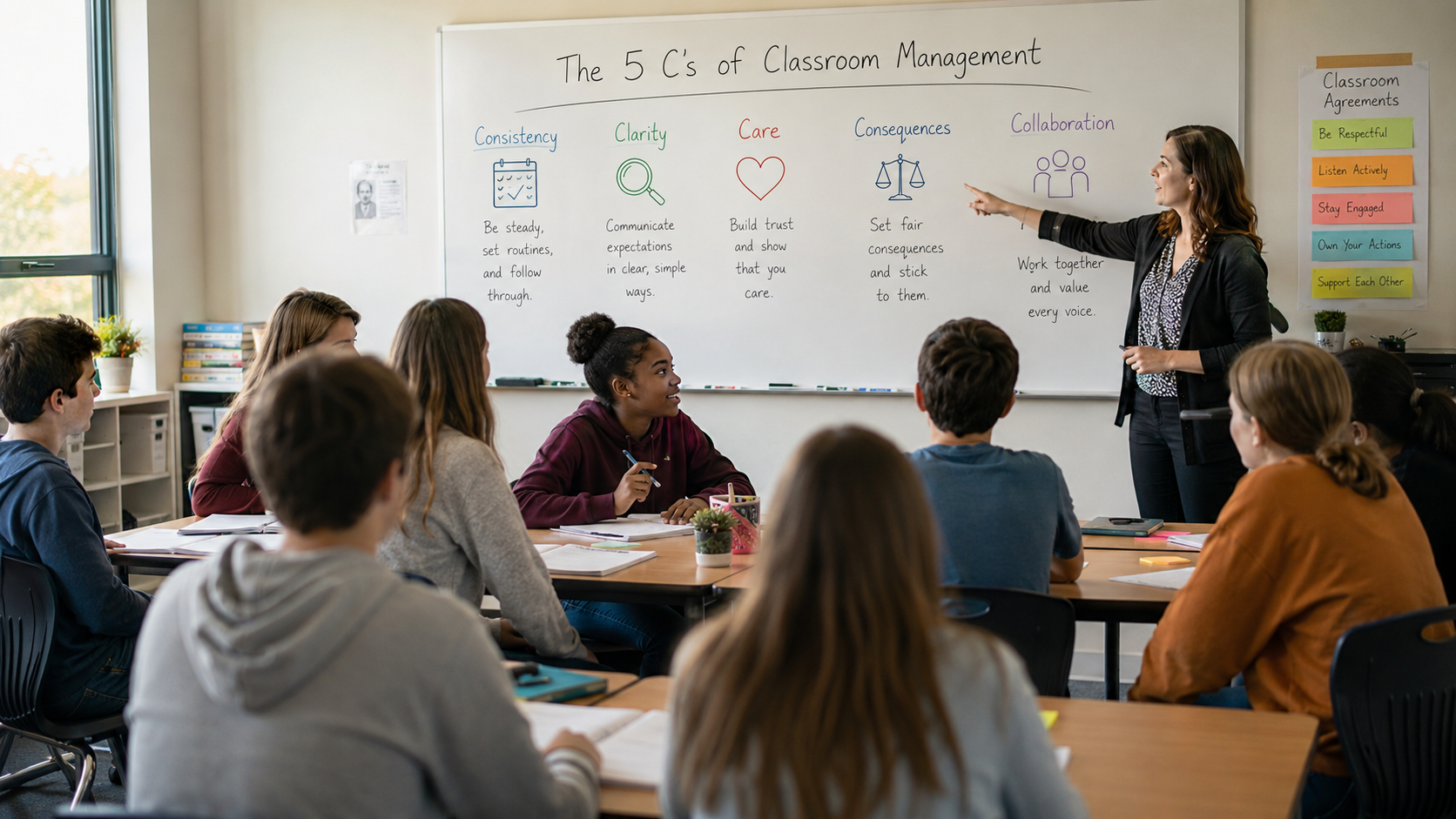
The 5 C’s of classroom management provide a practical framework for creating a respectful, organized, and productive learning environment. These five core principles—consistency, clarity, care, consequences, and collaboration—help teachers establish clear expectations while building positive relationships with students. When applied consistently, these strategies reduce disruptive behavior and encourage active participation. Students feel more confident because they understand what is expected of them each day. Clear communication minimizes misunderstandings, while genuine care strengthens trust between teachers and students. Fair consequences promote accountability without creating fear or resentment. Collaboration gives students a voice in shaping classroom expectations, increasing their sense of ownership and responsibility. Together, these five pillars support effective classroom management by creating a predictable environment where students feel safe, respected, and motivated to learn. Teachers who consistently practice these principles often experience stronger classroom engagement and fewer behavioral challenges.
Implementing Consistency and Care Daily
Consistency means applying classroom rules fairly every day, regardless of circumstances or personal mood. Students learn faster when expectations remain predictable and consistent.
Care involves showing genuine interest in students as individuals. Greeting students at the door, listening actively, and offering encouragement strengthen teacher-student relationships.
When consistency and care work together, students develop trust and respect. This combination encourages cooperation, improves classroom behavior, and creates a positive learning environment where students feel comfortable participating.
What strategies do you use to manage classroom behavior?
Managing daily conduct requires a proactive mix of clear routines, positive reinforcement, and immediate intervention when minor disruptions occur. Effective educators rarely rely on reactive punishment alone. Instead, they establish predictable daily rhythms and engage students with dynamic lessons that naturally minimize downtime. Clear verbal cues, non-verbal hand signals, and strategic seating arrangements prevent many issues before they start. Furthermore, acknowledging positive actions encourages peers to model similar behavior. Building strong relationships with students also creates a sense of mutual accountability. When learners know their teacher truly cares about their success, they naturally strive to maintain a respectful and productive classroom environment.
Implementing Positive Reinforcement and Proactive Routines
Proactive routines keep students actively engaged throughout every lesson segment. Establishing clear transition signals reduces wasted instructional time and keeps wandering minds focused. Additionally, pairing these routines with targeted praise for positive choices reinforces desired conduct and inspires the entire class to stay on task.
What Are the 7 Classroom Management Strategies for Students with Learning Disorders?
Effective classroom behavior management strategies help students with learning disorders stay focused, reduce anxiety, and participate more confidently in daily lessons. These students may experience challenges with attention, emotional regulation, or processing information. Using proactive support instead of punishment creates a more positive learning environment for everyone.
Seven proven classroom behavior management strategies include:
- Using visual schedules
- Breaking large assignments into smaller tasks
- Providing sensory tools
- Offering preferential seating
- Using positive reinforcement
- Maintaining predictable routines
- Teaching self-regulation skills
These classroom behavior management strategies reduce stress while improving engagement throughout the school day. Visual schedules prepare students for transitions, and smaller tasks prevent cognitive overload. Sensory tools help improve concentration, while preferential seating reduces distractions and allows for additional teacher support.
Positive reinforcement builds confidence and encourages appropriate behavior. Predictable routines create stability, while self-regulation techniques help students manage emotions independently. When teachers consistently apply these classroom behavior management strategies, they create an inclusive classroom where every learner has the opportunity to succeed academically, socially, and emotionally. These classroom behavior management strategies also promote a supportive learning environment that benefits the entire class.
Using Visual Schedules for Smooth Transitions
Visual schedules help students understand what will happen throughout the day. Knowing the sequence of activities reduces uncertainty and eases transition-related anxiety.
Displaying a daily schedule also supports students with executive functioning challenges. They can prepare mentally for changes and stay focused on upcoming tasks.
This simple strategy promotes independence, minimizes unexpected disruptions, and helps create a calm, structured classroom environment.
What Are the 5 R’s of Behavior Management?
The 5 R’s of behavior management provide a balanced approach to promoting positive behavior while maintaining respectful teacher-student relationships. These five principles—rules, routines, relationships, responsibility, and restoration—help teachers manage classroom behavior through structure and accountability. Clear rules establish expectations, while consistent routines create stability throughout the school day. Strong relationships encourage students to cooperate because they feel valued and respected. Responsibility teaches learners to recognize the impact of their choices on themselves and others. Restoration focuses on repairing harm after conflicts instead of relying only on punishment. This restorative approach helps students develop empathy, accountability, and problem-solving skills. By combining these five elements, teachers create a supportive classroom culture where students learn from mistakes, strengthen social skills, and contribute positively to the learning community while maintaining a safe and productive educational environment.
Fostering Restoration After Conflict
Restoration encourages students to repair harm after a conflict instead of simply receiving punishment. Guided conversations help students understand the effects of their actions.
Restorative practices may include apologizing, helping classmates, or participating in problem-solving discussions. These actions build empathy and reinforce accountability.
This approach strengthens classroom relationships while teaching students valuable conflict-resolution skills they can apply beyond school.
What Are the Big 8 Classroom Management Strategies?
The Big 8 classroom management strategies are evidence-based techniques that help teachers maximize learning while minimizing classroom disruptions. These strategies include establishing clear rules, building positive relationships, using proximity control, providing immediate feedback, designing engaging lessons, teaching social skills, applying positive reinforcement, and maintaining calm composure. Together, they create a structured learning environment that encourages student participation and reduces behavior problems. Clear expectations help students understand classroom standards, while engaging lessons keep attention focused on learning. Positive relationships increase trust and cooperation, making students more receptive to guidance. Immediate feedback allows teachers to correct behavior before problems escalate. Teaching social skills promotes respectful interactions, and positive reinforcement encourages appropriate behavior. Maintaining calm composure models emotional control during challenging situations. When combined, these eight strategies provide teachers with a flexible and effective toolkit for successful classroom management.
Mastering Proximity Control for Quick Redirection
Proximity control is a simple but highly effective classroom management technique. Teachers redirect off-task behavior by moving closer to a student while continuing instruction.
This non-verbal strategy often corrects minor disruptions without interrupting the lesson. Students receive a gentle reminder without feeling embarrassed.
Using proximity control consistently preserves instructional time, maintains classroom focus, and prevents unnecessary verbal confrontations.
Frequently Asked Questions
How can I handle chronic disruptions without losing instructional time?
Handling chronic disruptions requires identifying the underlying cause instead of reacting only to the behavior. Meet privately with the student to discuss possible triggers, such as academic frustration, anxiety, or peer conflicts.
Create a simple intervention plan that includes discreet strategies, such as a private signal, scheduled check-ins, or a cool-down pass. Address issues quickly and calmly to minimize interruptions and keep the rest of the class focused on learning.
What is the best way to introduce classroom rules to students?
Introduce classroom rules by involving students in creating them during the first week of school. Discuss why each rule supports a safe and productive learning environment.
Keep the list short by focusing on three to five positive expectations. Display the rules clearly, review them regularly, and recognize students who consistently demonstrate the expected behaviors.
How do I maintain consistency when dealing with different student personalities?
Consistency means enforcing classroom expectations fairly for every student while adapting your communication style to individual needs. Some students respond best to public recognition, while others prefer private encouragement.
Apply the same consequences whenever expectations are not met. At the same time, personalize your interactions to motivate each student effectively. Fairness comes from predictable expectations, not identical responses.
What role does positive reinforcement play in behavior management?
Positive reinforcement is one of the most effective behavior management strategies because it encourages students to repeat appropriate behaviors. Recognizing positive actions creates a supportive classroom culture and motivates other students to follow similar examples.
Use specific praise instead of general compliments. For example, acknowledge how well a student organized materials or followed directions. Meaningful feedback strengthens intrinsic motivation and promotes lasting positive behavior.
Conclusion
Mastering effective classroom behavior management strategies takes genuine time, patience, and consistency. You will not build a perfect classroom overnight, and that is completely normal. The primary goal is steady progress, not perfection. By implementing proactive student behavior techniques, you can significantly reduce daily disruptions and reclaim valuable teaching time. To further strengthen student engagement and independence, consider incorporating student choice in learning, which can increase motivation and encourage positive classroom behavior.
Remember that building strong relationships serves as the foundation of any successful behavior management plan. When students know you genuinely care about their success, they are more likely to meet your expectations. Likewise, establishing clear routines reduces confusion and creates a safe, predictable learning environment where everyone can succeed.
Do not underestimate the power of positive reinforcement. Celebrate small victories and consistently recognize students’ effort and progress. When behavioral challenges arise, address them calmly and privately to preserve student dignity while maintaining trust and respect.
Ultimately, the best classroom behavior management strategies help students develop the skills to regulate their own actions. By shifting your focus from punishment to guidance and skill-building, you can transform your classroom into a supportive, focused learning space. Start by implementing one or two techniques from this guide and refine them over time. With consistency and the right approach, you will create an engaging environment where both teachers and students can thrive.