
What Is an Optical Heart Sensor and How Does It Work?
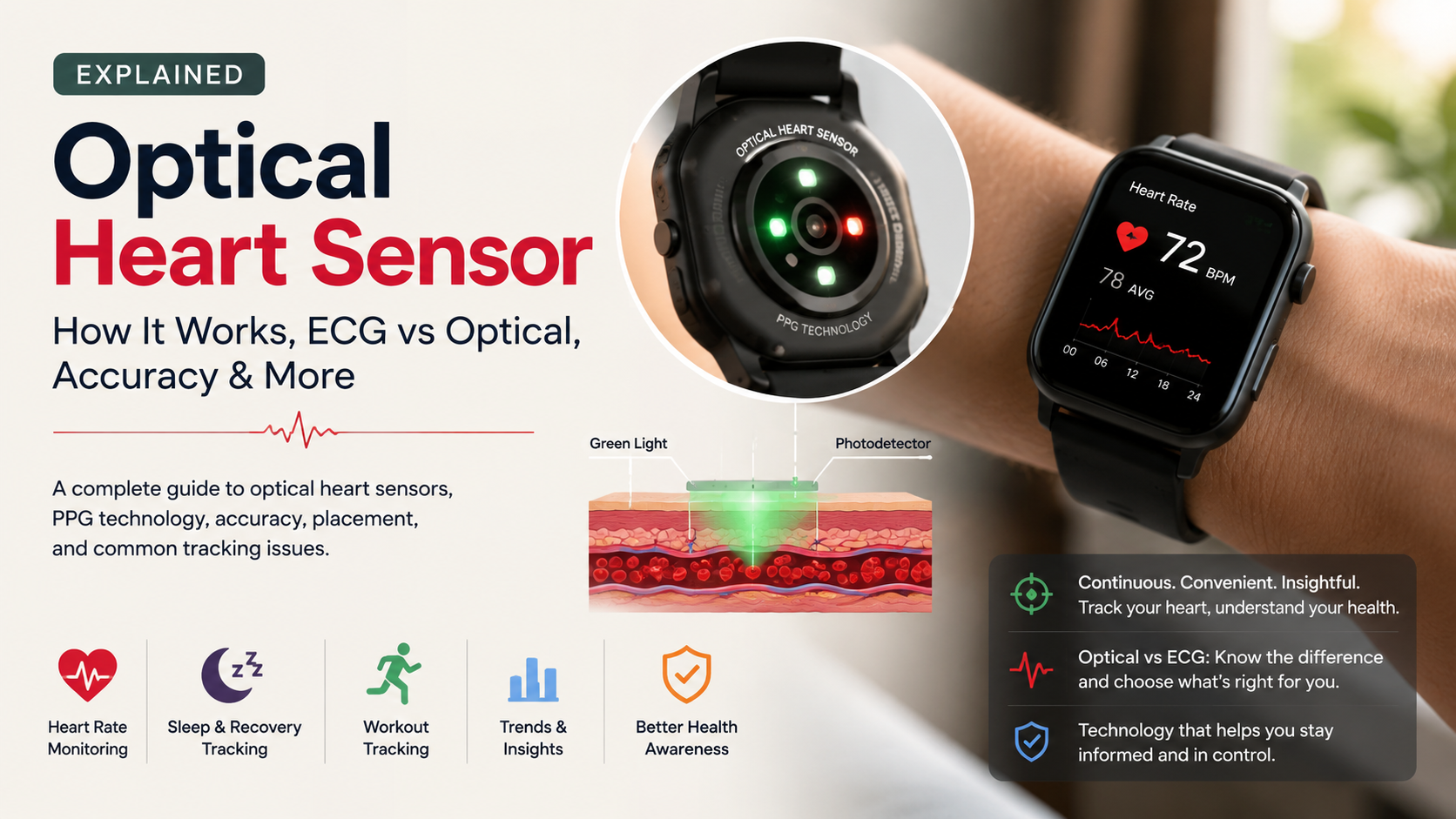
Understanding how wearable devices track health data starts with their sensors. An optical heart sensor is a key component in many smartwatches and fitness trackers, including screen-free health tracking devices designed for continuous monitoring. It measures your pulse by detecting changes in blood volume beneath your skin.
Most optical sensors use photoplethysmography (PPG) technology. The sensor shines light into your skin and measures how much light returns. Blood absorbs light differently as its volume changes with every heartbeat. The device then processes these changes into a heart rate reading.
The American Heart Association notes that monitoring heart rate trends can provide useful information about cardiovascular health. However, wearable readings are not the same as medical diagnoses.
This guide explains how optical heart sensors work and how they compare with ECG technology. You will also learn about PPG sensors, accuracy, sensor placement, and common tracking problems. These details can help you choose and use wearable technology more effectively.
What Is the Difference Between an ECG and an Optical Heart Sensor?
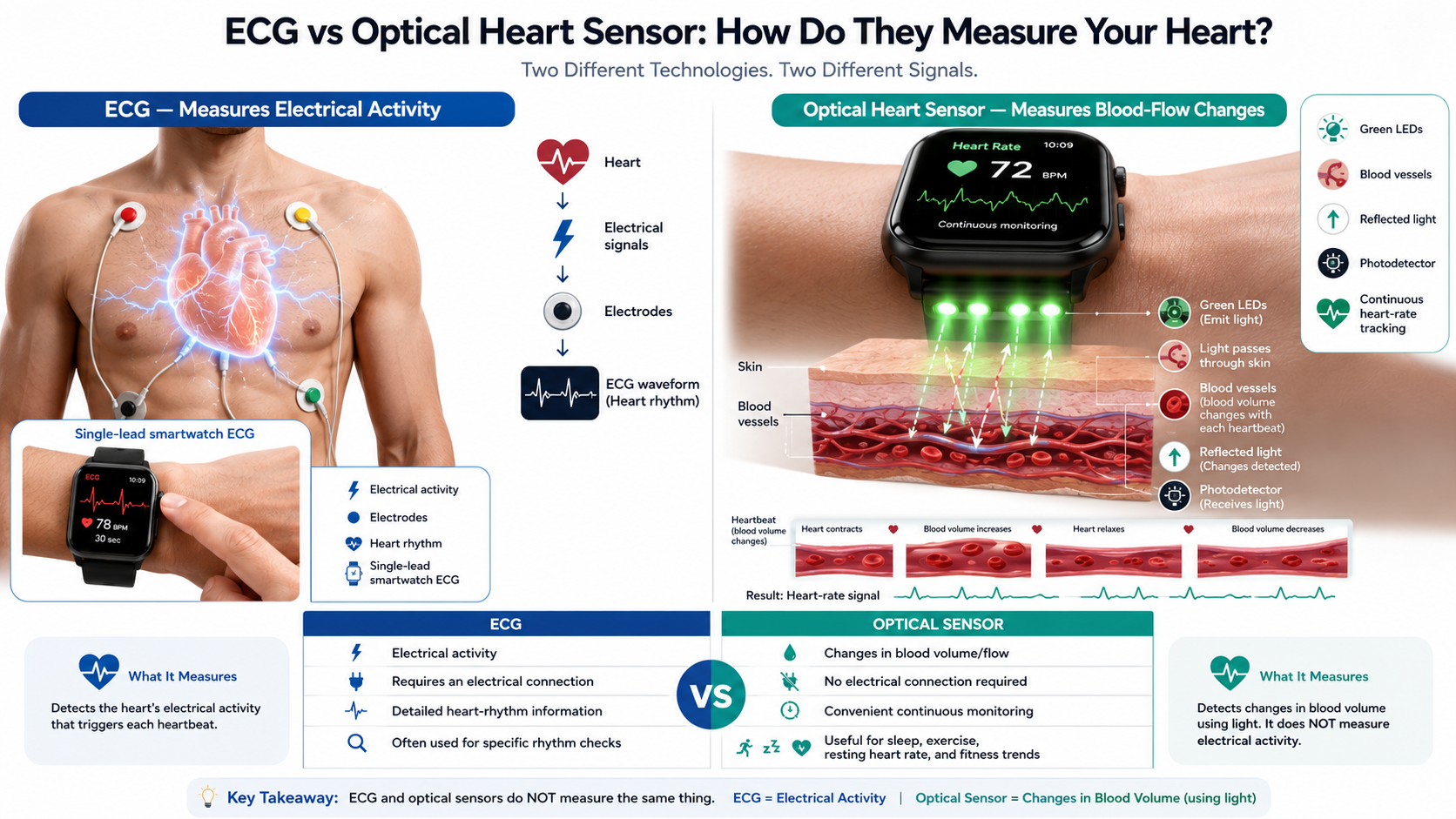
An ECG sensor and an optical heart sensor measure different signals from your body. An electrocardiogram, or ECG, detects the heart’s electrical activity. These electrical signals trigger the heart muscle to contract and pump blood throughout the body.
An optical heart sensor works differently. It uses LEDs to shine light into your skin. A photodetector then measures changes in the reflected light as blood volume changes.
ECG measurements can provide detailed information about heart rhythm. Medical ECG systems usually use several electrodes placed on the chest and limbs. Some smartwatches with advanced health features also offer single-lead ECG readings for selected rhythm checks.
Optical sensors usually sit against the wrist and can operate continuously. This makes them useful for tracking heart rate during sleep, exercise, and everyday movement.
Understanding Sensor Placement and Use Cases
Sensor placement also affects how each technology works. Medical ECG equipment uses electrodes at specific body locations to capture electrical signals. This setup can provide a broader view of cardiac activity.
A smartwatch ECG generally requires the user to touch an electrode. This creates an electrical connection that allows the device to record a heart rhythm.
An optical heart sensor does not need that electrical connection. Instead, it remains against the wrist and monitors changes in blood flow. This design supports continuous heart rate tracking throughout the day.
Optical sensors are especially useful for:
- Continuous heart rate monitoring
- Sleep and recovery tracking
- Workout heart rate measurement
- Resting heart rate trends
- General fitness monitoring
ECG technology can provide information that optical sensors cannot. However, optical sensors offer greater convenience for continuous tracking. The best technology depends on the health or fitness information you need.
What Is the Difference Between Optical and Electrical Heart Rate?
Electrical heart rate measurements detect the electrical activity that controls each heartbeat. This activity occurs when electrical signals travel through the heart and trigger its muscle cells to contract.
Optical heart rate technology measures something different. It detects the pulse wave created when the heart pumps blood through your blood vessels. Blood volume near the wrist increases and decreases with each heartbeat. These changes affect how light interacts with the tissue.
Because of this difference, electrical and optical readings can show slightly different timing. An ECG detects the heart’s electrical activation first. An optical sensor detects the resulting blood pulse after it travels toward the wrist.
Both methods can provide useful heart rate information. However, they measure different stages of the heartbeat.
Comparing Signal Transmission and Measurement Speed
Electrical signals are detected close to their source. As a result, ECG measurements capture cardiac electrical activity almost immediately.
Optical readings involve a small physiological delay. Blood needs time to travel from the heart toward the wrist. This delay is normal and usually does not affect everyday fitness tracking.
Optical sensors can still provide smooth, continuous heart rate data. Modern devices use signal processing and algorithms to identify pulse patterns. These systems can also help reduce noise caused by movement and other external factors.
For most users, the small timing difference is not important. It becomes more relevant when comparing optical readings with ECG measurements during detailed testing.
Are Optical Heart Rate Monitors Accurate?
Modern optical heart rate monitors can provide reliable readings during many everyday activities. They often perform well during steady exercise, such as walking, jogging, and cycling.
Accuracy depends on several factors. A secure fit helps the sensor maintain consistent contact with your skin. Loose movement can allow external light to enter and can weaken the signal.
Motion can also affect readings. Fast wrist movements during interval training, strength workouts, or other activities may create signal artifacts. Sweat, tattoos, skin characteristics, and cold temperatures can also influence performance.
Optical sensors are designed for general health and fitness tracking. They should not be treated as replacements for clinical equipment when diagnosing medical conditions.
Best Practices for Maximizing Device Accuracy
You can improve your wearable’s performance with a few simple habits:
- Wear the device snugly but comfortably.
- Position it slightly above the wrist bone.
- Keep the optical sensor clean and dry.
- Avoid wearing the band so loosely that it moves during exercise.
- Keep the sensor in consistent contact with your skin.
- Allow the device to warm up before intense outdoor exercise in cold weather.
A good fit is especially important during workouts. Excessive movement between the sensor and skin can reduce signal quality.
Following these steps can help your device produce more consistent heart rate readings. If a reading seems unusual, compare it with your normal trends rather than relying on one measurement.
What Is the Optical Heart Rate PPG Sensor?
An optical heart rate PPG sensor is the hardware that uses light to detect changes in blood volume. PPG stands for photoplethysmography. It is a non-invasive optical technique used to measure changes in blood volume within tissue.
A typical PPG system includes LEDs and a photodetector. The LEDs shine light into the skin. The photodetector measures the light that returns after interacting with the tissue, similar to how optical sensors use reflected light in other everyday devices.
Blood absorbs light differently from surrounding tissue. As blood volume changes during each heartbeat, the amount of detected light also changes. The device analyzes these fluctuations to estimate your pulse rate.
Many wearable devices use green LEDs for wrist-based heart rate tracking. More advanced systems may also use red and infrared wavelengths.
The Role of Multi-Wavelength LED Technology
Different light wavelengths interact with tissue in different ways. Green light is commonly used for wrist heart rate monitoring because it can provide a strong signal from superficial blood vessels.
Red and infrared light can interact with deeper tissue. Wearable devices can use these wavelengths for additional measurements, including blood oxygen-related metrics.
The exact capabilities depend on the sensor design and the device manufacturer. Not every smartwatch uses the same LED configuration or supports the same health features.
PPG technology has become popular because it allows continuous measurements without electrodes. The sensor can remain against the wrist while the device collects data throughout the day.
However, the quality of the signal still depends on skin contact, movement, temperature, and other conditions. The device’s software also plays an important role in converting raw optical signals into useful heart rate information.
What Is the Full Form of PPG?
The full form of PPG is photoplethysmography. It describes an optical method for detecting changes in blood volume within body tissue.
The term combines several concepts. “Photo” relates to light, while “plethysmography” refers to measuring changes in volume. In wearable technology, PPG uses light to detect changes caused by blood moving through the tissue.
During each heartbeat, blood volume near the skin changes. These changes affect the way light is absorbed and reflected. The PPG sensor detects these variations and sends the signal to the device’s processor.
The processor then uses algorithms to identify repeating pulse patterns. It converts those patterns into heart rate information that users can view on a screen.
How Light Absorption Creates Your Pulse Data
As your heart pumps blood, blood volume in the wrist rises and falls. This rhythmic change alters the amount of light absorbed by the tissue.
The photodetector captures these light variations. Software then filters noise and analyzes the resulting waveform.
The final output is usually a heart rate value measured in beats per minute. More advanced systems may use similar optical principles for other health measurements.
Understanding PPG makes optical heart monitoring easier to understand. The technology does not directly measure the heart’s electrical signals. Instead, it detects the blood-flow changes produced by each heartbeat.
Frequently Asked Questions
How do smartwatches attach optical sensors to the skin?
Smartwatches use a flat, glass-backed casing that rests directly against the top of your wrist. Manufacturers design this casing to maintain skin contact while housing the LEDs and photodetector securely. A snug wristband prevents shifting, ensuring that external light does not interfere with the internal optical measurements during your daily activities.
Can wrist tattoos interfere with optical heart rate tracking?
Yes, dark ink from tattoos can significantly block or absorb the light emitted by optical heart sensors. Because the sensor relies on clear light reflection through skin tissue, dense pigmentation underneath the device often disrupts readings. Many smartwatches struggle to track heart rate accurately over heavily tattooed wrists unless worn on an uninked area.
Why do optical sensors usually flash green light?
Green light provides the highest signal-to-noise ratio for detecting blood volume changes in the superficial capillaries of the wrist. Skin tissue absorbs green light very efficiently, allowing the photodetector to capture clear pulse waves during movement. This makes green LEDs the industry standard choice for continuous, energy-efficient wrist-based heart rate monitoring.
Do optical heart rate monitors work in cold weather?
Cold weather causes blood vessels in your extremities to constrict, reducing blood flow to the skin surface. When peripheral blood flow drops significantly, optical sensors receive weaker reflection signals, which can temporarily reduce tracking accuracy. Warming up your body or wearing gloves can help restore proper blood circulation and improve sensor performance outdoors.
Conclusion
Optical heart sensors have revolutionized how we monitor our physical health, bridging the gap between advanced technology and everyday convenience. By utilizing photoplethysmography technology, these devices track your pulse continuously through light reflection rather than electrical impulses. While they differ fundamentally from clinical ECG systems and electrical heart rate measurements, modern algorithms ensure impressive accuracy for fitness tracking. Understanding how your optical heart sensor works empowers you to wear your device correctly and interpret your health data with confidence. As wearable technology continues to advance, applying these insights will help you make the most of your fitness journey and achieve your wellness goals.