
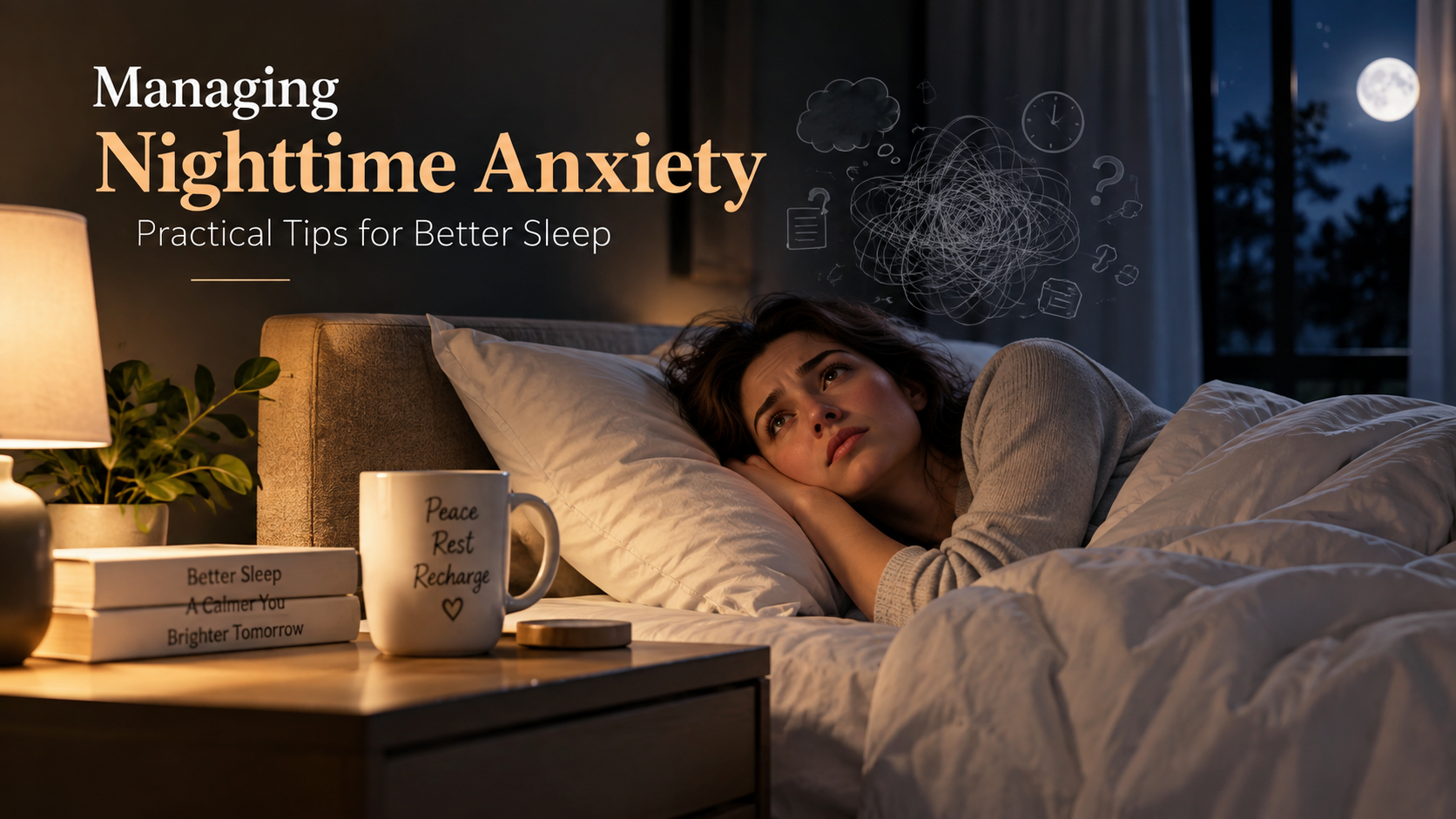
Managing Nighttime Anxiety: Practical Tips for Better Sleep
Managing nighttime anxiety can be difficult when your mind races with worries as soon as you get into bed. Many people struggle to relax at night, especially when daily distractions finally disappear. The quiet can make stressful thoughts feel louder and harder to control.
Nighttime anxiety can affect how quickly you fall asleep and how rested you feel the next morning. It may also create a frustrating cycle where worrying about sleep makes it even harder to sleep. The Sleep Foundation explains how anxiety and sleep problems can influence each other.
This guide explains practical ways to calm your mind before bed. It covers the 3-3-3 grounding technique, bedtime routines, breathing exercises, and sleep positions. These strategies can help you create a calmer transition from daytime activity to nighttime rest.
What is the 3-3-3 rule for anxiety sleep?
The 3-3-3 rule is a grounding technique that can help redirect attention during moments of anxiety. It is often used when racing thoughts make it difficult to relax at bedtime. The technique encourages you to focus on your surroundings instead of continuing an anxious thought cycle.
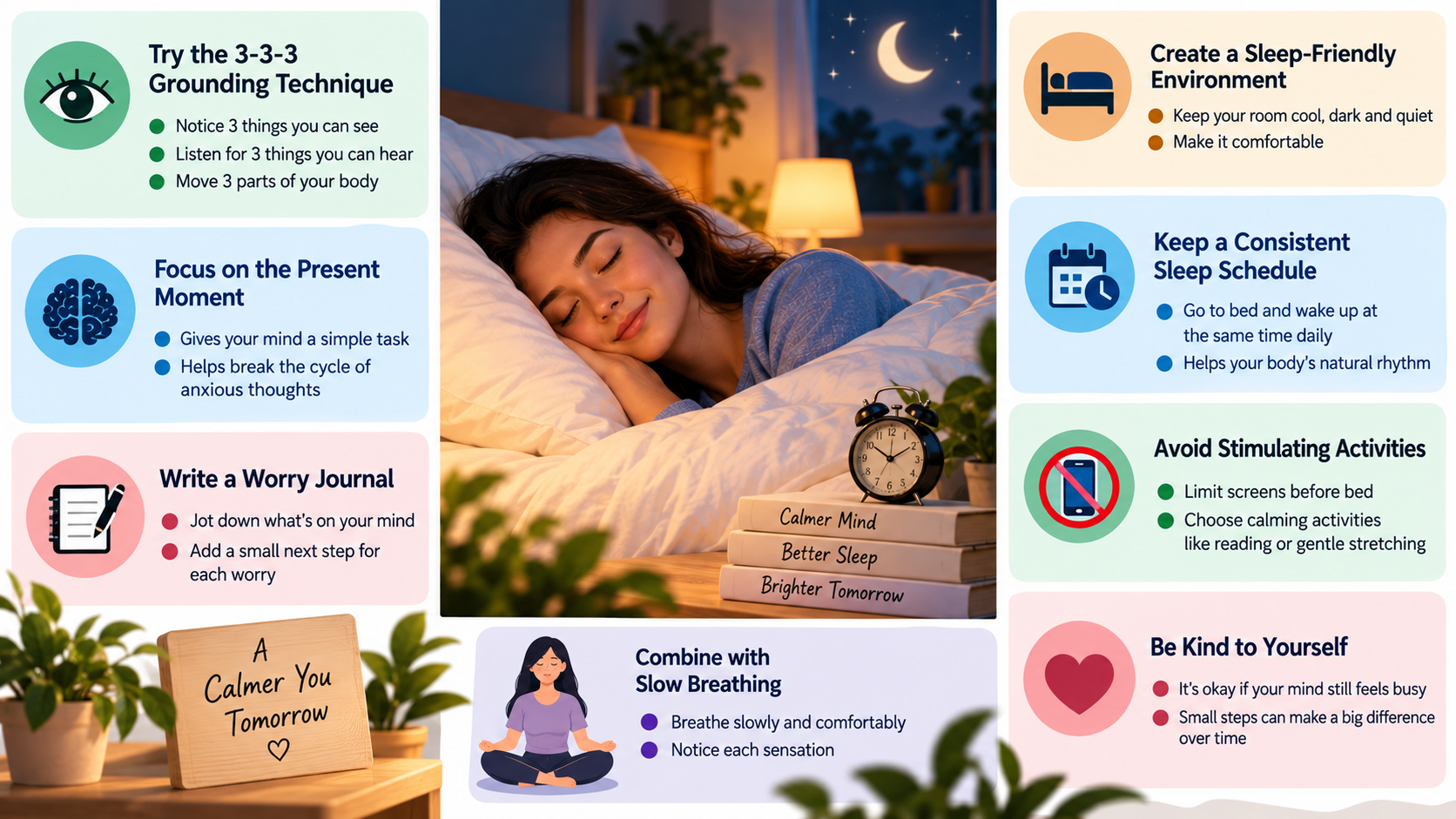
The common version involves identifying three things you can see, noticing three things you can hear, and moving three parts of your body. You can perform the exercise quietly while lying in bed or sitting nearby.
For example, you might notice a lamp, curtain, and ceiling. Then, listen for a fan, traffic, or another background sound. Finally, slowly move your fingers, shoulders, and feet.
The technique does not directly treat an anxiety disorder. However, it can provide a simple way to shift attention toward the present moment when worries become overwhelming.
Why grounding techniques work at night
Grounding techniques can help because they give your attention a specific task. Anxiety often involves repetitive thoughts about possible problems, future events, or past experiences. Focusing on immediate sensory information can interrupt that mental loop.
At night, this shift can be especially useful because there are fewer distractions competing for your attention. Instead of analyzing every thought, you focus on what you can see, hear, or physically feel.
Grounding does not need to make anxiety disappear completely. Even a small reduction in mental tension can make relaxation easier.
You can combine grounding with slow breathing for a more complete wind-down routine. Try breathing slowly and comfortably while noticing each sensation around you.
If the technique feels frustrating, do not force it. The purpose is to redirect attention, not to perform the exercise perfectly.
How can I sleep better at night with anxiety?
Improving sleep with anxiety starts with creating conditions that support relaxation. Keep your bedroom cool, dark, quiet, and comfortable when possible. Reduce bright light and avoid stimulating activities close to bedtime.
A consistent sleep schedule can also help regulate your body’s sleep-wake rhythm. Try going to bed and waking up at similar times each day. This routine can make it easier for your body to recognize when it is time to rest.
Your pre-sleep activities matter too. Reading a physical book, listening to calm audio, taking a warm shower, or doing gentle stretching can help you transition away from daytime activity with a restful evening routine.
Avoid using your bed as a place for prolonged worrying or work. If you remain awake and increasingly frustrated, get up briefly and do something quiet in low light. Return to bed when you feel sleepier.
Creating a worry journal before bed
A worry journal can help move persistent thoughts out of your head and onto paper. Set aside a few minutes before bed to write down concerns that keep returning.
You can also write a simple next step beside each practical worry. This can reassure your brain that the issue has not been ignored. There is a plan to address it later.
Avoid turning the journal into a long problem-solving session. The goal is to acknowledge your thoughts, not solve every problem at bedtime.
Try ending the exercise with a short statement such as, “I can deal with this tomorrow.” Then put the notebook away and begin your normal wind-down routine.
Writing can be particularly useful when your anxiety centers on unfinished tasks, upcoming responsibilities, or repeated thoughts about the same issue.
If journaling makes you more focused on your worries, switch to a calming activity instead.
What is the 3-3-3 rule for sleep?
There is no universally recognized 3-3-3 sleep rule that divides bedtime into three specific phases. The term is sometimes used online to describe different sleep or relaxation routines. It is also commonly confused with the 3-3-3 grounding technique used for anxiety.
For sleep, it is more useful to think about a gradual wind-down period rather than following a strict three-part formula. Start reducing stimulating activities before bed. Dim bright lights, finish demanding tasks, and move toward quieter activities as bedtime approaches.
During the final part of your routine, focus on activities that feel calming rather than monitoring whether you are falling asleep. Slow breathing, gentle stretching, reading, or quiet music may help.
The exact timing does not need to be perfect. A routine that you can follow consistently is usually more practical than a complicated schedule.
Structuring your bedtime transition window
A predictable bedtime transition can reduce the abrupt shift between daytime stress and nighttime rest. Start by finishing demanding work and other stimulating activities before you get into bed.
Next, move into a simple routine that signals the day is ending. You might change into comfortable clothes, dim the lights, brush your teeth, and read for several minutes.
Once you get into bed, avoid repeatedly checking the clock. Watching the minutes pass can increase pressure and make sleep feel like a performance.
If you cannot sleep, focus on resting rather than forcing yourself to fall asleep immediately. If frustration continues, leave the bed briefly and return when you feel sleepy.
The aim is to make bedtime predictable and low-pressure. Over time, this can strengthen the association between your nighttime routine and relaxation.
How to improve anxiety before sleep?
Reducing anxiety before bedtime is often easier than trying to calm intense worry after you are already in bed. Give yourself a self-care buffer period between daytime responsibilities and sleep.
Mindfulness, gentle stretching, progressive muscle relaxation, and quiet journaling can help some people transition into a calmer state. Choose one or two techniques instead of creating an elaborate routine that becomes another responsibility.
Pay attention to substances that can interfere with sleep. Caffeine can remain active for several hours, so consider limiting it later in the day. Alcohol may make you feel sleepy initially but can disrupt sleep later in the night.
Large meals close to bedtime may also cause discomfort for some people. Keep your evening routine comfortable and predictable.
Most importantly, avoid treating one difficult night as a failure. Worrying about whether you will sleep can create another layer of anxiety. A calmer attitude toward occasional sleeplessness can make bedtime less stressful.
The role of evening breathing exercises
Slow breathing can provide a simple way to settle physical tension before bed. One option is box breathing, which uses four equal phases: inhale, hold, exhale, and hold.
A common pattern uses four seconds for each phase. However, you should adjust the timing if holding your breath feels uncomfortable. Never force your breathing or continue if you feel dizzy.
Another option is simply making your exhale slightly longer than your inhale. Breathe gently and avoid taking unusually deep breaths.
The purpose is to slow your breathing and give your attention something steady to follow. This can make it easier to shift away from repetitive thoughts.
Try practicing for several minutes during your evening routine. You can also use the technique when anxiety appears after you get into bed.
Breathing exercises are a relaxation tool, not a replacement for professional treatment when anxiety is persistent or severe.
Why is anxiety worse at night?
Nighttime anxiety can feel stronger because the distractions of the day become less prominent. During daylight hours, work, conversations, errands, and entertainment can occupy your attention. At night, there may be more mental space for worries to surface.
Fatigue can also make anxious thoughts harder to manage. When you are tired, it may become more difficult to shift attention or maintain perspective.
Physical sensations can contribute as well. A faster heartbeat, muscle tension, or changes in breathing may become more noticeable in a quiet bedroom. If you interpret these sensations as dangerous, they can increase your anxiety further.
The sleep environment itself can also encourage inward attention. Darkness and silence remove many external distractions, which can make ordinary sensations and thoughts feel unusually prominent.
Understanding this pattern can help you avoid assuming that nighttime worries always signal a serious problem. However, frequent nighttime anxiety deserves attention, particularly when it regularly affects your sleep or daytime functioning and mental health.
The psychological impact of silence and darkness
Silence and darkness can change where your attention goes. Without daytime distractions, you may notice thoughts, sounds, or physical sensations that you normally overlook, making the art of silence particularly relevant to nighttime relaxation.
For someone already feeling anxious, this increased awareness can make ordinary sensations seem more important. A small heartbeat change may suddenly feel alarming. A minor worry may also become the focus of attention.
Instead of fighting this awareness, try labeling what is happening. You might tell yourself, “I am noticing anxiety right now.” This creates some distance between you and the anxious thought.
Then redirect your attention toward something neutral. Focus on slow breathing, the feeling of your pillow, or a quiet sound in the room.
You can also use a soft background sound if complete silence makes you uncomfortable. The goal is to create an environment that feels safe and relaxing without becoming overly stimulating.
What is the best sleep position for anxiety?
There is no single sleep position proven to treat anxiety. Comfort, breathing, pain, and personal preference should guide your choice. A position that helps you relax may be more useful than trying to follow a specific posture.
Side sleeping is comfortable for many people and may support easier breathing for some individuals. Back sleeping can also work well if it feels comfortable and does not worsen snoring or breathing problems.
Some people prefer a slightly open posture because it makes slow, comfortable breathing feel easier. Others naturally relax more when lying on their side with their knees slightly bent.
Avoid positions that create discomfort, pressure, or restricted breathing. If a position makes you more aware of physical sensations, try changing it rather than forcing yourself to stay still.
Remember that sleep position is only one small part of managing nighttime anxiety. Your routine, stress levels, sleep environment, and response to anxious thoughts usually matter more.
Supporting physical relaxation with pillows
Pillows can improve comfort and help reduce physical tension while you settle into bed. The right arrangement depends on your preferred sleep position and body shape.
If you sleep on your back, placing a pillow beneath your knees may reduce pressure on your lower back. Side sleepers may find a pillow between their knees more comfortable.
A supportive pillow beneath your head should keep your neck in a comfortable, neutral position. Avoid arrangements that cause stiffness or strain.
Some people also find gentle pressure from a weighted blanket calming. Research suggests weighted blankets may help some people with anxiety or sleep difficulties, but they are not a guaranteed treatment.
Choose an appropriate blanket and make sure you can easily remove it. Avoid anything that makes breathing difficult or causes overheating.
The main goal is physical comfort. When your body feels supported, it may become easier to focus on relaxation instead of discomfort.
Frequently Asked Questions
How long does it take to reset an anxious sleep schedule?
Resetting an anxious sleep schedule can take one to three weeks or longer, depending on your routine, stress levels, and consistency. Practicing managing nighttime anxiety by maintaining regular sleep and wake times can gradually help your body adjust to a predictable rhythm.
Should I stay in bed if I cannot fall asleep due to anxiety?
If anxiety keeps you awake, staying in bed while becoming increasingly frustrated can strengthen the association between your bed and wakefulness. As part of managing nighttime anxiety, get up after roughly 20 minutes, do something quiet in dim light, and return when you feel sleepy.
Can diet impact the severity of nighttime anxiety?
Diet can influence managing nighttime anxiety, particularly when caffeine, alcohol, heavy meals, or large amounts of sugar interfere with sleep. Limiting caffeine later in the day and choosing a balanced evening meal may support steadier energy and make it easier to relax before bedtime.
Are weighted blankets effective for managing bedtime anxiety?
Weighted blankets may help some people with managing nighttime anxiety by providing calming deep-pressure sensations, although research on their effectiveness remains limited. Choose an appropriate weight, use the blanket comfortably, and avoid relying on it as the only strategy for reducing persistent anxiety.
Conclusion
Effective managing nighttime anxiety requires consistency rather than a single quick fix. Keeping a regular sleep schedule, reducing evening stimulants, leaving bed when you cannot sleep, and developing calming bedtime habits can gradually make nights feel more predictable. Managing nighttime anxiety becomes easier when you give your mind and body time to adjust, practice relaxation regularly, and seek professional support when anxiety continues to disrupt your sleep or daily life.