
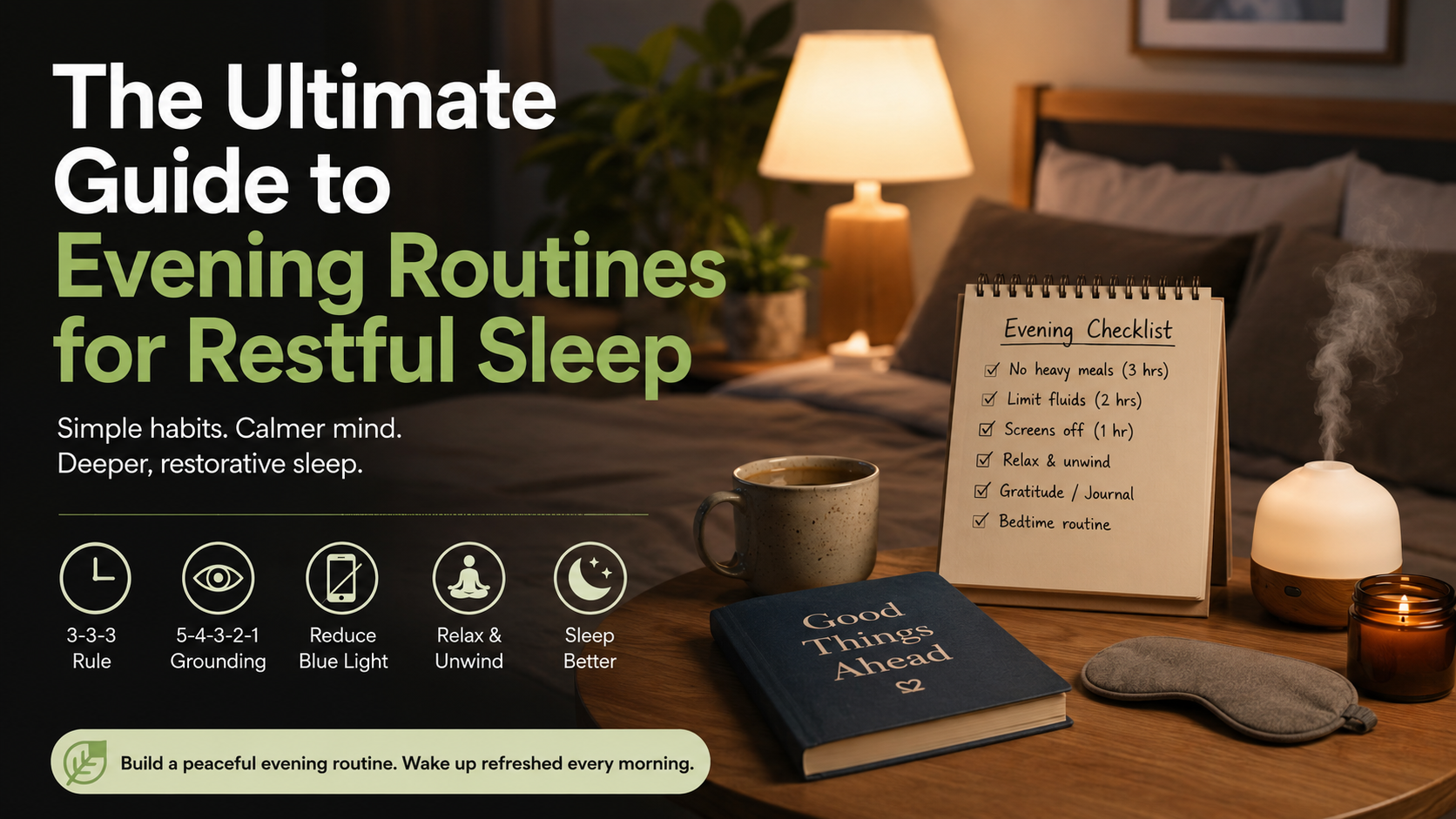
The Ultimate Guide to Evening Routines for Restful Sleep
Quality rest does not happen by accident. In our fast-paced modern world, deliberate evening routines for restful sleep bridge the gap between daily chaos and restorative recovery. When you prepare your body and mind before heading to bed, you signal to your internal clock that it is time to unwind. According to clinical guidance from the National Sleep Foundation, establishing consistent nightly patterns fundamentally strengthens circadian rhythms and improves sleep architecture.
A predictable wind-down ritual lowers physiological arousal, reduces lingering stress hormones, and encourages the natural release of melatonin. Without a structured buffer period, the nervous system remains in high gear, causing tossing, turning, and fragmented sleep cycles.
This comprehensive guide answers the most essential questions about optimizing your evening schedule. You will discover actionable frameworks like the 3-3-3 rule, grounding exercises like the 5-4-3-2-1 method, and evidence-based pediatric strategies like the 5-3-3 rule. We will also outline ten foundational sleep hygiene habits and walk you through designing an effective, sustainable adult bedtime routine for deeper nightly rejuvenation.


What is the 3-3-3 rule for sleep?
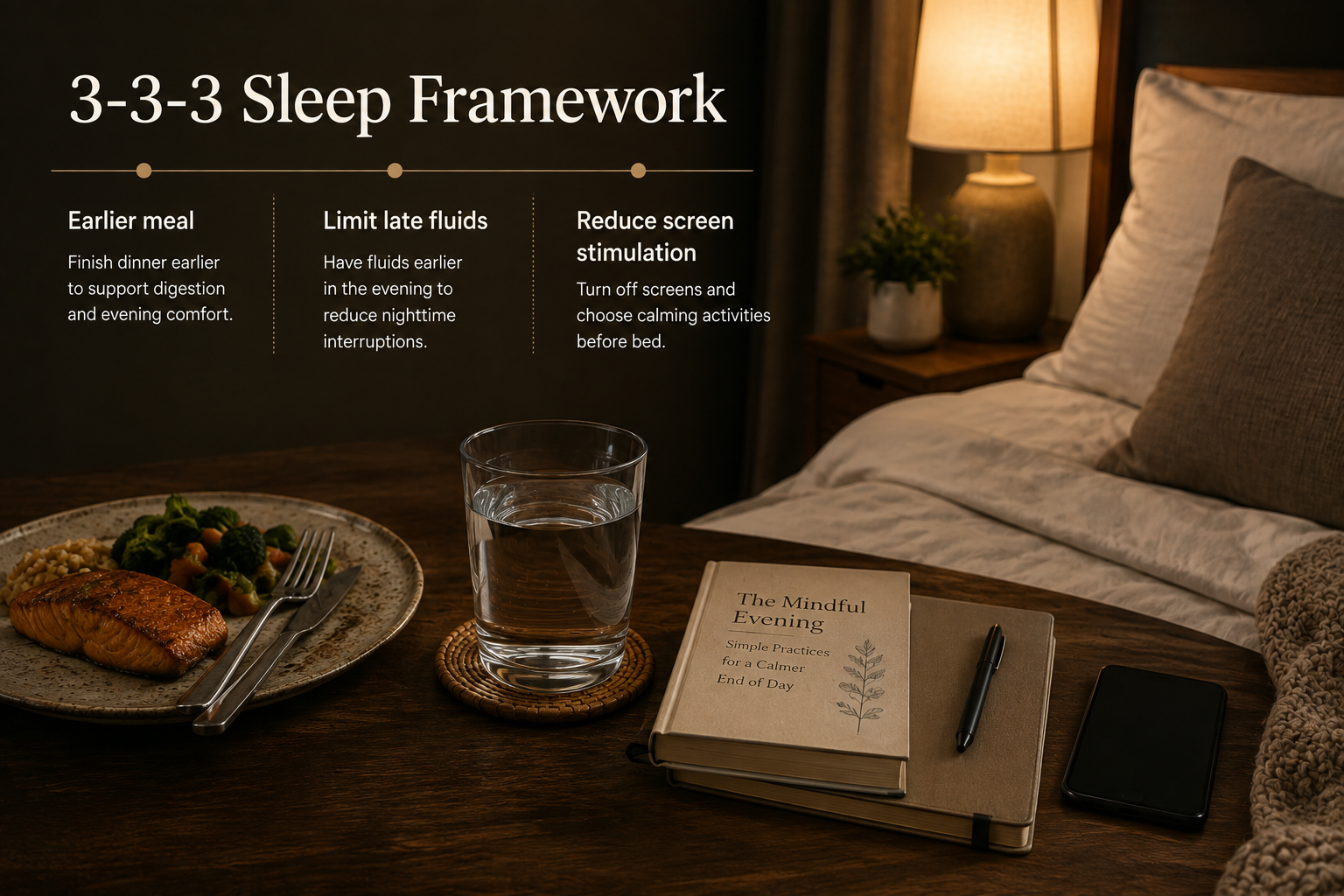
The 3-3-3 rule for sleep is a popular evening framework that divides the hours before bedtime into simple boundaries. It commonly suggests avoiding heavy meals for three hours before bed, limiting large amounts of liquid for two hours, and stopping screen use one hour before sleep. These habits can support a smoother transition into rest, although the 3-3-3 rule itself is not a universal medical standard.
Finishing large meals earlier may reduce discomfort, especially for people prone to reflux. Limiting fluids later may also reduce bathroom trips during the night. Reducing stimulating screen use can help create a calmer environment before bed.
The timing does not need to be exact. Your bedtime, meal schedule, medications, and personal needs should guide the routine.
Try using the rule as a flexible framework rather than a strict prescription. The goal is to create a predictable period with fewer physical and mental distractions.

Eliminating Late-Night Blue Light Disruption
Reducing phone, tablet, and television use before bed can make your evening less stimulating. Bright light, particularly when it reaches your eyes late at night, can affect the body’s circadian timing. Interactive content can also keep your brain engaged when it should be winding down, especially when studying late rather than following a consistent morning vs night study routine.
You do not necessarily need to avoid every screen for a full hour. Instead, focus on reducing bright light and mentally stimulating activities as bedtime approaches. Lowering screen brightness and using warmer display settings may also make evening use less disruptive.
Replace endless scrolling with activities that require less mental effort. Reading a physical book, listening to quiet music, writing in a journal, or doing gentle stretching can create a stronger transition toward sleep.
If you must use a device at night, keep the activity purposeful and brief. Avoid emotionally charged conversations, work messages, gaming, and fast-paced social media.
The goal is not perfection. It is to create a low-stimulation environment that helps your brain recognize that bedtime is approaching.
What is the 5 4 3 2 1 rule for sleep?
The 5-4-3-2-1 rule for sleep is a grounding exercise that can help redirect attention when your mind feels busy. It is commonly used as a mindfulness technique rather than a formal sleep treatment. The exercise asks you to notice five things you can see, four things you can feel, three things you can hear, two things you can smell, and one thing you can taste.
The technique gives your attention a specific task instead of allowing thoughts to keep looping. This can be useful when stress, worry, or bedtime rumination makes relaxation difficult.
Move through each sense slowly and without judging what you notice. You might observe the texture of your pillow, the sound of a fan, or the temperature of the room.
The exercise does not guarantee sleep, and it should not replace professional treatment for persistent insomnia. However, it can become a simple part of evening routines for restful sleep, especially when paired with slower breathing and reduced stimulation.
Calming Somatic Tension in Bed
Sensory grounding can become more effective when you combine it with slow, comfortable breathing. Instead of trying to force yourself to fall asleep, focus on relaxing your body and allowing your breathing to become steady.
Start by noticing physical sensations without trying to change them. Feel the mattress supporting your body. Notice the weight of your blanket and the temperature of the air. Then take several slow breaths without forcing unusually deep inhalations.
You can also gently release tension from your jaw, shoulders, hands, and legs. Avoid turning the exercise into another task that you must perform perfectly.
If your thoughts return, simply bring your attention back to a physical sensation or the sound of your breathing. This repeated redirection can reduce mental engagement with stressful thoughts.
Grounding works best when it feels simple. You do not need special equipment or advanced meditation skills. A few quiet minutes can provide a useful transition from mental activity to physical relaxation before sleep.
What is the 5-3-3 rule for sleep training?
The 5-3-3 rule for sleep training is sometimes used online to describe a structured approach to spacing infant night feedings. It generally means waiting five hours after bedtime before offering a feeding, then waiting three hours between later feeds. However, this is not a universal pediatric sleep-training standard, and feeding schedules should not be applied to every baby.
Infants have different nutritional needs based on age, growth, health, feeding method, and medical history. Some babies need frequent overnight feeds, particularly during early development. For that reason, parents should not use a fixed feeding interval simply to encourage longer sleep.
If a baby wakes before a planned interval, parents may sometimes use appropriate soothing methods when feeding is not required. These can include gentle patting, rocking, or other familiar comfort techniques.
Before changing overnight feeding patterns, discuss the plan with your pediatrician. A healthcare professional can determine whether longer intervals are appropriate for your baby’s development.
Treat the 5-3-3 approach as a parenting strategy discussed online, not a universal medical recommendation.
Building Predictable Nighttime Boundaries
Consistent nighttime responses can help families establish clearer sleep expectations. However, predictability should never override an infant’s nutritional or medical needs. Babies may wake because they are hungry, uncomfortable, sick, or seeking reassurance.
Parents can create boundaries by keeping nighttime interactions calm and predictable. Dim lighting, quiet voices, and minimal stimulation can help distinguish nighttime from daytime. When feeding is appropriate, keep the process simple before returning the baby to sleep.
As babies develop, their sleep patterns can change significantly. A strategy that works at one age may become unsuitable later. Growth spurts, illness, teething, and developmental changes can also temporarily affect sleep.
Rather than focusing only on longer sleep periods, look for a routine that supports safe sleep, adequate nutrition, and predictable caregiving. Follow your pediatrician’s recommendations for feeding and sleep practices.
If your baby has unusual waking patterns, poor weight gain, feeding difficulties, or other concerns, seek professional guidance. Consistency matters, but flexibility matters too.
What are 10 healthy sleep habits?
Healthy sleep depends on more than what you do during the final hour of the day. A consistent set of daytime and nighttime habits can make sleep easier and more predictable. These habits support your circadian rhythm while reducing common sources of nighttime disruption, including the need for better study tips for exam preparation when academic demands affect your daily schedule.
Ten useful habits include:
- Keep a consistent sleep schedule, including weekends when practical.
- Keep your bedroom dark, quiet, and comfortably cool.
- Exercise regularly, preferably during the daytime.
- Limit caffeine later in the day.
- Avoid relying on alcohol as a sleep aid.
- Get natural light exposure, especially earlier in the day.
- Use your bed primarily for sleep and intimacy.
- Create a relaxing wind-down period before bedtime.
- Manage stress through journaling, relaxation, or mindfulness.
- Avoid large or uncomfortable meals close to bedtime.
You do not need to change everything at once. Choose two or three habits that fit your lifestyle and maintain them consistently.
Over time, these habits can strengthen your evening routines for restful sleep and make bedtime feel more predictable.
Optimizing Your Bedroom Environment
Your bedroom can either support sleep or make it harder. A dark, quiet, and comfortable environment reduces common sources of nighttime stimulation. Creating a calm home environment can also make it easier to reduce distractions and support relaxation. Start by controlling the factors you can change most easily.
Use blackout curtains or an eye mask if outside light enters the room. Consider earplugs or steady background noise if unpredictable sounds regularly wake you. Keep the room comfortably cool rather than choosing a temperature simply because it is recommended online.
Around 65°F is often cited as a comfortable bedroom temperature, but individual preferences vary. You may sleep better slightly warmer or cooler. Focus on comfort rather than following one exact number.
Your mattress, pillow, bedding, and clothing also affect comfort. Choose options that help you maintain a comfortable temperature and sleeping position.
Remove unnecessary lights from electronic devices when possible. Keep work materials away from the bed if they encourage you to think about unfinished tasks.
A well-designed bedroom supports the rest of your evening routines for restful sleep by making relaxation easier and reducing avoidable disruptions.
Bedtime routine for adults
A bedtime routine for adults is a repeatable sequence of calming activities that helps separate daytime responsibilities from sleep. It does not need to last exactly 30 or 60 minutes. The ideal length depends on your schedule and how much time you need to transition comfortably.
Start by completing practical tasks such as washing up, preparing clothes, or setting an alarm. Then reduce stimulation by dimming lights and stepping away from demanding work. Choose one or two quiet activities that you genuinely enjoy.
Reading a physical book, listening to calm music, stretching gently, or writing tomorrow’s priorities can help create a clear stopping point for the day. Avoid turning the routine into another productivity project.
Keep your bedtime and wake time reasonably consistent. Repetition helps establish predictable cues around sleep, especially when your evening activities follow the same general order.
The most effective evening routines for restful sleep are realistic enough to maintain. A simple routine repeated most nights is usually more useful than an elaborate plan that lasts only a few days.
Crafting a Sustainable Wind-Down Ritual
A sustainable wind-down ritual should fit your actual life. If your routine requires too many steps, it becomes difficult to maintain during busy evenings. Start with two or three activities that feel calming rather than burdensome.
For example, you might spend ten minutes preparing for tomorrow, followed by ten minutes of reading. You could then dim the lights and complete your usual bedtime hygiene. The exact activities matter less than creating a consistent sequence.
Avoid judging the routine by how quickly you fall asleep. Sleep naturally varies from night to night. A useful routine should reduce stimulation and create favorable conditions for rest, not guarantee immediate sleep.
If you remain awake for a prolonged period, avoid repeatedly checking the clock. If you cannot sleep, a quiet activity outside bed may be more helpful than forcing sleep.
Review your routine after a few weeks. Keep activities that help and remove those that create stress.
The goal of evening routines for restful sleep is consistency without rigidity. A routine that works on ordinary days and busy nights has a better chance of becoming a lasting habit.
Frequently Asked Questions
How long should an ideal evening routine last?
An ideal evening routine lasts between 30 and 60 minutes. This provides sufficient time for your core body temperature to drop and your heart rate to slow down without feeling like an overwhelming chore. Consistency matters far more than duration, so choose a realistic timeframe you can maintain every night.
What is the best bedroom temperature for restful sleep?
Most sleep specialists recommend keeping your bedroom between 60 and 67 degrees Fahrenheit (15 to 19 degrees Celsius). Cooler ambient temperatures facilitate the natural drop in core body temperature that triggers sleepiness, helping you fall asleep faster and preventing disruptive micro-awakenings during deep sleep cycles.
Can taking a warm shower before bed help me sleep?
Yes, taking a warm shower or bath about 90 minutes before bed enhances sleep onset. Warm water dilates blood vessels near the skin’s surface. When you step out, that heat quickly dissipates, causing a rapid drop in core body temperature that signals to your brain it is time to rest.
Why do I wake up in the middle of the night?
Mid-night awakenings often stem from stress, blood sugar fluctuations, late-night alcohol, caffeine, or environmental disturbances like noise and light. Addressing sleep hygiene factors—such as maintaining a cool room, avoiding late meals, and managing daytime anxiety—greatly minimizes these nighttime disruptions and fosters continuous sleep.
Conclusion
Achieving deep, rejuvenating rest is well within your control when you prioritize intentional habits. By implementing proven time buffers like the 3-3-3 framework, applying the 5 4 3 2 1 sensory technique, and eliminating late-night screen time, you create an ideal physiological environment for rest. Tailoring structured pediatric strategies like the 5-3-3 method or building a personalized adult wind-down ritual provides the stability your nervous system craves. For students, combining these habits with best study tips for exam preparation can also help create a more balanced routine around academic demands.
Remember that optimizing your evening routines for restful sleep is a gradual process rather than an overnight fix. Choose one or two actionable adjustments from this guide to implement tonight. As these small habits become second nature, you will experience shorter sleep latency, fewer nighttime awakenings, and greater daytime vitality.