
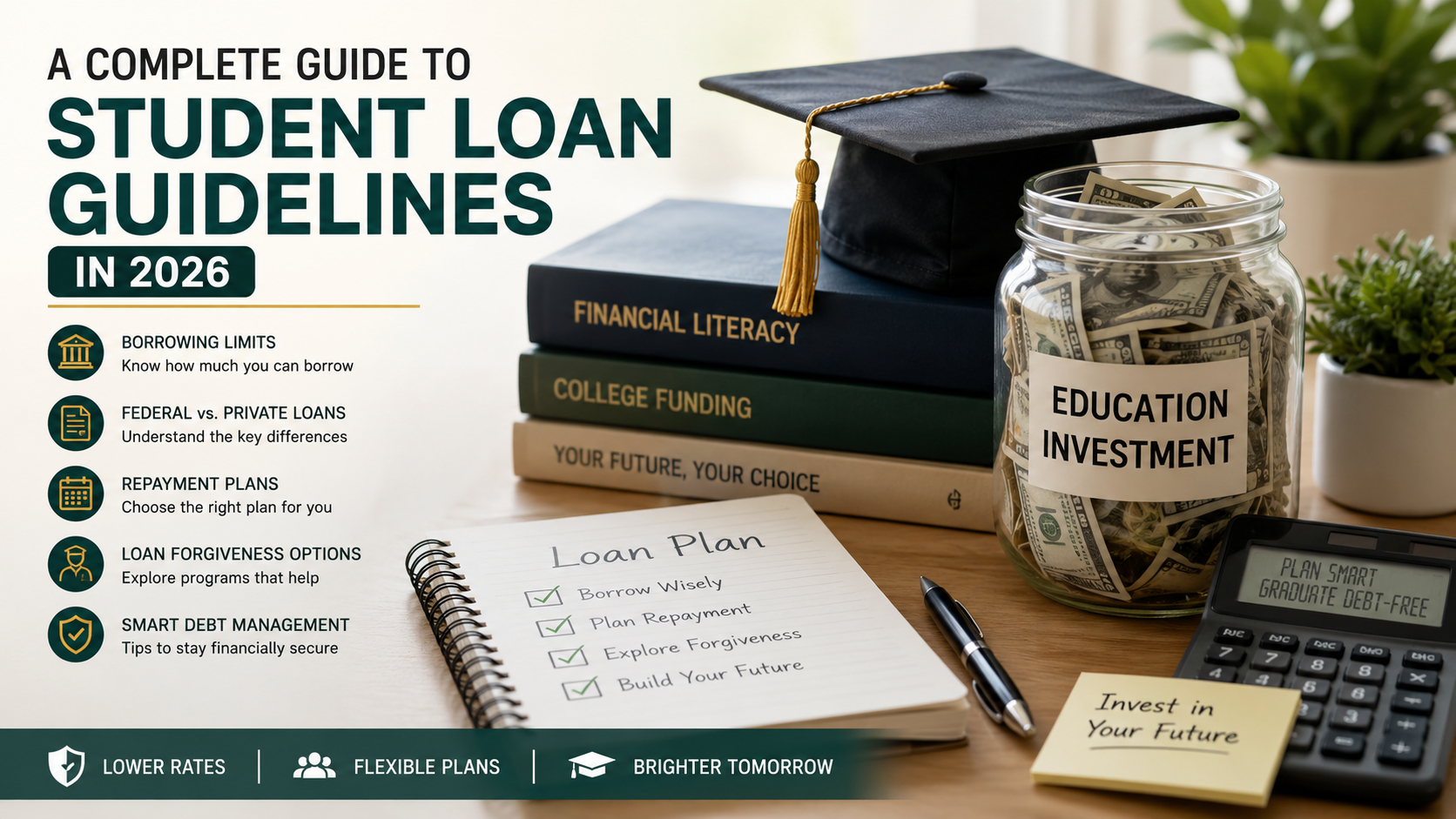
A Complete Guide to Student Loan Guidelines in 2026
Figuring out how to pay for college can feel overwhelming. With rising tuition costs, most families eventually need to explore borrowing options. If you are preparing for higher education, understanding the latest student loan guidelines is absolutely essential. These rules dictate everything from how much money you can borrow to how you will eventually pay it back. By familiarizing yourself with the official Federal Student Aid requirements provided by the U.S. Department of Education, you can make smarter financial decisions that protect your future.
Education debt is a serious commitment, but it does not have to be a lifelong burden. Knowing the right steps to take before you sign a promissory note gives you total control over your finances. Today, borrowing parameters frequently change. New repayment plans emerge, interest rates fluctuate, and forgiveness programs face legislative updates. Therefore, you need accurate, up-to-date information to navigate this complex landscape.
In this comprehensive article, we will explore the core rules you must know before borrowing. We will break down current borrowing limits, explain the crucial differences between federal and private lenders, and highlight the best repayment strategies available today. Whether you are an incoming freshman, a graduate student, or a parent supporting your child, this guide will provide the absolute clarity you need to succeed.
Understanding Basic Student Loan Guidelines
Before you borrow a single dollar, you must grasp the foundational rules of college financing. The government sets specific parameters to protect both the borrower and the lender. These foundational student loan guidelines determine who qualifies for aid, how interest accrues, and what responsibilities you hold after graduation.
You must complete the Free Application for Federal Student Aid (FAFSA) every year to access government funding. The information you provide dictates your financial need. Consequently, your school uses this data to build a custom financial aid package.

Federal vs. Private Education Funding
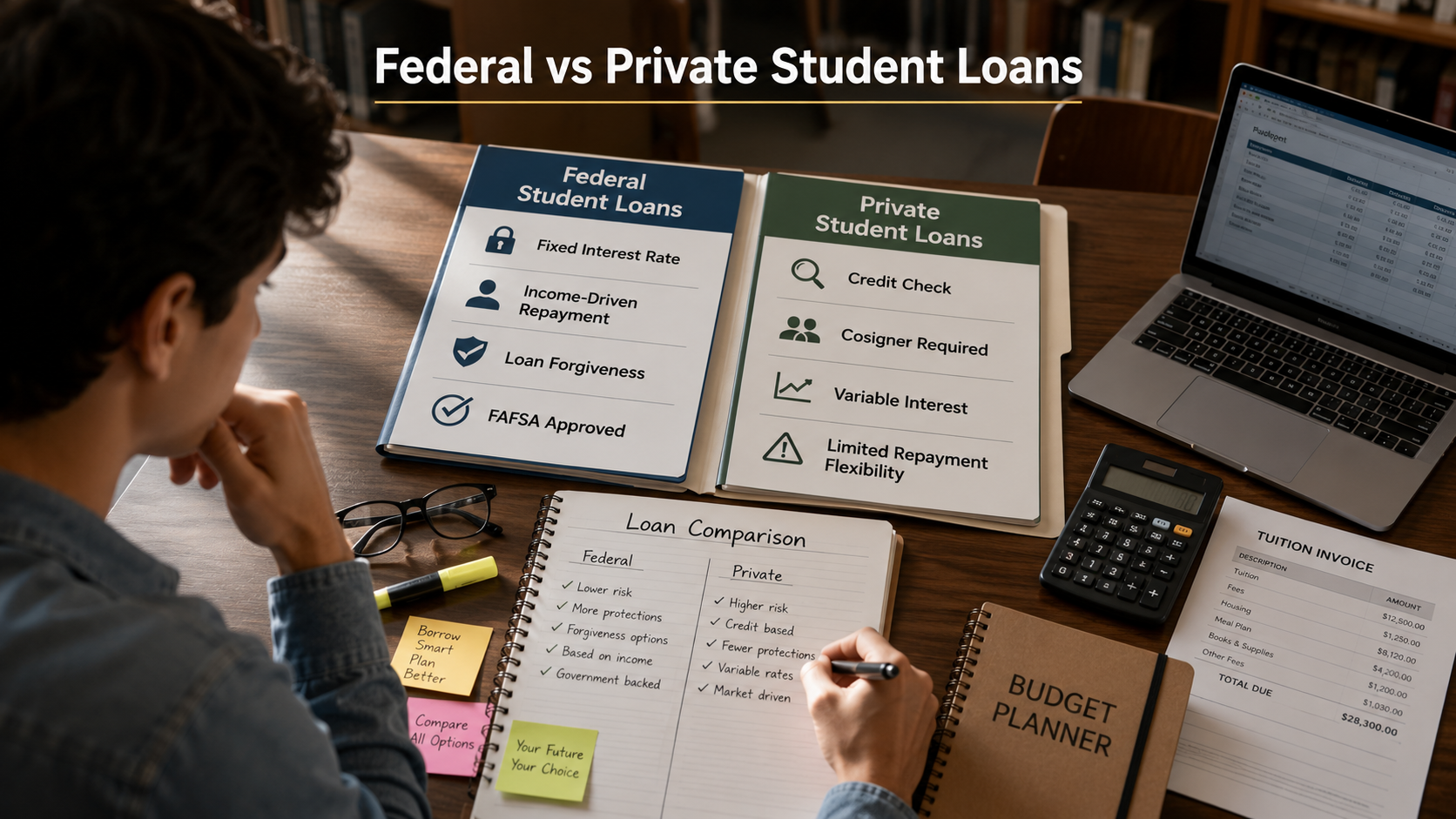
Borrowers generally choose between two main types of debt: federal and private.
-
Federal funding: The government funds these options. They offer fixed interest rates, income-driven repayment plans, and forgiveness programs. Federal loans almost never require a credit check or a cosigner.
-
Private funding: Banks, credit unions, and online lenders provide these options. They require a credit check and usually demand a cosigner. Private lenders set their own rules, which means they rarely offer flexible repayment options.
Always exhaust your federal options before turning to private lenders. Federal loans offer built-in safety nets that private lenders simply do not match.
What Is the New Student Loan Plan for 2026?
The new student loan plan for 2026 introduces streamlined income-driven repayment (IDR) options designed to reduce monthly payments for many undergraduate borrowers. Under the updated framework, the government aims to cap discretionary income at more affordable levels, helping low- and middle-income graduates manage repayment without excessive financial strain. The application process has also become simpler through integrated digital portals, reducing paperwork and administrative delays. In addition, revised interest subsidy rules help prevent qualifying borrowers from seeing their balances grow because of unpaid interest. These changes are intended to make repayment more predictable and financially sustainable. Financial experts recommend reviewing the updated repayment options before selecting a plan. Comparing your expected income, career path, and long-term financial goals can help you choose the repayment strategy that offers the greatest savings over the life of your student loan.
Impact on Monthly Discretionary Income Caps
One of the most significant changes in the 2026 student loan plan is the adjustment to monthly discretionary income caps. The updated formula lowers the percentage of discretionary income used to calculate monthly payments for many eligible borrowers. As a result, recent graduates can keep more of their income during the early stages of their careers, when salaries are often lower and living expenses can be challenging. Lower monthly payments improve cash flow and make it easier to cover essentials such as housing, transportation, and savings. These changes also reduce the likelihood of missed payments caused by financial pressure. Borrowers should review their income annually and update their repayment information when required. Staying enrolled in the appropriate income-driven repayment plan ensures they continue receiving the maximum benefit while keeping their student loan payments affordable over time.
What Is the Minimum Student Loan for 2026–2027?
The minimum student loan amount for the 2026–2027 academic year depends primarily on your school’s Cost of Attendance (COA), federal borrowing limits, and lender requirements. Federal Direct Loans generally do not impose a nationwide minimum borrowing amount. However, colleges and private lenders may require students to borrow a minimum amount, often around $1,000, before approving a loan. This flexibility allows students to borrow only what they truly need for tuition, mandatory fees, books, and essential living expenses. Borrowing responsibly helps reduce future repayment costs and minimizes unnecessary interest charges. Before accepting a loan offer, calculate your education expenses carefully and explore scholarships, grants, and savings first. Your school’s financial aid office can explain any institution-specific borrowing requirements and help you determine the most appropriate loan amount.
Navigating Private Lender Minimums Successfully
Private lenders often establish minimum loan amounts to offset administrative and processing costs. These requirements vary by lender, making it important to compare multiple loan providers before applying. Some lenders may require higher minimum borrowing amounts than others, while eligibility criteria can also differ based on credit history or a co-signer. Planning your semester budget in advance helps you borrow only what you need while still meeting lender requirements. Avoid taking extra funds simply because they are available. Every additional dollar borrowed may increase the total interest paid over the life of the loan. Comparing interest rates, repayment terms, fees, and borrower benefits can help you select the most cost-effective financing option while keeping future debt manageable.
What Are the New Guidelines for Student Loans?
The new student loan guidelines for 2026 focus on greater transparency, stronger borrower protections, and increased accountability across federal and private lending programs. Lenders must provide clearer disclosures showing the estimated total repayment cost before borrowers sign loan agreements. Updated policies also strengthen default prevention by requiring loan servicers to offer counseling and alternative repayment solutions before accounts enter serious delinquency. These measures help students make informed financial decisions while reducing the risk of unexpected repayment challenges. Educational institutions are also expected to provide more comprehensive financial literacy resources before students accept federal or private loans. Together, these improvements encourage responsible borrowing and help students better understand their financial obligations throughout the borrowing and repayment process.
Enhanced Consumer Protection and Fee Transparency
Recent policy updates place a stronger emphasis on consumer protection and transparent loan terms. Borrowers now receive clearer explanations of interest calculations, repayment schedules, and any applicable fees before accepting a loan. Many updated regulations also reduce or eliminate hidden charges that previously increased borrowing costs unexpectedly. Simple, easy-to-understand loan documentation allows students to make informed decisions without navigating complex financial language. Better transparency also helps borrowers understand when interest begins accruing, how repayment options work, and what happens if payments are missed. These protections support more responsible borrowing and reduce the likelihood of unpleasant financial surprises. Reading all loan documents carefully remains essential, even with stronger disclosure requirements.
What Is the Education Loan in 2026?
An education loan in 2026 reflects a more modern approach to financing higher education. Today’s loan products are designed to match rising tuition costs while offering greater convenience through digital banking technology. Many lenders now provide flexible disbursement schedules that align with semester or quarterly billing cycles, ensuring students receive funds when they are needed most. Borrowers can also manage their accounts through secure online dashboards that allow them to monitor balances, submit documents, request deferments, and review repayment progress. Education loans now support a wider range of academic pathways, including university degrees, vocational programs, technical certifications, and online learning. These innovations make student financing more accessible and improve the overall borrowing experience for students pursuing traditional and non-traditional educational opportunities.
Digital Integration and Smart Repayment Tracking
Modern student loan platforms include advanced digital tools that simplify account management throughout the repayment journey. Mobile apps and online dashboards allow borrowers to monitor balances, receive payment reminders, download statements, and update personal information from anywhere. Many lenders also encourage automatic payments by offering small interest rate discounts to eligible borrowers. Automated billing helps reduce missed payments while supporting consistent repayment habits. Digital account management also makes it easier to request deferment, review repayment history, or switch eligible repayment plans when financial circumstances change. These technology-driven features improve convenience, increase payment accuracy, and encourage long-term financial responsibility, making student loan management significantly easier than in previous years.
How much student loan can I get in 2026?
Determining your borrowing capacity depends on several vital factors governed by lenders and institutional policies. Under current guidelines, the exact amount you can secure varies based on your chosen course, university reputation, and total cost of attendance. Undergraduate students typically face different borrowing limits compared to graduate or professional degree seekers. Private lenders and financial institutions evaluate your credit history, co-signer strength, and future earning potential before approving large sums. Furthermore, universities calculate your financial need by subtracting your expected family contribution from the total cost. This ensures that you only borrow what is necessary to cover tuition, housing, and essential study materials. Proper budget planning keeps your post-graduation debt manageable and prevents unnecessary financial strain.
Assessing Your Total Cost of Attendance
Lenders carefully evaluate the complete cost of attendance provided by your academic institution. This calculation encompasses tuition fees, accommodation, textbooks, transportation, and daily living expenses. Providing accurate estimates ensures your approved loan amount closely matches your actual financial requirements during the academic year.
Can I get a 100% student loan?
Securing full coverage for your academic expenses is a common goal for many aspiring scholars worldwide. While 100 percent financing is possible, it largely depends on the lender, your academic profile, and collateral availability. Public lenders often impose caps that cover a significant portion of tuition, leaving students to arrange margin money for living costs. However, specialized financial institutions and premium banks sometimes offer complete coverage for top-tier universities or high-demand professional programs. Achieving full funding usually requires a strong co-signer with an excellent credit score or valuable tangible collateral like property. Students must carefully weigh the long-term interest implications of borrowing the entire cost upfront before committing to a massive debt burden.
Role of Collateral in Full Financing
Providing secure collateral significantly increases your chances of obtaining complete educational funding from traditional lenders. Real estate, fixed deposits, or government bonds act as strong security guarantees for banks. This security minimizes lender risk, allowing them to disburse the entire cost of your education smoothly.
Education loan by Government
Government-backed financial assistance remains one of the most reliable and affordable ways to fund higher studies. These programs are designed to support deserving students by offering lower interest rates and flexible moratorium periods. Most government schemes do not require immediate repayment while you are studying, giving you peace of mind. Additionally, many nationalized initiatives waive processing fees and provide special subsidies for economically weaker sections or female students. Applicants must complete thorough verification processes and submit academic admission proofs to qualify for these beneficial public funds. Checking official state or federal education portals ensures you never miss crucial deadlines for application submissions.
Benefits of Moratorium Periods
Government loans typically feature a helpful moratorium period that lasts throughout your course duration plus a grace period. During this window, you are not obligated to make principal or interest repayments. This crucial breather allows you to focus entirely on your academics without immediate financial pressure.
Education loan debt calculator
Managing your future finances effectively requires a clear understanding of your monthly repayment obligations before signing any agreement. An education loan EMI calculator is a digital tool that instantly computes your Equated Monthly Installments based on specific variables. By inputting your desired loan amount, applicable interest rate, and repayment tenure, you instantly see your monthly breakdown. This transparency helps you choose a tenure that aligns with your projected post-graduation salary expectations. Experimenting with different numbers allows you to find a comfortable balance between affordable monthly payments and total interest outgo. Utilizing this tool prevents unpleasant surprises and builds financial discipline long before your repayment phase officially begins.
Impact of Tenure on Total Interest
Choosing a longer repayment tenure reduces your monthly EMI amount, making payments feel manageable right after graduation. However, extending the timeline significantly increases the total cumulative interest paid over the life of the loan. Shorter tenures save money overall but demand higher monthly installments from your starting salary.
Frequently Asked Questions
How do I apply for the updated federal student loan programs?
Applying for updated federal student loan programs begins with completing the Free Application for Federal Student Aid (FAFSA) through the official government website. Review the latest student loan guidelines before submitting your application so you understand the current eligibility requirements and repayment options. Submit your FAFSA as early as possible to meet your school’s priority deadlines and maximize your financial aid eligibility. After processing, your college or university will provide a financial aid offer outlining available grants, scholarships, work-study opportunities, and federal student loans. Carefully review the award letter before accepting any loan. Compare repayment plans, estimated monthly payments, and long-term borrowing costs. If you have questions, contact your institution’s financial aid office for guidance before finalizing your borrowing decisions.
Can I refinance my existing loans under the 2026 guidelines?
Refinancing existing student loans remains an option in 2026, but borrowers should evaluate the benefits and potential drawbacks carefully. The latest student loan guidelines continue to encourage borrowers to compare all available options before refinancing federal loans with a private lender. While refinancing may reduce your interest rate if you have strong credit and stable income, it often means giving up federal benefits such as income-driven repayment, deferment, and certain loan forgiveness programs. Compare offers from multiple lenders, including interest rates, repayment terms, fees, and borrower protections. Calculate your long-term savings instead of focusing only on a lower monthly payment. A careful comparison helps determine whether refinancing supports your financial goals.
What happens if I miss a student loan payment under the new rules?
Missing a student loan payment does not automatically place your loan in default. Under the updated student loan guidelines, your loan servicer typically sends reminders and contacts you to discuss available assistance before the situation becomes more serious. Depending on your eligibility, you may qualify for forbearance, deferment, or an alternative income-driven repayment plan. Responding quickly to your loan servicer is essential because early communication often prevents additional fees and protects your credit history. Ignoring missed payments can eventually lead to delinquency and more severe financial consequences. Staying proactive and seeking assistance at the first sign of financial hardship gives you the best opportunity to keep your student loans in good standing.
Are graduate students eligible for the new 2026 repayment structures?
Graduate and professional students may qualify for portions of the updated 2026 repayment framework, although eligibility rules differ from those for undergraduate borrowers. The latest student loan guidelines outline separate borrowing limits, repayment options, and eligibility requirements for many graduate-level federal loan programs. Many graduate students rely on specialized borrowing options, such as Grad PLUS Loans, which have unique repayment terms. Before borrowing, review available repayment plans, projected monthly payments, and long-term borrowing costs. Graduate students with higher loan balances may benefit from selecting an income-driven repayment strategy that matches their expected earnings. Consulting financial aid professionals or trusted financial advisors can help determine the most suitable repayment approach.
Conclusion
Managing your education debt successfully comes down to preparation, organization, and knowledge. The world of college financing often seems complicated, but you can master it by paying close attention to the rules. Understanding the specific student loan guidelines that govern your borrowing gives you a significant advantage. You will know exactly how much you can safely borrow, how to secure the lowest interest rates, and which repayment plans fit your future budget.
Always remember to prioritize federal funding over private options. Federal programs offer unmatched flexibility, including income-driven repayment and powerful forgiveness options like PSLF. Keep your loan servicer informed of any changes to your address or income. If you ever face financial hardship, contact them immediately instead of ignoring your payments. They provide deferment and forbearance options designed to help you avoid default.
If you’re also exploring ways to reduce your overall education costs, consider applying for financial aid programs alongside student loans. You can discover several funding opportunities in our guide on Top Scholarships for Indian Students, which can help minimize borrowing and lower your long-term debt burden.
Ultimately, your education is a valuable investment in your future earning potential. Treat your debt responsibly, review your loan documents carefully, and stay informed about policy changes. By applying the strategies outlined in this guide while taking advantage of scholarship opportunities, you can confidently manage your finances and pay off your student loans faster.