
How to Make Group Work Work for Your Team
Learning how to make group work work is one of the most valuable skills you can develop in any professional environment. Almost everyone has experienced the frustration of a disorganized team project. Missed deadlines, misaligned goals, and unequal effort can easily derail an otherwise promising initiative. However, when a team operates efficiently, the combined output far exceeds what individuals can achieve alone.
Collaboration drives modern business success. According to insights from the Project Management Institute (PMI), organizations that foster strong team dynamics complete projects faster and with higher success rates. Effective group work does not happen by accident. It requires intentional planning, clear communication, and a shared commitment to the final outcome.
Many people dread group assignments because they lack a structured approach to teamwork. They jump straight into the work without establishing ground rules. This often leads to confusion and resentment down the line. You can avoid these common pitfalls by setting clear expectations from day one.
In this comprehensive guide, we will explore practical strategies to transform chaotic group projects into seamless collaborative experiences. You will learn how to assign roles effectively, leverage the right tools, and navigate conflicts professionally. Whether you manage a remote workforce or lead a local department, these actionable tips will help you unlock your team’s full potential.
What Makes Group Work Work?
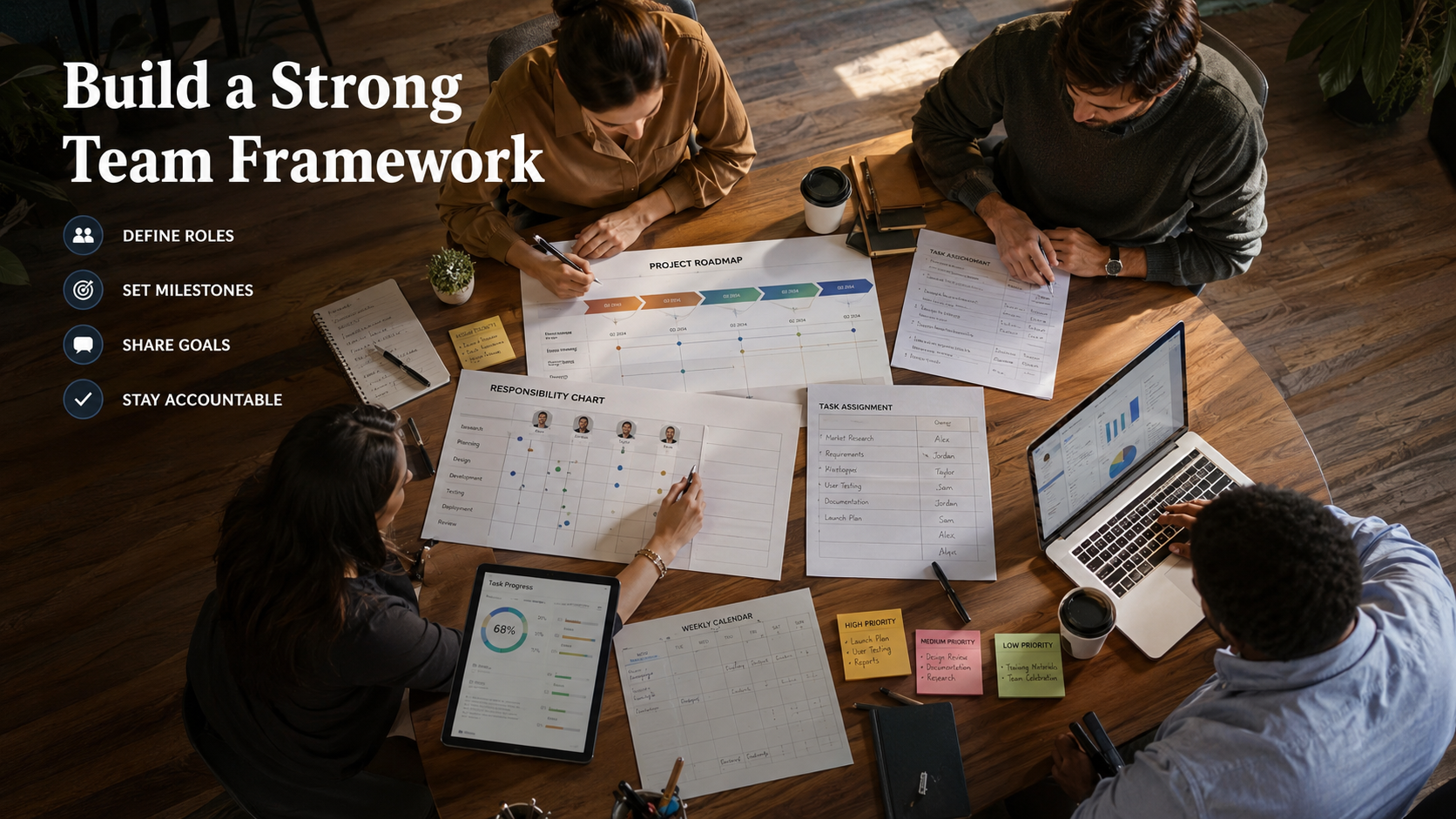
Successful group work is built on trust, clear communication, shared goals, and personal accountability. When team members understand a common objective, they can combine their individual strengths to achieve better results. A shared sense of purpose keeps everyone focused and reduces confusion throughout the project.
Open communication encourages collaboration by ensuring every member feels heard and respected. It also helps prevent misunderstandings before they become larger problems. Setting clear expectations from the beginning allows each person to understand their responsibilities and deadlines.
Another essential factor is psychological safety. Team members should feel comfortable sharing ideas, asking questions, and learning from mistakes without fear of criticism. When leadership is collaborative and everyone accepts responsibility for their contributions, groups become more productive, creative, and successful.
Establishing Clear Shared Goals and Trust
Clear goals and mutual trust are the foundation of effective teamwork. Every team member should understand the project’s purpose, expected outcomes, and individual responsibilities. Shared objectives help align everyone’s efforts and reduce unnecessary conflicts during the project.
Trust encourages open communication and stronger collaboration. When people believe in each other’s abilities, they are more willing to share ideas, ask for support, and provide constructive feedback. This creates a positive working environment where everyone feels valued.
Building trust takes consistent communication, reliability, and respect. Following through on commitments and supporting teammates strengthens relationships over time. When combined with clearly defined goals, trust improves decision-making, increases motivation, and helps teams overcome challenges more effectively.
How to Make Group Work Work?
Making group work successful requires planning, organization, and consistent communication. Start by assigning responsibilities according to each member’s strengths, skills, and experience. Clear role distribution reduces duplication of effort and helps everyone contribute more effectively.
Use project management tools to organize tasks, monitor deadlines, and share important documents. Regular meetings or progress updates help identify challenges early and keep everyone informed about the project’s status. Small adjustments made throughout the project prevent minor issues from becoming major obstacles.
Recognizing achievements along the way also improves motivation. Celebrating completed milestones encourages teamwork and maintains momentum. Combining structured planning with flexibility allows groups to adapt to changing requirements while continuing to work toward shared goals.
Leveraging Digital Tools for Seamless Coordination
Modern digital tools make group work more organized and efficient. Project management platforms, shared calendars, cloud storage, and collaborative documents allow team members to communicate and work together from any location. These tools also improve transparency by keeping project information in one place.
Task management software helps assign responsibilities, track deadlines, and monitor progress without constant follow-up. Shared documents reduce version control issues and ensure everyone works with the latest information.
Choosing the right collaboration tools saves time, minimizes confusion, and improves accountability. When used effectively, technology supports better communication and enables teams to complete projects more efficiently.
How to Make a Group Work Effective?
An effective group continually evaluates its performance and looks for ways to improve. Teams perform better when meetings have clear agendas, defined objectives, and reasonable time limits. Focused discussions help members make decisions efficiently and avoid unnecessary delays.
Encouraging different viewpoints leads to stronger problem-solving and more creative solutions. Diverse perspectives help teams evaluate ideas from multiple angles and reduce the risk of groupthink.
Regular feedback also strengthens team performance. Reviewing completed work, discussing challenges, and identifying opportunities for improvement helps groups refine their processes. Continuous learning enables teams to become more efficient and successful over time.
Fostering Constructive Feedback and Continuous Improvement
Constructive feedback is essential for long-term team success. Team members should feel comfortable giving and receiving respectful suggestions that improve both individual performance and overall collaboration. Honest communication helps identify problems before they affect project outcomes.
Feedback should focus on solutions rather than criticism. Recognizing achievements while discussing areas for improvement creates a supportive environment that encourages learning and professional growth.
Teams that regularly review their performance adapt more quickly to new challenges. A culture of continuous improvement promotes innovation, strengthens collaboration, and helps future projects run more smoothly.
What Are the 7 Tips for Successful Group Work Participation?
Successful group work participation depends on communication, responsibility, and teamwork. Developing positive collaboration habits helps individuals contribute effectively while supporting the group’s overall success.
The seven tips for successful group work participation are:
- Communicate openly and regularly
- Meet deadlines consistently
- Practice active listening
- Take responsibility for assigned tasks
- Remain flexible during changes
- Support teammates when needed
- Contribute meaningful ideas during discussions
Following these habits builds trust, improves productivity, and creates a positive team environment. Strong participation benefits both individual performance and the overall quality of the group’s work.
Cultivating Active Listening and Mutual Accountability
Active listening strengthens collaboration by helping team members understand different perspectives before responding. Listening carefully reduces misunderstandings and encourages more thoughtful discussions. It also helps build trust by showing respect for every participant’s ideas.
Mutual accountability ensures that everyone contributes fairly to the group’s success. Completing assigned tasks on time and communicating openly about progress keeps projects moving forward.
When active listening and accountability become part of a team’s culture, collaboration improves naturally. These habits strengthen relationships, increase productivity, and help groups achieve shared goals more effectively.
What Are the 5 C’s of Classroom Management?
The 5 C’s of classroom management are Clarity, Consistency, Care, Communication, and Control. Together, these principles create a structured learning environment where students understand expectations and feel supported throughout collaborative activities.
Clarity ensures rules, instructions, and learning goals are explained before group work begins. Consistency means expectations are enforced fairly for every student, building trust and predictable routines. Care focuses on creating a supportive classroom where students feel comfortable sharing ideas and taking academic risks. Communication encourages active listening, respectful discussions, and open dialogue between teachers and students. Finally, Control involves maintaining an organized classroom, managing transitions effectively, and guiding behavior without relying on harsh disciplinary measures. Applying these principles consistently helps teachers create an environment where teamwork, participation, and meaningful learning can thrive.
Applying the 5 C’s During Group Projects
The 5 C’s become even more valuable during collaborative learning activities. Begin by explaining expectations, success criteria, and group responsibilities before students form teams. Clear communication reduces confusion and helps everyone start with confidence.
Maintain consistent expectations for time management, classroom behavior, and participation throughout the project. Show genuine care by encouraging quieter students and recognizing everyone’s contributions. Calm classroom control keeps discussions productive without limiting creativity. When these five principles work together, students collaborate more effectively, resolve challenges respectfully, and remain focused on achieving shared learning goals while developing stronger teamwork and communication skills.
What Are the 4 Group Roles?
The four essential group roles are Leader, Recorder, Timekeeper, and Presenter. Each role supports effective collaboration and helps distribute responsibilities evenly among team members.
The Leader guides discussions, keeps the group focused, and encourages equal participation. The Recorder documents important ideas, organizes notes, and tracks completed tasks. The Timekeeper monitors deadlines, manages the schedule, and ensures activities stay on track. The Presenter organizes the group’s final work and communicates it clearly to classmates or teachers.
Assigning these roles helps prevent confusion, encourages accountability, and allows every student to contribute meaningfully. Rotating responsibilities across different projects ensures students gain experience in leadership, organization, communication, and presentation. Over time, this balanced approach develops confidence, adaptability, and stronger collaboration skills that benefit students in both academic and real-world settings.
Rotating Roles to Build Well-Rounded Skills
Students should not remain in the same role for every project. Regularly rotating responsibilities allows everyone to develop a broader range of academic and interpersonal skills. It also prevents students from becoming dependent on a single task or leadership position.
For example, quieter students gain confidence when leading discussions or presenting results, while confident leaders improve their listening and organizational abilities by serving as recorders or timekeepers. Rotating roles also promotes empathy because students experience different responsibilities and challenges within a team. Over time, this practice creates balanced, adaptable learners who can contribute effectively in different situations and collaborate successfully with a variety of classmates.
What Are the 10 Principles of Group Work?
The 10 principles of group work are positive interdependence, individual accountability, equal participation, face-to-face interaction, social skill development, clear goal setting, reflective evaluation, group processing, flexible grouping, and active facilitator guidance.
Positive interdependence encourages students to rely on one another to achieve shared objectives. Individual accountability ensures every member contributes fairly. Equal participation gives everyone an opportunity to share ideas, while face-to-face interaction strengthens communication and teamwork. Social skill development promotes active listening, respectful discussion, and constructive conflict resolution. Clear goals keep the team focused throughout the project. Reflective evaluation and group processing encourage students to review their performance and identify improvements. Flexible grouping exposes learners to different perspectives, while active teacher guidance provides timely support. Together, these principles create structured, engaging, and highly effective collaborative learning experiences.
Implementing Core Principles for Maximum Success
Applying these group work principles consistently helps transform classroom collaboration into meaningful learning experiences. Begin by emphasizing positive interdependence so students understand they succeed together rather than individually. Pair this with individual accountability to ensure every learner remains actively involved throughout the project.
Teachers should observe group interactions, provide constructive feedback, and address challenges before they affect progress. Encourage students to reflect on their communication, teamwork, and problem-solving strategies after completing each activity. Reflection helps groups recognize strengths, improve weak areas, and develop more effective collaboration techniques. When these principles become part of regular classroom practice, participation increases, conflicts decrease, and students develop stronger academic, social, and leadership skills that extend beyond the classroom.
Frequently Asked Questions
What is the primary cause of group work failure?
The most common cause of group work failure is a lack of structure and unclear expectations. Without defined roles, clear objectives, and accountability, some students dominate discussions while others contribute very little. Teachers can prevent this by assigning responsibilities, setting measurable goals, and monitoring progress throughout the project. Regular feedback and individual assessments also encourage balanced participation and improve collaboration.
How big should student groups ideally be?
The ideal group size is generally three to four students. Smaller groups encourage active participation because every member has more opportunities to contribute. They also make communication and decision-making easier. Groups larger than five often experience coordination problems, unequal participation, and increased social loafing, making collaborative learning less effective.
How do you handle a group member who does not contribute?
Address participation issues as early as possible through private conversations to identify any underlying challenges. Reinforce expectations using individual project logs, role-specific responsibilities, and peer evaluations. Timely teacher support helps resolve conflicts before they affect the group’s progress. Clear accountability encourages every student to participate more consistently and confidently.
How should teachers grade group work fairly?
Teachers should combine a group grade with individual assessments to evaluate collaborative projects fairly. Individual performance can be measured through peer reviews, self-reflections, assigned responsibilities, and project documentation. This balanced grading approach rewards effective teamwork while ensuring each student’s effort is accurately recognized, creating a fair and motivating assessment system.
Conclusion
Mastering how to make group work work takes time, patience, and practice. You cannot expect a team to function perfectly on the first day. However, by applying the right frameworks, you can dramatically improve your team’s collaborative efforts. Focus on building a foundation of trust and accountability from the very beginning.
Remember that clear communication solves most team problems. Establish designated roles so everyone understands their daily responsibilities. Use project milestones to track progress and keep motivation high. Finally, equip your team with modern collaborative tools to streamline their workflow and eliminate unnecessary friction.
Group projects do not have to be a source of stress. When managed correctly, they become an incredible driver of innovation and efficiency. To stay organized and maximize your team’s performance, it’s also worth exploring different productivity systems for students that can help improve time management, collaboration, and task completion. Start implementing these strategies in your next project. Set clear expectations, listen to your colleagues, and address conflicts early. By taking these proactive steps, you will transform everyday group assignments into highly successful, rewarding team achievements.