
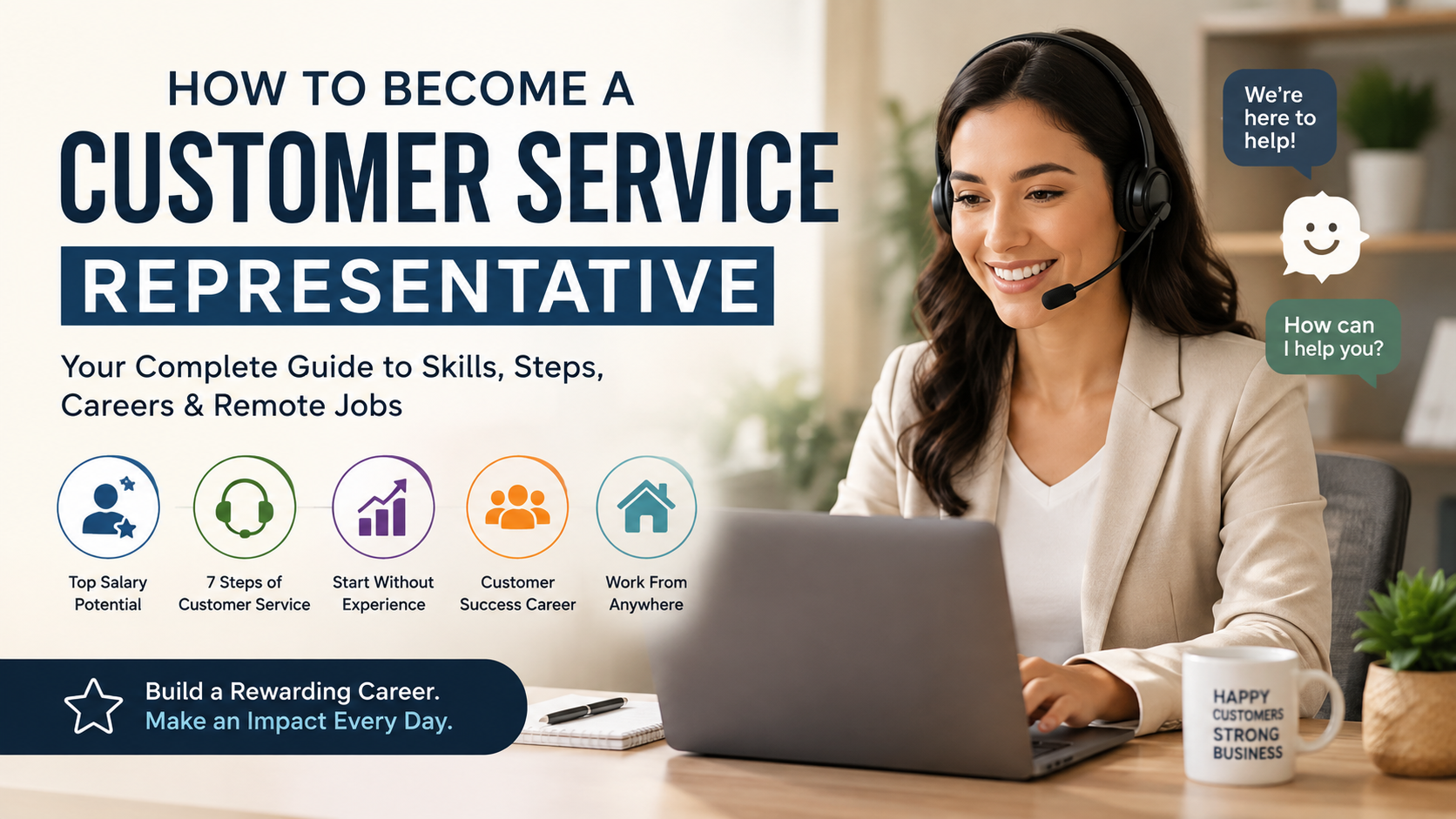
How to Become a Customer Service Representative
Embarking on a career path as a customer service representative is an exciting move for anyone who loves helping people and solving problems. If you want to know how to become a customer service representative, you are stepping into a dynamic field with immense growth potential. Companies across every industry rely on dedicated support professionals to keep clients happy and loyal. According to the Bureau of Labor Statistics, customer service professionals play a critical role in modern business operations. This comprehensive guide answers your most pressing questions. We explore the highest salary potential, the seven core steps of service, breaking into the industry without prior experience, starting a career in customer success, identifying key customer qualities, and finding remote support jobs. Let us dive right in and explore everything you need to know to launch your rewarding support career today.
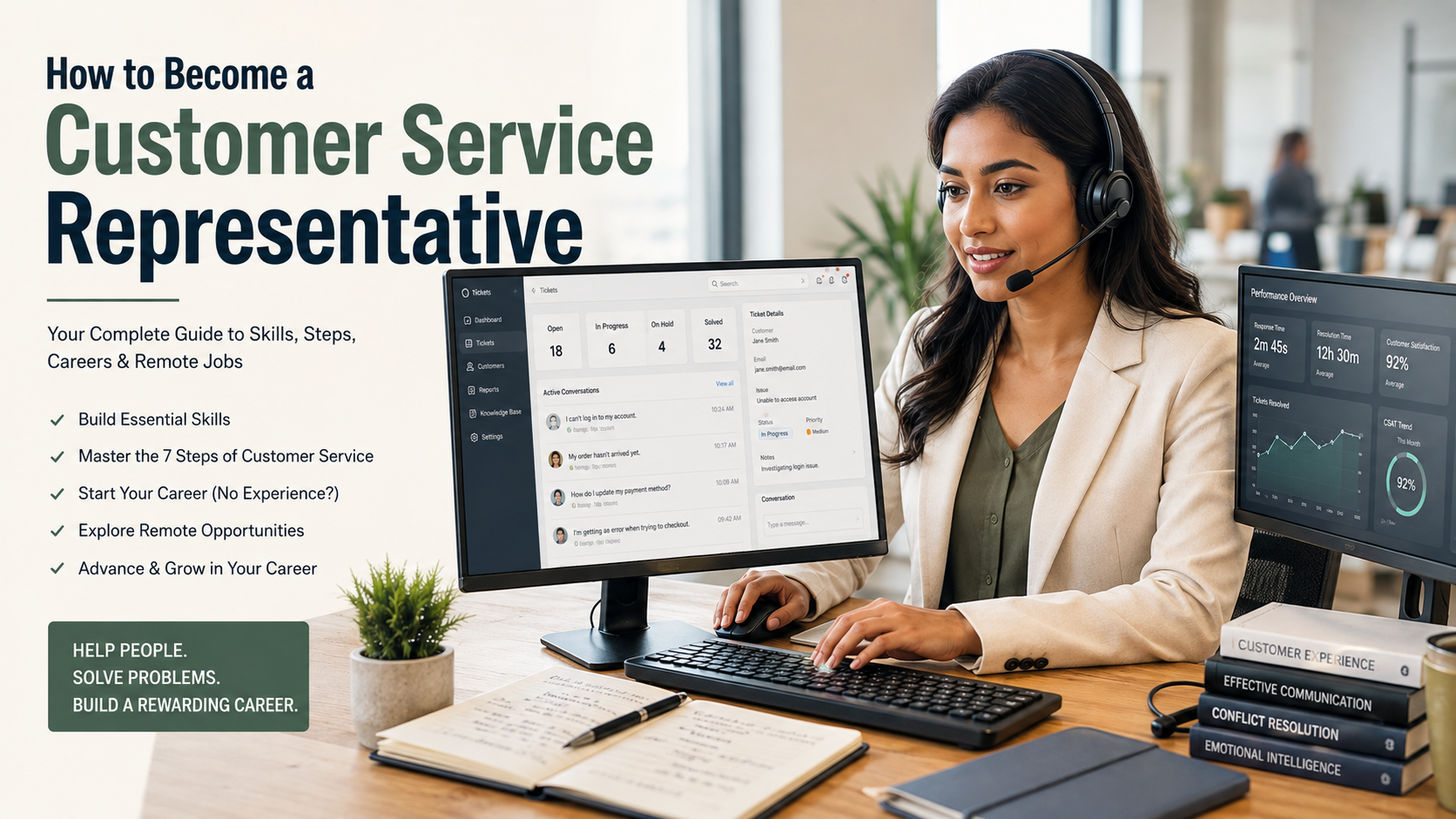

What Is the Highest Salary for a Customer Service Representative?
The salary of a customer service representative varies based on location, industry, experience, and specialization. Entry-level roles often start near minimum wage, while experienced professionals can earn considerably more. Industries such as technology, finance, and healthcare often provide stronger compensation than general customer support roles.
Your earning potential can also increase when you move beyond standard agent responsibilities. Team leader, supervisor, customer success, and customer service management positions typically offer higher salaries. Specialized technical support roles can also provide better compensation because they require deeper product and technical knowledge.
Multilingual abilities can further improve your opportunities. Companies may pay more for representatives who can support customers across different regions. Strong conflict resolution and communication skills also help experienced representatives advance, especially in jobs that require strong communication skills.
To maximize your earnings, focus on developing technical expertise, industry knowledge, and leadership skills. These capabilities can help you qualify for senior positions and negotiate better compensation.
Maximizing Earnings in Tech Support
Technical support can provide some of the strongest earning opportunities within customer service. Software companies often need representatives who can troubleshoot complex products and resolve escalated technical issues.
Mastering ticketing systems, software platforms, troubleshooting methods, and product documentation can make you more valuable. Advanced technical knowledge allows you to handle problems that general customer service agents cannot solve independently.
Some technology companies also offer bonuses, commissions, or stock-based compensation. However, these benefits vary significantly between employers and locations.
If you want to increase your income, consider building skills in areas such as:
- Software troubleshooting
- CRM and ticketing platforms
- Technical documentation
- Product knowledge
- Data analysis
- Escalation management
These skills can help you move from general customer support into technical support specialist or senior support roles.
What Are the 7 Steps of Customer Service?
The seven steps of customer service provide a practical framework for handling customer interactions from beginning to end. They help representatives remain professional while solving problems efficiently.
The first step is to greet the customer and create a positive opening. Second, listen carefully to understand the customer’s concern. Third, acknowledge the customer’s feelings and demonstrate empathy.
Fourth, investigate the problem and identify its underlying cause. Fifth, explain a suitable solution clearly and confirm that the customer understands it. Sixth, take action and resolve the issue as efficiently as possible.
Finally, follow up when appropriate to confirm that the solution worked. This final step can improve customer satisfaction and prevent recurring problems.
These steps are not a rigid script. Instead, they provide a useful structure for maintaining consistency during different types of customer interactions.

The Power of Active Listening
Active listening is one of the most important customer service skills. Customers often become frustrated when they feel ignored or misunderstood.
Allow the customer to explain the problem without unnecessary interruptions. Pay attention to both their words and the underlying concern. Asking relevant follow-up questions can help you identify the actual issue.
You can also summarize the customer’s explanation before suggesting a solution. This confirms that you understood the situation correctly.
For example, saying, “So the main issue is that your payment was processed, but the order was not confirmed,” shows that you listened carefully.
Active listening also helps reduce tension during difficult conversations. Customers are more likely to cooperate when they feel heard and respected.
For anyone learning how to become a customer service representative, developing this skill early can make interviews and real customer interactions much easier.
How to Get Into Customer Service Without Experience?
You do not need years of professional experience to start a customer service career. Many entry-level employers focus on communication, patience, reliability, and problem-solving skills.
Start by identifying transferable skills from your previous experiences. Retail, hospitality, education, volunteering, college projects, and other activities can demonstrate useful customer service abilities.
Your resume should highlight situations where you helped people, solved problems, handled complaints, managed deadlines, or worked as part of a team. Avoid simply listing generic qualities. Show how you used those skills in real situations.
You can also complete beginner-friendly online customer service courses. Learning the basics of CRM platforms, ticketing systems, professional communication, and customer support can demonstrate initiative. As you gain experience, upskilling and reskilling can help you qualify for more advanced roles.
When applying for jobs, customize your resume for each position. Use relevant terms from the job description without forcing keywords into your application.
Entry-level positions such as customer service representative, support agent, call center representative, and help desk associate can provide practical experience and create opportunities for advancement.
Leveraging Transferable Skills Effectively
Your previous job does not have to involve customer service directly. Employers often value experiences that demonstrate patience, communication, organization, and problem-solving.
For example, retail work can demonstrate your ability to handle customer questions and complaints. Hospitality experience can show that you remain professional during busy periods. School projects can demonstrate teamwork and communication.
Focus on specific situations rather than vague claims. Instead of saying you are “good with people,” explain how you handled a difficult customer or solved a problem under pressure.
Useful transferable skills include:
- Active listening
- Verbal and written communication
- Conflict resolution
- Time management
- Problem-solving
- Teamwork
- Attention to detail
Presenting these skills clearly can strengthen your resume even when you have limited professional experience.
How to Start a Career in Customer Success?
Customer success differs from traditional customer service because it focuses more on long-term customer outcomes. Support teams often respond to problems, while customer success teams work proactively to help clients achieve their goals.
A strong starting point is to understand traditional customer support first. Learn how customers use products, why problems occur, and how effective support influences retention.
Next, develop basic knowledge of customer relationship management software and customer data. Understanding metrics such as product usage, customer retention, renewals, and churn can help you understand the broader customer journey.
Communication remains essential. Customer success professionals often conduct meetings, explain product features, identify risks, and build relationships with clients.
Networking can also help you understand the profession. Connect with customer success professionals and study current job descriptions to identify commonly requested skills.
Certifications can support your learning, but practical knowledge matters more than collecting certificates. Focus on developing skills that help customers achieve measurable results.
Transitioning From Support to Success
Moving from customer support to customer success requires a change in mindset. Support usually focuses on resolving immediate customer problems. Customer success focuses on helping customers achieve long-term value.
Instead of measuring success only by closed tickets, customer success teams may track product adoption, retention, renewals, and customer satisfaction.
Support experience can provide a useful foundation for this transition. You already understand common customer problems and the challenges users face with products.
To prepare for a customer success role, learn how to identify customer goals and recognize signs of dissatisfaction. Practice explaining how a product can help customers achieve specific outcomes.
You should also become comfortable discussing customer data. Basic knowledge of CRM systems and customer health metrics can make your experience more relevant.
This transition can open paths toward roles such as Customer Success Associate, Customer Success Manager, Account Manager, or Implementation Specialist.
What Are the 7 Qualities of a Good Customer?
A good customer can make service interactions more productive, although customer behavior varies from person to person. Seven qualities are particularly helpful during customer service interactions.
First, good customers communicate their needs clearly. Second, they remain patient when representatives need time to investigate complex problems. Third, they treat support professionals with respect and courtesy.
Fourth, they remain open to reasonable solutions. Fifth, they provide constructive feedback instead of responding only with anger. Sixth, they take responsibility for relevant account information and settings when necessary.
Seventh, they recognize helpful service and show appreciation when a representative resolves their concern.
Customer service representatives cannot control every customer interaction. However, understanding these qualities can help agents recognize behaviors that encourage productive conversations.
The goal is not to expect every customer to behave perfectly. Instead, representatives should remain professional while encouraging clear communication, mutual respect, and practical problem-solving throughout the interaction.
Fostering Positive Client Relationships
Positive customer relationships depend on more than simply solving problems quickly. Customers also want to feel respected, understood, and taken seriously.
Representatives can encourage better interactions by communicating clearly and avoiding defensive language. A calm explanation can often prevent a disagreement from becoming a larger escalation.
Empathy is particularly useful when customers are frustrated. You do not have to agree with every complaint to acknowledge the customer’s experience.
For example, recognizing that a delayed order caused inconvenience shows understanding without accepting blame unnecessarily.
Clear expectations also improve relationships. Explain what you can do, what you cannot do, and when the customer should expect an update.
Over time, these habits can create more productive interactions and reduce unnecessary conflict. They also help representatives maintain professionalism during stressful conversations.
Strong relationship-building skills are valuable for anyone learning how to become a customer service representative, especially when the role involves frequent calls, complaints, or escalations.
How to Become a Customer Service Representative From Home
Learning how to become a customer service representative from home requires both customer service skills and reliable technology. Remote support roles have become more common across many industries, although requirements vary by employer.
Start by creating a quiet, dedicated workspace. Your environment should allow you to take calls without frequent background interruptions.
You will usually need a reliable computer and stable high-speed internet. Some employers may require an Ethernet connection, specific operating systems, or approved security software.
A professional headset can improve call quality and reduce distractions.
You should also become comfortable using video conferencing, CRM systems, email, chat platforms, and ticketing software. Understanding AI chatbots and business automation can also help you adapt to the technology increasingly used in modern customer support.
When searching for remote positions, look specifically for remote customer service representative and work-from-home support roles. Read each job description carefully because equipment and schedule requirements differ.
During remote interviews, demonstrate strong communication, self-discipline, time management, and problem-solving skills. Employers need confidence that you can work independently while maintaining consistent service quality.
Setting Up Your Home Office
A suitable home office can make remote customer service work more comfortable and productive. Start with a quiet area where you can focus without regular household interruptions.
A reliable internet connection is essential. If your employer supports it, a wired Ethernet connection can provide more consistent connectivity than Wi-Fi.
Your computer should handle the company’s required applications without performance problems. A professional headset can also improve audio quality during customer calls. If you are considering new equipment or software, learning how to evaluate new technology before you buy can help you avoid unnecessary upgrades.
An ergonomic chair and properly positioned desk can make long working sessions more comfortable. You do not necessarily need expensive equipment. Prioritize reliability and comfort over unnecessary upgrades.
Useful equipment may include:
- Reliable computer
- Stable internet connection
- USB or compatible headset
- Comfortable desk and chair
- External monitor
- Backup internet option
Keep your workspace organized and free from unnecessary distractions. A professional setup can help you communicate clearly and maintain focus throughout your shift.
For anyone exploring how to become a customer service representative, preparing your home workspace is an important practical step toward succeeding in a remote role.
Frequently Asked Questions
What qualifications do you need to be a customer service representative?
Most entry-level support roles require at least a high school diploma or equivalent qualification. Employers primarily look for strong verbal and written communication skills, basic computer literacy, and typing proficiency. Having patience, empathy, and emotional intelligence matters far more than holding an advanced university degree in this field.
Is customer service a stressful job?
Support roles can sometimes feel stressful due to dealing with upset clients and managing high call volumes. However, developing strong emotional resilience and stress-management techniques makes the role highly manageable. Many professionals find immense fulfillment in successfully resolving tricky problems and making someone’s day much better.
What software do customer service reps use daily?
Agents rely heavily on customer relationship management platforms and ticketing systems to track client issues. Popular tools include Zendesk, Salesforce Service Cloud, Freshdesk, and Intercom. Additionally, you will use live chat widgets, internal messaging apps like Slack, and Voice over IP phone systems to communicate.
Can you advance your career in customer service?
Yes, customer service offers fantastic pathways for upward mobility into leadership and specialized corporate roles. Successful agents frequently promote to team lead, customer support manager, quality assurance specialist, or customer success manager positions. Developing leadership skills opens doors to executive management over time.
Conclusion
Mastering how to become a customer service representative opens the door to a dynamic, people-centric career path with incredible growth potential. Throughout this guide, we explored competitive salary expectations, the foundational seven steps of service, and actionable ways to break into the industry without prior experience. We also looked at advancing into customer success, identifying positive client traits, and setting up a successful remote work environment from home. By applying these practical insights, you can position yourself as a top-tier candidate in today’s competitive job market. Take the first step today by updating your resume, refining your communication skills, and applying for roles that match your professional goals.