
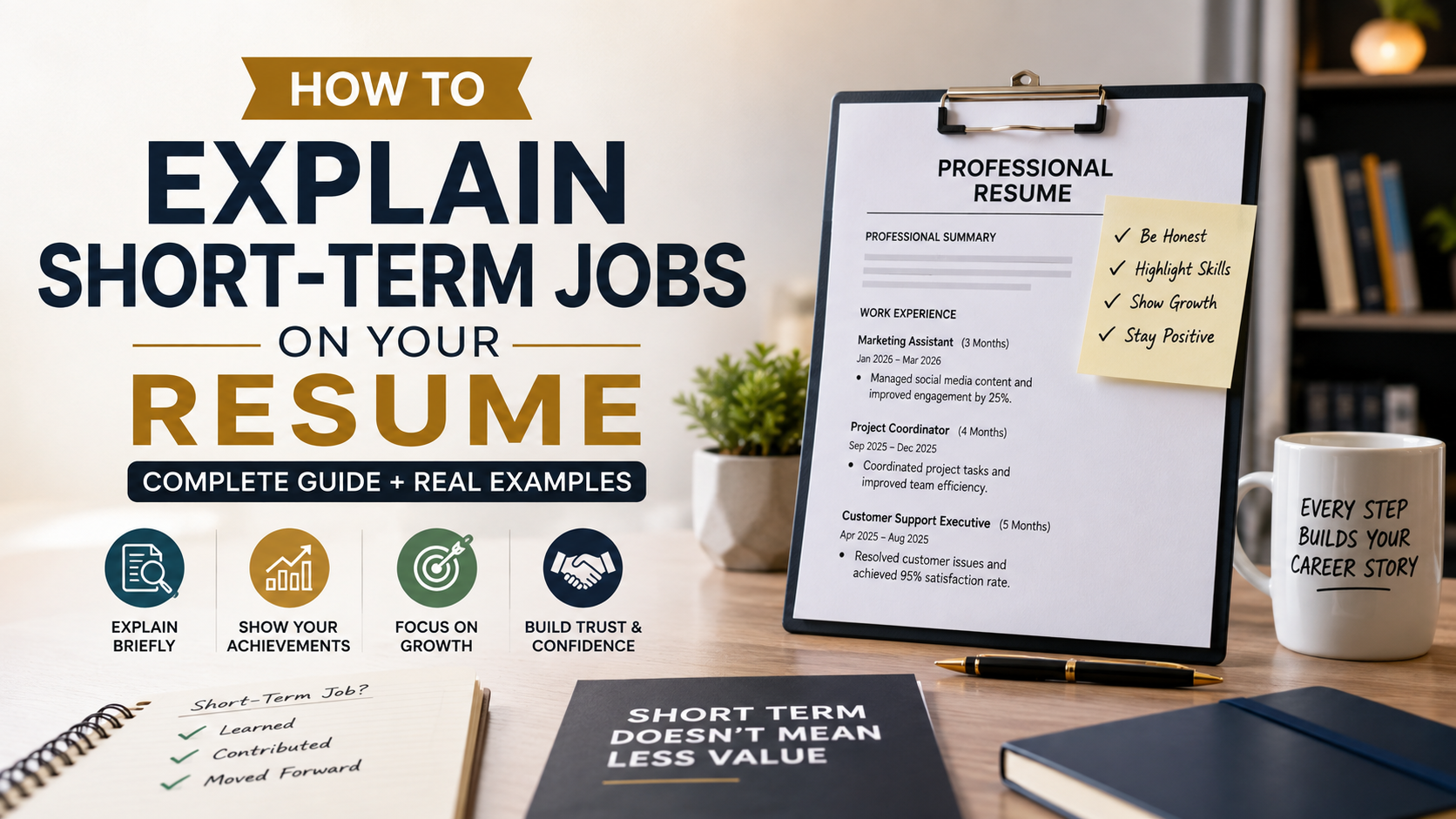
How Do I Explain Why I Left a Job After 3 Months?
Leaving a position after three months can raise questions during the hiring process. Employers may wonder whether you resigned unexpectedly or had problems with the company. Your explanation should therefore be brief, factual, and professional. For more guidance, see how to explain employment gaps in an interview successfully.
Start by giving the actual reason without criticizing your former employer. If the company restructured, budgets changed, or the position was eliminated, state that clearly. If the role differed significantly from what you were promised, explain the mismatch without assigning blame.
For example, you could say, “The position changed significantly after I joined, so I decided to pursue a role that better matched my experience and long-term goals.” This answer provides context without sounding negative.
You should also mention something valuable from the experience. Discuss a skill, project, or achievement you gained during those three months.
Most importantly, focus on your current goals. Show that the short tenure was an isolated situation rather than a pattern.
Focusing on Cultural or Role Misalignment
Sometimes a short-term job ends because the actual role does not match the original description. The company may have different priorities, responsibilities, or working practices than you expected. This situation does not need to become a negative story during an interview.
Explain the mismatch using neutral language. Avoid saying that the company was disorganized, dishonest, or difficult to work with. Instead, describe the difference between the expected role and the actual responsibilities.
For example, you might say, “After joining, I discovered that the position focused more heavily on sales than the technical work discussed during the hiring process.”
Then explain what you want in your next position. Mention the type of responsibilities where your skills can create stronger long-term value.
This approach shows self-awareness and professionalism. It also helps recruiters understand that you made a considered career decision.
Avoid using cultural or role misalignment as an excuse for every short position. If the same explanation appears repeatedly across your resume, employers may question your judgment. Use it only when it accurately describes what happened.
What Is an Example of Short-Term Work?
Short-term work generally refers to employment designed to last for a limited period. The exact duration varies by employer and industry. Some temporary positions last a few weeks, while others continue for several months. Understanding how temporary employment differs from permanent work can also help when comparing internships and full-time jobs.
Common examples include freelance projects, fixed-term contracts, seasonal jobs, temporary agency assignments, internships, and project-based consulting work. Covering another employee during parental leave can also qualify as short-term employment.
For example, a company might hire a digital marketer for four months to manage a holiday campaign. Once the campaign ends, the contract naturally finishes. The short duration does not indicate poor performance or job instability.
Another example could involve working as a temporary administrative assistant during a company’s busy season. A six-month contract can demonstrate your ability to learn quickly and perform under pressure.
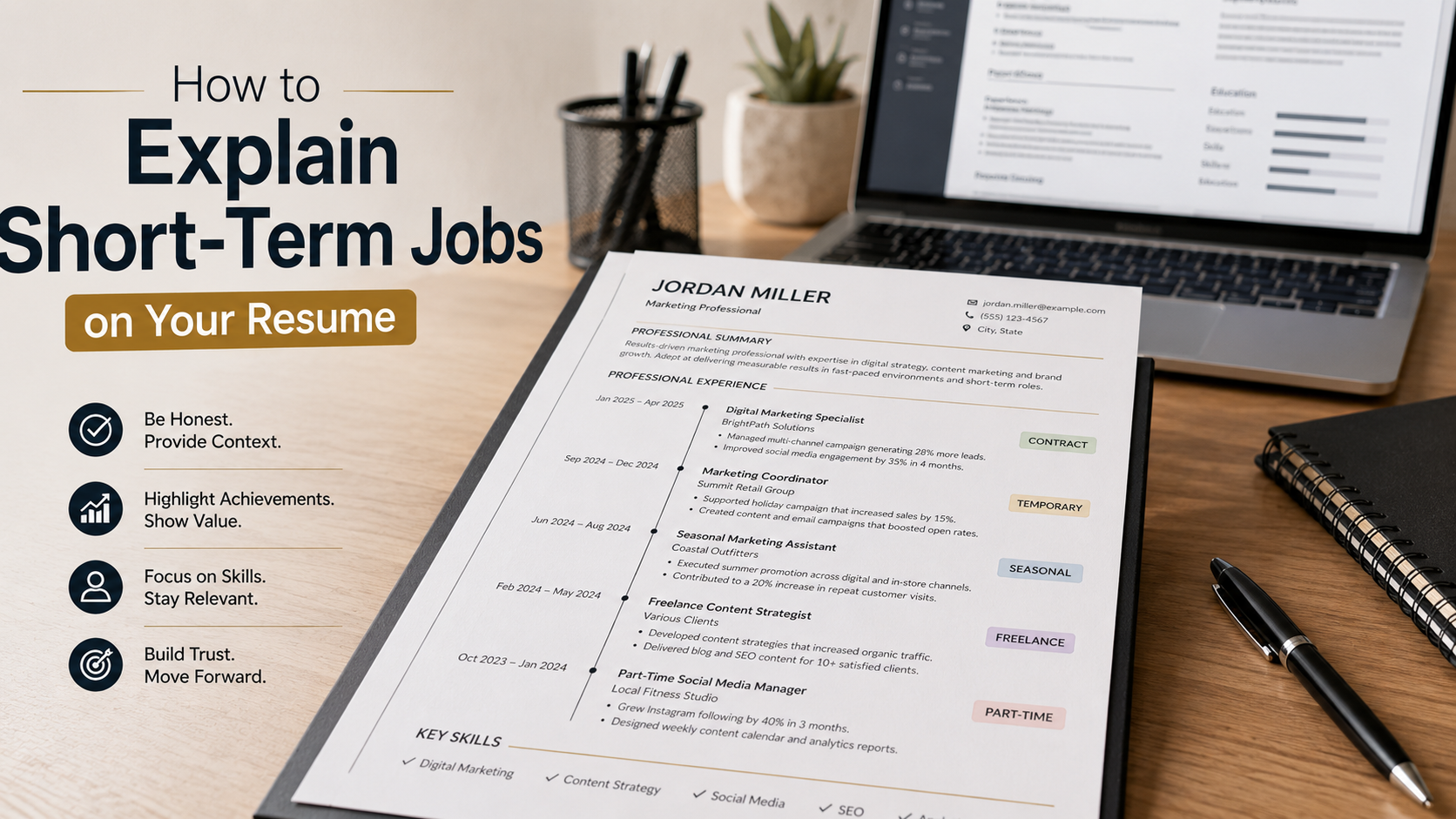
When listing these positions, clearly identify their temporary nature. Labels such as Contract, Temporary, Seasonal, or Freelance provide useful context.
Short-term employment can strengthen your resume when you connect each role to measurable achievements and relevant skills.
Recognizing Freelance and Contract Gigs
Freelance assignments and contract positions are common forms of short-term work. They can demonstrate independence, adaptability, client management, and the ability to deliver results without long-term supervision.
When adding these experiences to your resume, make their structure immediately clear. You can place Contract or Freelance beside the job title. Include the client or company name, dates, responsibilities, and major achievements.
For example:
Digital Marketing Specialist — Contract
ABC Company | January 2026–April 2026
- Managed a seasonal campaign across multiple digital channels.
- Increased qualified website traffic during the campaign period.
- Prepared weekly performance reports for management.
This format makes the short duration understandable before a recruiter forms an assumption.
If you completed several small freelance projects, consider grouping them under one heading. A unified Freelance Consultant entry can make your experience easier to scan.
Do not exaggerate freelance work to make it appear longer. Accurate dates build credibility and make your professional history easier to verify.
How Do You Explain a Short-Term Job?
Explaining a short-term job requires a balance between transparency and brevity. Recruiters usually do not need a detailed personal history. They need enough information to understand why the position ended. These principles also fit into broader resume and interview tips for beginners when preparing for the hiring process.
Start by identifying the nature of the position. Add Temporary, Contract, Seasonal, or another accurate label beside the job title when appropriate.
During an interview, explain the reason in one or two sentences. Then connect the experience to something useful you gained. This keeps the conversation focused on your qualifications rather than the short tenure.
For example, you could say, “It was a six-month contract created for a specific software migration project. I helped complete the migration and strengthened my project coordination skills.”
If the position ended unexpectedly, explain the situation honestly. Avoid blaming your manager or former colleagues. Recruiters generally respond better to calm, factual explanations.
Practice your answer before interviews. Your goal is to sound prepared rather than rehearsed.
Do not apologize repeatedly for a short position. A brief job becomes more concerning when you appear uncomfortable discussing it. Confidence comes from presenting the facts clearly and moving toward your future goals.

Utilizing Parenthetical Labels for Clarity
Simple labels can provide valuable context on a resume. Adding (Contract), (Temporary), or (Seasonal) beside a job title tells recruiters why the position lasted for a limited period. Clear labeling is also one way to avoid resume mistakes recruiters notice immediately.
For example:
Software Developer (Contract)
XYZ Technologies | March 2025–August 2025
This format immediately separates intentional short-term employment from unexplained job hopping. It also reduces the chance that recruiters will misunderstand your employment history during an initial screening.
Use labels only when they accurately describe the position. Do not add “Contract” simply to make a permanent job appear more intentional.
You can also include a short explanation within the first bullet point when useful. For example, write, “Hired for a six-month system migration project.” This gives recruiters context while keeping the resume concise.
These labels are particularly useful for freelance work, seasonal employment, fixed-term contracts, internships, and temporary assignments.
Clear formatting cannot replace a strong explanation. However, it can prevent unnecessary confusion before an interview begins.
Keep the design consistent across your resume. Recruiters should understand your employment timeline without having to search for explanations.
How Do I Add a Part-Time Job on My Resume?
A part-time job belongs on your resume when it supports your target position, demonstrates transferable skills, or fills an important period in your employment history. You do not need to hide a part-time position simply because you worked fewer hours.
Place the role in your main Work Experience section if it is relevant. Follow the same basic format used for full-time positions. Include the employer, job title, location, dates, and several achievement-focused bullet points.
You can add “Part-Time” beside the job title when the distinction provides useful context.
For example:
Customer Service Associate (Part-Time)
ABC Retail | June 2025–December 2025
- Assisted customers with product questions and purchases.
- Resolved service issues while maintaining positive customer relationships.
- Managed multiple customer requests during busy periods.
Focus on skills that transfer to your target role. These may include communication, teamwork, organization, problem-solving, customer service, or time management.
If the job is unrelated and you already have substantial relevant experience, you may leave it off. Resume space should support your current career objective.
Grouping Multiple Part-Time Roles Together
Several part-time jobs can make a resume look crowded when each position receives a separate entry. This becomes especially noticeable when you worked multiple freelance or temporary roles at the same time.
In that situation, consider grouping related work under a single heading. For example:
Freelance and Part-Time Experience
Various Clients | 2024–2026
Then list your strongest responsibilities and achievements beneath the heading.
This structure works particularly well for freelancers, consultants, tutors, designers, writers, developers, and other professionals who manage several small assignments.
However, do not group unrelated positions if doing so makes your experience unclear. A recruiter should still understand who employed you and what work you performed.
You can also group several assignments by function rather than by employer. For example, “Freelance Web Developer” can contain projects completed for multiple clients.
The goal is not to hide short-term work. The goal is to organize your experience clearly.
Use this approach when several brief roles represent a consistent pattern of intentional work. Keep individual entries when a particular employer or achievement is especially relevant to your target position.
How Do I Say I Left a Job for Personal Reasons?
You can explain leaving a job for personal reasons without revealing private details. Employers generally need to understand whether the situation affected your availability. They do not need your complete personal history. If the situation created a longer break between jobs, learn how to explain a gap year on your resume without oversharing.
Use a broad and truthful explanation. Depending on your situation, you might say that you left because of family responsibilities, relocation, or another personal matter.
For example, you could say, “I needed to step away from the position to handle an important family matter. The situation has now been resolved, and I am ready to focus fully on my next role.”
This answer provides enough context without oversharing sensitive information.
Avoid inventing a reason simply because it sounds more professional. Dishonesty can create bigger problems if an employer asks follow-up questions.
You also do not need to describe medical or family circumstances in detail. Keep the explanation focused on your availability and professional readiness.
After answering, redirect the conversation toward your skills and career goals. Explain why the new position interests you and how your experience matches its requirements.
A calm, concise explanation usually works better than a long defense of your decision.
Keeping Boundaries Firm and Professional
Personal circumstances can be difficult to discuss during a job interview. You can protect your privacy while still giving recruiters enough information to understand a career interruption. Preparing for other common questions can also help you approach the conversation with greater confidence, including top behavioral interview questions and answers.
Prepare a short statement before the interview. Keep it factual and avoid unnecessary details. For example, say, “I left the role to address a personal family matter. That situation has been resolved, and I am now available to commit fully to my career.”
If the interviewer asks for more information, you can politely maintain your boundary. You might say, “I prefer to keep the details private, but the situation is resolved and will not affect my ability to perform this role.”
Then move the conversation back to your qualifications. Discuss a recent project, relevant skill, or reason you are interested in the position.
This approach demonstrates professional judgment and confidence. You acknowledge the employment change without allowing personal information to dominate the interview.
Remember that your explanation should remain truthful. Avoid using vague personal reasons when a more accurate professional explanation exists.
Your objective is not to eliminate every question about a short-term job. Instead, provide enough context for the recruiter to understand your decision and evaluate your current suitability.
FREQUENTLY ASKED QUESTIONS
Should I Leave Short-Term Jobs Off My Resume Entirely?
Leaving Short-Term Jobs on Your Resume off completely can create larger questions if the omission produces an unexplained employment gap. If a role lasted only a few weeks and offered little relevant experience, omitting it may be reasonable. However, keep positions that lasted several months or developed useful skills. Clearly label contract or temporary work to provide context and maintain credibility.
How Do I Handle Multiple Very Short Jobs in a Row?
If you have several Short-Term Jobs on Your Resume, consider grouping them under one Freelance, Contract, or Project-Based Work heading. This approach creates a cleaner employment history and prevents excessive job-by-job detail. Focus on the combined skills, achievements, and responsibilities across those assignments. Clearly explain that you intentionally pursued project-based opportunities rather than frequently changing permanent jobs.
Will Short-Term Jobs Ruin My Chances of Getting Hired?
Short-Term Jobs on Your Resume will not automatically hurt your chances of getting hired. Recruiters understand that contracts, seasonal positions, temporary assignments, and project work are common. The bigger concern is an unexplained pattern of frequent departures. Provide honest context for each brief role and emphasize measurable achievements. Show how these experiences prepared you for the specific position.
How Detailed Should My Job Descriptions Be for Brief Roles?
Descriptions for Short-Term Jobs on Your Resume should remain concise and focused on results. Include two or three bullet points that highlight your strongest contributions. Avoid listing routine responsibilities unless they directly relate to your target position. Emphasize measurable achievements, important skills, and tools you learned quickly. For brief employment, relevant impact matters more than extensive descriptions.
Conclusion
Mastering how to explain short-term jobs on your resume gives you a distinct competitive edge. Brief tenures no longer need to be stressful mysteries during your job search. By providing clear context, labeling contract work accurately, and maintaining professional boundaries regarding personal reasons, you control your narrative. Focus heavily on the transferable skills and valuable lessons gained from every professional experience. Apply these strategic insights to your resume today to showcase your adaptability. Step into your next interview with complete confidence, knowing your career story is cohesive, honest, and compelling.