
Envelope Budgeting Method: Is It Still Effective?
Managing personal finances often feels overwhelming with endless digital transactions and automated payments. Many people search for a reliable way to regain control over their spending habits and save more money. According to the Consumer Financial Protection Bureau, structured budgeting strategies significantly improve long-term financial stability and reduce household debt. The envelope budgeting method has stood the test of time as a tangible strategy for tracking expenses and curbing impulse purchases. This comprehensive guide answers the most important questions about the envelope budgeting method, exploring how the strategy functions in today’s digital economy, examining popular alternative money rules like the 70/20/10 framework, and reviewing which financial institutions and applications support modern cash tracking.

What Is the Envelope Method of Budgeting?
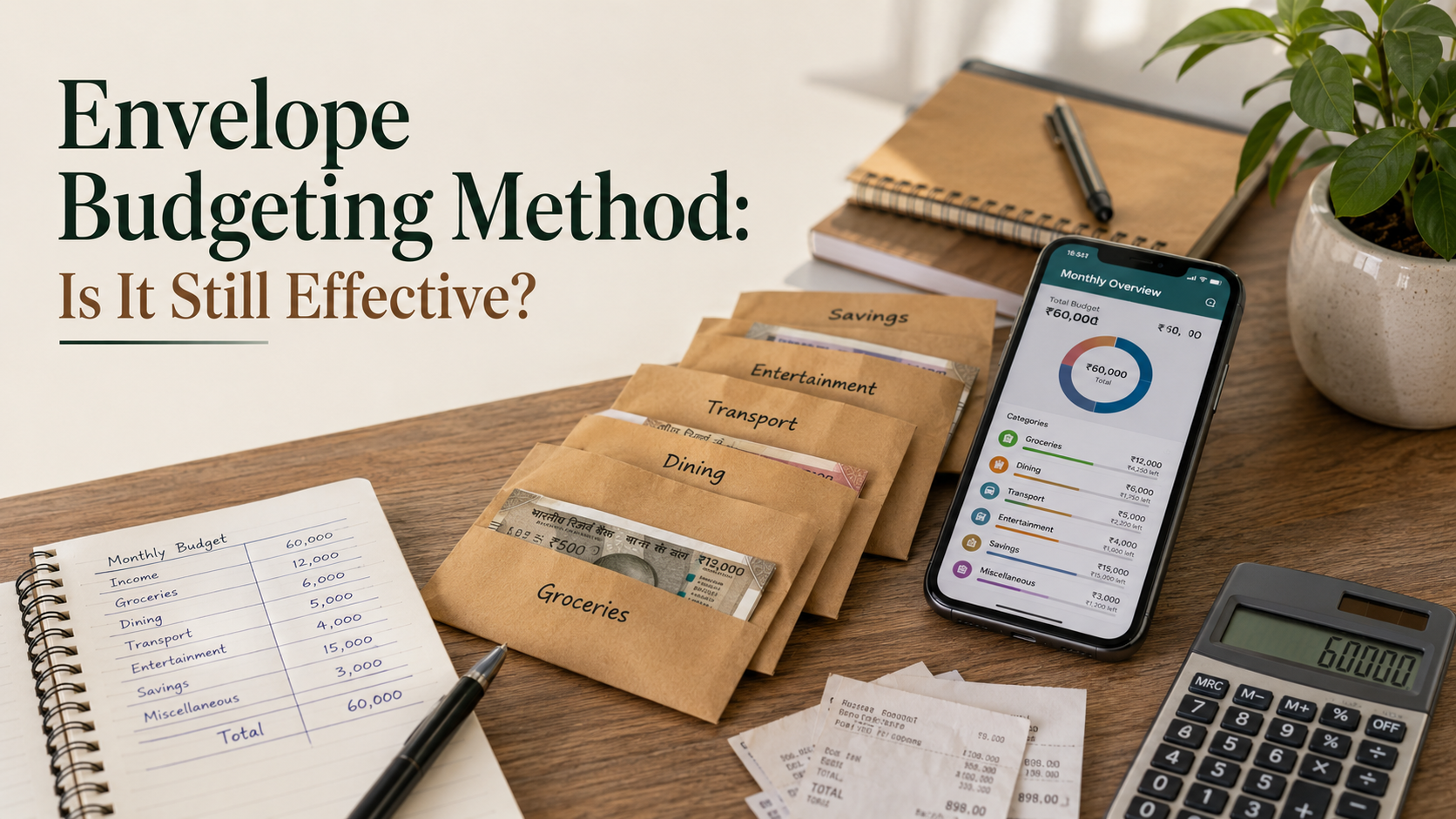
The envelope method of budgeting is a cash-management strategy that divides your income into specific spending categories. Each category receives a fixed amount based on your monthly budget. For a broader introduction to budgeting principles, see What Is Budgeting? A Beginner’s Guide to Managing Money.
Traditionally, you place physical cash into labeled envelopes for expenses such as groceries, entertainment, dining out, clothing, and transportation. You then spend only the money assigned to each category. When an envelope becomes empty, you stop spending in that category until the next budgeting period.
The method creates clear spending limits and makes your available money easier to understand. It can also reduce impulse spending because each purchase directly reduces the cash available for that category.
You normally pay fixed bills first, then allocate your remaining discretionary money. The system works best when your categories reflect your actual spending habits.
Unlike a general spending plan, the envelope system gives every category a defined limit. This makes overspending easier to identify before it becomes a problem.
The Psychology Behind Physical Cash Spending
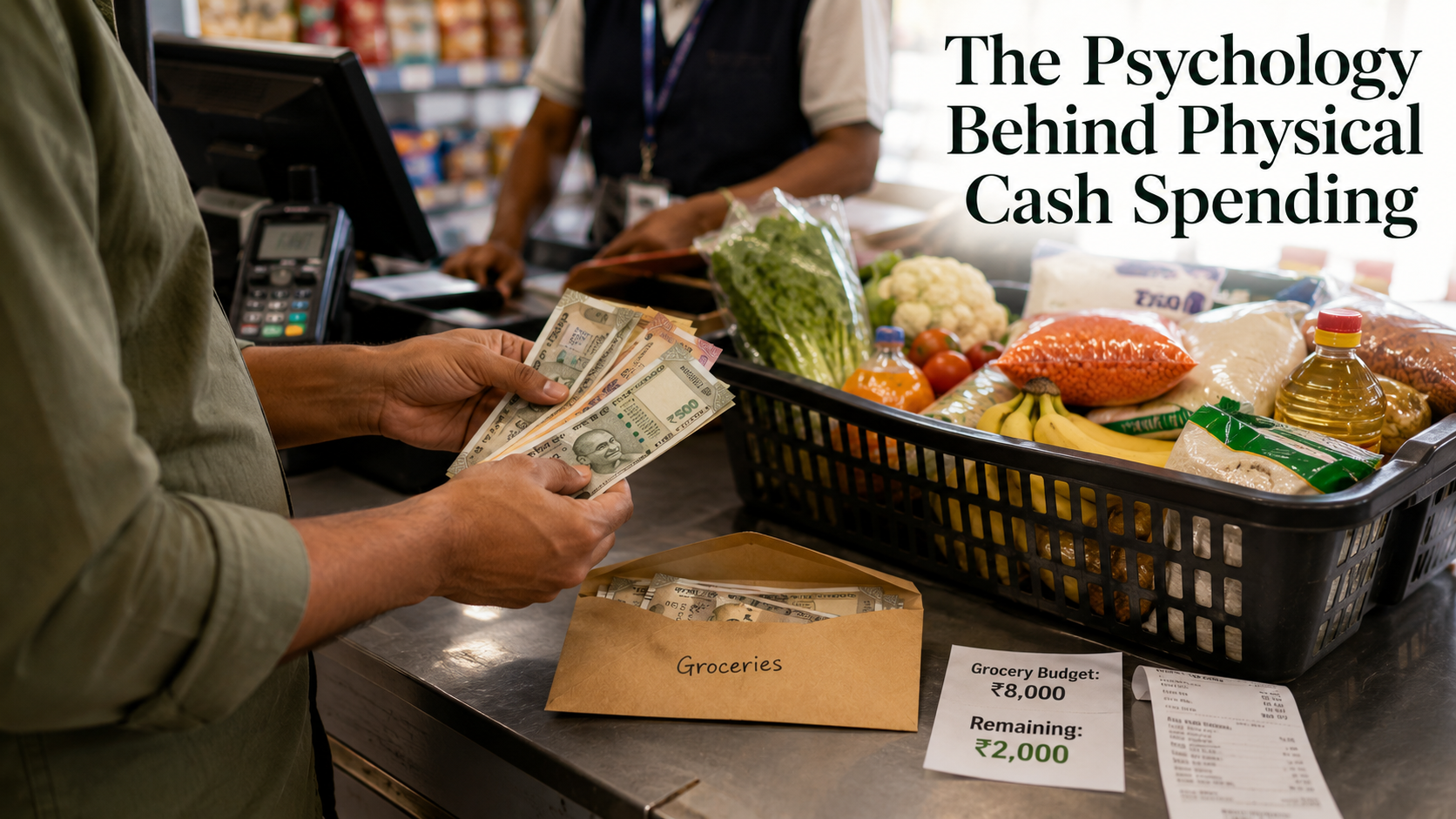
Physical cash can make spending feel more tangible because you can see your money leaving your hands. This is often called the pain of paying. Digital payments can feel less immediate because the money exists mainly as a number on a screen.
When you physically hand over cash, the transaction becomes more noticeable. That extra awareness may encourage you to pause before making an unnecessary purchase.
The effect is particularly useful for discretionary categories. These include dining out, entertainment, shopping, and other expenses that can easily exceed a planned budget. Learning to distinguish between essential purchases and discretionary spending can also help; Needs vs Wants: How to Spend Money Wisely explores this distinction in more detail.
However, cash is not automatically better for everyone. Some people manage money more effectively through banking apps and automatic transaction tracking.
The key benefit is the spending boundary. Physical envelopes make that boundary visible and immediate. Digital envelopes can create a similar structure when they clearly show how much remains in each category.
Does the Envelope System Really Work?
The envelope budgeting system can work well for people who frequently overspend in flexible categories. Its main advantage is simplicity. Instead of checking a large account balance, you can look at the amount remaining for a specific expense.
For example, suppose you allocate ₹8,000 for groceries. Once that category reaches zero, you know that your planned grocery budget has been used. This creates a clear decision point before you spend more.
The method can also help identify spending patterns. If you repeatedly run out of money for dining out, your budget may need adjustment.
However, the system is not automatically effective. It requires accurate category planning, regular reviews, and enough discipline to respect the limits. Physical cash can also become inconvenient for online purchases and recurring payments.
The best approach depends on your spending habits. People who need stronger spending boundaries may benefit from physical envelopes. Others may prefer digital tools that provide similar controls without requiring cash.
Overcoming the Inconveniences of Carrying Cash
Carrying cash can create practical problems. It may be inconvenient for online purchases, recurring subscriptions, large payments, and situations where merchants prefer digital transactions.
You can reduce these problems by keeping physical cash only for categories where you tend to overspend. For example, you might use envelopes for groceries, entertainment, and dining while paying fixed bills electronically.
You also do not need to carry every envelope with you. Keep the cash for less frequently used categories in a secure location at home. Take only the money needed for your planned errands.
Another option is to combine physical and digital budgeting. Use cash for discretionary spending and a bank account for fixed expenses.
Review your envelopes once a week. Check whether you are spending faster than expected and adjust future allocations when necessary.
The goal is not to make your finances unnecessarily complicated. The goal is to create spending limits that you can actually follow.
What Is the 70/20/10 Rule for Money?
The 70/20/10 rule is a percentage-based budgeting framework that divides monthly net income into three broad categories. Unlike envelope budgeting, it does not require you to assign a specific cash amount to every individual expense.
Under the version described here, 70% of income covers regular living expenses and everyday needs. This can include housing, utilities, groceries, transportation, insurance, and other essential costs.
Another 20% is directed toward financial priorities. These may include retirement contributions, emergency savings, or debt payments above required minimums.
The remaining 10% can support charitable giving, personal development, or discretionary spending, depending on your priorities.
The percentages are guidelines rather than universal rules. Your housing costs, debt obligations, income level, and financial goals may require different allocations.
For someone with variable expenses, percentage budgeting can provide a flexible starting point. You can calculate each category from your actual monthly income instead of rebuilding a fixed-dollar budget every time your earnings change.
Adapting Percentage Rules for Variable Income
Percentage-based budgeting can be useful when your income changes from month to month. Freelancers, commission-based workers, contractors, and business owners may find fixed monthly spending limits difficult to maintain.
Instead of assigning the same dollar amount every month, you can calculate your budget after receiving your income. The percentages then scale with your available money.
For example, a lower-income month produces smaller allocations. A stronger month produces larger allocations while maintaining the same general structure.
However, variable income requires another safeguard. Your essential expenses may not decrease as quickly as your income. Rent, insurance, and debt payments can remain fixed even during a weaker month.
For that reason, build an emergency fund before relying heavily on percentage rules. You can also calculate your essential monthly expenses and establish a minimum income threshold. For more guidance, How to Build an Emergency Fund: Risk, Returns & Liquidity explains how to approach this financial safety net.
The 70/20/10 framework should therefore serve as a starting point, not a rigid formula. Adjust the percentages when your financial circumstances require it.
Which Banks Offer the Envelope Budget System?
Most traditional banks do not provide literal physical budgeting envelopes. Instead, some banks and financial platforms offer digital features that divide money into categories.
For example, Ally Bank currently offers Spending Buckets within its Spending Account. Customers can allocate money toward expenses such as groceries, bills, and other planned spending. Ally also offers savings buckets for separate financial goals.
These features resemble digital envelopes because they organize money by purpose. However, they do not necessarily impose the same hard spending restriction as physical cash. Ally notes that transactions can still use available funds outside a particular bucket.
Qube Money also focuses on digital cash-envelope budgeting. Its current Qube+ product lets users organize money into Bills, Spend, and Goals categories while connecting existing financial accounts.
Before choosing a platform, check availability, fees, account requirements, transaction rules, and supported financial institutions.
Choosing the Right Feature Set for Your Needs
The best digital envelope system is not necessarily the one with the most features. It is the one that matches how you actually manage money.
Start by identifying the categories where you need the most control. If groceries and dining are your problem areas, prioritize clear spending categories and real-time transaction visibility.
If your main goal is saving, look for tools that separate savings goals from everyday spending. Automatic transfers can also reduce the need for manual budgeting. You can also compare different approaches in Short-Term vs Long-Term Savings: Mastering Your Goals.
Before opening an account or subscribing to an app, review:
- Monthly or annual fees
- Account minimums
- ATM availability
- Transaction limits
- Bank-account compatibility
- Automatic transfer options
- Mobile-app functionality
- Rules for moving money between categories
Also check whether the digital envelopes actually restrict spending or simply organize your balance. That distinction matters.
A tool that only labels your money may not provide enough control if you frequently overspend. Choose a system that creates the level of accountability you need without making everyday banking unnecessarily difficult.
Digital Envelope Budgeting
Digital envelope budgeting recreates the basic structure of physical envelopes through a banking app, budgeting application, or spreadsheet. Instead of placing cash into separate envelopes, you assign money to virtual categories.
For example, you could create categories for groceries, transportation, entertainment, clothing, and household expenses. Each category receives a planned amount based on your income and expected spending.
Digital systems remove several problems associated with physical cash. You do not need to visit an ATM, carry large amounts of money, or keep multiple envelopes at home.
Some platforms also connect with financial accounts and track transactions automatically. Goodbudget, for example, is designed around the envelope budgeting method and supports budgeting across web and mobile platforms.
The biggest advantage is convenience. You can review category balances from your phone and update your budget without handling physical currency.
However, digital budgeting can feel less restrictive. A card transaction may not create the same psychological reaction as spending cash. Strong notifications, regular reviews, and clear category limits can help close that gap.
Maintaining Awareness Without Physical Cash
The biggest challenge with digital envelope budgeting is maintaining spending awareness. When you pay with a card, the transaction can feel disconnected from the remaining amount in your budget.
You can reduce this problem by turning on transaction notifications. Seeing a purchase immediately can make your spending more visible.
Another useful habit is checking your category balances before making discretionary purchases. Do not wait until the end of the month to discover that you have exceeded your planned limit. For additional practical strategies, 7 Money Saving Tips You Must Know: Your Finance Guide covers ways to reduce unnecessary spending.
You can also schedule a short weekly budget review. Compare your actual spending with the amount remaining in each category.
For example, if your entertainment budget is ₹3,000 and you have already spent ₹2,500, you know that only ₹500 remains. That information can influence your next decision.
Some digital systems also allow you to record transactions before they fully clear. This can make your category balance more responsive to your actual spending decisions.
The objective is to recreate the awareness of physical cash while keeping the convenience of digital payments.
Free Envelope Budgeting Apps
A free envelope budgeting app can help you test the method without adding another subscription to your monthly expenses. Free options are useful when you are unsure whether envelope budgeting fits your habits. If you want to compare more budgeting tools, see Best Budgeting Apps for Students: Track & Save Money.
Goodbudget is one established option built specifically around the envelope budgeting approach. Its platform is available on the web, Android, and iPhone, and it allows users to organize spending through digital envelopes.
Free plans can be enough for simple household budgeting. However, they may include restrictions on the number of envelopes, accounts, or automated features available.
Before choosing an app, decide whether you need automatic bank synchronization. Manual tracking may be sufficient if you have a small number of transactions and want stronger awareness of your spending.
If you prefer automation, compare the available bank connections and transaction features before committing.
Avoid choosing an app simply because it advertises itself as free. Review what the free version actually includes and whether important features require payment.
The best free budgeting app is the one you can use consistently without making your budgeting routine unnecessarily complicated.
Maximizing Free-Tier Features for Success
Free budgeting tools often provide enough functionality for beginners, but you may need to manage transactions manually. That can feel inconvenient at first, yet it can also increase awareness of where your money goes.
Start with a small number of categories. Create envelopes only for expenses that require active control. Too many categories can make budgeting difficult to maintain.
Set aside a few minutes each week to review your transactions. Enter missing expenses, compare category balances, and identify areas where spending is running ahead of plan.
You can also use receipts and bank statements to improve accuracy. Keep your digital balances updated rather than relying on memory.
If an app offers transaction synchronization on its free tier, enable it and still review the imported transactions regularly. Automatic categorization can occasionally place purchases in the wrong category.
Once you understand your spending patterns, decide whether you actually need premium features. Paying for software is not automatically an improvement.
A simple system that you use every week is more valuable than an advanced budgeting app that you abandon after a month.
FAQ SECTION
Can I use the envelope budgeting method if I pay most of my bills online?
Yes, you can easily adapt the envelope budgeting method for online bill payments by using a hybrid approach. Keep physical cash exclusively for discretionary categories like dining out and groceries, while managing fixed monthly bills through designated checking account sub-accounts or digital software tools. This separation ensures your essential housing and utility obligations are met automatically without requiring cash withdrawals for digital transactions.
How do I handle unexpected expenses that do not fit my current envelopes?
Unexpected expenses require you to practice flexibility by reallocating funds from a lower-priority envelope to cover the emerging cost. If your car needs an unexpected repair, pull the necessary money from your entertainment or clothing envelope for that month. To prevent this from disrupting your core budget, establish a miscellaneous buffer envelope specifically designed to absorb small, unforeseen daily surprises.
What happens to leftover money in my envelopes at the end of the month?
Leftover money at the end of the month gives you complete flexibility to choose between several strategic financial moves. You can roll the remaining balance over into the same category for the upcoming month to build a larger safety cushion. Alternatively, you can sweep the surplus funds directly into your savings account or put them toward accelerating your current debt payoff goals.
Is the envelope budgeting method suitable for high-income earners?
The envelope budgeting method works exceptionally well for high-income earners who want to curb lifestyle inflation and build intentional spending habits. High earners often struggle with unconscious spending because discretionary funds feel limitless on digital cards. Establishing strict category limits restores mindfulness, ensuring that surplus income actively contributes to long-term wealth creation rather than disappearing into unmonitored purchases.
Conclusion
Mastering your personal finances requires intentional strategies that align with your spending psychology and long-term goals. The envelope budgeting method remains a remarkably effective tool for building financial discipline, whether you choose traditional physical cash or modern digital applications. By setting clear boundaries for your discretionary spending and eliminating unconscious purchases, you take active control of your financial future. Reflect on your current spending habits, select the digital or physical tracking style that fits your lifestyle best, and start applying these principles today to watch your savings grow.