
How to Encourage Students to Participate in Arts Classes
Learning how to encourage arts class participation can help educators create a more active, confident, and creative classroom. Walking into a studio or creative space can feel intimidating for many learners. Fear of judgment, self-doubt, and rigid curricula can stop students from exploring their creative instincts. To encourage participation, teachers should build an environment that values curiosity over technical perfection. Research from the National Endowment for the Arts highlights links between arts involvement, critical thinking, social connection, and educational development. When students feel safe experimenting without fear of failure, their confidence can grow.
Every educator faces different classroom dynamics. Some learners arrive eager to paint or sculpt, while others stay quiet because they believe they lack natural talent. Practical strategies can help teachers turn hesitation into meaningful engagement.
This guide explores how to encourage arts class participation, increase classroom involvement, improve attendance, and motivate quieter learners. It also covers practical techniques that can build lasting motivation across different arts disciplines.

How to motivate students in art class?
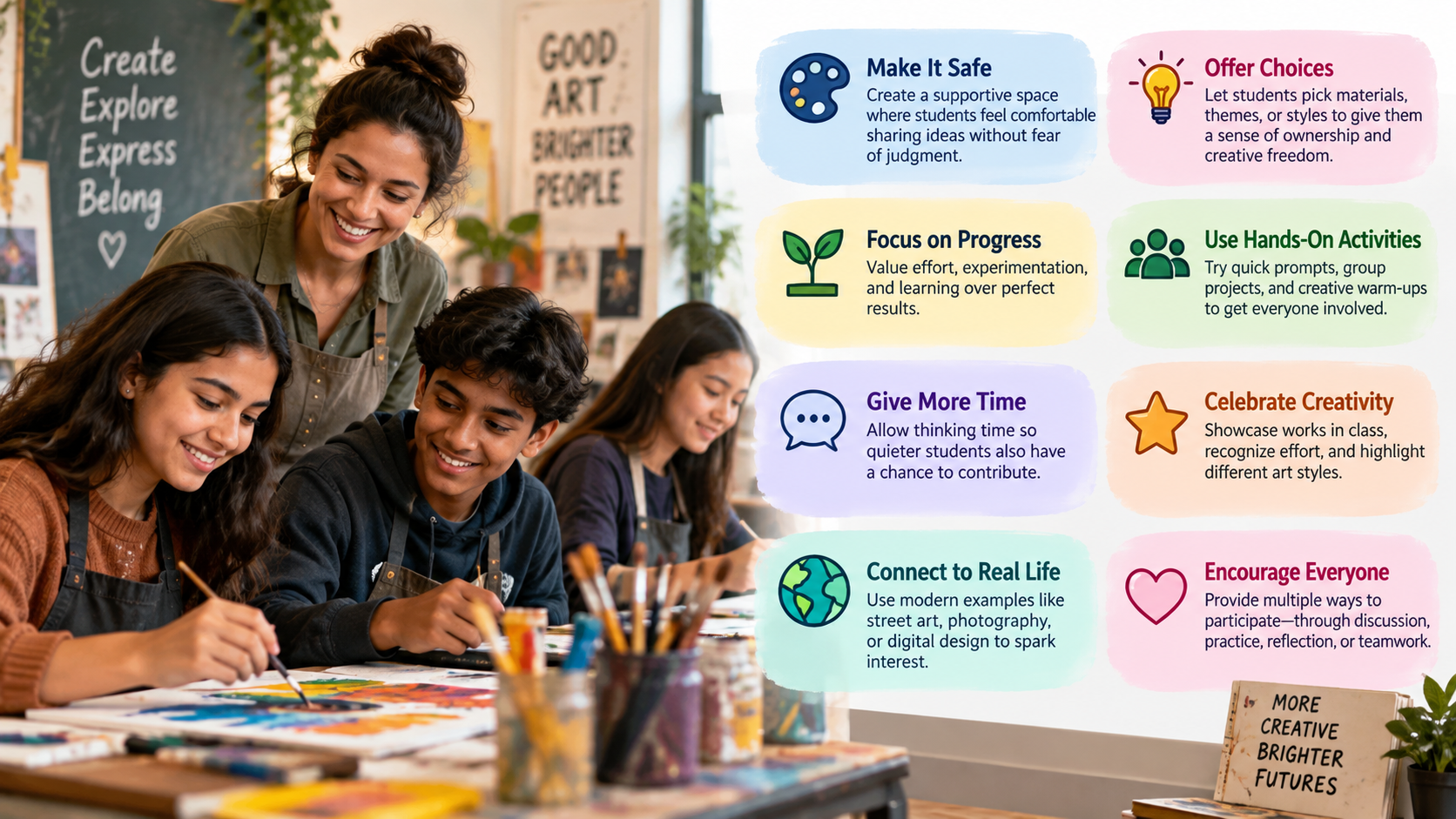
Motivating students in an art class starts with shifting attention from strict technical results to personal creative discovery. Many learners hesitate because they fear their finished work will look imperfect. Flexible, open-ended assignments can reduce this pressure and encourage individual expression. Give students meaningful choices about materials, subjects, techniques, and working styles. This sense of creative autonomy helps learners feel ownership over their work.
Connecting lessons with contemporary visual culture can also make assignments more relevant. Graphic novels, street art, animation, photography, and digital design may capture interests that traditional exercises overlook. Teachers can invite students to explain why particular styles appeal to them and explore educational psychology theories that help explain how learners engage with different approaches.
Small celebrations of experimentation can further strengthen motivation. Praise persistence, curiosity, and thoughtful decisions instead of focusing only on polished results. When students understand that art involves exploration, revision, and discovery, they become more willing to participate and take creative risks.
Embrace the Process Over the Final Product
Praise learners for creative risk-taking, experimentation, and perseverance rather than technical perfection. Students need to understand that mistakes can provide useful information. A failed technique may reveal what needs to change in the next attempt. This mindset makes experimentation feel safer and more productive.
Teachers can reinforce this approach by displaying preliminary sketches, rough concept boards, drafts, and unfinished studies. Showing the stages behind completed artwork helps students understand that strong results rarely appear immediately. It also reduces the pressure to produce something impressive on the first attempt.
During feedback sessions, ask students about their decisions and discoveries. Questions such as “What did you try?” or “What would you change?” encourage reflection without making the discussion feel like judgment.
Recognizing the process also supports different skill levels. Beginners can receive credit for persistence, while experienced learners can explore more complex techniques. This approach helps encourage arts class participation because students feel valued for their progress, not compared against a single standard of perfection.
How do you encourage student participation in class?
Active participation becomes easier when teachers replace long lectures with dynamic, hands-on activities. Art classes naturally provide opportunities for students to create, discuss, demonstrate, and collaborate. Use these opportunities instead of keeping students passive for extended periods.
Short activities can make participation feel less demanding. Group brainstorms, peer critiques, material demonstrations, and collaborative design exercises can involve students without requiring lengthy presentations. Structured discussion methods can also support quieter learners. For example, think-pair-share gives students time to form an idea before sharing it with the wider class.
Teachers should also allow enough thinking time after asking questions. Immediate answers often come from the most confident students. A few additional seconds can give hesitant learners an opportunity to contribute.
Clear expectations matter as well. Explain what meaningful participation looks like and provide several ways to demonstrate it. Students can participate through discussion, practical work, peer feedback, reflection, or group activities. This flexible approach can help encourage arts class participation across different personality types and confidence levels.
Implement Quick Interactive Brainstorms
Begin lessons with two-minute creative prompts or collaborative visual warm-ups. These activities can involve quick sketches, word associations, unusual object designs, or visual responses to a simple question. Keep the exercises short enough that students do not feel pressured to produce finished work.
A shared whiteboard can make these warm-ups more collaborative. Students can add ideas individually before discussing patterns or interesting connections as a group. Digital boards can provide a similar option when technology is available.
The key is to keep these activities low-stakes and unrated. Students participate more freely when they know the exercise is designed for exploration rather than assessment. Teachers can also use different prompts throughout the week to prevent routines from becoming repetitive.
Quick brainstorms serve another purpose. They create an immediate transition from passive listening to active thinking. Students begin using their imagination as soon as class starts.
Over time, these small interactions can make participation feel normal. Learners become more comfortable sharing unusual ideas, responding to classmates, and experimenting without worrying about whether every answer is perfect.
How to encourage students to attend class?
Consistent attendance depends partly on whether students feel connected to the classroom community. A learner who feels noticed and valued may have stronger reasons to attend than someone who views every lesson as another compulsory activity. Teachers can build this connection through meaningful projects, welcoming routines, and positive student relationships.
Long-term projects can make physical attendance particularly valuable. Divide larger assignments into stages that involve planning, experimentation, production, and review. Students then have a clear reason to return because each session contributes to their progress.
A welcoming environment also matters. Greet learners by name when possible and show interest in their ongoing work. Explain what students will create or discover during each session rather than presenting attendance as an obligation.
Collaborative activities can create another reason to attend. Group projects depend on shared contributions, so students understand that their presence affects classmates.
Teachers should avoid relying only on pressure or punishment. Instead, make the value of each lesson visible. When students associate arts classes with creativity, connection, progress, and hands-on experiences, regular attendance can become easier to maintain throughout the term.
Foster Belonging with Personalized Check-Ins
A brief personal check-in can help students feel recognized when they enter the classroom. Spend a few seconds asking about an ongoing project, noticing progress, or acknowledging a new idea. These interactions do not need to become lengthy conversations. Consistency matters more than duration.
Teachers can also create simple routines around individual progress. For example, ask students to identify one goal for the lesson and revisit it before class ends. This gives learners a clear sense of direction while showing that their development matters.
Personalized feedback should remain specific. Instead of saying that a project looks good, mention a particular decision, technique, or improvement. Specific recognition helps students understand which behaviors contributed to their progress.
These small actions can strengthen classroom belonging. Students are more likely to feel that they contribute something meaningful to the studio rather than simply completing another assignment. Building this sense of connection can also support student confidence and willingness to engage.
Check-ins can also help teachers identify barriers early. A student who repeatedly disengages may need clearer instructions, additional support, or a different way to participate. By noticing these patterns, educators can respond before disengagement becomes a lasting habit.
How do we encourage our students to participate?
To encourage students to participate in arts classes, educators should intentionally reduce the psychological barriers that can silence quieter voices. Classroom norms provide a useful starting point. Work with students to establish expectations around respect, constructive feedback, listening, and creative freedom. Shared ownership can make these expectations more meaningful. Understanding the role of emotions in student learning can also help teachers recognize why some learners hesitate to participate.
Participation should also have multiple pathways. A student who avoids speaking during a large critique may still offer valuable feedback through written notes, digital discussion boards, journals, or small-group conversations. These alternatives do not lower expectations. They simply recognize that students communicate in different ways, while giving teachers more opportunities to use formative assessment best practices.
Cultural representation is another important factor. Include diverse artists, traditions, techniques, and creative perspectives when appropriate. Students may become more engaged when lessons connect with experiences or artistic traditions that feel relevant to them.
Teachers should also avoid equating confidence with participation. A quiet student may be deeply involved in the creative process without frequently speaking. Observing practical work, reflection, collaboration, and peer feedback can provide a broader picture of engagement.
When students feel respected and heard, participation becomes less about satisfying a teacher requirement. It can become a natural part of the creative classroom experience.
What are the 10 ways to motivate a student?
Sustained student motivation usually develops from a combination of autonomy, relevance, encouragement, and achievable progress. Educators can use several practical strategies to create these conditions in arts classes. The goal is not to make every lesson entertaining. It is to help students see value in the creative process and recognize their own development.
Ten useful approaches include:
- Offer meaningful choices so learners can influence their projects.
- Set achievable milestones that make larger assignments manageable.
- Give timely feedback focused on growth and specific decisions.
- Connect lessons to interests such as design, music, film, fashion, or digital media.
- Create a safe classroom culture where mistakes are treated as part of learning.
- Display student work to recognize effort and progress.
- Introduce varied mediums to prevent repetitive routines.
- Gamify selected technique exercises when appropriate for the class.
- Invite guest creators to provide real-world perspectives.
- Celebrate personal growth instead of encouraging constant comparison.
These strategies can work together rather than as isolated techniques. When students have choices, receive useful feedback, and see progress, they may develop stronger creative confidence and a greater willingness to participate. Teachers can strengthen this process through reflection questions after every lesson to identify what worked and where students need additional support.
Frequently Asked Questions
Why do some students resist participating in arts activities?
Most reluctant learners hold a deep-seated fear of peer judgment or believe they lack innate talent. Academic conditioning often trains individuals to seek single correct answers, which clashes with the ambiguity of creative spaces. When teachers replace strict grading criteria with process-oriented feedback, that underlying resistance quickly evaporates.
How can I engage quiet or introverted art students?
Provide quieter learners with structured, low-pressure contribution channels. Let them document ideas in reflective sketchbooks, write sticky-note feedback during gallery walks, or collaborate in pairs. Giving them adequate processing time before asking for public responses helps introverted pupils share brilliant creative insights without feeling overwhelmed.
How does student choice impact classroom motivation?
Offering choices regarding materials, subject themes, and artistic methods gives pupils strong ownership over their learning. When learners pursue projects that align with their personal passions, their intrinsic curiosity takes over. This autonomy directly transforms routine classroom assignments into exciting personal investigations.
What should I do if a student refuses to participate?
Never engage in a public power struggle. Instead, speak privately with the learner to identify underlying anxieties, frustrations, or personal skill barriers. Offer a smaller, less intimidating entry point, such as organizing supplies or experimenting with one new texture, to gradually rebuild their confidence.
Conclusion
Helping young people discover their creative voice is an important part of teaching. When educators intentionally encourage arts class participation, they create a supportive environment where imagination and confidence can grow. Focusing on creative discovery instead of rigid outcomes can reduce the fear of failure that prevents students from participating. Consistent encouragement, personal choice, emotional safety, and meaningful feedback can further encourage arts class participation. With these practical strategies, teachers can help hesitant learners take creative risks, build confidence, and develop a lasting interest in artistic self-expression.