
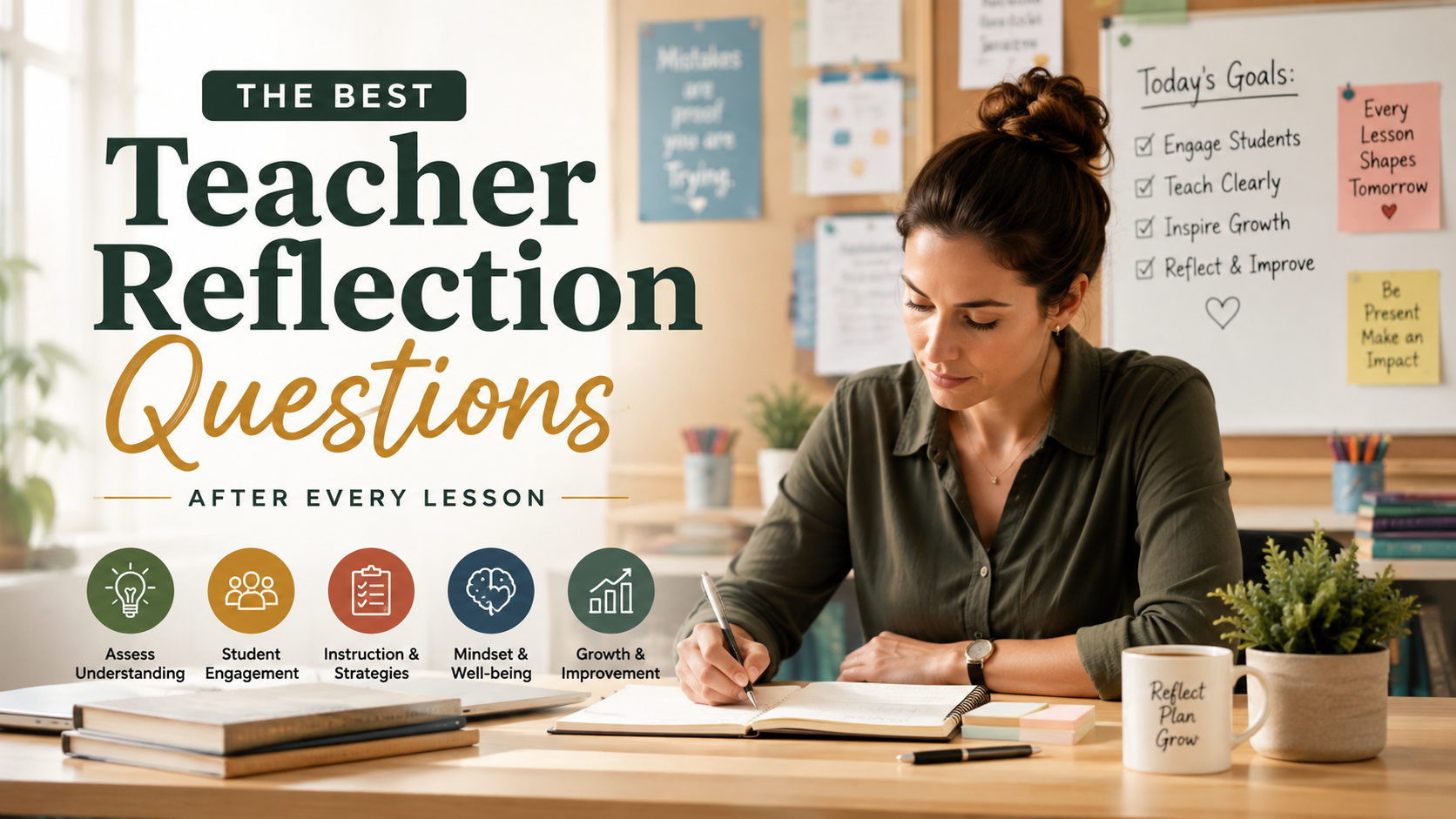
The Best Teacher Reflection Questions After Every Lesson
Finding the right teacher reflection questions can completely transform how you approach your daily classroom instruction. According to research from the Association for Supervision and Curriculum Development, intentional post-lesson evaluation helps educators refine their methods and improve overall student outcomes. When you take a few moments to review your teaching strategies, you gain clarity on what worked well and what needs adjustment. This article explores essential teacher reflection questions, including what are some good reflection questions for teachers, what are some good reflection questions, what are some questions about reflection, what are 7 questions you can use as self-reflection, what is reflection question and answer, and what are the 10 questions about yourself. Evaluating your lessons regularly builds professional resilience and creates a more dynamic, responsive learning environment for every student in your classroom.
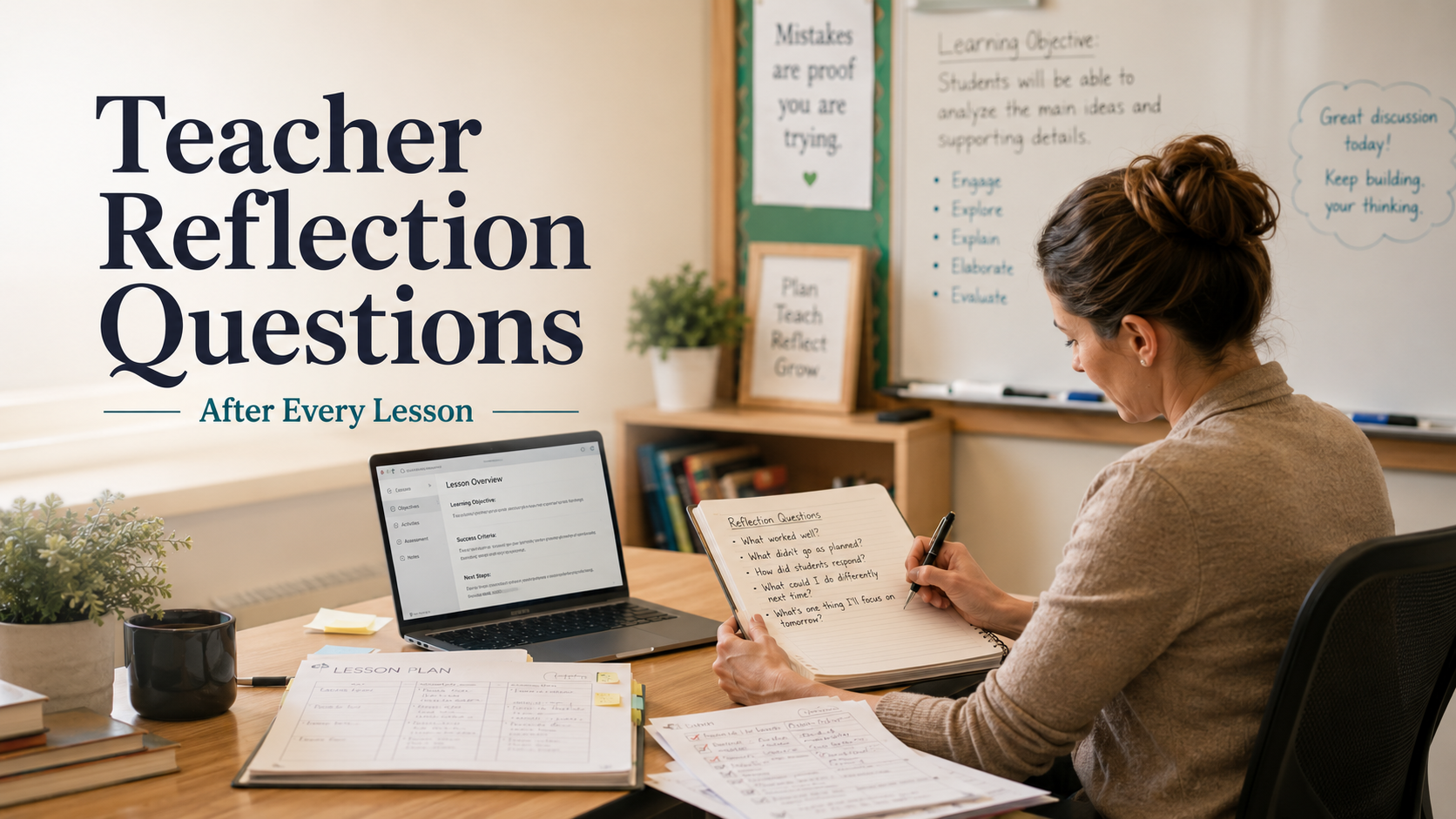

What Are Some Good Reflection Questions for Teachers?
Good reflection questions for teachers focus on instructional clarity, student engagement, pacing, classroom management, and student progress. After a lesson, teachers can examine what worked and what needs adjustment. This process turns everyday teaching experiences into practical opportunities for a teacher self-reflection routine and professional growth.
Ask yourself whether students understood the main learning objective. Consider whether some students struggled with specific activities or instructions. Reviewing these details can reveal gaps that may need attention in the next lesson.
Student engagement also deserves careful attention. Think about when students participated actively and when their attention declined. Consider whether the lesson activities, resources, or teaching methods supported meaningful participation.
Classroom management is another useful area for reflection. Ask whether transitions were smooth and whether your strategies supported a positive learning environment. Specific observations are more useful than broad judgments about lesson quality.
Assessing Student Understanding and Engagement
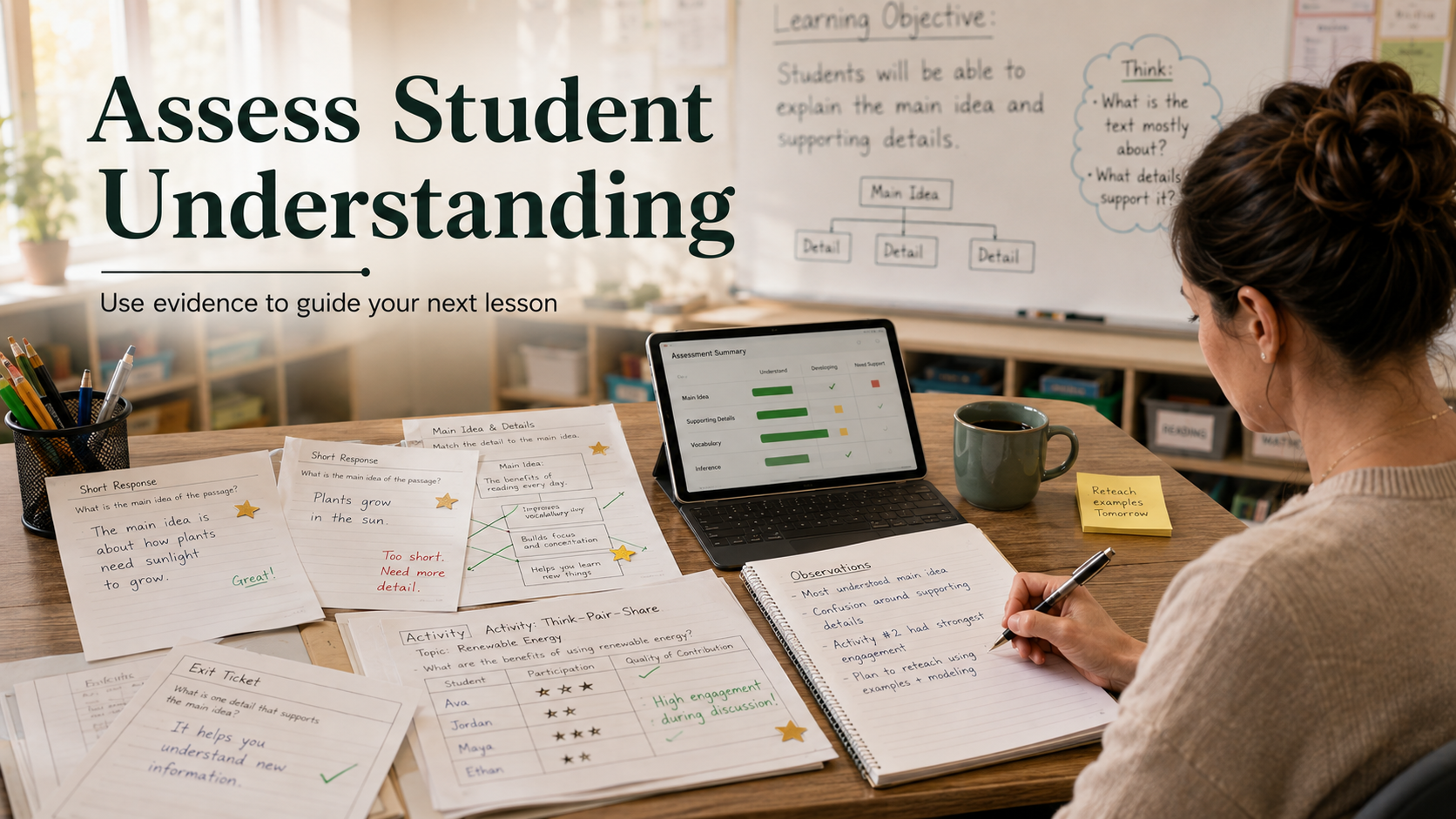
Evaluating student understanding soon after a lesson can prevent misconceptions from carrying into future units. Review formative assessment results, class discussions, student questions, and completed activities. These sources can show whether students achieved the main learning objective.
Ask yourself:
- Did most students understand the key concept?
- Which students needed additional support?
- Which questions revealed confusion?
- Did the activity match the intended learning outcome?
- When did student engagement increase or decrease?
Pay attention to patterns rather than isolated moments. One incorrect answer does not necessarily indicate a wider problem. However, repeated errors may suggest that your explanation or activity needs adjustment.
Student engagement also provides useful information about lesson design. Consider whether students had enough opportunities to participate, ask questions, collaborate, or apply what they learned. Use these observations and student engagement strategies to make specific changes to future lessons.
What Are Some Good Reflection Questions?
Good reflection questions also examine the teacher’s personal growth, emotional well-being, and professional satisfaction. Teaching can involve demanding schedules, challenging behavior, and constant decision-making. Regular reflection helps educators understand how these experiences affect their energy and mindset.
Consider which parts of the school day felt rewarding. Then identify situations that created unnecessary frustration or stress. This comparison can reveal patterns that are easy to overlook during a busy teaching schedule.
You can also reflect on your relationships with students and colleagues. Ask whether your communication was respectful, clear, and supportive. Consider whether you responded thoughtfully during difficult interactions or reacted too quickly. Reflecting on building positive student relationships can help you identify practical areas for improvement.
Reflection should not become a process of criticizing yourself. Its purpose is to identify useful lessons and practical improvements. A balanced approach recognizes successful moments alongside areas that need attention.
Maintaining Emotional Balance and Mindset
Reflecting on your emotional state can help you recognize early signs of frustration or exhaustion. Consider how you felt before, during, and after the school day. Look for situations that consistently affect your mood or energy.
Useful questions include:
- Which teaching moment gave me the most satisfaction?
- What interaction felt unnecessarily difficult?
- Did I respond calmly to challenging behavior?
- What helped me stay focused?
- What could make tomorrow’s workload more manageable?
These questions can reveal emotional patterns that influence classroom performance. They may also help you identify where clearer boundaries or better preparation could reduce unnecessary pressure.
Self-reflection should remain practical and constructive. You do not need to analyze every emotion in detail. A few honest observations can help you make better decisions while protecting your professional well-being.
What Are Some Questions About Reflection?
Questions about reflection often focus on its purpose, frequency, and practical use. Teachers may wonder how often they should reflect or whether they need a formal journal. In reality, reflective practice can take several forms.
The most useful approach is one that fits naturally into your teaching routine. Some educators prefer written journals, while others use brief notes, voice recordings, or mental checklists. The format matters less than the quality and consistency of the reflection.
Teachers should also consider what they want reflection to achieve. Simply describing what happened is less useful than identifying why something happened and what should change next time.
A short reflection can be enough after an ordinary lesson. More detailed reflection may help after a difficult class, assessment, observation, or major teaching project. Watching your teaching on replay can provide another way to identify areas for improvement. The goal is to create a sustainable habit that supports continuous professional development.
Establishing a Sustainable Reflective Habit
Consistency is more important than spending a long time reflecting. Set aside a few minutes after class while the lesson details remain fresh. Record the most important observation, the reason behind it, and one possible action.
A simple routine might include these three questions:
- What worked well today?
- What did not work as expected?
- What will I change next time?
You can write your answers in a notebook, teaching planner, or digital document. Some teachers may prefer recording short voice notes immediately after class.
Avoid turning reflection into another administrative task. Keep the process focused on useful observations and realistic changes. Reviewing previous reflections can also reveal recurring patterns in student needs, lesson pacing, or classroom management.
Over time, this habit creates a practical record of your professional growth. It can help you prepare more effectively and make future lessons more responsive to student needs.
What Are 7 Questions You Can Use as Self-Reflection?
Seven focused self-reflection questions can provide a simple framework for evaluating a completed lesson or teaching day. The questions should cover both instructional performance and personal experience. This prevents reflection from becoming focused only on mistakes or student behavior.
Consider asking:
- Did students understand the main learning objective?
- Which activity generated the strongest engagement?
- Where did the lesson pacing feel too fast or slow?
- What unexpected challenge affected the lesson?
- What did the assessment results reveal?
- Was my explanation clear enough for different learners?
- How did I feel throughout the teaching experience?
These questions create a balanced review of your lesson. They examine student outcomes, instructional decisions, classroom dynamics, and your own well-being. For lessons that rely heavily on collaboration, reflecting on how to make group work work can provide another useful perspective on classroom dynamics.
You do not need to answer every question in detail. Choose the questions most relevant to that day’s lesson. The important part is turning your observations into specific actions.
Breaking Down the Seven Daily Inquiries
Each question provides a different perspective on your teaching practice. Student understanding shows whether the lesson achieved its intended purpose. Engagement reveals which activities encouraged meaningful participation.
Pacing can highlight sections that felt rushed or unnecessarily long. Unexpected challenges can help you prepare better responses for similar situations. Assessment results provide evidence that can guide future instruction. Reviewing how your school assessment system works can also help you interpret assessment information more effectively.
Instructional clarity deserves special attention. A lesson may appear successful while some students still misunderstand the core concept. Reflect on whether your examples, explanations, instructions, and questions supported different learning needs.
The final question focuses on your own experience. Your energy, confidence, and emotional state can affect how you teach.
Use your answers to choose one or two improvements. Avoid trying to change everything at once. Small, targeted adjustments are easier to apply and evaluate during future lessons.
What Is a Reflection Question and Answer?
A reflection question-and-answer format involves asking a specific question about your teaching and writing an honest response. This method makes reflective practice more structured. Instead of simply thinking that a lesson went well or poorly, you examine the reasons behind that judgment.
For example, asking “Why did students struggle with this activity?” encourages deeper analysis. Your answer might identify unclear instructions, insufficient background knowledge, limited practice time, or an activity that did not match the learning objective.
This approach also turns reflection into an actionable process. After identifying the problem, consider what you can change in the next lesson. The answer should therefore move beyond describing the past and point toward a practical next step.
Keeping these reflections over time can reveal recurring patterns. You may discover that certain activities consistently increase engagement or that specific transitions regularly cause difficulties.
Documenting Insights for Future Planning
Keeping written reflection questions and answers creates a useful record of your teaching experiences. You can use a notebook, spreadsheet, teaching journal, or digital document. Choose a format that makes reviewing previous entries simple.
Before beginning a new unit, review relevant reflections from earlier lessons. Look for recurring challenges, successful strategies, and unresolved student needs. This information can influence your lesson plans and help you avoid repeating ineffective approaches.
A useful reflection entry can include:
- The situation you observed.
- What you think caused it.
- Evidence from students or assessments.
- What worked well.
- One change to make next time.
This structure keeps reflection focused and practical. It also creates a record of professional growth that becomes more valuable over time.
Rather than collecting lengthy journal entries, prioritize specific observations. A few useful sentences can provide more value than several pages of general thoughts.
What Are the 10 Questions About Yourself?
Ten self-reflection questions can help teachers examine their values, communication style, strengths, weaknesses, and professional goals. These questions move beyond individual lessons and focus on the educator behind the instruction.
Consider asking yourself:
- What kind of teacher do I want to be?
- Do my daily actions reflect my teaching values?
- What are my strongest teaching skills?
- Which skills need further development?
- How do I respond when students challenge me?
- Do I communicate expectations clearly?
- How well do I listen to students?
- What situations consistently frustrate me?
- How do I respond to my own mistakes?
- What professional goal should I focus on next?
These questions encourage deeper teacher self-reflection. They can reveal differences between your intentions and your everyday classroom behavior.
The goal is not to judge yourself harshly. Instead, use the answers to understand your habits and identify realistic areas for growth.
Aligning Personal Values With Classroom Practice
Your teaching values influence how you communicate, manage behavior, design activities, and respond to mistakes. Reflection can help you determine whether your daily decisions reflect those values.
For example, if you value patience, consider how you respond when students repeatedly make the same mistake. If you value inclusion, examine whether your activities allow different learners to participate meaningfully.
Ask yourself whether your classroom expectations are clear and consistent. Consider whether your responses to difficult behavior match the kind of educator you want to become.
This type of reflection can also strengthen relationships with students and colleagues. When your actions consistently reflect your values, students are more likely to understand what they can expect from you.
Personal reflection should lead to practical changes. Choose one behavior that you want to improve and define how you will approach it differently. Over time, these small adjustments can strengthen your teaching practice and support long-term professional satisfaction.
Frequently Asked Questions
How Long Should a Teacher Spend on Daily Reflection?
A daily reflection should take about five to ten minutes. This timeframe is long enough to identify useful patterns without making reflection feel like another task. Use a few focused teacher reflection questions instead of writing a detailed account of the entire day. Note what worked, what did not, and what you will change next time. Keeping the process short makes it easier to maintain consistently.
Can Teacher Reflection Improve Student Academic Performance?
Yes, teacher reflection questions can support better student academic performance. Reflecting on assessment results, student questions, and common mistakes can reveal learning gaps early. Teachers can then adjust explanations, activities, or practice opportunities before students move to more difficult concepts. Reflection does not guarantee higher achievement, but it helps educators make evidence-based instructional changes that can improve understanding and support stronger learning outcomes.
Should Teachers Share Their Reflections With Students?
Yes, teachers can share appropriate reflections with students. Discussing a lesson that did not work as planned can show students that learning involves adjustment and improvement. This approach also models a healthy growth mindset and encourages students to evaluate their own work. However, private emotional concerns or sensitive professional issues should remain confidential. Share reflections that support learning, not personal information that students do not need.
What Is the Best Medium for Keeping a Teaching Journal?
The best teaching journal format is the one you can use consistently. A physical notebook works well for teachers who prefer quick handwritten notes. Digital tools may be better if you want searchable entries and easy access across devices. You can also use short voice notes after class. Choose a simple format that makes answering teacher reflection questions quick, practical, and easy to maintain.
Conclusion
Using teacher reflection questions regularly can strengthen instructional practice and encourage continuous professional growth. Reflecting on lessons, student engagement, classroom management, and your own mindset can reveal practical areas for improvement. You do not need to answer every question daily. Start with two or three prompts after your next class. Keep your answers brief, focus on evidence, and turn each reflection into one realistic action.