5 Dangers of Using Your Old, Damaged Charging Cable
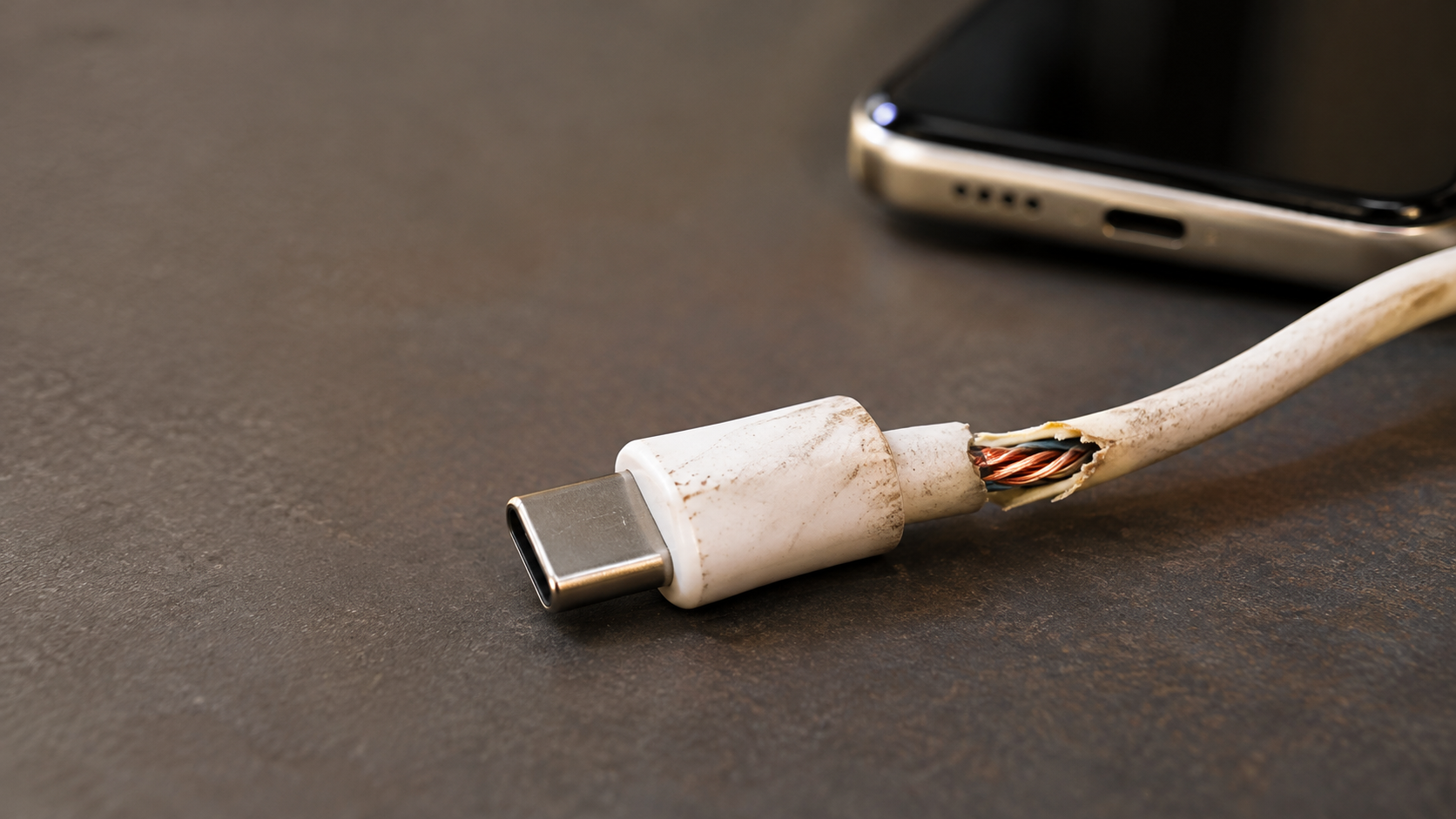
We have all experienced this situation. You notice a small tear near your phone charger’s connector and decide to wrap electrical tape around it. However, continuing to use a damaged charging cable can create serious safety risks and potentially harm your electronic devices. What seems like a harmless shortcut could lead to electrical fires, overheating, or charging problems.
Charging cables contain insulated wires that safely carry electrical current between your adapter and device. When the insulation breaks or internal wires become damaged, the cable may no longer operate safely.
Ignoring a worn-out charging cord might seem harmless when your battery is nearly empty. However, exposed wires, loose connectors, and damaged insulation can create serious problems.
Here are five important dangers of continuing to use an old or damaged charging cable.
1. Electrical Fires
One of the biggest risks of using a damaged charging cable is an electrical fire. Charging cables carry electrical current through insulated wires. When their protective covering becomes damaged, internal wires may become exposed.
This creates opportunities for electrical faults, particularly when damaged wires touch each other or conductive surfaces. A short circuit can generate excessive heat and potentially produce sparks.
The danger increases when you charge your phone near flammable household materials. Bedsheets, curtains, carpets, and wooden furniture can catch fire under certain conditions. You can also reduce household fire risks by following these tips to make your home fireproof.
Watch for these warning signs:
- Exposed wires: Cracked or peeling insulation can expose internal conductors.
- Excessive heat: A damaged cable or connector may become unusually hot during charging.
- Burning smells: Unusual smells near charging equipment can indicate overheating or electrical damage.
- Visible sparks: Sparks around a connector or electrical connection indicate a potential fault.
Never leave a damaged charging cable connected overnight. Stop using it immediately and replace it with a suitable, undamaged cable.
2. Electric Shock and Burns
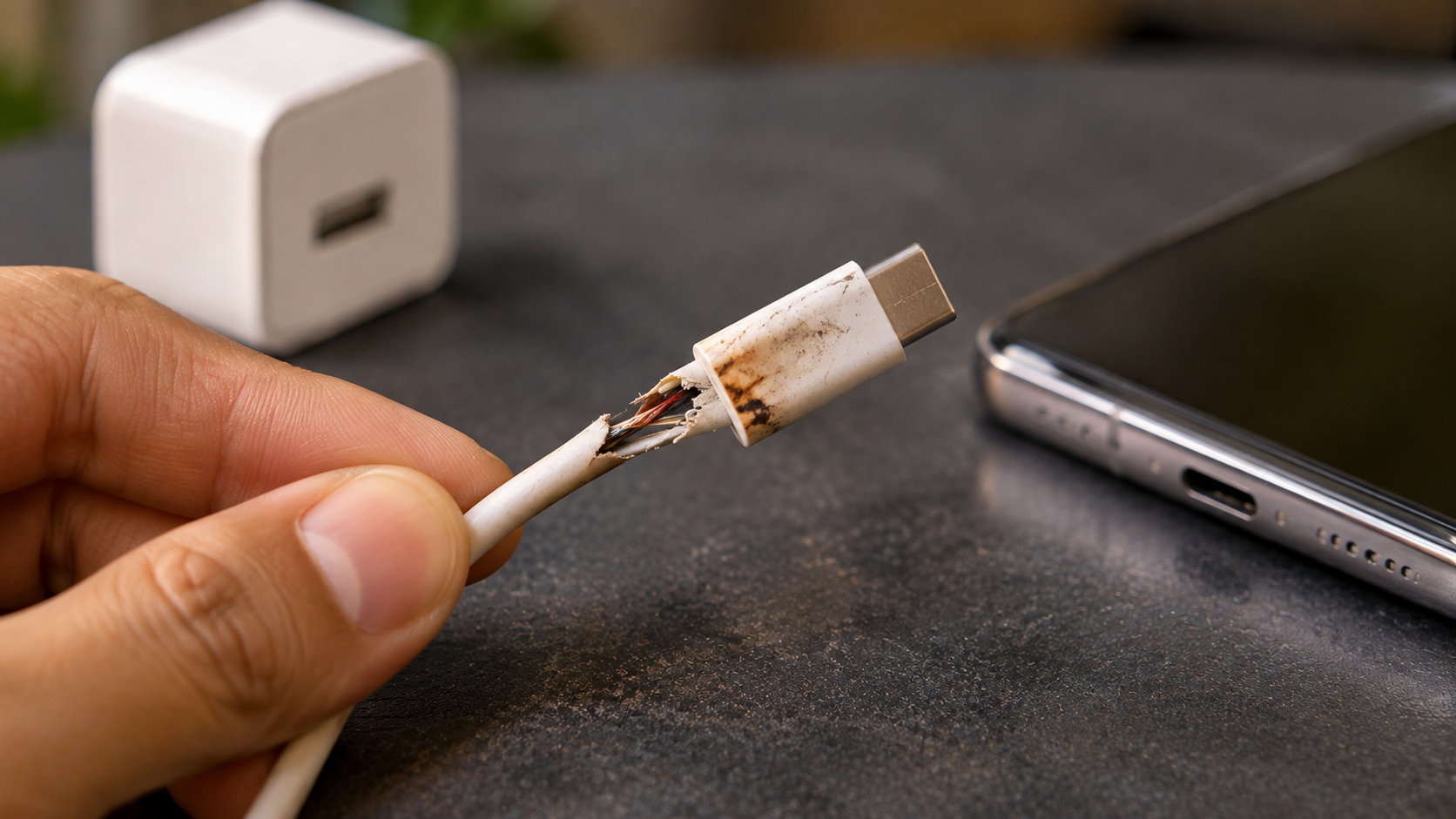
Another serious danger of using a damaged charging cable is electric shock. Although many phone charging cables carry relatively low voltage, damaged charging equipment can still create electrical hazards.
Exposed conductors, faulty adapters, and damaged connectors increase the possibility of accidental contact with electrical components. The actual risk depends on the equipment, its design, and the type of electrical fault.
A damaged cable can also develop excessive heat around its connector. Holding or touching an overheated connector may cause skin discomfort or burns.
Pay attention to these warning signs:
- Exposed metal strands: Damaged insulation can reveal internal conductive wires.
- Unusual heating: A cable that becomes excessively hot needs immediate replacement.
- Cracked connectors: Broken connector housings can expose internal electrical components.
- Damaged adapters: Cracked or broken power adapters can expose dangerous electrical parts.
If you notice any of these problems, disconnect the charger from the wall outlet. Avoid touching exposed conductors or damaged electrical components.
Never continue using a cable simply because it still charges your phone. Replace damaged charging accessories rather than risking an electrical injury.
3. Potential Battery and Charging Problems
A damaged charging cable can interfere with normal charging. Internal wire damage, loose connections, and worn connectors may interrupt the electrical connection between your phone and its power adapter.
You might notice your phone repeatedly connecting and disconnecting from the charger. Sometimes, charging may stop unexpectedly or become slower than usual.
These problems do not automatically mean your battery is permanently damaged. Modern smartphones contain power-management circuits that regulate incoming electricity. However, a faulty cable or incompatible charging equipment can still cause abnormal charging behavior. Understanding the 80-20 rule for rechargeable batteries can also help you learn more about everyday battery care.
Watch for these common symptoms:
- Interrupted charging: Your phone repeatedly starts and stops charging.
- Slow charging: Damaged connections can prevent reliable power delivery.
- Unexpected disconnections: Loose connectors may interrupt the charging process.
- Unusual heating: A faulty cable or connection may generate excessive heat.
Continued exposure to abnormal charging conditions can create additional stress for your device. Battery swelling or overheating should never be ignored.
Replace the damaged cable and monitor your phone’s charging behavior. If problems continue with a reliable replacement, have the device inspected by a qualified technician.
4. Damaged Charging Ports and Internal Components
A damaged charging cable can also affect your smartphone’s charging port. This is particularly concerning when the connector becomes bent, loose, corroded, or physically broken.
A damaged connector may not fit properly into your device. Forcing it into the charging port can damage the delicate contacts inside.
Over time, repeated use of a loose or damaged connector may cause additional wear. You might experience intermittent charging or find that your phone no longer recognizes certain cables.
Electrical faults can also affect connected electronic components. Although modern devices include protective charging circuits, these safeguards cannot eliminate every risk associated with faulty accessories.
Look for these warning signs:
- Loose connections: The charging cable frequently disconnects from your phone.
- Bent connector tips: Deformed connectors may damage the charging port.
- Charging interruptions: Your device stops charging when the cable moves.
- Unrecognized accessories: Your phone repeatedly fails to detect the connected cable.
Avoid forcing a damaged connector into your phone. Replace the faulty cable before it causes further problems.
If your phone continues experiencing charging issues, ask a qualified technician to inspect its charging port and internal charging components.
5. Damage to Power Adapters and Electrical Outlets
Your charging cable is not the only component that can experience problems. A damaged cable may also affect the connected power adapter and electrical outlet.
For example, a short circuit or faulty connection can cause excessive current or trigger protective electrical devices. Depending on the fault, this may damage the adapter or interrupt the electrical supply.
Modern chargers and household electrical systems include protective features. However, these protections do not make damaged charging accessories safe to use. Choosing a reliable replacement matters too, so consider whether a third-party charger is safe before purchasing one.
Watch for the following warning signs:
- Overheating adapters: A power brick that becomes unusually hot may have an electrical problem.
- Burning smells: Unusual smells around an adapter or outlet require immediate attention.
- Tripped circuit breakers: Repeated electrical trips may indicate a fault that needs investigation.
- Damaged outlet connections: Loose, discoloured, or scorched outlets should be inspected by an electrician.
Stop using the charging equipment if you notice these symptoms. Disconnect it safely if there are no sparks, flames, or immediate electrical hazards.
Never attempt to repair a damaged wall outlet yourself. Contact a qualified electrician to inspect the electrical installation.
Is It Safe to Use a Broken Charging Cable?
No. You should never continue using a charging cable with exposed wires, damaged insulation, or broken connectors. Even a small tear can compromise the cable’s protective covering and increase electrical risks.
A damaged cable may also develop loose internal connections. These connections can interrupt charging and generate excessive heat. In certain situations, electrical faults can produce sparks or create a fire hazard.
Some people wrap damaged cables with electrical tape and continue using them. However, this does not restore the cable’s original insulation or repair broken internal conductors.
Watch for these signs that your charging cable needs replacement:
- Cracked or peeling outer insulation.
- Exposed copper wires or internal conductors.
- Bent, broken, or loose connector ends.
- Unusual heating during normal charging.
- Repeated charging interruptions.
If you notice any of these problems, disconnect the cable and stop using it. Do not touch exposed wires while the equipment remains connected.
Replace the damaged accessory with a compatible cable from a reputable manufacturer. A replacement costs far less than dealing with preventable electrical damage.
Is It Safe to Use a Damaged Charger?
No. Using a damaged wall charger can expose you to serious electrical hazards. Unlike the low-voltage output cable, the wall adapter connects directly to your household electrical supply.
A power adapter converts high-voltage alternating current (AC) into lower-voltage direct current (DC). Its internal components help regulate the electricity delivered to your phone. If you use a laptop, understanding why laptop chargers have a box in the middle of the cable can also help you understand how charging equipment manages electrical power.
If the adapter casing cracks or its internal components become damaged, its electrical insulation and protective features may become compromised.
Stop using an adapter if you notice:
- Cracked housing: Physical damage may expose internal electrical components.
- Burn marks: Discolouration can indicate overheating or electrical damage.
- Buzzing or unusual sounds: These may indicate an electrical fault.
- Burning smells: An unusual smell can signal overheating components.
- Loose electrical prongs: Damaged plugs may create unreliable connections.
Never open or attempt to repair a damaged wall adapter. Unplug it safely when possible and replace it with a compatible product from a reputable manufacturer.
If the wall outlet itself shows burn marks, sparks, or damage, contact a qualified electrician before using it again.
Should I Throw Away Old Charging Cables?
Yes, you should replace charging cables that show physical damage or unreliable charging behaviour. However, not every old charging cable needs immediate disposal.
A cable can remain usable for years if its insulation, connectors, and internal connections remain in good condition. Age alone does not determine whether a charging cable is safe.
Before keeping an old cable, inspect it carefully. Look for cracks, exposed wires, loose connectors, unusual heating, and signs of corrosion.
If you discover damage, stop using the cable. Do not keep faulty accessories in your drawer as emergency backups. Someone might accidentally use them later.
You should also dispose of damaged cables responsibly. Charging cords contain materials such as copper and plastic that can be recovered through appropriate recycling processes.
Consider these disposal options:
- Electronics recycling centres: Take damaged cables to authorised e-waste collection facilities.
- Retailer take-back programmes: Some electronics retailers accept unwanted charging accessories.
- Local e-waste collection drives: Check whether your municipality offers electronic waste collection.
Avoid burning cables or dumping large amounts of electronic waste into the environment. Responsible recycling helps recover useful materials and reduces unnecessary waste.
Can a Damaged Charging Cable Damage My Phone?
Yes, a damaged charging cable can potentially damage your smartphone. However, the extent of the damage depends on the type of fault and your device’s protective circuitry.
Modern smartphones contain power-management components that regulate incoming electricity. These systems help protect the battery and other internal components from certain electrical problems. If your phone’s battery behaves unusually, learning how to tell if a phone battery has been replaced can help you investigate possible battery-related issues.
However, these safeguards cannot prevent every issue caused by faulty charging accessories. A damaged connector may create poor electrical contact, intermittent charging, or excessive heat.
Physical damage is another concern. A bent or broken connector can scratch the charging port or damage its internal contacts when inserted incorrectly.
You might notice the following problems:
- Charging interruptions: Your phone repeatedly disconnects from the charger.
- Port damage: A bent connector may damage the charging port’s internal contacts.
- Overheating: Faulty connections can generate excessive heat.
- Charging errors: Your phone may fail to recognise the connected accessory.
If your phone stops charging properly, test it with a compatible, undamaged cable and adapter. If the problem continues, have the charging port inspected.
Replacing a damaged cable early can help prevent avoidable charging problems and expensive repairs.
What to Do If My Charging Cable Is Damaged?
If you notice damage to your charging cable, stop using it immediately. Continuing to charge your phone with exposed wires or broken connectors creates unnecessary electrical risks.
First, disconnect the charging equipment safely. If there are no sparks, flames, or other immediate hazards, switch off the wall outlet before unplugging the adapter. Hold the plug or adapter housing rather than pulling the cable.
Never attempt temporary repairs using electrical tape, glue, or other household materials. These solutions cannot reliably restore damaged internal conductors or the cable’s original safety protection.
Follow these steps to handle a damaged charging cable:
- Stop charging: Disconnect the damaged cable and avoid using it again.
- Inspect the adapter: Check whether the power brick or connector also shows physical damage.
- Replace the cable: Purchase a compatible replacement from a reputable manufacturer.
- Check compatibility: Ensure the cable supports your device’s charging standard and power requirements.
- Recycle responsibly: Take the damaged accessory to an authorised electronics recycling facility.
When buying a replacement, look for products from reputable manufacturers. Check compatibility, build quality, and relevant safety certifications. USB-IF certification and Apple’s MFi programme can help identify products meeting applicable requirements. Also, remember that some chargers with multiple ports may charge devices at different speeds, depending on their power distribution and specifications.
Most importantly, never compromise electrical safety to save money on a replacement charging cable.
Conclusion
A damaged charging cable might seem like a minor inconvenience, but ignoring it can create serious safety risks. From electrical fires and overheating to charging problems and damaged phone components, a faulty cable is not worth the risk.
Always inspect your charging accessories for exposed wires, cracked insulation, loose connectors, or unusual heating. If you notice any damage, stop using the cable and replace it with a compatible product from a reputable manufacturer.
For additional electrical safety guidance, visit the U.S. Consumer Product Safety Commission (CPSC). It provides helpful information about identifying and preventing household product hazards.
Remember, a cheap replacement charging cable is far better than an expensive phone repair or a preventable electrical accident. Prioritise safety and never compromise it just to keep an old charger working.