
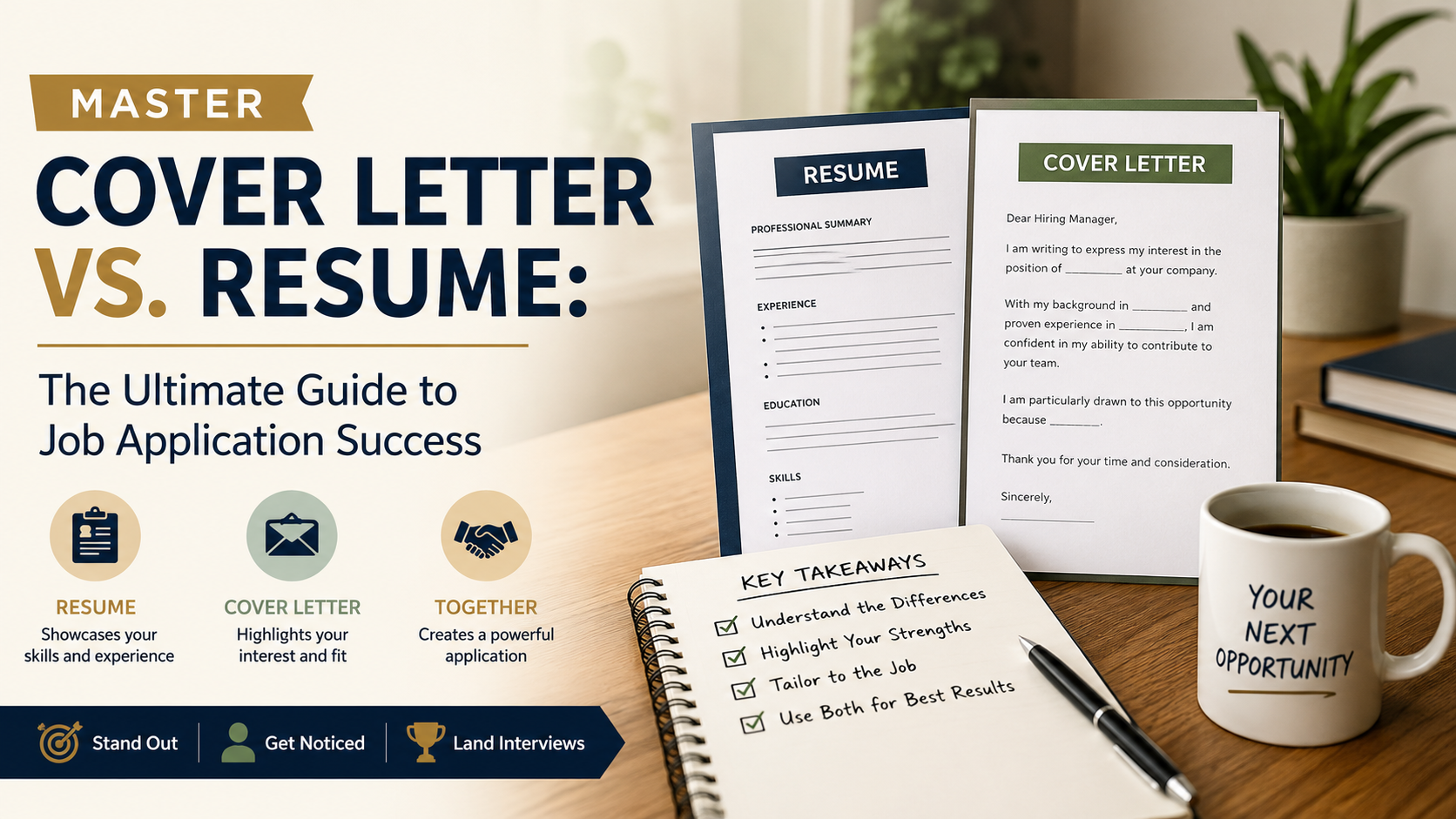
Master Cover Letter vs. Resume: The Ultimate Guide to Job Application Success
Navigating the job market often brings up a common dilemma: figuring out the core differences in the cover letter vs. resume debate. Understanding how these two documents work together can completely transform your job search and help you land interviews faster. Whether you are a recent graduate or a seasoned professional, knowing which document does what is essential for career growth. According to guidance from the U.S. Department of Labor CareerOneStop, tailoring your application materials significantly improves your chances of getting noticed by hiring managers. This comprehensive guide answers your most pressing questions, including whether a cover letter is better than a resume, if a CV is a cover letter, whether you can use a resume as a cover letter, and if you truly need both. Let’s dive into the details to clear up any confusion and elevate your application strategy.

Is a Cover Letter Better Than a Resume?
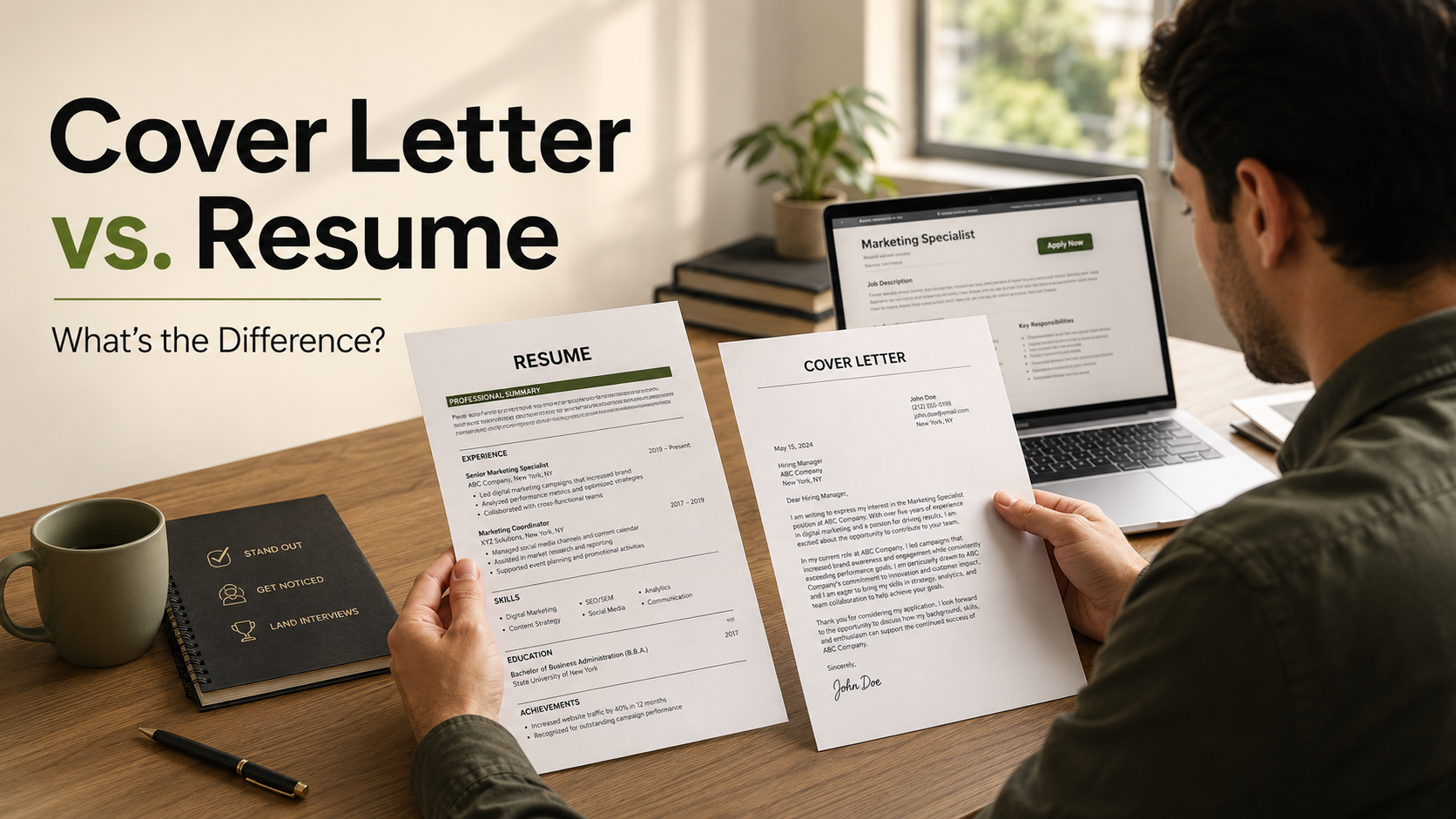
Deciding whether a cover letter is better than a resume is a common question for job seekers. The answer is no. Neither document is objectively better because each serves a different purpose in the hiring process. A resume provides a structured summary of your professional history, skills, education, and achievements. It gives recruiters the facts they need to assess your qualifications quickly.
A cover letter works differently. It provides a personalized introduction and explains why you want the role. It can also show your communication style, motivation, and interest in the company. While a resume shows what you have accomplished, a cover letter explains why those accomplishments matter for the position.
Using only one document can leave important gaps in your application. Your resume may show strong experience but provide little context about your motivation. Your cover letter may explain your interest but lack enough evidence of your qualifications. Using both documents together gives employers a clearer picture of your professional value.
Why You Need Both Documents
The strengths of a resume and cover letter become clearer when you compare their roles. A resume focuses on facts, evidence, and career history. A cover letter provides context and connects that experience to a specific opportunity. Together, they create a stronger job application.
Your resume should make your qualifications easy to scan. Recruiters often review applications quickly, so relevant skills, achievements, and experience should stand out immediately. The document should focus on measurable results rather than lengthy explanations.
Your cover letter gives you more room to explain your motivation. You can discuss why you want the position and how your experience matches the employer’s needs. You can also briefly explain circumstances that may require additional context, such as a career change or employment gap.
The two documents should support each other rather than repeat each other. Your resume provides the evidence, while your cover letter adds meaning and direction. This combination helps hiring managers understand both what you offer and why you want the opportunity.
Is a CV a Cover Letter?
Many job seekers mistakenly use the terms CV and cover letter interchangeably. They are different documents with different purposes. A curriculum vitae, or CV, provides a detailed record of your academic and professional background. Depending on the field and country, it may include education, research, publications, presentations, awards, certifications, and professional experience.
A cover letter is much shorter and more targeted. It normally accompanies a resume or CV during a job application. Its purpose is to introduce you, explain your interest in the position, and connect your background to the employer’s requirements.
The difference becomes especially important when applying for jobs internationally. Employers may use the terms “CV” and “resume” differently depending on the country. However, a cover letter remains a separate document from either one.
Before submitting an application, always check the employer’s instructions. If the company requests a CV and cover letter, submit both. Do not assume that one document can replace the other. Understanding these differences helps you follow application instructions and present your experience professionally.
Understanding the Core Differences
A CV is generally a comprehensive record of your academic and professional experience. It may extend across several pages when the applicant has substantial experience. Academic and research positions often require detailed information about publications, research projects, teaching experience, and awards.
A cover letter serves a completely different purpose. It is usually a concise, targeted document written for one specific position. Instead of listing everything you have done, it highlights the experiences most relevant to the opportunity.
The difference can be summarized simply:
- CV: Provides detailed information about your background.
- Resume: Summarizes relevant qualifications and achievements.
- Cover letter: Explains your interest and suitability for a specific role.
Keeping these documents separate prevents unnecessary repetition. Your CV or resume should contain the detailed evidence. Your cover letter should explain the connection between that evidence and the employer’s needs.
This distinction also helps recruiters evaluate your application more efficiently. When every document has a clear purpose, your overall application becomes easier to understand. More importantly, you avoid submitting a resume when an employer specifically expects a personalized cover letter.
Can I Use a Resume as a Cover Letter?
Using a resume as a cover letter is usually a mistake because the two documents communicate information differently. A resume uses structured sections, bullet points, dates, job titles, skills, and achievements. Its design allows recruiters to scan your qualifications quickly.
A cover letter requires a more natural narrative structure. It normally addresses the hiring manager or employer and explains why you are interested in the position. It should connect your relevant experience to the company’s needs rather than simply repeat your resume.
Copying resume bullet points into a letter does not automatically create an effective cover letter. Recruiters want to understand your motivation and see why your background makes you relevant to the specific role. A strong cover letter adds context instead of duplicating information.
There is also an important practical issue. If the job posting specifically asks for a cover letter, submitting only your resume means you have not followed the application instructions. That can weaken your application before your qualifications are even considered.
A resume and cover letter should work together. Your resume proves your experience, while your cover letter explains its relevance.
The Risks of Improper Formatting
Poor formatting can make an otherwise qualified candidate appear careless. A resume is designed for fast scanning, so its structure should emphasize dates, positions, skills, achievements, and relevant qualifications. A cover letter needs a more conventional letter structure.
A proper cover letter should explain your purpose quickly. The opening should identify the position and establish your interest. The middle should connect your strongest qualifications to the role. The closing should reinforce your interest without making exaggerated claims.
Replacing this structure with resume-style bullet points can make the application feel impersonal. It also removes the opportunity to explain why you are interested in the company or position.
Improper formatting can create several problems:
- Your motivation becomes unclear.
- Your application may appear generic.
- Important context gets lost.
- You may appear to ignore application instructions.
- Your communication skills become harder to evaluate.
A dedicated cover letter bridges the gap between your experience and the employer’s specific needs. It should not simply repeat your resume. Instead, use it to interpret your most relevant experience and explain why it matters to the position. For guidance on creating one, see this step-by-step guide to writing a cover letter.
Do You Need Both a Cover Letter and a Resume?
Whether you need both documents depends on the employer’s instructions. If a job posting specifically requests a cover letter and resume, submit both. Understanding Cover Letter vs. Resume requirements can help you avoid an incomplete application.
If a cover letter is optional, consider whether it adds useful information. A tailored letter can strengthen your application by explaining your motivation and connecting your experience to the specific role.
A cover letter can also provide context that does not fit naturally into your resume. For example, you might explain a career transition, employment gap, relocation, or change in professional direction. However, a generic letter adds little value and may waste the recruiter’s time.
Quality matters more than simply submitting another document. If you write a cover letter, tailor it to the company and position. Mention specific requirements, relevant achievements, or genuine reasons for wanting to join the organization. You should also avoid common problems covered in this guide to resume mistakes recruiters notice immediately.
The goal is not to submit more paperwork. The goal is to provide useful evidence and context that helps the employer make a hiring decision. In the Cover Letter vs. Resume comparison, both documents have value when they serve different purposes and complement each other.
Maximizing Your Competitive Edge
A tailored cover letter can strengthen your application when it adds information that your resume cannot communicate effectively. It gives you an opportunity to connect your experience with the employer’s current needs.
For example, your resume might show that you managed a project successfully. Your cover letter can explain how that experience relates to the challenges mentioned in the job description. This connection makes your application more specific and relevant.
A strong cover letter can also demonstrate communication skills. Clear writing, logical organization, and concise explanations show how effectively you communicate professionally. These qualities matter in many roles, particularly positions involving clients, teams, or written communication.
However, submitting a cover letter does not guarantee an advantage. A poorly written letter can have the opposite effect. Generic introductions, excessive flattery, spelling errors, and repeated resume content can make your application weaker.
Focus on relevance rather than length. A useful cover letter should:
- Address the specific position.
- Highlight two or three relevant strengths.
- Explain your interest in the employer.
- Connect your experience to the role.
- End with a clear and professional closing.
Used properly, the cover letter gives your application additional context without duplicating your resume.
Cover Letter and Resume Similarities
Although cover letters and resumes have different purposes, they share several important characteristics. Both documents represent you professionally and should present a consistent message about your qualifications. They also need careful proofreading because spelling and grammar mistakes can damage your credibility.
Both documents should be tailored to the position. Review the job description and identify relevant skills, qualifications, responsibilities, and keywords. Then reflect those terms naturally when they accurately describe your experience.
Formatting also matters for both documents. Use readable fonts, clear headings, consistent spacing, and enough white space. Avoid unnecessary graphics or complicated layouts that make the content harder to scan. Your goal is to make important information easy to find.
The documents should also complement each other. If your resume highlights project management, your cover letter can explain how that experience prepares you for the advertised role. Avoid making both documents say exactly the same thing.
Ultimately, both documents support the same goal: helping you reach the next stage of the hiring process. The resume provides structured evidence, while the cover letter adds context and personality. Together, they create a cohesive and professional job application.
Shared Goals in the Hiring Process
Both documents are designed to communicate your professional value and encourage the employer to consider you for an interview. However, they achieve that goal through different methods. For a broader overview of the application and interview process, explore these resume and interview tips for beginners.
A resume answers questions such as what experience you have, where you worked, what skills you developed, and what results you achieved. Its structure helps recruiters evaluate your qualifications efficiently.
A cover letter answers different questions. Why do you want this position? Why are you interested in this company? Which parts of your experience are most relevant? What makes this opportunity a logical next step for you? You may also encounter these behavioral interview questions and answers when discussing your experience.
Because both documents contribute to the same application, they should tell a consistent story. Your job titles, dates, achievements, and skills should match across both documents. Avoid introducing claims in your cover letter that your resume cannot support.
Consistency does not mean repetition. Instead, each document should contribute something different. Your resume supplies evidence and career details, while your cover letter supplies explanation and motivation.
When these documents work together, recruiters can understand your qualifications faster. They can also see how your background connects to the specific opportunity. That makes your overall application clearer, more focused, and easier to evaluate.
FAQ SECTION
Should I Use the Same Cover Letter for Every Job Application?
No. You should tailor your cover letter for each job application. A customized letter can mention the specific company, position, and relevant achievements. This approach shows genuine interest and connects your experience to the employer’s needs. A generic letter may appear careless or impersonal. When comparing Cover Letter vs. Resume, remember that the cover letter gives you more space to explain why you fit the specific role.
How Long Should a Professional Resume Be?
For most professionals, a resume should be one to two pages long. Recent graduates and early-career applicants can usually keep their resume to one page. Experienced professionals may use two pages when their background requires more space. Avoid adding information simply to increase length. Every section should support your current career goals and demonstrate relevant skills, achievements, or experience.
Can a Cover Letter Be Longer Than One Page?
A professional cover letter should generally fit on one page. Hiring managers often review many applications, so concise writing is more effective. Aim for three or four short paragraphs. Introduce yourself, highlight your most relevant qualifications, explain your interest, and finish with a clear closing. The goal of a cover letter is to add context without repeating everything already included in your resume.
What Is Applicant Tracking System (ATS) Optimization?
ATS optimization means formatting your resume and using relevant keywords so applicant tracking systems can read your application correctly. Many employers use ATS software to screen applications before recruiters review them. Study the job description and naturally include relevant terms that accurately describe your experience. Use simple formatting and avoid excessive graphics, tables, or complicated layouts that may interfere with automated parsing.
Conclusion
Understanding Cover Letter vs. Resume requirements helps you create more complete and professional job applications. Your resume provides a structured overview of your experience, skills, education, and achievements. Your cover letter adds context by explaining your motivation and connection to the specific position.
Neither document replaces the other. They serve different purposes and should work together. Tailor both documents to the job description and follow the employer’s application instructions carefully.
When a cover letter is required, submit one that adds useful information rather than repeating your resume. When it is optional, include it only when you can make a relevant, personalized case.
By understanding the differences between Cover Letter vs. Resume, you can present your qualifications more clearly and give hiring managers stronger reasons to consider your application.