Category Archives: Work From Home

Work From Home (WFH)

Cover Letter vs. Resume: Key Differences & When to Use Both

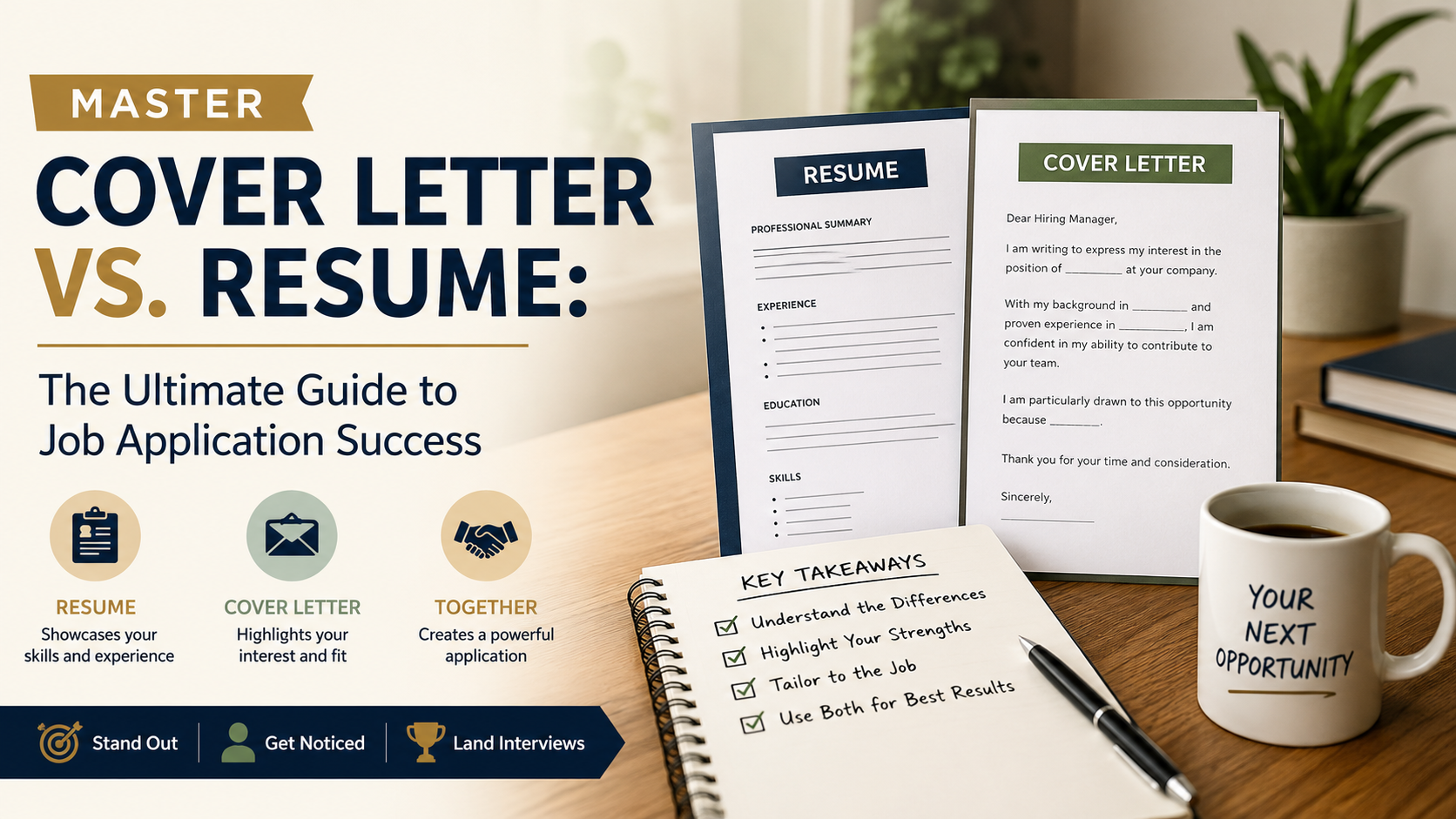
Master Cover Letter vs. Resume: The Ultimate Guide to Job Application Success

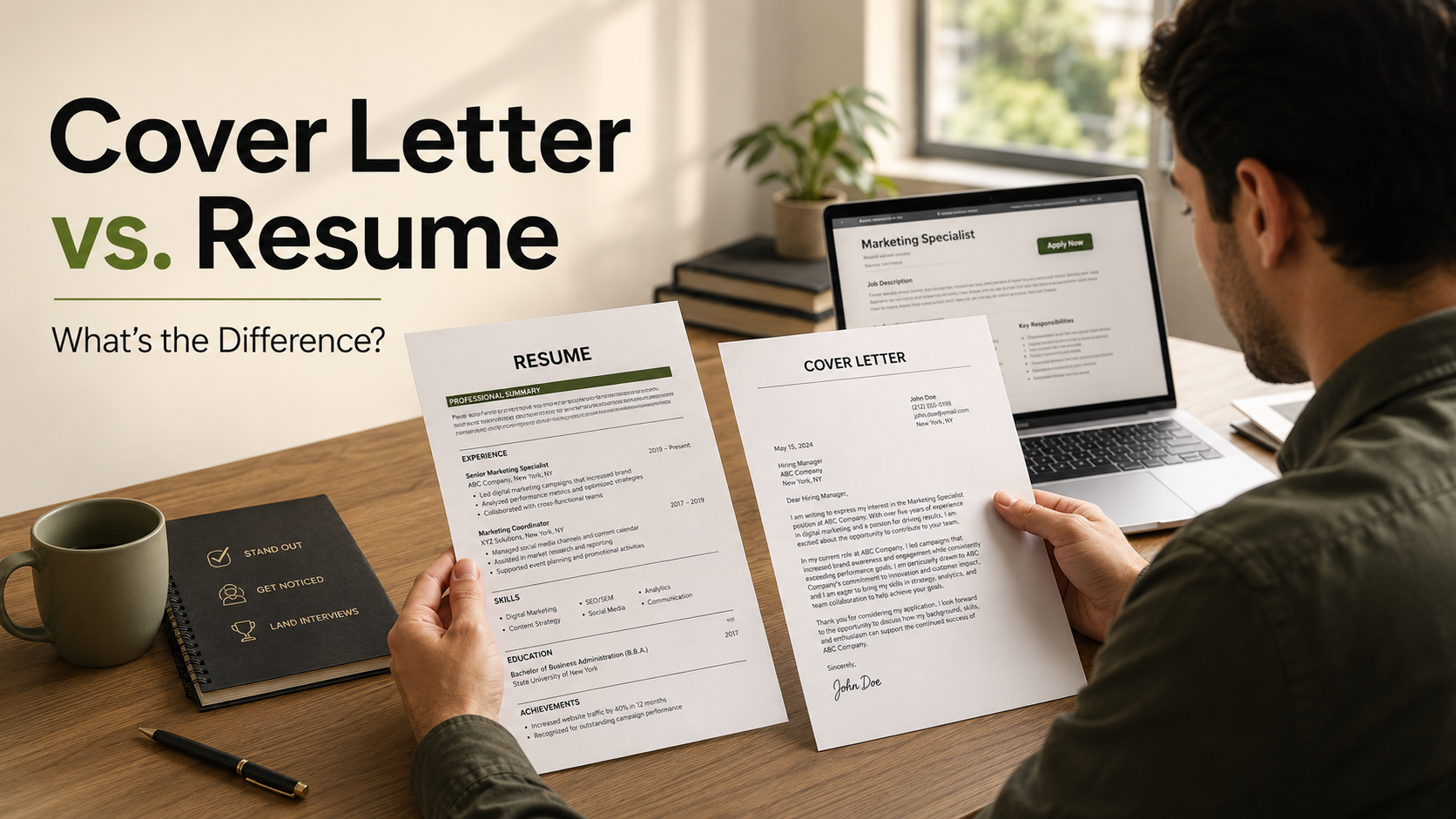
Navigating the job market often brings up a common dilemma: figuring out the core differences in the cover letter vs. resume debate. Understanding how these two documents work together can completely transform your job search and help you land interviews faster. Whether you are a recent graduate or a seasoned professional, knowing which document does what is essential for career growth. According to guidance from the U.S. Department of Labor CareerOneStop, tailoring your application materials significantly improves your chances of getting noticed by hiring managers. This comprehensive guide answers your most pressing questions, including whether a cover letter is better than a resume, if a CV is a cover letter, whether you can use a resume as a cover letter, and if you truly need both. Let’s dive into the details to clear up any confusion and elevate your application strategy.

Is a Cover Letter Better Than a Resume?

Deciding whether a cover letter is better than a resume is a common question for job seekers. The answer is no. Neither document is objectively better because each serves a different purpose in the hiring process. A resume provides a structured summary of your professional history, skills, education, and achievements. It gives recruiters the facts they need to assess your qualifications quickly.

A cover letter works differently. It provides a personalized introduction and explains why you want the role. It can also show your communication style, motivation, and interest in the company. While a resume shows what you have accomplished, a cover letter explains why those accomplishments matter for the position.

Using only one document can leave important gaps in your application. Your resume may show strong experience but provide little context about your motivation. Your cover letter may explain your interest but lack enough evidence of your qualifications. Using both documents together gives employers a clearer picture of your professional value.

Why You Need Both Documents

The strengths of a resume and cover letter become clearer when you compare their roles. A resume focuses on facts, evidence, and career history. A cover letter provides context and connects that experience to a specific opportunity. Together, they create a stronger job application.

Your resume should make your qualifications easy to scan. Recruiters often review applications quickly, so relevant skills, achievements, and experience should stand out immediately. The document should focus on measurable results rather than lengthy explanations.

Your cover letter gives you more room to explain your motivation. You can discuss why you want the position and how your experience matches the employer’s needs. You can also briefly explain circumstances that may require additional context, such as a career change or employment gap.

The two documents should support each other rather than repeat each other. Your resume provides the evidence, while your cover letter adds meaning and direction. This combination helps hiring managers understand both what you offer and why you want the opportunity.

Is a CV a Cover Letter?

Many job seekers mistakenly use the terms CV and cover letter interchangeably. They are different documents with different purposes. A curriculum vitae, or CV, provides a detailed record of your academic and professional background. Depending on the field and country, it may include education, research, publications, presentations, awards, certifications, and professional experience.

A cover letter is much shorter and more targeted. It normally accompanies a resume or CV during a job application. Its purpose is to introduce you, explain your interest in the position, and connect your background to the employer’s requirements.

The difference becomes especially important when applying for jobs internationally. Employers may use the terms “CV” and “resume” differently depending on the country. However, a cover letter remains a separate document from either one.

Before submitting an application, always check the employer’s instructions. If the company requests a CV and cover letter, submit both. Do not assume that one document can replace the other. Understanding these differences helps you follow application instructions and present your experience professionally.

Understanding the Core Differences

A CV is generally a comprehensive record of your academic and professional experience. It may extend across several pages when the applicant has substantial experience. Academic and research positions often require detailed information about publications, research projects, teaching experience, and awards.

A cover letter serves a completely different purpose. It is usually a concise, targeted document written for one specific position. Instead of listing everything you have done, it highlights the experiences most relevant to the opportunity.

The difference can be summarized simply:

  • CV: Provides detailed information about your background.
  • Resume: Summarizes relevant qualifications and achievements.
  • Cover letter: Explains your interest and suitability for a specific role.

Keeping these documents separate prevents unnecessary repetition. Your CV or resume should contain the detailed evidence. Your cover letter should explain the connection between that evidence and the employer’s needs.

This distinction also helps recruiters evaluate your application more efficiently. When every document has a clear purpose, your overall application becomes easier to understand. More importantly, you avoid submitting a resume when an employer specifically expects a personalized cover letter.

Can I Use a Resume as a Cover Letter?

Using a resume as a cover letter is usually a mistake because the two documents communicate information differently. A resume uses structured sections, bullet points, dates, job titles, skills, and achievements. Its design allows recruiters to scan your qualifications quickly.

A cover letter requires a more natural narrative structure. It normally addresses the hiring manager or employer and explains why you are interested in the position. It should connect your relevant experience to the company’s needs rather than simply repeat your resume.

Copying resume bullet points into a letter does not automatically create an effective cover letter. Recruiters want to understand your motivation and see why your background makes you relevant to the specific role. A strong cover letter adds context instead of duplicating information.

There is also an important practical issue. If the job posting specifically asks for a cover letter, submitting only your resume means you have not followed the application instructions. That can weaken your application before your qualifications are even considered.

A resume and cover letter should work together. Your resume proves your experience, while your cover letter explains its relevance.

The Risks of Improper Formatting

Poor formatting can make an otherwise qualified candidate appear careless. A resume is designed for fast scanning, so its structure should emphasize dates, positions, skills, achievements, and relevant qualifications. A cover letter needs a more conventional letter structure.

A proper cover letter should explain your purpose quickly. The opening should identify the position and establish your interest. The middle should connect your strongest qualifications to the role. The closing should reinforce your interest without making exaggerated claims.

Replacing this structure with resume-style bullet points can make the application feel impersonal. It also removes the opportunity to explain why you are interested in the company or position.

Improper formatting can create several problems:

  • Your motivation becomes unclear.
  • Your application may appear generic.
  • Important context gets lost.
  • You may appear to ignore application instructions.
  • Your communication skills become harder to evaluate.

A dedicated cover letter bridges the gap between your experience and the employer’s specific needs. It should not simply repeat your resume. Instead, use it to interpret your most relevant experience and explain why it matters to the position. For guidance on creating one, see this step-by-step guide to writing a cover letter.

Do You Need Both a Cover Letter and a Resume?

Whether you need both documents depends on the employer’s instructions. If a job posting specifically requests a cover letter and resume, submit both. Understanding Cover Letter vs. Resume requirements can help you avoid an incomplete application.

If a cover letter is optional, consider whether it adds useful information. A tailored letter can strengthen your application by explaining your motivation and connecting your experience to the specific role.

A cover letter can also provide context that does not fit naturally into your resume. For example, you might explain a career transition, employment gap, relocation, or change in professional direction. However, a generic letter adds little value and may waste the recruiter’s time.

Quality matters more than simply submitting another document. If you write a cover letter, tailor it to the company and position. Mention specific requirements, relevant achievements, or genuine reasons for wanting to join the organization. You should also avoid common problems covered in this guide to resume mistakes recruiters notice immediately.

The goal is not to submit more paperwork. The goal is to provide useful evidence and context that helps the employer make a hiring decision. In the Cover Letter vs. Resume comparison, both documents have value when they serve different purposes and complement each other.

Maximizing Your Competitive Edge

A tailored cover letter can strengthen your application when it adds information that your resume cannot communicate effectively. It gives you an opportunity to connect your experience with the employer’s current needs.

For example, your resume might show that you managed a project successfully. Your cover letter can explain how that experience relates to the challenges mentioned in the job description. This connection makes your application more specific and relevant.

A strong cover letter can also demonstrate communication skills. Clear writing, logical organization, and concise explanations show how effectively you communicate professionally. These qualities matter in many roles, particularly positions involving clients, teams, or written communication.

However, submitting a cover letter does not guarantee an advantage. A poorly written letter can have the opposite effect. Generic introductions, excessive flattery, spelling errors, and repeated resume content can make your application weaker.

Focus on relevance rather than length. A useful cover letter should:

  • Address the specific position.
  • Highlight two or three relevant strengths.
  • Explain your interest in the employer.
  • Connect your experience to the role.
  • End with a clear and professional closing.

Used properly, the cover letter gives your application additional context without duplicating your resume.

Cover Letter and Resume Similarities

Although cover letters and resumes have different purposes, they share several important characteristics. Both documents represent you professionally and should present a consistent message about your qualifications. They also need careful proofreading because spelling and grammar mistakes can damage your credibility.

Both documents should be tailored to the position. Review the job description and identify relevant skills, qualifications, responsibilities, and keywords. Then reflect those terms naturally when they accurately describe your experience.

Formatting also matters for both documents. Use readable fonts, clear headings, consistent spacing, and enough white space. Avoid unnecessary graphics or complicated layouts that make the content harder to scan. Your goal is to make important information easy to find.

The documents should also complement each other. If your resume highlights project management, your cover letter can explain how that experience prepares you for the advertised role. Avoid making both documents say exactly the same thing.

Ultimately, both documents support the same goal: helping you reach the next stage of the hiring process. The resume provides structured evidence, while the cover letter adds context and personality. Together, they create a cohesive and professional job application.

Shared Goals in the Hiring Process

Both documents are designed to communicate your professional value and encourage the employer to consider you for an interview. However, they achieve that goal through different methods. For a broader overview of the application and interview process, explore these resume and interview tips for beginners.

A resume answers questions such as what experience you have, where you worked, what skills you developed, and what results you achieved. Its structure helps recruiters evaluate your qualifications efficiently.

A cover letter answers different questions. Why do you want this position? Why are you interested in this company? Which parts of your experience are most relevant? What makes this opportunity a logical next step for you? You may also encounter these behavioral interview questions and answers when discussing your experience.

Because both documents contribute to the same application, they should tell a consistent story. Your job titles, dates, achievements, and skills should match across both documents. Avoid introducing claims in your cover letter that your resume cannot support.

Consistency does not mean repetition. Instead, each document should contribute something different. Your resume supplies evidence and career details, while your cover letter supplies explanation and motivation.

When these documents work together, recruiters can understand your qualifications faster. They can also see how your background connects to the specific opportunity. That makes your overall application clearer, more focused, and easier to evaluate.


FAQ SECTION

Should I Use the Same Cover Letter for Every Job Application?

No. You should tailor your cover letter for each job application. A customized letter can mention the specific company, position, and relevant achievements. This approach shows genuine interest and connects your experience to the employer’s needs. A generic letter may appear careless or impersonal. When comparing Cover Letter vs. Resume, remember that the cover letter gives you more space to explain why you fit the specific role.

How Long Should a Professional Resume Be?

For most professionals, a resume should be one to two pages long. Recent graduates and early-career applicants can usually keep their resume to one page. Experienced professionals may use two pages when their background requires more space. Avoid adding information simply to increase length. Every section should support your current career goals and demonstrate relevant skills, achievements, or experience.

Can a Cover Letter Be Longer Than One Page?

A professional cover letter should generally fit on one page. Hiring managers often review many applications, so concise writing is more effective. Aim for three or four short paragraphs. Introduce yourself, highlight your most relevant qualifications, explain your interest, and finish with a clear closing. The goal of a cover letter is to add context without repeating everything already included in your resume.

What Is Applicant Tracking System (ATS) Optimization?

ATS optimization means formatting your resume and using relevant keywords so applicant tracking systems can read your application correctly. Many employers use ATS software to screen applications before recruiters review them. Study the job description and naturally include relevant terms that accurately describe your experience. Use simple formatting and avoid excessive graphics, tables, or complicated layouts that may interfere with automated parsing.


Conclusion

Understanding Cover Letter vs. Resume requirements helps you create more complete and professional job applications. Your resume provides a structured overview of your experience, skills, education, and achievements. Your cover letter adds context by explaining your motivation and connection to the specific position.

Neither document replaces the other. They serve different purposes and should work together. Tailor both documents to the job description and follow the employer’s application instructions carefully.

When a cover letter is required, submit one that adds useful information rather than repeating your resume. When it is optional, include it only when you can make a relevant, personalized case.

By understanding the differences between Cover Letter vs. Resume, you can present your qualifications more clearly and give hiring managers stronger reasons to consider your application.


High Paying Remote Jobs in 2026: Global Guide

High Paying Remote Jobs in 2026: Global Guide

High Paying Remote Jobs in 2026 offer professionals unprecedented opportunities to earn international salaries while working from home. Working for a top-tier international company from the comfort of your living room is now a standard career path. This shift matters because it democratizes opportunity. It allows professionals in developing markets to earn strong currencies while giving businesses access to a diverse, global talent pool. However, standing out in a worldwide applicant pool requires strategy, specific skills, and a deep understanding of how remote hiring works.

This article covers everything you need to know to launch a successful global career. We will explore the industries offering the best compensation, detail the specific roles that pay the most, and discuss the daily realities of working across borders. Furthermore, we will answer your most pressing questions about securing foreign roles, handling international payments, and building a sustainable income from home.

Top Industries for High-Income Remote Work

When searching for high paying remote jobs in 2026, technology and digital services naturally lead the pack. Software engineering, data science, and cloud architecture remain incredibly lucrative. Companies rely on digital infrastructure, so they constantly need experts who can build, secure, and maintain these systems remotely. Moreover, cybersecurity has become a non-negotiable priority for organizations worldwide, making remote security analysts highly sought after.

However, technical roles are not the only path to a high income. Marketing, particularly performance marketing and SEO, offers massive remote opportunities. Businesses are eager to hire professionals who can drive online revenue. Similarly, product managers and digital project managers are in high demand to coordinate distributed teams and ensure product launches run smoothly.

Financial services and virtual consulting are also experiencing a remote boom. Financial analysts, remote bookkeepers, and corporate strategists can easily manage their portfolios from anywhere. Consequently, if you possess highly specialized knowledge, you can package your expertise into consulting services and attract high-paying international clients without ever stepping into a corporate office.


Top 5 High Paying Remote Jobs with Details

To give you a clearer picture of where the most lucrative opportunities lie, here are five specific roles that consistently offer top-tier compensation for remote workers:

Senior Software Engineer / Engineering Manager

Software engineers design and maintain the systems that run modern businesses. Senior roles, especially engineering managers who lead distributed teams, command premium salaries often ranging from $130,000 to over $180,000. These roles are naturally suited to remote work since they rely entirely on digital collaboration tools and cloud-based environments.

DevOps and Cloud Engineer

Companies rely heavily on seamless software deployment and robust cloud infrastructure. DevOps engineers maintain these automated systems and keep platforms running smoothly. Because the infrastructure is entirely online, this role easily translates to 100% remote work, with compensation frequently reaching $120,000 to $170,000 annually.

Data Scientist

Organizations collect massive amounts of data and need experts to uncover actionable patterns. Data scientists use advanced programming and modeling tools to guide business decisions. According to official projections from the U.S. Bureau of Labor Statistics, demand for data scientists is expected to grow significantly over the next decade, making it a highly secure and high-paying remote career choice.

AI and Machine Learning Specialist

As artificial intelligence integrates into every industry, experts who can build and refine machine learning models are in incredibly high demand. This role requires deep knowledge of Python, neural networks, and algorithms. Because AI talent is scarce globally, companies are willing to hire internationally and offer highly competitive pay packages to secure top experts.

Information Security Analyst

With cyber threats growing more sophisticated, protecting company data is a critical priority. Cybersecurity professionals monitor networks, assess risks, and build secure systems. They operate efficiently from home using secure remote access, and their essential role in risk management allows them to command salaries often exceeding $120,000.


Building a World-Class Remote Profile

To land high paying remote jobs in 2026, your online presence must act as your digital resume. Traditional CVs are simply not enough in a competitive global market. Therefore, you need a robust portfolio that visually or practically demonstrates your skills. For developers, an active GitHub profile showcasing clean code is essential. For writers or designers, a sleek personal website with clear case studies proves your value immediately.

Networking also looks different in the remote era. Instead of attending local mixers, you must optimize your LinkedIn profile for international recruiters. Using specific keywords related to your industry and clearly stating that you are open to global remote work helps algorithms match you with the right opportunities. Furthermore, actively participating in industry-specific online communities, such as specialized Discord servers or Reddit forums, can lead to unadvertised job leads.

According to a recent report by Forbes highlighting World Bank insights on the digital economy, developing markets are experiencing massive digital transformations, with millions transitioning into remote or hybrid models. To stand out in such a massive crowd, continuous upskilling is vital. Acquiring certifications in in-demand tools—like AWS, Salesforce, or advanced data analytics platforms—signals to global employers that you are serious, capable, and ready to deliver results from day one.


Navigating International Contracts and Tools

Working for an overseas company requires a basic understanding of international employment frameworks. Most global companies hire remote workers as independent contractors rather than traditional employees. As a result, you will likely manage your own taxes, health insurance, and retirement planning. While this arrangement requires more administrative work, the significantly higher pay rates often outweigh these inconveniences.

Many employers use EOR (Employer of Record) platforms such as Deel and Remote to hire and pay international workers legally. These platforms handle compliance requirements and currency conversions, allowing workers to receive accurate and timely payments in their local currency. Familiarizing yourself with these systems can make the onboarding process much smoother when you secure a remote role.

Communication serves as the cornerstone of successful remote work. Since colleagues work from different locations, you must master asynchronous communication. Clear and concise emails, Slack messages, and project updates help prevent misunderstandings and keep teams aligned. In addition, employers expect remote professionals to use collaboration tools such as Jira, Trello, Asana, and Zoom effectively. Demonstrating strong organization skills and proactive communication can quickly make you an invaluable member of any remote team.


Frequently Asked Questions

How to get foreign remote jobs from India?

Getting foreign remote jobs from India requires targeted searching and a globally optimized profile. First, avoid local job boards and focus exclusively on remote-specific platforms like We Work Remotely, FlexJobs, Remote.co, and Wellfound (formerly AngelList). These platforms cater directly to companies looking for international talent. Therefore, your chances of finding a borderless role increase significantly.

Next, you must build a portfolio that proves your competence to someone sitting halfway across the world. International employers care less about where you went to university and more about what you can actually build or deliver. Create a personal website, contribute to open-source projects, or publish case studies on LinkedIn.

Finally, you need to navigate the interview process with time zones in mind. Show prospective employers that you have excellent written communication and a reliable internet setup. Be prepared to discuss how you will overlap with their working hours. Emphasize your ability to work autonomously, as global managers cannot micromanage you. If you can prove reliability and high-quality output, foreign companies will be eager to hire you.

How to make $70,000 a year from home?

Making $70,000 a year from home is a highly realistic goal if you target the right high paying remote jobs in 2026. To reach this income level, you must offer a high-value skill. Software development, data science, cybersecurity, and senior digital marketing roles frequently command this salary or higher. If you lack these skills, investing six months into an intensive bootcamp or certification can drastically change your earning potential.

Alternatively, you can reach this financial milestone through specialized freelancing. Instead of seeking a single full-time employer, many professionals build a portfolio of three to four steady clients. For instance, a freelance SEO consultant or UX designer charging $35 to $40 an hour only needs to work standard full-time hours to surpass the $70,000 mark.

However, earning this much requires treating your home office like a real business. You must be deeply disciplined, continuously market your services, and consistently deliver premium work. Furthermore, you must learn to negotiate confidently. Research global salary standards for your role and do not undervalue yourself simply because you live in a region with a lower cost of living.

Can I do US remote jobs from India?

Yes, you can absolutely do US remote jobs from India. Thousands of Indian professionals currently work for American startups, tech giants, and agencies without ever leaving their hometowns. US companies actively seek talent in India to bridge skill gaps, diversify their teams, and often to maintain 24/7 operational coverage.

Usually, you will not be hired as a traditional “W-2 employee” because US labor laws do not easily extend overseas. Instead, you will be hired as an independent contractor. To do this legally, you will typically fill out a W-8BEN form, which tells the US government that you are a foreign worker and exempts you from US tax withholding. You will then be responsible for reporting and paying income taxes in India.

Alternatively, the US company might use a global payroll platform to hire you as a legal employee in India. In this scenario, the platform acts as your legal employer on paper, handling local taxes and benefits, while you perform your daily duties for the US company. In either case, the logistical barriers have largely been eliminated, making it easier than ever to secure these roles.

Which company is 100% remote?

A growing number of highly successful companies operate on a 100% remote model, meaning they have no physical headquarters at all. These organizations are often pioneers in asynchronous communication and global hiring. GitLab is one of the most famous examples; they have thousands of team members spread across more than 60 countries and are completely transparent about their remote work handbook.

Automattic, the company behind WordPress.com, is another giant in the fully remote space. They have operated without a central office for years, offering generous home-office stipends and flexible schedules to their global workforce. Zapier, the workflow automation platform, is also 100% distributed, explicitly hiring top talent regardless of their physical location.

Other notable 100% remote companies include Buffer, Doist (creators of Todoist), and Toggl. These companies actively recruit globally and are excellent targets if you are looking for high paying remote jobs in 2026. Because they were built from the ground up to be remote, their cultures are highly inclusive of international workers, and they offer streamlined onboarding processes for global hires.

What remote jobs are most in demand in India?

In India, the most in-demand remote jobs heavily skew toward technology, data, and digital marketing. Software engineering remains the dominant force. Full-stack developers, particularly those skilled in Python, React, and Node.js, are constantly recruited by international firms. Similarly, the explosion of artificial intelligence has made AI and machine learning engineers incredibly sought after.

Data roles are also surging. Global companies generate massive amounts of information and desperately need Data Analysts and Data Scientists to interpret it. Proficiency in SQL, Tableau, and data modeling can easily secure a lucrative remote position. Consequently, these roles offer a clear path to high-income brackets.

Beyond strict IT roles, Digital Marketing and Content Strategy are highly requested. Global brands need experts to manage their SEO, run paid ad campaigns, and create engaging social media content. Additionally, technical customer success and specialized virtual assistance are growing rapidly. US and European companies frequently hire Indian professionals to manage client onboarding, technical troubleshooting, and high-level administrative operations.

Do I need a specific degree to work remotely?

No, you do not always need a specific university degree to secure remote work. While traditional professions like law or medicine require formal credentials, the digital economy values practical skills over paper degrees. Many of the best remote workers are self-taught or bootcamp graduates.

Employers in the tech and digital spaces care primarily about your portfolio and your ability to solve their problems. If you can write flawless code, design beautiful interfaces, or rank a website on Google, the hiring manager will rarely care about your college major. Therefore, building a strong body of work is far more important than formal education.

However, having a degree can still be beneficial, especially for management roles or when working with highly traditional enterprise companies. If you do not have a degree, you can bridge the credibility gap by earning recognized industry certifications, such as Google Career Certificates or specialized tech credentials.

How do time zones affect remote work?

Time zones are one of the biggest practical challenges in global remote work. If you are in India working for a company on the US West Coast, you are dealing with a time difference of over 12 hours. Consequently, this can lead to late-night meetings and inverted sleep schedules if not managed correctly.

Fortunately, many modern remote companies operate asynchronously. This means work is not done in real-time. Instead, tasks are tracked on project boards, and communication happens via detailed messages that you can answer during your own daytime hours. In these setups, you may only need one or two hours of “overlap” with your global team for essential meetings.

When interviewing for a foreign role, it is crucial to ask about their working hours expectations. Clarify whether they expect you to be online during their core business hours or if they evaluate performance purely based on output. Managing time zones effectively is the key to maintaining a healthy work-life balance while working globally.


Conclusion

The landscape of work has fundamentally transformed, and pursuing high paying remote jobs in 2026 is a smart, strategic career move. The barriers that once separated skilled professionals from top-tier global companies have dissolved. By leveraging global job boards, understanding international hiring structures, and continuously updating your technical abilities, you can command an international salary from anywhere in the world.

Whether you are aiming to make $70,000 a year from home or looking to secure a role with a 100% distributed company, the opportunities are vast. The key is to treat your remote career with the same professionalism and dedication as you would a corporate office role. Therefore, building a strong online portfolio, mastering asynchronous communication, and adopting a proactive mindset are essential steps for success.

Ultimately, navigating high paying remote jobs in 2026 requires adaptability and focus. The global market is highly competitive, but it rewards those who deliver consistent, high-value results. Start refining your digital presence today, target the right international companies, and take control of your borderless career journey.

Further Reading: Managing Remote Work with Children at Home

If you’re balancing a remote career with parenting responsibilities, learning how to structure your day effectively can significantly improve both productivity and work-life balance. For practical scheduling strategies, time-management tips, and routines designed specifically for parents, read this helpful guide: Scheduling Your Work-From-Home Day Around Kids.

Best desk lamp for working at night

Regardless of how brilliant the light in your study room is, it’s preferable to have a specialized desk lamp that is supposed to focus and provides for perfect control of the brightness, angle, and intensity surrounding the table. An excellent study lamp will ease eye strain and improve your ability to focus.

With the selections available for the best study table lamps in India, you can focus on your work or study without being distracted. They have several dimming controls, energy-efficient construction, and glare-free lighting.

Depending on your own preferences, you may choose from simple, minimalistic lamps or go with something more creative and distinctive. To choose the perfect lamp for your needs, though, take into account the wattage, adaptability, and power supply.

Best desk lamps for working at night are as follows:

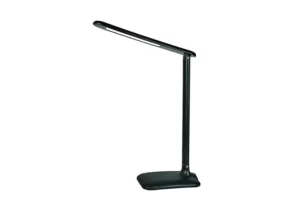
  • Philips 61013 Air 5W LED Desk Light

(Photo from https://www.momjunction.com/)

This study lamp is one of Philips’ best. Philips is renowned for producing cutting-edge electronic devices. With 20 LEDs, this powerful desk lamp produces cool day light that is great for reading and studying. Since the design is minimalist, it blends in seamlessly with any interior without standing out. The lamp’s neck bends down to 180 degrees to make it small and space-saving, so you can store it out of the way when not in use.

Pros
  • Emits a lot of light
  • Does not cause eye strain
  • Lightweight
Cons
  • It cannot be recharged.
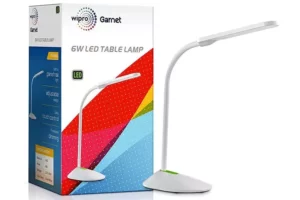
  • Wipro Garnet 6W LED Table Lamp

(Photo from https://www.momjunction.com/)

This stylish, well-made Wipro LED table lamp produces glare-free illumination. It has three dimming controls and three color-changing options, which enable users, adjust the brightness to their tastes.

You can conveniently turn the light on, off, or alter the brightness thanks to the feather-touch unique design. To lessen eye fatigue, it provides warm white, neutral white and cold day light. The light is a terrific investment because it also comes with a charging adapter, a flexible gooseneck, and a tough exterior.

Pros
  • No-glare lighting
  • Color-changing
  • Simple touch controls
  • Adaptable style
  • Energy-efficient
Cons
  • Not Wireless
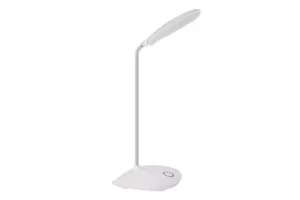
  • Deeplite LED Desk Lamp

(Photo from https://www.momjunction.com/)

One of the best LED study lamps for ease of use is this touch-sensitive table lamp. It has three brightness settings for use in a variety of situations, including reading, working, camping, and even as an emergency bedroom lamp.

It uses 5 watts and produces 400 lumens of strong, flicker-free LED glow with no dark spots. The energy-saving and eye-friendly features of this LED table lamp should convince you to buy it.

Pros
  • Dimmable
  • 360-degree flexibility
  • Able to be charged in several ways
Cons
  • The battery backup may not impress everyone.
  • Opple LED Table Lamp

(Photo from https://www.momjunction.com/)

The Opple LED table lamp is a viable option if all you’re looking for is a rechargeable table lamp. You may use it as a night lamp at the lowest brightness setting thanks to a touch switch and three different brightness settings.

Its flexible, 360° rotating design and anti-slip silicone cushion increase how profitable it is. It has a USB interface design and an internal 500 mAh rechargeable battery. It has a clip base as well, allowing you to secure it to the edge of your desk to reduce clutter.

Pros
  • Touch sensor switch
  • Flicker-free
  • Wide clip-on jaw
  • Space-saving design
Cons
  • Lasts only for 5 hours even after full charging.
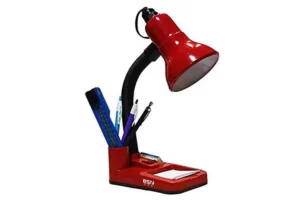
  • ESN 999 Electric Table Lamp With Attached Pen Stand

(Photo from https://www.momjunction.com/)

This retro-styled bright red study table light may give color to your workplace and break up the monotony of a plain study table. It has a 100 cm long wire and a handy switch on the front that can be used to turn it on and off.

You may change the angle to suit your tastes thanks to the flexible gooseneck. To save space on your desk, this B22 holder study lamp also has a pen holder and additional room for sticky notes or other small supplies.

Pros
  • Enticing color
  • Lightweight
  • Easily accessible
Cons
  • Does not include a bulb in it.
  • Helicon Table Lamp

(Photo from https://www.momjunction.com/)

This desk lamp’s chrome appearance makes it appropriate for either a home or office setting. For the best light dispersion, the lamp’s neck can spin up to 360 degrees and is height-adjustable.

It is quite strong and durable because it is built of steel and synthetic materials and has an aluminium reflector. Since it has a B22 bulb base, incandescent bulbs will fit the light. This study lamp reduces the damaging effects of light on your eyes by using light-style power.

Pros
  • Lightweight but robust
  • Convenient flip switch
  • Designed with technology for eye care
  • Gooseneck arm
Cons


  • After a few hours of use, the surface could start to warm up.
  • Figment Rechargeable LED Desk Lamp

(Photo from https://www.momjunction.com/)

This is one of the greatest study table lamps in India that you could think about if you’re seeking for a night study lamp that matches your minimalist study table. The light may be dimmed or brightened using a touch mechanism, and it is composed of sturdy plastic.

It is powered by a USB charger, so you can charge it with your laptop or a power bank. As a reminder to turn off the lamp while it charges, it has an indicator for charging.

Pros
  • Touch screen display
  • Provides eye safety
  • Effective heat transfer
  • Energy-efficient
  • Long running time
Cons


  • Some people might find the base to be too weak.
  • Zosoe Rechargeable LED Desk Lamp

(Photo from https://www.momjunction.com/)

Three brightness settings and different light modes are available on this chic cordless table lamp. It is completely touch-controlled and lightweight for simple use. The neck can be folded or twisted in any way because it is 360° adaptable. It produces evenly dispersed, flicker-free natural light.

The light also has a built-in rechargeable battery so you may use it at night without electricity and charge it during the day.

Pros
  • Energy-saving
  • Switch with a touchpad
  • With a USB port
  • Light that doesn’t flicker
  • Soothing to the eyes
Cons
  • The charging process could be prolonged.

These are a few study desk lamps which you can buy for better focus and lightening.

References:

https://www.momjunction.com/

Want to know what to wear for an interview- tips for men, click on the link below:

https://theperfectblogger.com/what-to-wear-to-a-job-interview-tips-for-men/


ESSENTIAL STATIONARY SUPPLIES

ESSENTIAL STATIONARY SUPPLIES

Office supplies and stationery are still necessary and essential even when offices have gone paperless and technologically transformed. You may believe  stationary is insignificant items, but you can see how  stationary is used all around the office, including at your desk, in the conference rooms, and even in the pantry. Can you picture without having a pen with which to sign documents or make notes, or not having a suitable drawer in which to store your paperwork? Simple chores like fixing typos and organizing paperwork can be accomplished more quickly and easily when using such stationery. As a result, it’s crucial to provide your office with enough of stationery supplies.

IMAGE CREDITS: istockphoto.com

LASER POINTER

Because every employee is required to give a keynote or PowerPoint presentation, the laser pointer was chosen as the first item.

A presenter’s body becomes an extension of the laser pointer when used appropriately. It serves as a tool for focusing attention and aids in maintaining focus throughout a presentation, ensuring that everyone is informed and in agreement.

WHITEBOARD MARKER

PHOTO CREDITS: Unsplash.com

We frequently run out of whiteboard markers; I don’t know about you.

We use it to perform design sprints and stay on the same page throughout meetings (which we do quite often).

Finding an economical yet useful whiteboard marker is so crucial.

CORRECTION TAPE

Scribbling over errors might make your writing look unkempt if you’ve made a mistake while writing. As a result, the reader can find your work difficult to read.

You’ll need a useful correction tape to make your documents look tidy and professional. Correction tape is a white, opaque masking material that slides over paper without resistance and may entirely cover ink from pens and printers.

The advantages of utilizing correction tape over correction fluid are numerous. On a page, correction fluid could spread, overflow, or spill. Additionally, it needs time to dry and over time, it might even harm the paper.

NOTEBOOK AS A STATIONARY

PHOTO CREDITS: Unsplash.com

A notebook will come in handy whether you’re taking notes for a meeting or simply need a place to write down your daily to-do list.

Although there is a large selection of notebooks available, we suggest a ring- or spiral-bound book. The bound edge of a notebook has deep creases from traditional stapled or glued spines. This may result in the papers tearing and disintegrating over time.

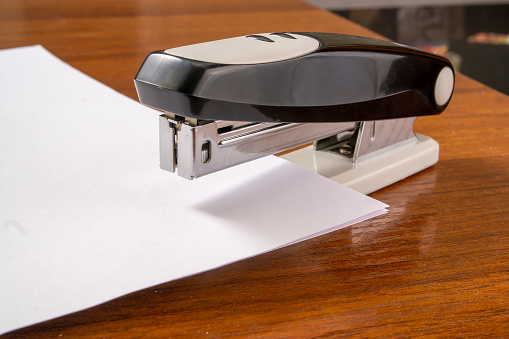
STAPLING MACHINE

PHOTO CREDITS: istockphoto.com

Small staplers are good for joining two or three sheets of paper together, but the only office supply that will hold enormous stacks of documents is a heavy-duty stapler.

A good heavy-duty stapler can easily bind up to 210 sheets at once. In contrast to tiny hand-held staplers, they will cleanly and effectively bind your documents without creating creases, broken staples, or stapler malfunctions!

A heavy-duty stapler is the way to go because it requires less maintenance and has fewer user-related difficulties. Additionally, binding and stapling are not just applicable to papers. Its versatility makes it essential office stationery. The machine can even bind linen, silk, and even leather.

PAPER TRAY

Every office is familiar with the image of a messy desk filled with mountains of paperwork. The layer paper tray is therefore essential to have on every workstation.

A tiered paper tray helps you manage any documents you have, much as organizing your emails into separate folders, similarly to a physical replica of your inbox. Mail, significant contracts, and your to-do list are just a few examples of documents that can be organized into manageable piles and given the appropriate level of priority. The paper tray’s stackable design makes the most of your desk space because it takes up minimal room while holding a variety of documents.

HIGHLIGHTERS AS A STATIONARY

PHOTO CREDITS: Unsplash.com

My particular favorite type of stationery is highlighters. The vivid colors make reading through lengthy passages of text much more enjoyable.

Use highlighters to draw attention to important phrases and points on a page. Highlighting such crucial passages also makes it simpler to read and identify when you quickly skim the text. Highlighting aids in summarizing important points.

You must get premium highlighters because lower-quality ones are more prone to spill, smear, or dry out too soon. High-quality highlighters frequently include two width options and are refillable.

CARD CASE AS A STATIONARY

Every contract, report, and document must be flawlessly presented to leave the best possible impression on your clients and customers. To avoid folding or tearing huge documents, nevertheless, can be particularly challenging when moving them from one location to another. It’s crucial to keep these materials as wrinkle-free as possible.

For preserving their documentation in top condition, every workplace requires a sturdy card case. Additionally, it guards against damage or scrapes. It is ideal for certificates, drawings, and other paper documents and is available in a variety of sizes. Place your documents inside of this document case with a sturdy back to keep them organized and prepared for any presentation.

USEFUL LINKS

To know how to make time for your workout, see: https://theperfectblogger.com/how-to-make-time-for-the-workout/

To know benefits and drawbacks of electric cars, visit: https://theperfectblogger.com/benefits-and-drawbacks-of-electric-cars/


HOME OFFICE SETUP

 HOME OFFICE SETUP

Although the ability to work from home is not a new idea, the COVID-19 pandemic has made it an unexpected but necessary requirement for many office and knowledge employees. Even if the coronavirus outbreak eventually ends, many companies will discover they don’t need large office buildings, and many employees will discover they don’t need to be in the office every day or spend hours travelling. All that you need to know about home office setup, we’ve got you covered.

Creative Home Office Setup

Idealistically, a long-term home office should be a designated space that is outfitted for work in your home. Implement as many of the following as you can to create a secure, productive workspace over time.

A Separate Space Room

IMAGE CREDITS: Unsplash.com

For the critical necessity to divide business life from home life, you should ideally utilize a modest room that can house a desk and computer equipment and whose door can be closed.

The majority of people don’t have extra space, but many may turn a guest room into a space that serves as both an office and a guest room when guests are over. The same can be said for a covered porch, a sizeable laundry room or even a garden shed.

Height of Home Office Setup

IMAGE CREDITS: istockphoto.com

An office-height workstation or table is necessary in your room. From the bottom of the work surface to the top, the distance is 29 inches, as is the industry norm. With a higher height, tall people do better, while shorter people perform better. Numerous tables and desks can be raised or lowered, typically by moving the feet.

The basis for that industry standard, however, is handwriting on paper rather than utilizing a keyboard and mouse. That is why keyboard trays are normally an inch or two lower than desk or table height and lift out from beneath the work surface. A keyboard and mouse tray is something you should acquire if you have the space.

Monitor for Home Office Setup

Get a sizable monitor (or two) for your home office, exactly like you would at the company headquarters. I’ve had success with Asus and Acer 25 to 27-inch monitors, but any significant manufacturer will provide high-quality monitors. Simply steer clear of the most affordable displays if you can, as they might cause eyestrain with prolonged use due to their lower resolution and consequently increased fuzziness.

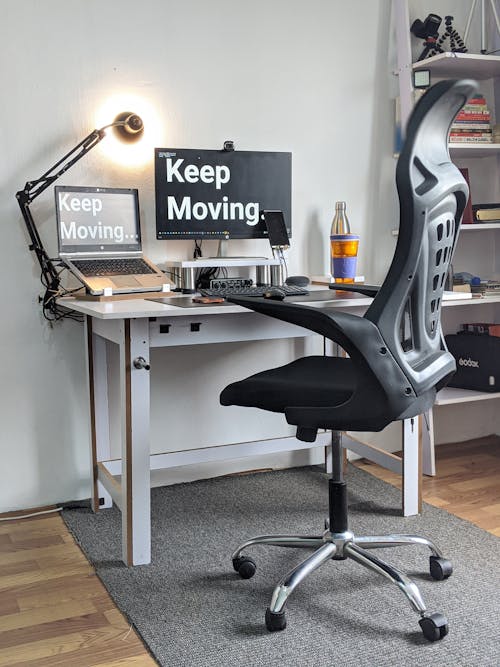
Chair for Home Office Setup

IMAGE CREDITS: Pexels.com

There are several poor chairs available that can cause injuries if you use a computer for an extended period of time. The height of deck chairs and dining chairs, for instance, is frequently off, and neither of these conditions promotes the necessary upright posture. If possible, choose one with adjustable arm height, lateral arm position, seat pan tilt, and height that can be adjusted, as well as one that can roll and offers lumbar support for the lower back.

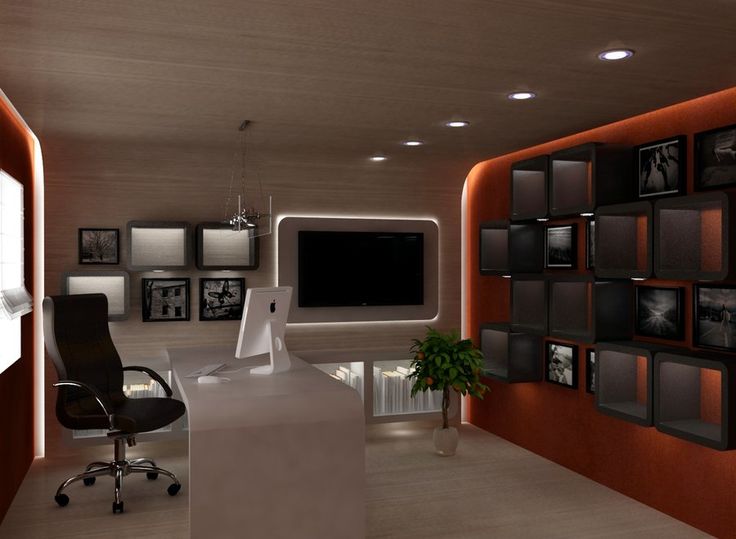
Lightning

IMAGE CREDITS: Pinterest.com

It’s incredibly simple to overlook how your workplace environment affects your productivity. People frequently neglect to consider lighting. To read papers and see tangible items, you should ideally have enough indirect light to brighten your workspace. It is normally better to have overhead lighting, like that from a ceiling lamp.

Direct illumination and monitor reflection are two examples of indirect lighting. When the sun is out, for instance, glare from an outside window behind or to the side of your workstation may appear on your display. Natural light is actually rather nice, but soften it with drapes or shades to prevent glare.

Internet Speed

A minimum speed of 50 Mbps is advised, and the more people using the internet at once, the more you’ll need a higher-speed service. Most metropolitan and suburban areas offer at least one high-speed internet service provider.

The internet bandwidth at your residence is crucial. Since wired Ethernet connections are the best, if at all possible utilize one to connect your computer to your router. This is especially important if you frequently stream video or carry out other bandwidth-demanding operations. Use Wi-Fi if you can’t connect your PC to your router to complete simple office chores.

USEFUL LINKS

To know more about freelancing as a career, see: https://theperfectblogger.com/how-to-start-a-freelance-career/

To know advantages of car insurance, see: https://theperfectblogger.com/advantages-of-car-insurance/

[/kc_column_text][/kc_column][/kc_row]

COMPUTERS AND SOFTWARE

COMPUTERS AND SOFTWARE

A computer’s operating system and various activities are carried out by software, which is a collection of instructions, data, or programs. In contrast, hardware, quite different from software, refers to the components that make up a computer’s physical structure. Software thus becomes a crucial part of computers. Software can be said to be the soul of the computer. An application, script, or program that runs on a device is referred to as software in general usage.  Software can be viewed as the changeable component of a computer, whereas the hardware, unlike software, is always present. Find the basic information about software in this article.


TYPES OF SOFTWARE

PHOTO CREDITS: Unsplash.com

Application Software:

Application software, the most prevalent kind of software, is a set of computer programs that carry out a particular task for a user or, in some situations, for another application. Applications can be standalone or comprise a collection of programs that operate them on the user’s behalf. Office suites, graphics software, databases, database management software, web browsers, word processors, software development tools, image editors, and communication platforms are a few examples of contemporary applications.

System Software:

These software packages are made to run the hardware and application software on a computer. The actions and features of the hardware and software are coordinated by the system software. Additionally, it manages how the computer hardware functions and offers a setting or platform in which all other software can operate. The OS, which controls all other computer programs, is the best illustration of system software. The firmware, computer language translators, and system utilities are more examples of system software.

Driver Software:

PHOTO CREDITS: istockphoto.com

This software, also referred to as device drivers, is frequently regarded as a kind of system software. Device drivers manage the peripherals and devices linked to a computer, allowing them to carry out the activities that are unique to them. A device driver is required for the operation of every connected device to a computer. Examples include any nonstandard hardware, such as specialized game controllers, that comes with software, as well as standard gear, such USB storage devices, keyboards, headphones, and printers, that is enabled by software.

Middleware:

Software that acts as a middleman between two different types of application software, between system software and application software, or between the two is known as middleware. Microsoft Windows, for instance, can communicate with Excel and Word thanks to middleware. Another application on a computer running one type of OS can utilize it to request remote assistance from an application running on a computer running a different OS. Additionally, it makes it possible for more recent programs to communicate with older ones.

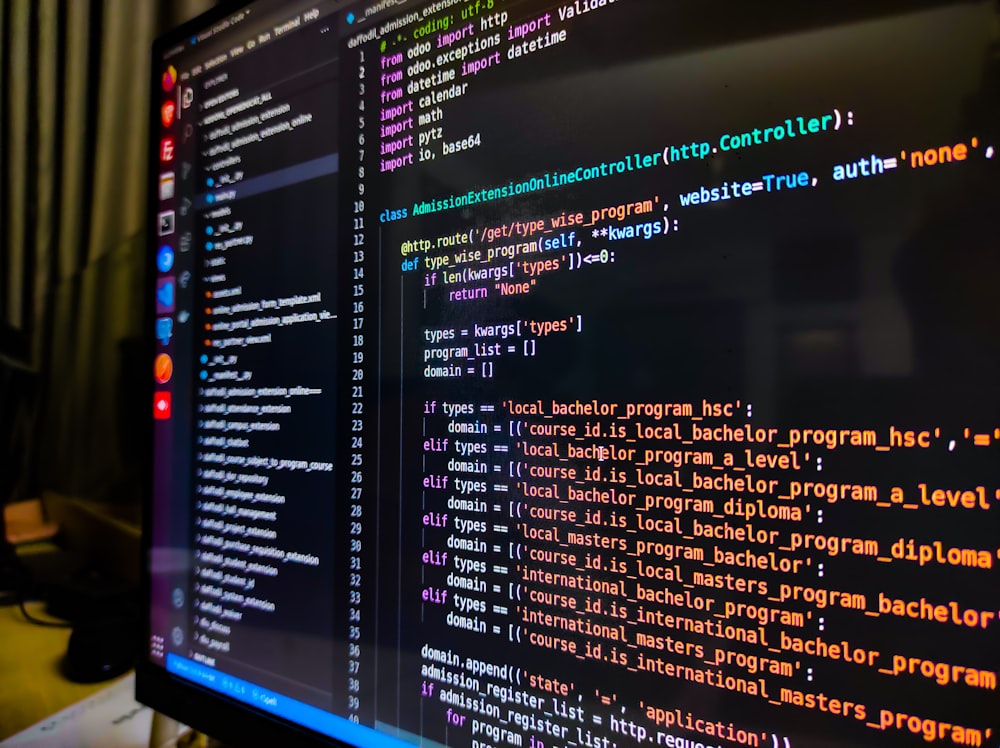
Programming Software:

PHOTO CREDITS: istockphoto.com

To write code, computer programmers utilize programming languages. It is possible for programmers to create, write, test, and debug other software programs using programming languages and tools. Compilers, debuggers, interpreters, and assemblers are a few examples of programming software.

Designing and implementation

PHOTO CREDITS: Unsplash.com

Project managers utilize a framework called the software development lifecycle to outline the steps and duties involved in creating software. The planning stage of the design lifecycle is followed by a need analysis of the users of the program and the development of specific requirements. The design phase, which follows the first requirements analysis, seeks to define how to satisfy those user requirements.

Following the conclusion of the development phase, software testing takes place before the implementation stage. Any actions necessary to maintain the system are completed during the maintenance phase.

A description of the software’s structure, data models, interfaces between system components, and possibly the algorithms the software engineer will employ are all included in the software design.

User requirements are converted during the software design process into a format that computer programmers can utilize to code and implement software. The software engineers create the program design iteratively, incorporating details and making adjustments as they go.

USEFUL LINKS

To know best fitness apps to track your workout, visit: https://theperfectblogger.com/best-fitness-apps-to-track-your-daily-workout/

To know about homeschooling while working from home, see: https://theperfectblogger.com/homeschooling-while-working-from-home/

ZOOM MEETING TUTORIALS

ZOOM MEETING TUTORIALS

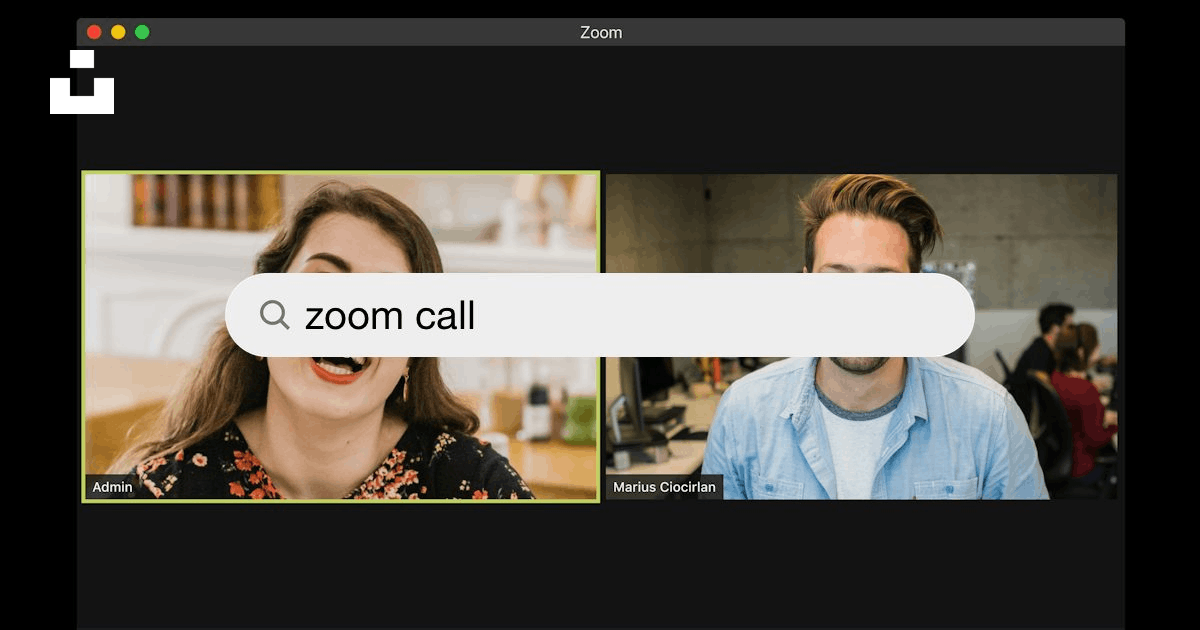
Zoom was a popular videoconferencing tool used by many businesses before the pandemic for meetings, interviews, and other events. Many people nowadays have switched to Zoom for in-person meetings and group gatherings as a result of long days spent disconnected from friends and family. Find everything you would want to know about Zoom Meeting Tutorials in this article.

Zoom meeting (Image Credits: Unspalsh.com)

Registration 

Of course, signing up for the service should be done first. Either your laptop or your Smartphone can be used for this. The web service will be discussed initially.

  • Visit the Zoom sign-up page. Your date of birth may be required to start. That’s because you cannot create a Zoom account if you are under 16 unless it is for educational purposes.
  • The options for opening an account will then be offered to you. Your email address can be entered in the “Your work email address” box at the top. If you succeed in doing so, go to step two. Despite the fact that Zoom requests a work email, a personal email should be sufficient. It was claimed in March that Zoom’s Contact Directory feature exposed some email addresses and user photographs since the app might have assumed that users of particular email domains were employed by the same organization. Zoom later disabled this domain-matching capability.
  • You can also establish an account by clicking the Sign in with SSO, Sign in with Google, or Sign in with Facebook buttons. You don’t need to register an account initially; after doing this, you can download the Zoom desktop application and move on to step 7.
  • If you included one, Zoom will send a confirmation email to that address. You can activate your account by either pasting the activation URL into your browser or by clicking the “Activate Account” button in the email.
  • Further:
  • Next, you’ll be asked if you’re signing up on behalf of a school on the page that appears in your online browser. Click “No” and then “Continue” if you aren’t, assuming you aren’t.
  • On the following screen, enter your first and last name as well as a password.
  • You can send an email invitation to others to register for a free Zoom account on the following page. This step is optional, so you can omit it.
  • An orange “Start Meeting Now” button will then appear, giving you the option to start a test meeting after receiving a link to your unique meeting URL. You ought to be prompted to download the Zoom desktop program if you paste that URL into your browser or press the orange icon. Install the app by following the directions.
  • You’ll see buttons to “Join a Meeting” or “Sign In” when you’ve loaded the Zoom app. By clicking “Sign In,” you may begin your test meeting.
  • Enter your email and password from when you signed up for Zoom in your browser on the following screen. When prompted, click the Sign in with Google or Sign in with Facebook boxes if you registered using those methods.
  • After logging in, make sure you’re on the “Home” tab, and then use the Zoom app to hit the orange “New Meeting” icon. Your meeting will now begin.
KINDLY NOTE: THE PROCESS TO REGISTER ON ZOOM APP ON MOBILE IS SIMILAR TO THE PROCESS OF WEB AS SHOWN ABOVE.


IMAGE CREDITS: Unsplash.com

Starting a meeting on Zoom Using Web

  • Open the App
  • To begin a meeting right now, select the orange “New meetings” button. You’ll see a video window open, and a pop-up window will ask you whether you want to use your computer’s audio to join the conference and if you want to test the speaker and microphone.
  • To send invitations, locate the toolbar that shows when you move the cursor inside the meeting window and click the little arrow next to the “Participants” button. When you do, Zoom will open a box where you may send an email with instructions on how to join your Zoom meetings, invite Zoom contacts, copy your meeting URL to your clipboard, or copy a longer message with your meeting URL and dial-in information to your clipboard. You may also obtain the password for your meetings from this option. When you’re ready, press “Invite.”

IMAGE CREDITS: Unsplash.com

Starting a Meeting on Zoom Using Mobile App

  • Click “New Meeting” on the app.
  • You can decide whether to start it with the video on and whether to use your unique meeting ID (not recommended; see above). Next, select “Start a Meeting.”
  • Press “Participants” at the bottom row of icons to send out invitations, and then tap “Invite” at the bottom of the following screen. When you do, you’ll have the option of inviting your Zoom contacts, sending a message invite via a number of services, including Messenger, Messages, or Gmail, or copying the invite URL to your phone’s clipboard.

USEFUL LINKS

Want to know about how to schedule your work from home around kids, see: https://theperfectblogger.com/scheduling-your-work-from-home-day-around-kids/


OFFICE EQUIPMENTS

OFFICE EQUIPMENTS

You will require standard office supplies like phones, laptops, and networking equipment if you’re setting up a business office or making sure your home office is completely equipped. Make certain you have all the necessities. In this article, find all the essential office equipment.

COMPUTERS

IMAGE CREDITS: istockphoto.com

Any successful organization relies on information to function. Investing in and adopting the appropriate computers and software for your company is essential to maximizing the value of information. Investigate systems for data backup for your company as well. There are several internet services accessible right now that will spare you from spending money on safe and dependable office backup equipment.

Laptops

You have more mobility with a laptop computer since you can take your work with you wherever you go, including conferences, meetings, and other on-the-go situations. Laptops are reliable enough to function as a primary computer for all but the most memory-intensive tasks thanks to advancements in storage, display, and computational power.

Monitors

PHOTO CREDITS: istockphoto.com

To make working on desktop or laptop computers easier, computer monitors can be attached as the primary or secondary display. Larger displays also make it simple to share your screen with others in the space, which is useful for meetings and presentations.

TELEPHONE

Using the phone to communicate with clients and suppliers is a widespread practice. It will be easier to purchase the appropriate size phone system for your business at the appropriate pricing if you are aware of the services, features, and options that are offered with your business phone.

Smartphone

You can use a Smartphone to check your business email and make calls from any location. It can also assist you in remaining punctual and organized. You can work effectively and efficiently using a seemingly endless array of Smartphone business apps.

Landlines

PHOTO CREDITS: Unsplash.com

Larger businesses with numerous staff that need to communicate with clients and one another frequently will find landlines to be especially beneficial. When your company employs a landline phone system, it is simple to direct calls to the right person.

INTERNET

PHOTO CREDITS: Unsplash.com

If information is the lifeblood of a corporation, computer networks are the veins and arteries, delivering information via the internet to every department. For your company’s internet connection, you’ll need a router and Ethernet connections. You also need a modem, which requires Internet service from a provider, to connect your network to the Internet.

SOFTWARE FOR OFFICE COMPUTERS

Without operating system software, computers are unable to assist you. Depending on the kind of business you run, you’ll need different kinds of software, although almost all businesses require access to spreadsheet and word processing program.

Security software

Your security software, which guards your computers and networks from spam, viruses, and hackers, is another essential piece of software. Firewall protection, antivirus software, and authentication software are essential when working with sensitive information since cyber attacks cost the U.S. economy billions of dollars each year.

PRINTER FOR OFFICE

PHOTO CREDITS: istockphoto.com

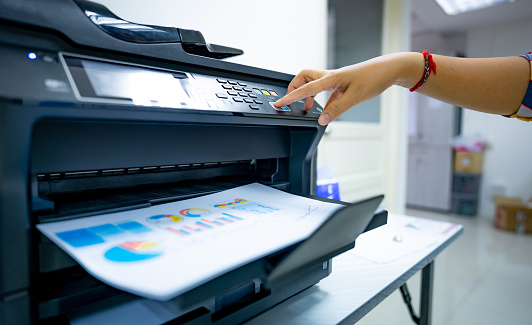
Paper is still valued and used regularly even if information is organized, managed, and moved electronically. If it was electronic, we’d like to print it. If printed, it ought to be scanned. A single, all-in-one gadget, like an all-in-one printer, can do it all, saving you time and money.

SHREDDER

Paper must be destroyed just as rapidly as it is produced. Whether it’s a client’s sensitive documents, an employee’s personal information, a customer list, or a private letter, your organization is responsible for the information it has. Before something goes wrong, you can securely delete important material using a paper shredder.

MAILING EQUIPMENT FOR OFFICE

Billing statements, product samples, brochures, and documents are just a few examples of what could be mailed from your business. Scales and postage software, among other mailing tools, can help your business save time and money.

FURNITURE FOR OFFICE

PHOTO CREDITS: Unsplash.com

Of course, you need desks and tables for your office furniture, as well as seats for you and your staff to sit on. Adding to the list of essential office furnishings are bookshelves, filing cabinets, and storage units.
USEFUL LINKS

Want to know top 10 cars in the world, click: https://theperfectblogger.com/top-10-most-popular-cars-in-the-world/

To know pros and cons of buying a used car, see: https://theperfectblogger.com/advantages-and-disadvantages-of-buying-a-used-car/