
The Ultimate Guide to Careers in Digital Marketing: Paths, Skills, and Growth
The corporate world is shifting online rapidly, making digital advertising more vital than ever. Consequently, careers in digital marketing have become some of the most sought-after professional paths in the modern economy. Businesses must build a robust online presence to survive, which drives an unprecedented demand for skilled strategists, creators, and analysts. If you are looking for a dynamic field that merges creativity with technical data, this industry offers a diverse range of opportunities. To explore the foundational guidelines of online visibility and web standards, checking out the Google Search Central documentation provides excellent insight into how the digital ecosystem functions.
Whether you are a recent graduate, a creative writer, or a tech-savvy data analyst, careers in digital marketing offer opportunities for many different skill sets. This comprehensive guide will break down the top high-paying roles, essential skills, and actionable steps to build a successful long-term career. If you are just starting out, consider earning one of the best professional certifications for beginners to strengthen your skills and improve your job prospects. Moreover, the industry is highly dynamic and rewards individuals who embrace continuous learning, change, and adaptation.
Why Choose Careers in Digital Marketing?
The modern marketplace relies almost entirely on electronic channels to attract and retain customers. Choosing a career in this sector offers immense stability, competitive financial rewards, and long-term professional growth potential. As traditional media continues to contract, digital budgets grow exponentially year over year across global corporate structures.
High Demand and Job Security
Virtually every brand requires a functional online strategy to survive in today’s digital-first economy. From global corporations to local boutique shops, businesses invest heavily in their digital presence to maintain customer acquisition pipelines. This universal need creates a continuous, recession-proof stream of job opportunities across various sectors. Because consumer behavior remains anchored online, the demand for professionals who understand digital trends shows no signs of slowing down anytime soon.
Diverse Career Paths
Digital advertising is not a monolithic industry, meaning it accommodates a vast spectrum of unique human talents and working styles. If you enjoy storytelling, video production, or graphic design, content creation and brand building might be your true professional calling. Conversely, if you prefer logic, statistics, and pattern recognition, data analytics and paid media optimization offer challenging, numbers-driven environments. You can easily switch between specializations as your personal interests evolve over the years.
Flexibility and Remote Work
Because this work relies primarily on cloud software, digital dashboards, and online collaboration platforms, professionals enjoy massive geographic flexibility. Many marketing agencies and corporate communications departments offer permanent remote or hybrid work models, allowing a healthier work-life balance. This flexibility allows you to collaborate with international clients and global teams right from your home office. Ultimately, it shifts the focus of your employment from hours logged to actual value delivered.
High-Paying Roles in the Online Marketing Industry
As you plan your professional trajectory, understanding the distinct specializations within the industry will help you target the right positions. Here are some of the most lucrative tracks available today.
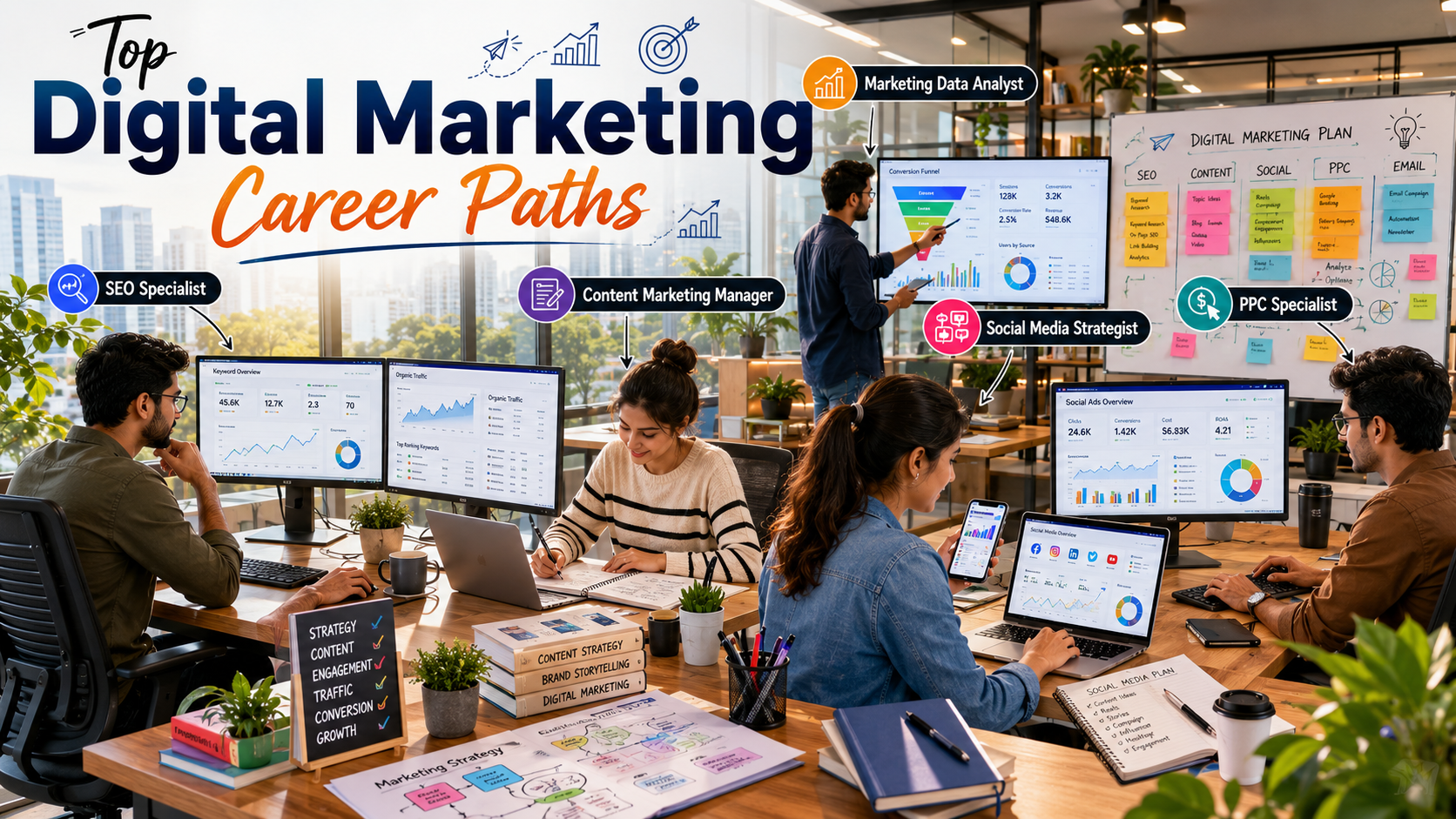
Search Engine Optimization (SEO) Specialist
SEO specialists focus exclusively on driving high-quality organic traffic to websites by optimizing technical structures and content layouts. They spend their days improving site architecture, conducting extensive keyword research, and building authoritative backlink profiles to rank higher on search networks. This role requires a perfect balance of technical developer knowledge, strategic user intent analysis, and creative content planning. As search engines continually refine their algorithms, these specialists ensure that an organization’s digital assets remain visible and accessible.
Content Marketing Manager
Content managers oversee the end-to-end creation, curation, and distribution of blogs, corporate videos, eBooks, podcasts, and infographics. They ensure that all published material aligns perfectly with the brand’s established voice while guiding potential customers through the sales funnel. Strong editorial instinct, comprehensive project management skills, and cross-departmental collaboration are completely vital to succeed in this role. By creating highly valuable assets, these professionals build long-term trust and authority for businesses without relying purely on paid ads.
Social Media Strategist
Beyond just posting regular photos, social media strategists manage an organization’s public image across platforms like Instagram, LinkedIn, and TikTok. They analyze audience engagement metrics, design community campaigns, and collaborate closely with digital influencers to boost brand loyalty and conversions. This position requires an intimate understanding of pop culture, platform algorithms, and consumer psychology to capture attention in crowded feeds. Strategists turn passive scrollers into active brand advocates by creating highly interactive online communities.
Paid Media and Pay-Per-Click (PPC) Expert
PPC experts manage sizable advertising budgets on digital networks like Google Ads, Meta Ads, and Amazon Advertising platforms. They design highly targeted campaigns, monitor daily ad spend, and constantly run split tests to maximize total return on investment. This role is highly analytical, requiring an individual to comfortable with complex data spreadsheets, audience segmentation, and mathematical modeling. Because their work directly impacts client revenue, skilled media buyers are always in high demand across agencies worldwide.
Core Skills Needed for a Successful Strategy
To excel in the highly competitive world of digital advertising, you must develop a balanced mix of soft and hard skills.
Essential Skillset Matrix
Success in careers in digital marketing depends on developing both technical and creative skills. On the technical side, professionals should understand data analytics and ROI tracking to measure campaign performance. They also need a solid grasp of search engine algorithms to improve website visibility. In addition, experience with marketing automation platforms helps streamline campaigns and increase efficiency.
Equally important are creative and interpersonal skills. Strong storytelling and copywriting abilities enable marketers to create engaging content that connects with their audience. Moreover, adaptability is essential because digital marketing tools and trends evolve rapidly. Finally, effective cross-team collaboration allows marketers to work successfully with designers, developers, content creators, and sales teams to achieve shared business goals.
Data Literacy and Analytics
Modern marketing campaigns live and die by empirical data, meaning intuition alone is no longer enough to succeed. You must know how to interpret complex user metrics from modern tracking tools like Google Analytics and custom data dashboards. Understanding granular user behavior, specific conversion rates, and exact bounce rates helps you refine marketing strategies for maximum corporate performance. Marketers who can accurately translate raw numbers into actionable business growth strategies will always find themselves ahead of the competition.
Adaptability and Continuous Learning
Search engine algorithms change constantly, social media platforms alter their reach rules overnight, and new software tools emerge weekly. Therefore, successful professionals possess an exceptional growth mindset and an immense tolerance for constant change. You must stay highly curious, read industry publications daily, and continuously update your knowledge base to keep your campaigns performing optimally. Embracing a lifestyle of lifelong learning turns industry disruption into your personal competitive advantage.
How to Get Started and Build Your Portfolio
Breaking into this industry does not always require a formal four-year university marketing degree or expensive educational credentials. Instead, modern digital employers heavily value practical experience, personal initiative, and visible proof of your actual execution capability.
-
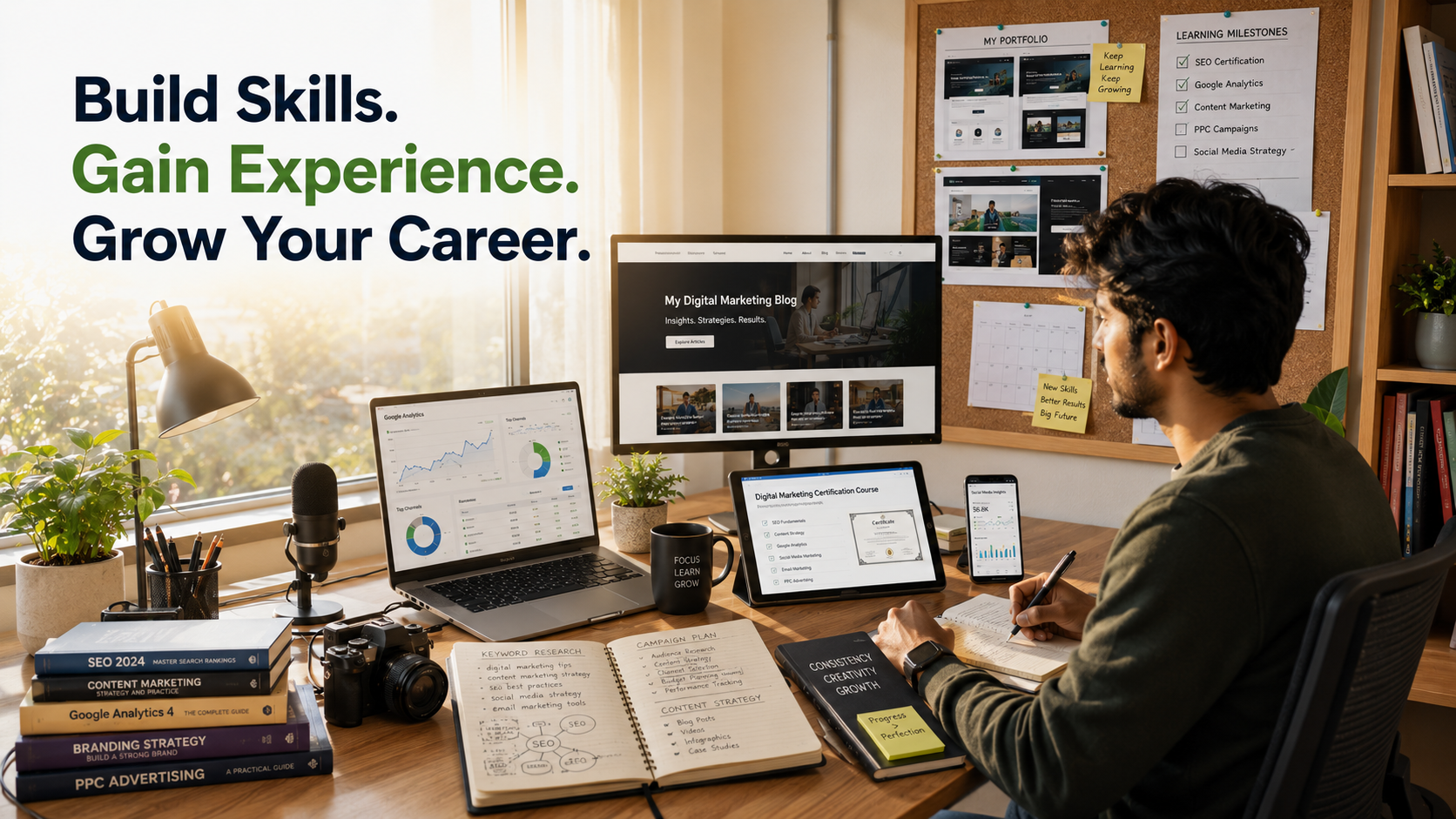
Earn Industry Certifications: Start by taking free, globally recognized courses from reputable platforms like Google Skillshop, HubSpot Academy, or Meta Blueprint.
-
Build Your Own Website: Launch a personal blog, e-commerce store, or portfolio site to practice foundational SEO, write copy, and track real user data.
-
Freelance or Volunteer: Offer your digital services to local small businesses, neighborhood non-profits, or family friend operations to build real-world case studies.
By establishing your own digital sandbox, you can test marketing theories without risk, find out what interests you, and create an impressive portfolio that commands attention during job interviews.
Frequently Asked Questions
What Entry-Level Jobs Are Available in Digital Marketing?
If you are exploring careers in digital marketing, several entry-level roles can help you get started. Common positions include Digital Marketing Coordinator, Social Media Assistant, and SEO Junior Analyst. These careers in digital marketing focus on daily tasks instead of long-term business strategy. For example, you may schedule posts, write captions, track campaign performance, and conduct keyword research. As a result, these responsibilities provide practical experience across multiple marketing channels. Over time, careers in digital marketing allow you to discover the specialization that best matches your interests and skills.
Furthermore, careers in digital marketing often begin with collaborative team environments. For instance, a Social Media Assistant may work closely with content writers and graphic designers. This experience helps you understand how different departments support a consistent brand voice. Moreover, learning marketing software, content management systems, and analytics tools builds valuable technical skills. Therefore, careers in digital marketing become easier to advance as your experience grows. By mastering these core responsibilities, you prepare for higher-level positions. Ultimately, careers in digital marketing reward professionals who combine technical knowledge with creativity and strong communication. As your confidence increases, careers in digital marketing can lead to specialist, manager, or leadership roles. This steady progression makes careers in digital marketing attractive for long-term professional growth.
Do I need a marketing degree to get a job?
No, you do not strictly need a marketing degree to secure a position in this field. Many highly successful professionals come from diverse backgrounds like English literature, journalism, computer science, or behavioral psychology. Modern employers value practical tech skills, professional certifications, and hands-on portfolio experience far more than a specific university diploma. A strong portfolio demonstrating real campaigns you managed, or websites you optimized, will carry significant weight during recruitment. Completing industry-standard certifications is an excellent, cost-effective way to validate your skills to potential hiring managers.
Because digital advertising changes much faster than traditional academic curricula can adapt, actual proof of competence is the real currency of the industry. An applicant who can showcase a personal blog they successfully ranked on search engines, or a small budget ad campaign they optimized to achieve a 4% click-through rate, will immediately outshine an individual holding only a theoretical degree. The modern workspace requires people who can comfortably navigate tools like Google Analytics, Meta Ads Manager, and email automation workflows on day one. By prioritizing tangible project outcomes, specialized industry certifications, and localized case studies over standard university credentials, you show forward-thinking employers that you possess the exact real-world capabilities they need to grow their bottom line.
What is the average salary for digital marketers?
Salaries vary widely based on your geographic location, your specific area of expertise, and total years of experience. Entry-level professionals typically earn between $45,000 and $60,000 annually as they build up their skills. However, as you gain experience and move into specialized technical roles like PPC Specialist or Enterprise SEO Strategist, salaries often rise to between $75,000 and $100,000. Senior executives, such as Directors of Digital Marketing or Chief Marketing Officers (CMOs), can easily command salaries well over $130,000 per year, accompanied by performance bonuses.
The significant compensation differences within the industry are driven primarily by how closely a specific role ties to direct business revenue generation. For instance, data analytics, performance marketing, and marketing automation roles generally pay a notable premium compared to generalist support positions. This premium exists because these analytical experts explicitly manage and track large advertising budgets, directly influencing conversion metrics and client returns. Additionally, geographic regions and localized cost-of-living metrics play a critical role in standard pay rates. Working inside high-tech metropolitan hubs or transitioning from a standard marketing agency to an in-house corporate tech product team can accelerate your salary growth by 20% to 30%, making specialized skill development an incredibly lucrative path.
Is Digital Marketing a Stressful Career Path?
Like any fast-paced corporate industry, digital marketing can involve periods of elevated pressure. This is especially true during major holiday product launches or after sudden platform updates. For example, paid media managers face daily pressure to maximize return on ad spend. Meanwhile, social media managers may need to handle public relations crises online. However, the field also offers creative freedom, diverse projects, and flexible work arrangements. As a result, these advantages can reduce workplace burnout over time. Moreover, strong time-management skills and clear client expectations improve productivity. Relying on data instead of emotional guesswork also leads to better decisions. Ultimately, these habits help professionals maintain a healthier work-life balance.
Professional anxiety often comes from the real-time nature of digital marketing. Mistakes can become public within minutes. Likewise, poorly configured dashboards can waste advertising budgets very quickly. Therefore, successful marketers use detailed quality-assurance checklists. They also automate data alerts to detect sudden performance changes. In addition, experienced professionals treat campaign fluctuations as data instead of personal failures. This mindset reduces stress and supports continuous improvement. Finally, structured workflows and clear communication boundaries make the job more sustainable. As a result, marketers can enjoy remote work and creative problem-solving without sacrificing their mental well-being.
How do algorithm changes affect this career?
Algorithm changes by major tech entities like Google or Meta fundamentally reshape how organizations reach their online audiences. A single search update can alter website rankings or advertising costs overnight, requiring professionals to pivot their strategies immediately. While this constant evolution sounds intimidating to outsiders, it actually provides excellent long-term job security for skilled strategists. If digital platforms never changed, automated artificial intelligence could replace human marketers easily. Your ability to interpret algorithm shifts, adapt content, and find creative solutions makes you incredibly valuable to businesses.
When a dominant tech platform rolls out a major system patch or updates its ranking metrics, it creates an immediate knowledge gap in the corporate marketplace. Businesses that rely on steady streams of web traffic or social engagement suddenly find themselves scrambling for answers, which is exactly when an adaptable digital marketer becomes indispensable. Rather than fearing these technical adjustments, top-tier professionals view them as fresh opportunities to outperform competitors who rely on outdated, static tactics. Staying ahead requires reading official industry documentation, testing new layouts on personal digital sandboxes, and learning how to incorporate emerging discovery trends like generative AI engine optimization into your standard strategies. Ultimately, this perpetual state of change ensures that human ingenuity, critical thinking, and rapid strategic adaptation remain highly prized and securely employed assets.
Conclusion
Navigating the diverse world of careers in digital marketing offers an exciting, future-proof professional path for driven individuals. Because businesses rely entirely on digital visibility to generate revenue and survive, the global demand for strategic thinkers, data analysts, and creative storytellers will continue to escalate. By mastering key technical analytics tools, refining your messaging skills, and building a strong personal portfolio, you can easily stand out to top-tier global employers. The industry rewards curiosity, adaptability, and measurable business growth results above all else.
As you progress, focusing on specialization while keeping an eye on broader digital ecosystem trends will make you irreplaceable. Find your specific niche, start creating real-world campaigns, and take the first step toward a thriving digital career today. The future belongs to those who know how to capture attention online, and there has never been a better time to build your expertise in this space.