Building Water Security & Resilience: Protecting Our Vital Resource
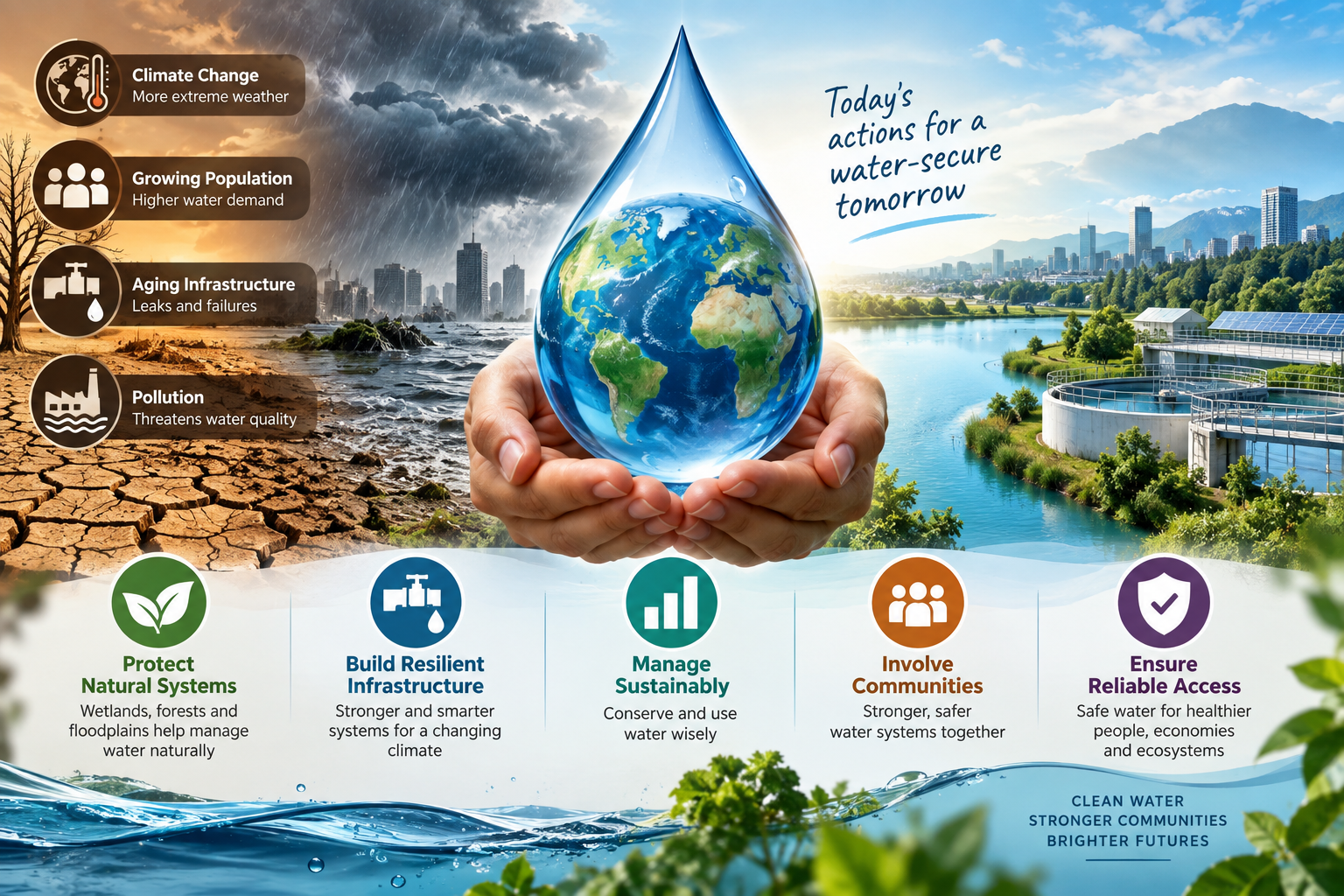
Water is the lifeblood of our communities, economies, and ecosystems. Yet, climate change, population growth, and aging infrastructure threaten reliable water supplies. Building water security & resilience has therefore become a critical global priority.
Communities and industries must adopt proactive measures to protect finite freshwater supplies. These measures must address unpredictable droughts, floods, pollution, and infrastructure failures. Reliable water management also requires a strong understanding of local hydrological systems, including climate-smart agriculture practices that help manage water resources more efficiently.
Effective solutions depend on robust policies, resilient infrastructure, and active community participation. Strategic investments can also help protect vulnerable populations from severe water shortages and unsafe supplies. The World Bank’s water security initiatives highlight the importance of strengthening water systems, improving resilience, and expanding reliable water services.
This guide explains what water resilience means and why water security matters. It also covers the 5 R’s of water conservation and practical ways to protect freshwater resources. Together, these approaches can support safer, more reliable, and sustainable water systems.
What is resilience in water?
Water resilience refers to the ability of a hydrological system, community, or ecosystem to prepare for, withstand, recover from, and adapt to hazardous events. These events can include severe droughts, major floods, infrastructure failures, and sudden chemical contamination.
A resilient water system does more than return to its previous condition after a disruption. It also learns from failures and improves its design and operations. This continuous adaptation helps maintain reliable water supplies as climate and environmental conditions change.
Water managers can strengthen resilience by diversifying water sources, upgrading aging pipe networks, and improving storage capacity. They can also integrate natural infrastructure into traditional water management systems.
Wetlands, floodplains, forests, and other natural areas can provide important protection. Wetlands can absorb excess stormwater during heavy rainfall. They can also release stored moisture gradually during dry periods.
Resilient planning therefore combines infrastructure, natural systems, reliable data, and emergency preparedness. This approach helps communities respond to water-related disruptions without compromising long-term supply or public safety.
Adapting to Climate Shocks Through Infrastructure
Modern climate shocks require infrastructure that can withstand changing and increasingly unpredictable conditions. Traditional concrete structures remain important, but they work best when combined with natural systems, renewable energy solutions such as offshore wind farms, and flexible management strategies.
Upgrading urban drainage networks can reduce the risk of severe flooding. Restoring natural river floodplains can provide additional space for excess water during extreme rainfall. These measures can reduce pressure on roads, buildings, and municipal drainage systems.
Engineers are also adopting decentralized water management systems. These systems distribute treatment, storage, and supply functions across multiple locations. As a result, one damaged facility is less likely to disrupt an entire water network.
Resilient infrastructure should also include backup systems and efficient monitoring. Smart sensors can identify pressure changes, leaks, and unusual consumption patterns. Early detection allows operators to respond before small problems become major failures.
Infrastructure planning must also account for future climate conditions. Designing only for historical rainfall or drought patterns can leave systems vulnerable. Flexible designs allow communities to adjust operations as risks change.
Combining engineered infrastructure with natural protection creates a more adaptable water system. It also supports long-term water security and resilience while reducing the potential costs of future disasters.
What is the importance of water security?
Water security means that populations have sustainable access to sufficient quantities of safe and acceptable-quality water. This access supports human health, livelihoods, ecosystems, and socio-economic development.
Without adequate water security, communities can face serious public health and economic problems. Water shortages can limit access to drinking water and sanitation. They can also contribute to agricultural losses and higher food prices.
Industries that depend on reliable water supplies can experience major disruptions. Manufacturing, energy production, and agriculture all require dependable access to water. Prolonged shortages can reduce production and increase operating costs.
Water scarcity can also increase pressure between communities and regions. In areas with limited supplies, competition for water may contribute to social tensions, displacement, or conflict.
Protecting water security also means protecting ecosystems. Wetlands, forests, rivers, and other natural systems help regulate water flows and support biodiversity. They can also improve water quality through natural filtration.
Strategic investments in clean drinking water, sanitation, water storage and purification, treatment, and distribution can improve community resilience. These investments reduce health risks while supporting economic stability. Ultimately, water security is essential for healthy communities, productive economies, and sustainable development.
Protecting Public Health and Economic Stability
Clean drinking water and reliable sanitation form the foundation of effective public health systems. When water supplies become contaminated or depleted, communities can face rapid increases in waterborne diseases and other health risks.
Reliable water infrastructure helps prevent these problems by maintaining safe supplies and supporting proper sanitation. Treatment facilities also play a critical role in removing harmful contaminants before water reaches households and businesses.
Water security has a direct economic impact as well. Businesses depend on predictable water supplies for production, cleaning, cooling, agriculture, and other operations. Interruptions can reduce output and increase costs across entire supply chains.
Public health problems create additional economic pressure. When contaminated water causes illness, communities may face higher healthcare costs and lost workforce productivity. Families can also experience financial strain when illness prevents people from working.
Investing in resilient water systems can reduce these risks before emergencies occur. Upgrading treatment plants, repairing aging pipes, protecting water sources, and improving monitoring can strengthen system reliability.
Local governments should also maintain emergency plans for contamination, drought, and infrastructure failures. These plans help communities respond quickly when normal water services are disrupted.
Protecting water resources is therefore both a health priority and an economic strategy. Strong water systems help communities remain productive, healthy, and better prepared for future disruptions.
What are the 5 R’s of water conservation?
The 5 R’s of water conservation provide a practical framework for reducing waste and improving resource efficiency. They are Refuse, Reduce, Reuse, Repair, and Recycle.
Refuse means avoiding unnecessary water-wasting practices and products. Individuals and businesses can question activities that consume water without providing meaningful value.
Reduce focuses on lowering daily water consumption. Efficient fixtures, better irrigation practices, and simple behavior changes can reduce unnecessary use. These improvements can also lower household and operating costs.
Reuse means finding safe secondary uses for water. For example, appropriately treated greywater can support non-potable applications such as landscape irrigation. Reusing water reduces pressure on freshwater supplies.
Repair addresses leaks in homes, businesses, and municipal systems. A dripping faucet may seem minor, but widespread leaks can create significant water losses. Prompt repairs prevent this hidden waste.
Recycle involves treating wastewater so it can be safely used again. Advanced treatment systems can produce reclaimed water for suitable applications. In some locations, highly treated wastewater can also become potable water.
Together, the 5 R’s encourage responsible water management at every level. Households, businesses, farmers, and municipalities can apply these principles to conserve freshwater and strengthen long-term water security.
Applying the 5 R’s in Daily Operations
Applying the 5 R’s requires more than individual awareness. Successful water conservation also depends on consistent practices across households, businesses, farms, and public institutions.
Households can begin with simple actions. Fixing dripping faucets, repairing leaking toilets, and avoiding unnecessary water use can reduce daily consumption. People can also reuse suitable household water for plants and other non-potable purposes.
Businesses can apply the same principles on a larger scale. Commercial facilities can install efficient fixtures, monitor consumption, and repair leaks quickly. Manufacturing operations can also introduce closed-loop recycling systems that reduce freshwater intake.
Agricultural operations have additional opportunities to improve efficiency. Farmers can use targeted irrigation systems and better scheduling to deliver water when crops need it most. These practices can reduce unnecessary evaporation and runoff.
Municipalities can support conservation through leak detection programs, smart meters, efficient public landscaping, and infrastructure upgrades. Public education can reinforce these efforts by helping residents understand how everyday choices affect local supplies.
The goal is not simply to use less water at any cost. Instead, the 5 R’s encourage efficient and responsible water use while maintaining health, productivity, and safety.
When these practices become routine, communities can reduce pressure on rivers, reservoirs, and aquifers. They can also improve resilience during periods of drought or supply disruption.
What are 10 ways we can protect our water resources?
Protecting water resources requires coordinated action across homes, farms, businesses, and communities. Several practical measures can reduce waste, prevent pollution, and strengthen local water supplies. Reducing food waste at home can also support more responsible resource use by lowering the water and other resources embedded in wasted food.
- Fix household leaks quickly to prevent unnecessary water loss.
- Install efficient fixtures, such as low-flow showerheads and dual-flush toilets.
- Use smart landscaping with native and drought-resistant plants.
- Limit chemical runoff from pesticides and fertilizers.
- Harvest rainwater for suitable gardening and agricultural uses.
- Dispose of hazardous chemicals properly instead of pouring them into drains.
- Support watershed conservation and local cleanup programs.
- Reduce single-use plastics that can contribute to freshwater pollution.
- Improve agricultural irrigation with efficient systems such as drip irrigation.
- Educate communities about responsible water use and conservation.
These actions address both water quantity and water quality. Reducing household and agricultural waste, including food waste at home, helps conserve available supplies. Preventing pollution also protects rivers, lakes, groundwater, and wetlands.
Effective water resource management requires cooperation between individuals, industries, farmers, and governments. Local conditions should guide conservation priorities because water challenges differ between regions.
Combining these ten actions can reduce unnecessary consumption and protect freshwater ecosystems. It can also help communities prepare for drought, pollution events, and other water-related risks.
Minimizing Runoff Through Sustainable Practices
Agricultural runoff can introduce excess nutrients, pesticides, sediment, and other pollutants into nearby rivers and freshwater systems. These pollutants can damage aquatic ecosystems and reduce water quality.
Farmers can reduce runoff by changing how they manage soil, fertilizers, and irrigation. Cover cropping is one useful approach. Cover crops protect soil between growing seasons and can reduce erosion caused by rainfall.
Precision fertilizer application can also limit nutrient losses. Farmers apply nutrients according to crop requirements instead of using excessive amounts. This reduces the amount of fertilizer available to wash into nearby waterways.
Buffer zones can provide another layer of protection. Vegetated areas near streams can slow surface runoff and help trap sediment and nutrients before they reach the water.
Efficient irrigation systems can further reduce runoff. Drip irrigation delivers water close to plant roots, which can limit excessive surface water and improve crop efficiency.
These practices can provide benefits beyond water protection. Healthier soils can improve moisture retention and support long-term agricultural productivity. Farmers may also reduce input costs when fertilizer and water are used more efficiently. Climate-smart agriculture can further support farmers in adapting to changing environmental conditions while improving resource efficiency.
Reducing agricultural runoff is therefore an important part of water security and resilience. Protecting watersheds at the source helps maintain cleaner freshwater supplies for communities, farms, and ecosystems.
What are 7 methods of water conservation?
Several proven methods can reduce water waste across households, farms, businesses, and municipal systems. These approaches focus on using available water more efficiently while protecting freshwater supplies.
- Drip irrigation delivers water directly to plant roots and reduces unnecessary evaporation and runoff.
- Rainwater harvesting captures rainfall from suitable surfaces for approved secondary uses.
- Greywater recycling allows appropriately treated household wastewater to support non-potable applications.
- Pressure reduction in municipal water mains can reduce losses from small leaks and pipe fractures.
- Smart metering helps identify unusual consumption patterns and potential leaks.
- Xeriscaping uses drought-tolerant plants to reduce outdoor irrigation requirements.
- Public awareness campaigns encourage residents and businesses to adopt efficient water-use habits.
No single method can solve every water challenge. The most effective approach depends on local climate, infrastructure, regulations, and available resources.
Technology can improve conservation by making water use easier to measure and manage. Smart meters, sensors, and automated irrigation systems can help users identify waste quickly. Essential emergency tools can also help households prepare for disruptions when normal water services are temporarily unavailable.
Nature-based strategies also have an important role. Drought-resistant landscaping can reduce outdoor demand while supporting suitable local vegetation.
When combined, these methods can lower unnecessary consumption across multiple sectors. They also support broader goals for water conservation, resource efficiency, and long-term water security.
Communities can achieve better results when conservation measures are supported by public education, appropriate policies, and investment in reliable infrastructure.
Maximizing Agricultural Efficiency With Drip Systems
Agriculture accounts for a large share of global freshwater withdrawals, making irrigation efficiency an important part of water conservation. Traditional flood irrigation can lose significant amounts of water through evaporation, runoff, and uneven distribution.
Drip irrigation takes a more targeted approach. It delivers controlled amounts of water close to crop roots through a network of pipes and emitters. This helps plants receive moisture where it is needed most.
The system can also reduce surface runoff and unnecessary evaporation. Farmers can adjust irrigation schedules based on crop requirements, soil conditions, and weather patterns. This allows water to be applied more precisely.
Better irrigation efficiency can provide additional agricultural benefits. Maintaining suitable soil moisture can support healthier crop growth and reduce stress during dry periods. Farmers may also lower pumping and water-related operating costs.
However, drip irrigation still requires proper design and maintenance. Clogged emitters, damaged pipes, and incorrect pressure can reduce system performance. Regular inspections help ensure that water reaches crops consistently.
Combining drip irrigation with soil monitoring and efficient scheduling can further improve results. Farmers can avoid applying water when rainfall or existing soil moisture makes irrigation unnecessary.
As climate pressures increase, efficient irrigation can help agriculture remain productive with limited water supplies. It is therefore an important tool for building water security & resilience while supporting sustainable food production.
Frequently Asked Questions
How does climate change impact global water security?
Building Water Security & Resilience becomes more difficult as climate change alters rainfall, accelerates glacier melt, and intensifies droughts and floods. These disruptions make water supplies less predictable, threaten agriculture, and increase pressure on drinking water systems worldwide.
What is the difference between water conservation and water efficiency?
Water conservation focuses on reducing overall consumption through responsible habits, while water efficiency uses technology to achieve the same results with less water. Building Water Security & Resilience requires both approaches to reduce waste, protect supplies, and strengthen long-term resource management.
How can businesses contribute to building water security?
Businesses can support Building Water Security & Resilience by conducting water audits, reducing operational waste, recycling wastewater, and improving supply-chain practices. Companies can also protect local watersheds, adopt efficient technologies, and ensure wastewater discharge meets environmental standards.
What role do wetlands play in natural water resilience?
Wetlands are essential to Building Water Security & Resilience because they absorb excess stormwater, reduce flooding, and gradually release stored water during dry periods. They also filter pollutants, support biodiversity, and help recharge groundwater supplies within surrounding watersheds.
Conclusion
Building Water Security & Resilience requires coordinated action from individuals, businesses, communities, and governments. Building Water Security & Resilience can protect freshwater supplies through conservation, efficient infrastructure, responsible irrigation, and wetland preservation. By adopting practical solutions today, communities can reduce water waste, strengthen resilience, and prepare for future climate-related challenges.