
AppleCare vs. Carrier Insurance: Which iPhone Protection Plan Has Better Value?
Protecting your iPhone is important, especially as flagship models become more expensive. A major repair can also cost hundreds of dollars without coverage. That makes choosing between AppleCare vs. carrier insurance an important decision after buying a new iPhone.
AppleCare+ and carrier protection plans can cover accidental damage. Some carrier plans also cover theft, loss, battery issues, and post-warranty failures. However, prices, deductibles, claim processes, and repair options can differ significantly.
AppleCare+ provides access to Apple Stores and Apple Authorized Service Providers. Carrier plans may offer broader protection, flexible enrollment, and multi-device options. The best choice depends on how you use your phone and which risks concern you most.
Apple’s plans also vary by market. In India, AppleCare Guide: Coverage, Cost, and Plans in India covers the latest details on AppleCare+ pricing and options. AppleCare+ with Theft and Loss is also available for eligible iPhones.
Is AppleCare better than carrier insurance?
When comparing AppleCare vs. carrier insurance, AppleCare+ is often the stronger choice for iPhone owners. It combines accidental-damage coverage with Apple’s repair network and technical support. Eligible plans also provide battery service and unlimited accidental-damage incidents while coverage remains active.
Carrier insurance can still make sense when you want broader protection. Depending on the provider, coverage may include loss, theft, damage, battery problems, and certain post-warranty failures. Some carrier plans also support multiple devices or offer convenient replacement services.
Repair costs are another important consideration. In the U.S., Apple lists a $29 service fee for screen-only damage and $99 for other accidental damage. In India, the current fees are ₹2,500 for eligible screen or back-glass damage and ₹8,900 for other accidental damage.
Carrier deductibles vary by provider and device. Therefore, compare the complete cost instead of focusing only on the monthly premium.

Genuine Parts and Service Reliability
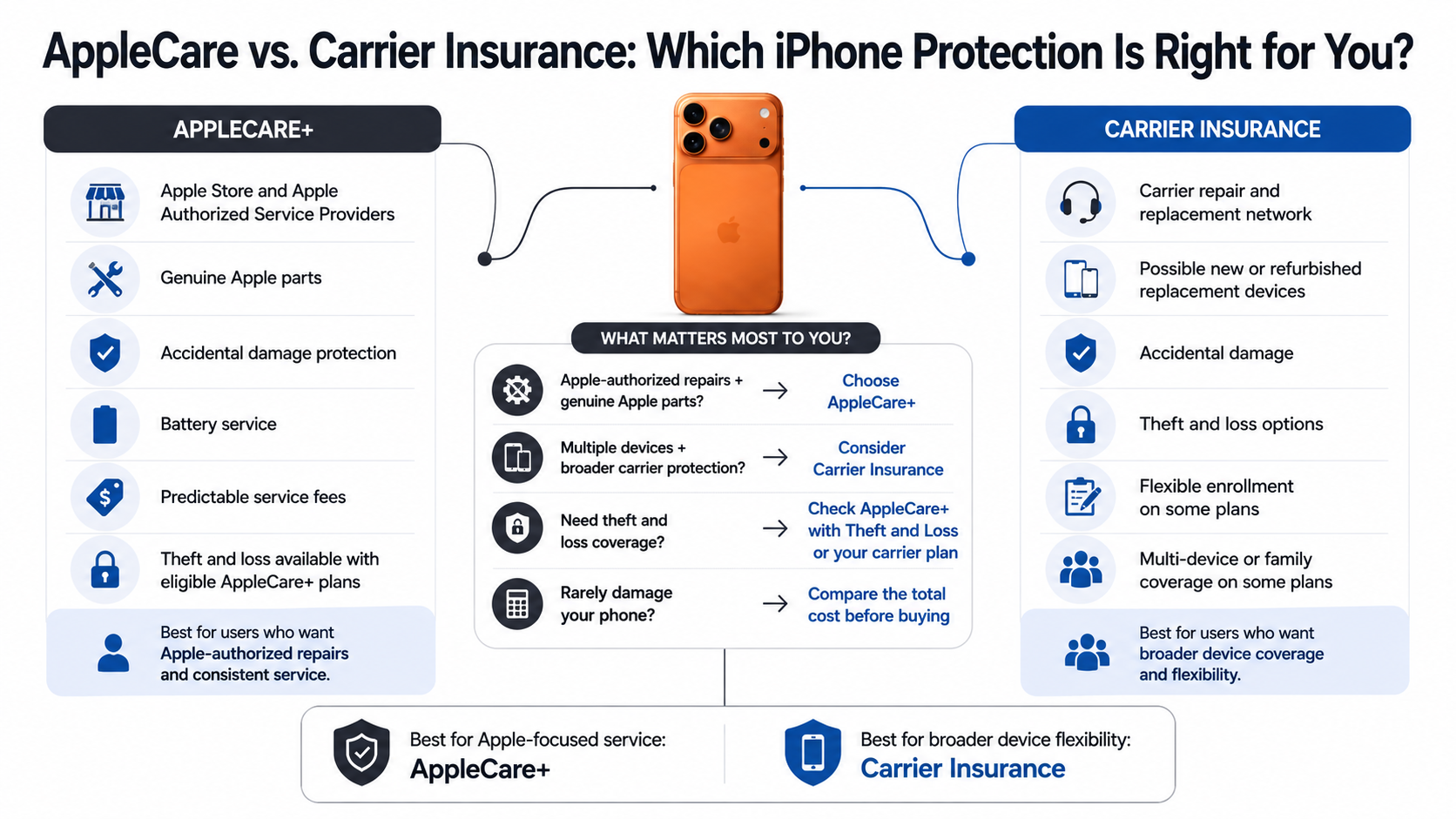
AppleCare+ has a clear advantage for owners who prefer Apple-authorized repair service. Apple provides service through Apple Stores and its network of Authorized Service Providers. AppleCare+ repairs use genuine Apple parts when Apple performs or authorizes the service.
This can make the repair experience more consistent. Depending on your location, you can arrange in-person service or pickup and delivery. Apple also offers same-day service at some locations for eligible repairs.
Carrier insurance follows a different service model. Insurance administrators may use repair networks or provide replacement devices. Some replacement devices may be new, while others may be refurbished.
That does not automatically make carrier insurance a poor choice. It simply means the repair process differs from Apple’s ecosystem. If genuine Apple parts and Apple-authorized service matter most, AppleCare+ has a meaningful advantage.
Which insurance is best for iPhone?
When evaluating AppleCare vs. carrier insurance, AppleCare+ with Theft and Loss is a strong option for many iPhone owners. It combines accidental-damage protection with coverage for eligible theft and loss incidents. Apple says the plan includes up to two theft-or-loss incidents every 12 months.
AppleCare+ also covers accidental damage from incidents such as drops and spills. Battery service is included when the battery retains less than 80% of its original capacity. Apple also provides priority support and several repair options for covered devices.
In India, current AppleCare+ service fees are ₹2,500 for eligible screen or back-glass damage and ₹8,900 for other accidental damage. Theft or loss has a ₹15,900 service fee under the applicable plan.
Carrier insurance may be better if you prioritize flexible enrollment, broader device coverage, or household protection. However, compare exclusions, deductibles, and replacement terms before choosing.
The Impact of Deductibles and Hidden Fees
Understanding costs is essential when comparing AppleCare vs. carrier insurance. The monthly premium tells only part of the story. Your total cost can include premiums, service fees, deductibles, replacement charges, and other plan-specific expenses.
AppleCare+ uses defined service fees for covered accidental damage. In India, the current fees are ₹2,500 for eligible screen or back-glass damage and ₹8,900 for other accidental damage. Theft or loss under AppleCare+ with Theft and Loss carries a ₹15,900 service fee.
Carrier deductibles can vary significantly. Some carrier plans may charge a deductible for replacements while offering lower-cost repairs for certain screen damage. The exact amount depends on the carrier, device, location, and protection plan.
Before buying coverage, calculate your expected cost over the ownership period. Then compare that amount with the potential cost of one or two repairs.
Which device protection plan is better, AppleCare or Asurion?
When comparing AppleCare vs. carrier insurance, AppleCare+ and Asurion serve different needs. AppleCare+ is built around Apple’s repair and support ecosystem. Asurion, meanwhile, administers protection programs for major wireless carriers and manages carrier-specific claims and replacements.
AppleCare+ can be attractive when you own one iPhone and want Apple-authorized service. Apple offers accidental-damage repairs, battery service, priority support, and repair or replacement options through its support network.
Asurion can provide broader flexibility through carrier plans. Carrier protection programs can cover eligible loss, theft, accidental damage, battery issues, and certain device problems. Some plans also include technical support and additional service benefits.
Replacement quality can differ. Carrier protection claims may be fulfilled with new or refurbished devices. Replacement devices can also have different parts or components depending on the program.
Therefore, AppleCare+ is usually stronger for Apple-focused service, while carrier insurance can appeal to households wanting broader protection.
When Multi-Device Flexibility Outweighs OEM Exclusivity
Carrier protection plans can become more attractive when you manage several devices. A household might have iPhones, Android phones, tablets, and other connected products. A multi-device plan can simplify billing and claims across different brands.
However, Apple also offers a bundled option called AppleCare One. It allows eligible customers to protect multiple Apple devices under one plan. The plan can include iPhone, iPad, and Apple Watch devices under its applicable terms. If you also use an iPad, Best iPad Accessories Cheaper Than Apple covers ways to save on compatible iPad products.
That means multi-device households should not assume carrier insurance is their only bundled option. Compare AppleCare One with your carrier’s multi-device protection before enrolling.
Enrollment flexibility can also affect your decision. Apple generally allows eligible customers to purchase AppleCare+ within 60 days of buying a new Apple device. The exact eligibility window can vary by country and product.
Choose the broader option when convenience matters most. Still, compare coverage limits, deductibles, exclusions, and enrollment rules before making your final decision.
Which is better, AppleCare or AppleCare+?
AppleCare+ is the more comprehensive option when you want protection against accidental damage. Apple’s standard limited warranty covers eligible manufacturing defects and hardware problems. It does not work like accidental-damage insurance.
Apple’s limited warranty generally provides one year of hardware coverage for eligible defects. AppleCare+ extends coverage and adds accidental-damage protection. It also provides additional service and support benefits.
That distinction matters when comparing protection plans. A display that fails because of a manufacturing defect is different from a screen cracked after a drop. Liquid damage is also different from a covered hardware malfunction.
AppleCare+ is designed to address everyday accidents that the standard warranty does not cover. Depending on the plan and market, it can also provide battery service and other support benefits.
If you only need protection against manufacturing defects, the standard warranty may be enough. If you want accidental-damage protection, AppleCare+ is the relevant upgrade. Theft and loss require a plan that specifically includes those benefits.
Understanding the Free Limited Warranty Limitations
The standard Apple limited warranty protects against manufacturing defects and eligible hardware problems. It is not designed to cover accidental drops, liquid damage, or other external causes. This difference is important when comparing Apple’s warranty with insurance-style protection.
A warranty and a protection plan serve different purposes. The warranty addresses qualifying defects. AppleCare+ adds protection for accidental damage and provides additional support services.
Without accidental-damage coverage, you may need to pay Apple’s applicable out-of-warranty repair price. Repair costs depend on the iPhone model and the type of damage.
AppleCare+ changes that calculation by applying defined service fees to eligible accidental-damage claims. In India, the current fees are ₹2,500 for screen or back-glass damage and ₹8,900 for other accidental damage.
Always check the terms for your exact iPhone and country. Coverage, service fees, and enrollment rules can change.
Is AppleCare+ really worth it?
AppleCare+ can be worth the cost when you are likely to make a claim. Its value becomes clearer when you compare the plan’s total cost with potential repair expenses. This is especially important for expensive iPhone models.
AppleCare+ covers eligible accidental damage and provides battery service when the battery retains less than 80% of its original capacity. These benefits can reduce repair and maintenance costs during ownership.
The plan can also reduce downtime. Apple provides repair options through Apple Stores and Authorized Service Providers. Pickup and delivery are also available in eligible situations.
However, AppleCare+ is not automatically worthwhile for everyone. If you rarely damage phones and can comfortably pay unexpected repair costs, self-insuring may be cheaper.
Consider AppleCare+ if you:
- Frequently drop or damage devices.
- Own an expensive Pro or Pro Max model.
- Want Apple-authorized repair support.
- Prefer predictable service fees.
- Need theft and loss protection.
Your decision should depend on your risk level, repair budget, iPhone value, and expected ownership period.
Long-Term Value for Heavy Smartphone Users
Heavy smartphone users may receive more value from AppleCare+ because they face more opportunities for accidental damage. Frequent travelers, commuters, outdoor workers, and people who use their phones constantly may benefit from predictable repair costs.
AppleCare+ provides unlimited accidental-damage incidents for covered devices. Each approved incident remains subject to the applicable service fee. This can make the plan more useful for people who expect multiple repairs during ownership.
Battery service can also improve long-term value. Apple provides battery service when the battery retains less than 80% of its original capacity. This can reduce maintenance costs during extended ownership.
For long-term ownership, these benefits can add up. However, you should compare total premiums with your expected repair needs.
If you rarely damage your devices, coverage may not provide the best financial return. If one major repair would create financial pressure, AppleCare+ can provide valuable protection and peace of mind.
The best approach is to consider your risk level, iPhone value, ownership period, and available repair budget before purchasing.
Frequently Asked Questions
Can I buy AppleCare after buying carrier insurance?
Yes, you can purchase AppleCare+ within 60 days of your iPhone purchase regardless of whether you have carrier insurance. You simply need to run a remote diagnostic test on your iPhone via the Settings menu or visit an Apple Store to verify the device remains undamaged before activating the policy.
What happens if I lose my iPhone without theft coverage?
If you purchase standard AppleCare+ without the Theft and Loss add-on, lost or stolen devices receive no coverage. You will be forced to pay the full retail replacement price for a brand-new iPhone out of pocket. Always ensure the “Theft and Loss” tier is selected if misplacing devices is a concern.
Does carrier insurance cover older or used phones?
Yes, most wireless carrier protection plans allow enrollment for older, pre-owned, or refurbished devices during promotional open-enrollment periods or when switching lines. AppleCare+, on the other hand, strictly requires enrollment within the initial 60-day window following the official retail sale of a new device.
Does my credit card offer free cell phone protection?
Many premium credit cards offer built-in cell phone protection benefits if you pay your monthly wireless carrier bill using the card. This complimentary coverage typically includes accidental damage and theft with low deductibles, serving as an effective alternative to both carrier plans and standalone manufacturer insurance policies.
Conclusion
Choosing between AppleCare vs. carrier insurance depends on your priorities, budget, and risk level. AppleCare+ is often the stronger choice for iPhone owners who value Apple-authorized service, genuine Apple parts, and predictable service fees.
Apple provides accidental-damage coverage, battery service, priority support, and repair options through Apple Stores and Authorized Service Providers. AppleCare+ with Theft and Loss adds coverage for eligible theft and loss claims.
Carrier protection can still be useful. It may provide broader device coverage, flexible enrollment, multi-device options, or additional services. Carrier insurance can also offer repair and replacement choices through the carrier ecosystem.
Before choosing a plan, compare:
- Monthly or upfront cost
- Repair and replacement fees
- Theft and loss coverage
- Repair and replacement process
- Enrollment requirements
- Parts and replacement-device terms
For many single-iPhone users, AppleCare+ offers a strong balance of coverage and service quality. For households with several devices, a carrier plan or AppleCare One may be more convenient. If you’re also considering Apple’s broader product lineup, Apple Price Hike covers recent pricing changes affecting other Apple devices.
Check your eligibility, compare the complete costs, and review the current terms before enrolling.