Learning Outside the Classroom: A Complete Guide
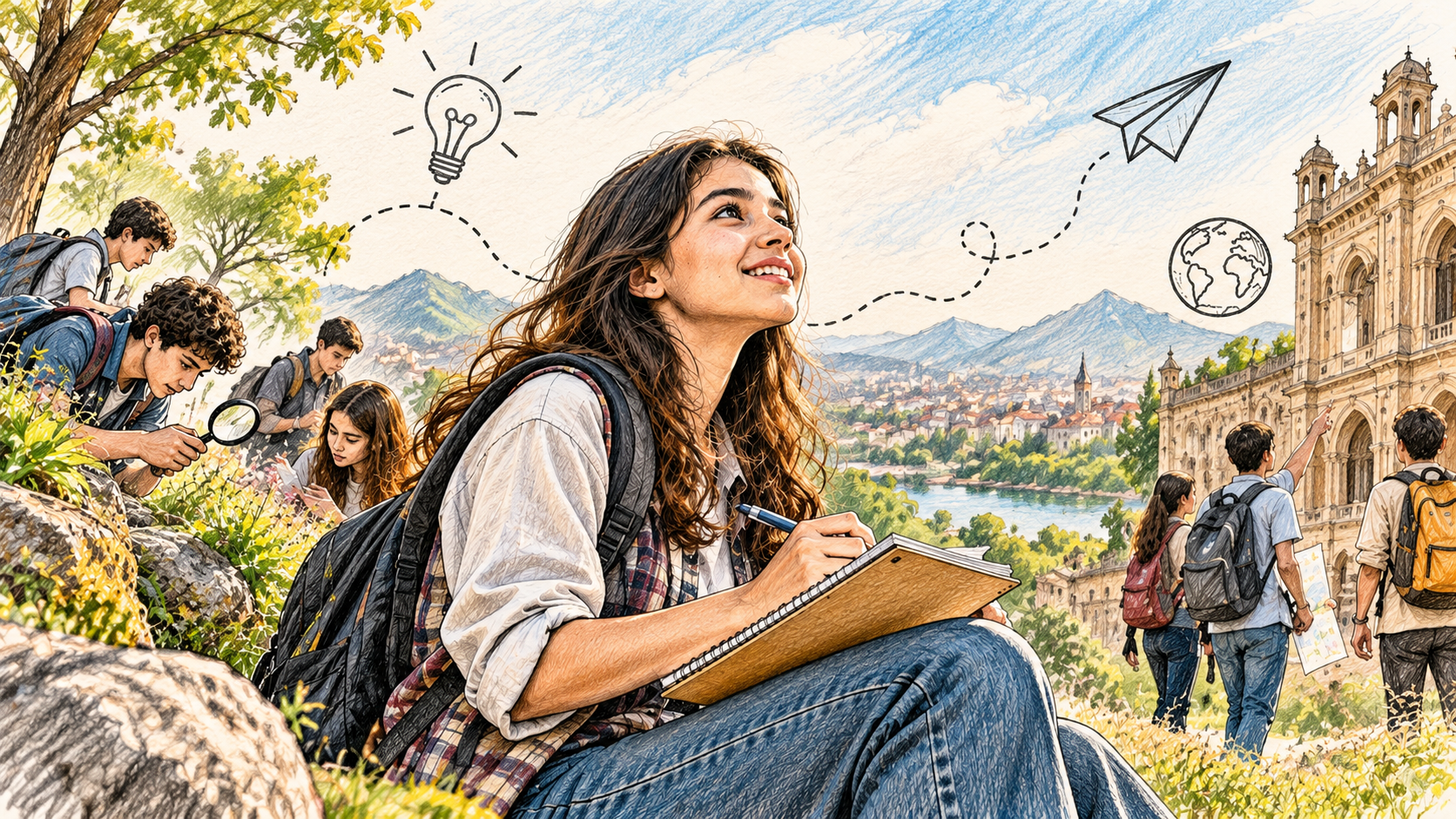
Traditional desk study builds foundational knowledge, but understanding often deepens when students step beyond the school gates. Today, learning outside the classroom is an important part of modern education. It connects academic lessons with real-world experiences and helps students turn abstract ideas into practical knowledge.
Research from the Council for Learning Outside the Classroom highlights the educational value of activities beyond traditional school settings. These experiences can support student motivation, academic development, and emotional wellbeing. They also encourage curiosity, resilience, and critical thinking. The Education Endowment Foundation also provides research-based guidance on approaches that can support student learning and development.
When students interact directly with their surroundings, learning becomes more active and memorable. They can observe, question, test ideas, and solve problems in real situations.
This guide explains what learning outside the classroom means and why it matters. You will also discover its major benefits, common educational terms, practical examples, and simple ways students can continue learning beyond the classroom.
What is learning outside of the classroom?
Learning outside of the classroom is an educational approach where teaching and learning take place beyond the traditional indoor school environment. It includes structured lessons and informal activities in outdoor spaces, cultural locations, workplaces, and community settings.
Instead of depending only on textbooks, lectures, and digital resources, students interact directly with their surroundings. They may examine objects, observe natural processes, speak with professionals, or investigate local issues. These experiences connect academic subjects with real-world situations and support personalized learning in education.
Learning outside the classroom can support many subjects. A science student might study plants in a local park, while a history student could visit a museum or heritage site. Geography students might collect environmental data, while language students could interview people in their community.
The approach also encourages students to become more active participants in their education. They can ask questions, make observations, test ideas, and reflect on what they discover. This combination of hands-on learning and reflection can make academic concepts easier to understand and remember.
The Role of Concrete Experience
Concrete experience is an important part of learning outside the classroom because students learn by directly interacting with the world around them. Instead of simply reading about a concept, they can observe it, test it, or apply it in a practical situation.
For example, students studying biology can examine plants in their natural habitat. A physics lesson can involve measuring motion during an outdoor activity. A history lesson can become more meaningful when students visit a museum or historical location.
These experiences give students opportunities to use multiple senses while learning. They also encourage observation, questioning, and problem-solving. When learners encounter something unexpected, they must think about why it happened and how it connects with what they already know, reinforcing student choice in learning and active participation.
Hands-on experiences can also improve confidence. Students see that knowledge is useful beyond written assignments and examinations. This can help them transfer classroom concepts into practical situations and develop a stronger understanding of the subject.
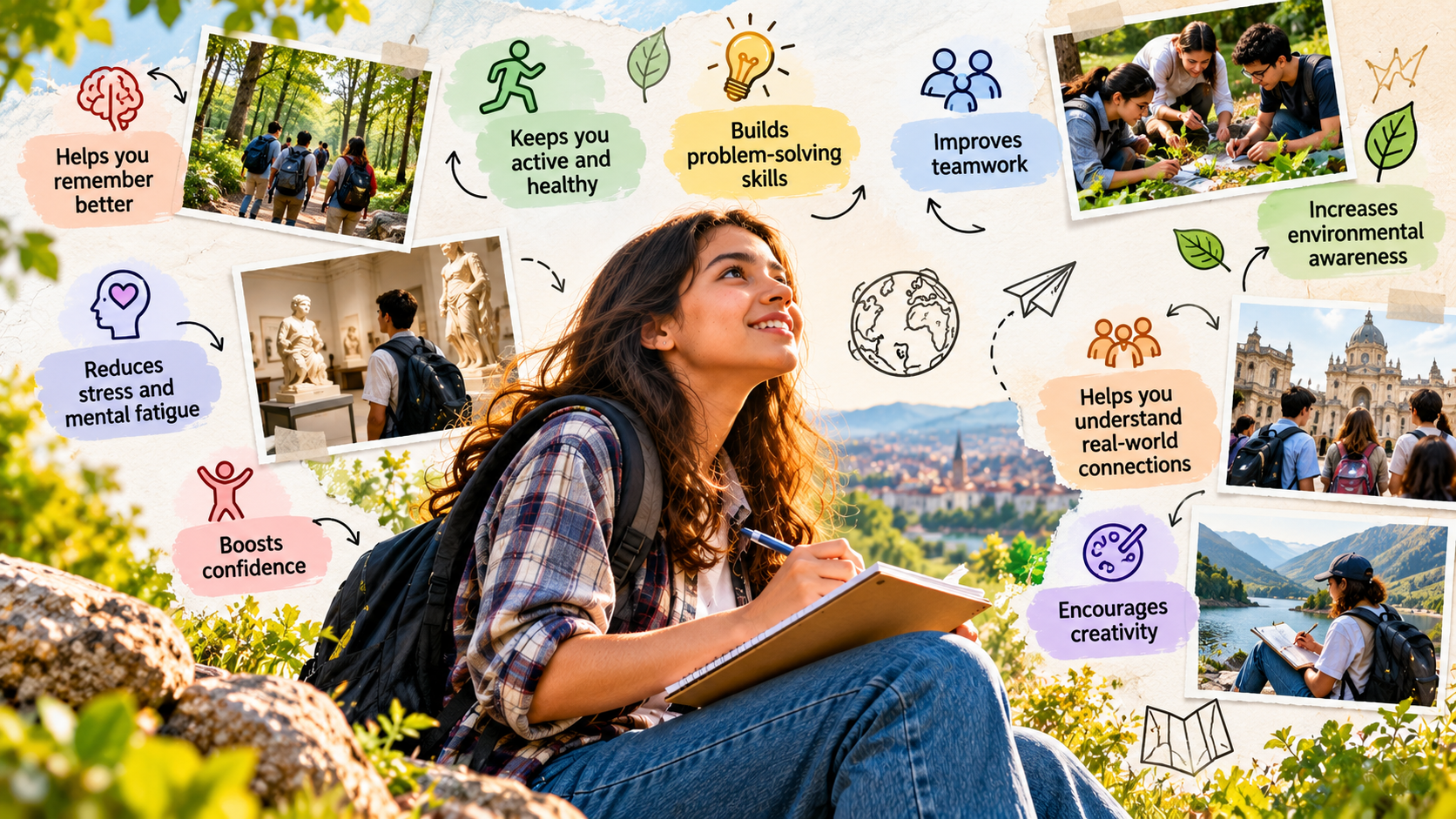
What are 10 benefits of learning outside the classroom?
Learning outside the classroom can support academic, physical, social, and emotional development. Its benefits often come from giving students opportunities to apply knowledge in unfamiliar and practical environments, including through STEM tools every modern classroom needs.
Ten important benefits include:
- Better knowledge retention: Practical experiences can make information more memorable because students connect ideas with real situations.
- Greater physical activity: Outdoor lessons often involve walking, exploring, measuring, building, or other forms of movement.
- Stronger problem-solving: Real environments can present unexpected challenges that require students to think and adapt.
- Reduced mental fatigue: A change from the traditional classroom can provide variety and help students stay mentally engaged.
- Improved teamwork: Group activities encourage communication, cooperation, and shared responsibility.
- Environmental awareness: Outdoor experiences can help students understand ecosystems and develop greater respect for nature.
- Social adaptability: Community activities expose learners to different people, places, and situations.
- Greater confidence: Completing unfamiliar tasks can help students become more independent.
- More creativity: New environments provide different sights, sounds, materials, and problems to explore.
- Higher engagement: Practical activities can make lessons feel more relevant, enjoyable, and connected to everyday life.
Together, these benefits show why education does not have to remain limited to desks and classrooms.
What is the term for learning outside the classroom?
There is no single term that describes every form of learning outside the classroom. The terminology depends on the setting, purpose, and type of educational experience involved.
Outdoor education is commonly used when learning takes place outdoors, particularly through activities involving nature, exploration, or physical challenges. Experiential education is broader and focuses on learning through direct experience and reflection.
Other related terms include place-based learning, fieldwork, informal learning, and community-based learning. Place-based learning connects lessons with local environments, culture, history, and community resources. Fieldwork usually involves collecting observations or data directly from a relevant location.
Although these terms have different meanings, they share a common idea. Students learn by interacting with authentic environments rather than depending entirely on classroom instruction.
The term you encounter may therefore vary by school, institution, subject, or educational framework. Understanding these differences can help teachers and students choose the right approach for their learning goals.
The Meaning of Experiential Pedagogy
Experiential pedagogy focuses on learning through direct experience, reflection, and practical application. Instead of treating students as passive recipients of information, this approach encourages them to participate actively in the learning process.
Educational theorist David Kolb is widely associated with the experiential learning cycle. His model describes learning through four connected stages: concrete experience, reflective observation, abstract conceptualization, and active experimentation.
Students first experience something directly. They then think about what happened and identify important observations. Next, they connect those observations with broader concepts or existing knowledge. Finally, they test or apply what they learned in another situation.
This process shows why an outdoor activity becomes more valuable when students reflect on it afterward. A field trip, experiment, or community project can provide the experience, while discussion and written reflection help students understand its meaning.
Experiential pedagogy therefore emphasizes active participation, reflection, application, and real-world problem-solving.
What are some examples of learning outside of the classroom?
Examples of learning outside of the classroom can be found in natural environments, cultural institutions, workplaces, and local communities. The activity does not need to be complicated. Its educational value comes from connecting the experience with clear learning objectives.
Common examples include:
- Museum visits: Students can explore science, history, art, or cultural exhibits while connecting them with classroom topics.
- Nature studies: Learners can identify plants, observe wildlife, or examine ecosystems in parks and nature reserves.
- Field research: Science students can test water quality, collect environmental observations, or study biodiversity.
- School gardens: Growing vegetables can introduce lessons about biology, nutrition, sustainability, and responsibility.
- Outdoor experiments: Students can investigate weather, motion, shadows, sound, or other scientific concepts.
- Community projects: Volunteering can teach communication, teamwork, citizenship, and social responsibility.
- Workplace visits: Students can observe professionals and understand how classroom skills are used in real jobs.
- Cultural activities: Galleries, heritage sites, libraries, and community events can provide meaningful learning experiences while helping students understand the role of culture in education.
These activities turn everyday locations into practical learning environments. They also give students opportunities to observe, question, participate, and apply knowledge.
How can students learn outside the classroom?
Students can make learning outside the classroom part of their everyday lives by looking for practical ways to apply what they study. They do not always need an organized school trip or expensive program.
Students can start with simple activities close to home. For example, they can visit a local park and identify plants using a field guide. They can record weather conditions, measure distances, photograph observations, or investigate how different environments change throughout the year.
Community involvement can provide another useful learning opportunity. Students can volunteer with local organizations, participate in community projects, or attend public workshops. These experiences can develop communication, teamwork, and problem-solving skills.
Cultural spaces can also support independent learning. Museums, libraries, galleries, science centers, and historical sites can help students explore topics beyond their textbooks.
Keeping a personal field journal can make these experiences more meaningful. Students can record observations, questions, discoveries, and reflections. Over time, this habit turns ordinary experiences into a structured form of self-directed learning.
The key is to stay curious, connect experiences with academic ideas, and reflect on what was learned.
Frequently Asked Questions
Is outdoor education suitable for all academic subjects?
Yes, outdoor education enriches every academic subject, not just the natural sciences. Mathematics comes alive through surveying landscapes and calculating tree heights. History gains profound immediacy through visits to heritage monuments. Language arts students find rich creative inspiration by writing sensory poetry in outdoor settings. Even foreign language studies benefit when students practice conversational skills in local multicultural markets.
How does learning outside impact student behavior?
Learning in varied environments significantly improves student behavior, focus, and emotional regulation. Exposure to green spaces reduces mental fatigue and alleviates symptoms of attention-deficit disorders. Furthermore, collaborative, hands-on tasks channel youthful energy constructively, resulting in fewer behavioral disruptions, improved impulse control, and stronger interpersonal cooperation when students return to regular indoor school routines.
What are the main challenges of organizing outdoor learning?
The main challenges include managing logistical safety risks, securing administrative funding, coordinating reliable transportation, and accommodating unpredictable weather conditions. Additionally, some educators feel constrained by rigid standard curricula and time limits. However, schools readily overcome these hurdles by utilizing on-site school grounds, partnering with local community organizations, and planning flexible outdoor activities.
Conclusion
Stepping beyond conventional school walls offers far more than an enjoyable break from desks. Throughout this guide, we examined the foundational definition of this hands-on educational approach, detailed its ten wide-ranging physical and cognitive benefits, clarified its academic terminology, reviewed tangible examples, and outlined actionable strategies for independent study.
By actively embracing learning outside the classroom, educators, parents, and students tap into an extraordinarily rich educational resource: the real world itself. Moving outside deepens academic comprehension, relieves mental stress, and builds essential life skills like critical thinking, team collaboration, and environmental stewardship, which are also explored through educational psychology theories every teacher should know.
Education should never remain confined to printed textbooks or artificial indoor lighting. Whether you are an educator designing a neighborhood botanical survey, a parent planning weekend museum visits, or a student investigating local history, start small. Step outside today, observe your surrounding environment with fresh curiosity, and transform the wider world into your personal classroom.