
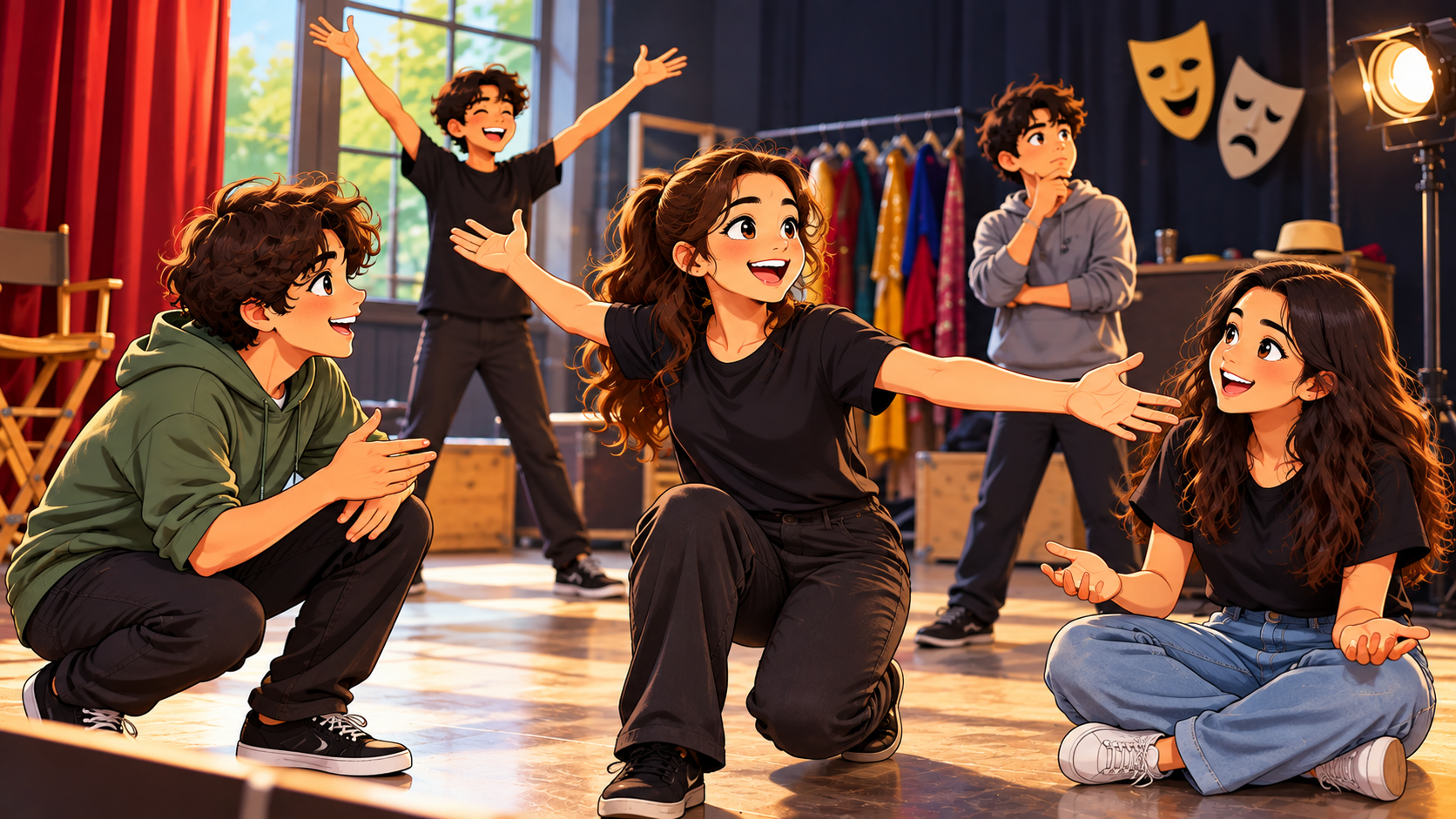
Theater Games That Make Learning a Blast in the Drama Classroom
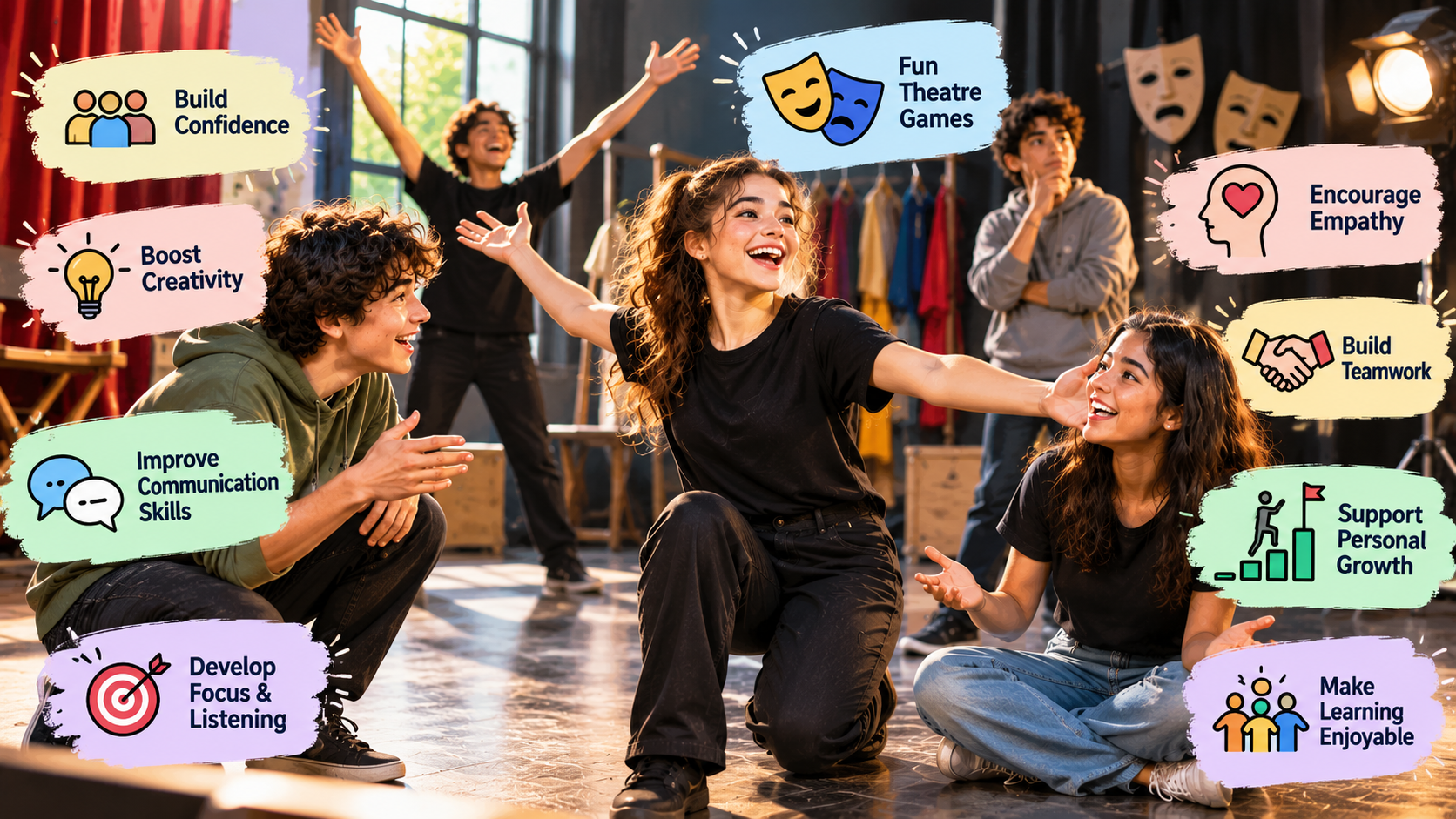
Step into any thriving acting studio, and you will often hear laughter before you see a script. Using theater games that make learning a blast can break social barriers, encourage creative thinking, and help nervous students become confident collaborators. Drama education can also support skills such as empathy, communication, public speaking, and teamwork, as highlighted by the Educational Theatre Association.
When students participate in active dramatic play, they explore complex ideas through experience. Instead of sitting quietly, they learn through movement, vocal expression, storytelling, and improvisation. This active environment encourages students to take creative risks without fearing mistakes.
Keeping a drama classroom engaged requires variety and thoughtful planning. Teachers need activities that work during warm-ups, rehearsals, performances, and regular classroom sessions.
This guide explores practical theater games and activities for different learning goals. You will discover warm-ups for musical theatre, ensemble-building exercises, storytelling games, and creative challenges. These activities can help students stay focused while developing confidence, listening skills, physical awareness, and teamwork. With the right structure, your rehearsal room can become an energetic space where students feel comfortable experimenting and performing.
What are some fun theatre games?
Classic improvisational exercises can create instant engagement while teaching important performance skills. “Zip, Zap, Zop” remains a popular choice for developing focus, eye contact, listening, and quick reactions. Students stand in a circle and pass energy around the group using coordinated movements and vocal cues.
Another useful activity is “Freeze and Justify.” Two performers create an improvised scene while the rest of the group watches. When someone calls “freeze,” a new actor replaces one performer and begins a different scene from the same physical position. The new performer must quickly justify the pose and build a fresh situation.
These theater games that make learning a blast also teach students to accept creative offers from their classmates. They learn to listen instead of planning every response in advance. With regular practice, students can become more flexible, responsive, and comfortable with spontaneous performance. Teachers can also adjust the pace to suit beginners or experienced performers.
Why “Zip, Zap, Zop” Builds Unbreakable Ensemble Focus
“Zip, Zap, Zop” works best when students understand that concentration matters more than speed. Begin with the group standing in a circle and establish clear movement patterns before increasing the pace. Students should make direct eye contact with the person receiving the action. This encourages performers to stay mentally present rather than simply waiting for their turn.
As the activity becomes faster, students must process movement, sound, and visual information almost simultaneously. That combination strengthens stage awareness, reaction speed, and active listening. It also encourages students to remain alert to their classmates.
Teachers can introduce additional challenges once the basic pattern becomes comfortable. For example, change the direction, increase the tempo, or ask students to maintain a specific physical posture. However, speed should never become the only goal.
The real value comes from developing concentration and ensemble awareness. Students begin to understand that strong performances depend on reacting to others rather than working in isolation.
What are some fun activities for theatre?
Collaborative storytelling and character-building exercises can bring energy into almost any drama classroom. “One Word Story” is a simple activity that requires students to create a complete story together. Each participant contributes only one word before the next person continues the sentence. The exercise encourages careful listening because every contribution affects what comes next.
Another engaging activity is “Museum Curator.” Students freeze like statues representing emotions, occupations, historical figures, or fictional characters. One student becomes the curator and moves around the room while the performers maintain their poses. The curator can try to make performers react without directly touching them.
These activities develop several useful performance skills. Students practice narrative structure, physical expression, concentration, and spatial awareness while working with others. They also learn that theatrical communication does not always require dialogue.
Teachers can adapt both activities for different ages and ability levels. Adding themes, character prompts, or time limits can make familiar exercises feel fresh. This approach also supports personalized learning in education, allowing activities to better match individual student needs. This variety helps students remain engaged while continuing to build confidence through playful performance.
How to make drama class fun?
Making drama class enjoyable requires more than adding games to every lesson. Students need a safe and supportive environment where they can experiment without worrying about embarrassment. Start by establishing clear expectations about respect, listening, and constructive feedback. When students understand that mistakes are part of learning, they are more willing to take creative risks.
Variety also keeps lessons from becoming predictable. Combine warm-ups, improvisation, movement exercises, storytelling, and short performance challenges. For example, divide students into small groups and give them three minutes to create a scene using two random props. A short deadline encourages action and limits overthinking. Teachers can also explore project-based learning to structure longer creative activities around meaningful outcomes.
Rotating leadership responsibilities can also increase participation. Give different students opportunities to direct, perform, narrate, or organize an activity. This approach supports student choice in learning while helping quieter students find ways to contribute.
Most importantly, match activities to your learning objective. Theater games that make learning a blast should still develop useful skills such as communication, character work, timing, collaboration, or stage confidence. Fun works best when it supports meaningful learning.
Setting Up High-Stakes Micro-Challenges to Drive Creative Teamwork
Micro-challenges can turn an ordinary drama exercise into an energetic teamwork activity. Divide students into small groups and give each team a clear theatrical problem. The challenge might involve creating a two-minute silent scene, using only three props, or communicating an emotion without speaking.
The restrictions should be simple enough to understand quickly. They should also leave room for different creative solutions. A short time limit encourages students to make decisions instead of endlessly discussing possibilities.
These exercises can strengthen problem-solving, communication, adaptability, and ensemble trust. Students must listen to their teammates and contribute ideas while respecting the group’s overall direction. They also learn how to recover when an idea does not work.
Teachers can increase the difficulty gradually. Add a required character, location, emotion, or unexpected event once students become comfortable with the basic format.
The goal is not to identify the most talented group. Instead, focus on how effectively students collaborate under pressure. A successful micro-challenge leaves students with a completed performance and a clearer understanding of how teamwork shapes theatre.
What are some good warm-up games for musical theatre?
Musical theatre performers need to prepare their voices, bodies, rhythm, and concentration before rehearsing demanding material. “The Great Vocal Race” combines movement with articulation practice. Students walk around the room while repeating tongue twisters such as “red leather, yellow leather.” They can gradually increase their pace while maintaining clear pronunciation.
Another useful exercise is “Rhythm Pass.” Students form a circle while one performer establishes a simple rhythm using claps, taps, or vocal sounds. Other students gradually add complementary rhythms without losing the original beat.
These activities help performers develop articulation, timing, coordination, and ensemble awareness. They also provide a more active alternative to standing still during traditional vocal warm-ups.
Teachers should keep vocal exercises comfortable and avoid forcing students to sing beyond their natural range. Warm-ups should prepare the voice rather than create strain.
For younger performers, simple rhythms and playful sounds can make the activities easier to understand. More advanced students can introduce layered rhythms, movement patterns, or musical phrases. With consistent practice, these warm-ups can help performers enter rehearsals with greater physical and vocal awareness.
What is a fun warm up game?
“The Human Machine” is a flexible warm-up that combines movement, sound, rhythm, and ensemble awareness. One student enters the performance space and creates a repeated mechanical movement with a matching sound. A second student joins and adds another movement that connects physically or conceptually with the first.
Students continue entering one at a time until the group becomes a large, moving machine. Each performer must watch the others carefully so their movement fits the developing rhythm. This encourages concentration while allowing students to experiment with unusual sounds and physical choices.
The activity can be adapted for different ages and experience levels. Beginners can use simple repetitive movements, while advanced performers can explore changing rhythms, character qualities, or emotional shifts.
“The Human Machine” also helps students become comfortable performing in front of their peers. Because everyone contributes to one shared creation, individual mistakes become less intimidating.
As a result, the exercise can prepare students for ensemble work, improvisation, physical theatre, and creative collaboration. It is especially useful when the class needs an energetic transition into rehearsal.
Directing Mechanical Rhythms and Dynamic Group Tempo Shifts
Once students have created their human machine, the teacher can introduce simple conducting signals. Use gestures to ask the group to become louder, quieter, faster, slower, larger, or smaller. Students must watch the conductor while maintaining awareness of the performers around them.
This turns a playful warm-up into an exercise in ensemble responsiveness and dynamic control. Performers learn that a group performance can change instantly when everyone responds to the same direction.
Start with obvious changes so students understand the signals. Once they become comfortable, make transitions more gradual. For example, slowly increase the machine’s tempo before bringing it back to a very slow rhythm. You can also introduce pauses that require the entire group to stop together.
The exercise develops listening and observation without relying on scripted dialogue. Students must respond physically while maintaining their character or movement pattern.
It can also introduce basic directing concepts. Students experience how changes in pace, volume, and physical scale affect an audience’s perception. By the end, the class has practiced performance control while still enjoying an energetic group activity.
Frequently Asked Questions
What age groups benefit most from drama games?
Drama games benefit participants of every age, from preschool children to adult corporate professionals. For young children, these activities develop social cooperation, emotional literacy, and language skills. For teenagers and adults, games reduce performance anxiety, encourage spontaneous thinking, and build confident presentation skills. Teachers adjust the complexity of game rules to match the group’s cognitive and physical maturity.
How much time should drama warm-ups take during class?
A standard drama warm-up should take roughly ten to fifteen minutes of a sixty-minute class period. This window provides ample time to activate the body, warm up the vocal cords, and focus group concentration without eating into rehearsal time. Keeping warm-ups concise and energetic ensures students transition into scene work feeling alert, grounded, and creatively inspired.
Can theater games help shy students build confidence?
Yes, theater games offer a supportive environment that helps shy students build genuine confidence gradually. Because many games emphasize group movement and choral sound rather than solo performance, self-conscious students feel protected by the ensemble. As they laugh alongside their peers and experience acceptance, their fear of failure fades, empowering them to take larger creative risks on stage.
Conclusion: Energize Your Drama Classroom Today
Integrating theater games that make learning a blast transforms routine rehearsals into vibrant hubs of creative discovery. Rather than viewing theatrical technique as rigid or intimidating, students explore emotional expression, vocal projection, and spontaneous storytelling through purposeful play. Games like “Zip, Zap, Zop” and “The Human Machine” build vital stage discipline while dismantling performance anxiety, proving that laughter and focused skill development go hand in hand.
Beyond the footlights, these dynamic exercises cultivate empathy, adaptive listening, and collaborative trust—essential interpersonal abilities that serve young actors well beyond school walls. As an educator or director, establishing an environment where creative risks are celebrated empowers even the quietest performers to step boldly into the spotlight.
Take the games outlined in this guide and weave them directly into your next rehearsal schedule. Watch how a ten-minute warm-up unlocks boundless enthusiasm, unifies your cast, and elevates performance quality across every scene. Set the stage for meaningful artistic growth today, and bring playful energy back to your creative curriculum.