
Are Older Blu-Ray Discs Worse Quality?
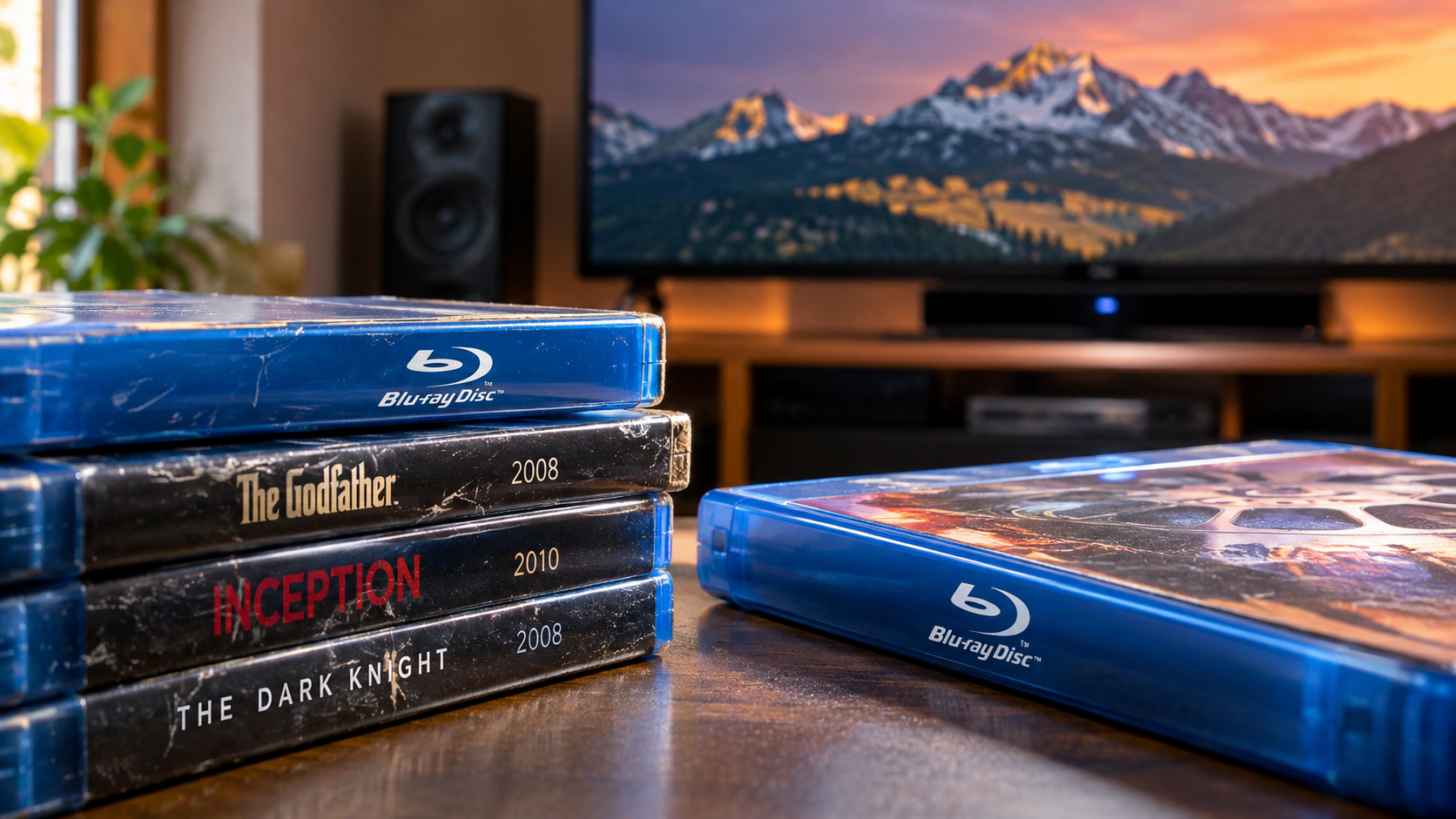
Many movie collectors wonder: are older Blu-ray discs worse quality than modern releases? The answer depends on the movie, its original source, and how the studio mastered it. Some early releases from 2006–2008 look noticeably dated. Others still deliver excellent picture and sound quality.
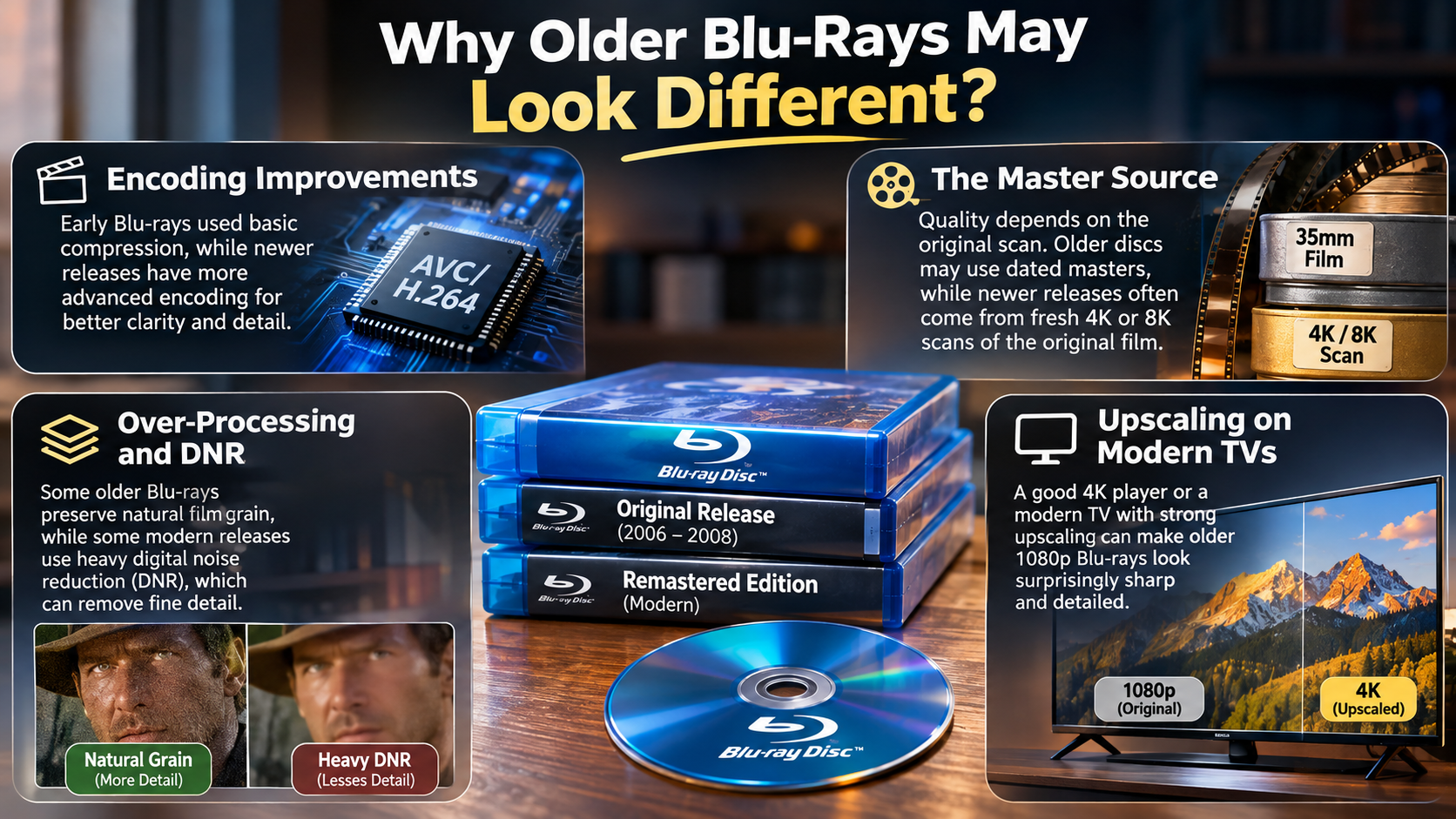
When Blu-ray launched, studios were still learning how to master films for high-definition home entertainment. Early releases sometimes used outdated transfers, inefficient encoding, or excessive digital processing. However, newer releases are not automatically better.
Understanding these differences matters when building a movie collection on a budget. A secondhand Blu-ray might offer excellent quality at a lower price. Alternatively, a newer restoration could provide noticeably sharper details and more accurate colors.
In this guide, we explain how old Blu-ray discs compare with modern releases. We also explore classic movie restorations, 1080p versus 4K, and whether physical media remains worth buying in 2026.
Are Older Blu-Ray Discs Worse Quality?
Yes, some older Blu-ray discs have noticeably worse picture and sound quality than newer releases. However, the release date alone does not determine image quality. The original film transfer, video encoding, mastering decisions, and disc condition matter much more.
When Blu-ray launched in 2006, studios used several video codecs. These included MPEG-2, AVC (H.264), and VC-1. MPEG-2 generally required more storage space to deliver comparable picture quality. However, AVC and VC-1 were also available during the format’s early years.
Disc capacity could influence the amount of compression used. Standard Blu-ray discs commonly hold 25GB on a single-layer disc and 50GB on a dual-layer disc. A smaller capacity did not automatically mean poor quality.
Some early releases also reused older transfers originally prepared for DVD. These transfers could lack fine details, accurate colors, and natural contrast. Modern restorations often improve these limitations.
Therefore, compare the actual transfer and disc edition before purchasing. An excellent early Blu-ray can outperform a poorly mastered modern release.
Early Mastering Mistakes and DNR
One major problem with some early Blu-ray releases was excessive Digital Noise Reduction (DNR). Studios sometimes applied aggressive filtering to remove visible film grain. They believed cleaner images would look better on high-definition televisions.
However, film grain is a natural part of traditional film photography. Removing too much grain can also remove important picture details. Faces may appear unusually smooth, while hair, clothing, and backgrounds lose their natural textures.
Another problem involved artificial edge enhancement. This processing increased the appearance of sharpness by adding bright outlines around objects. Unfortunately, it could introduce distracting halos and unnatural edges.
These problems were not exclusive to early Blu-ray releases. Some newer restorations have also received criticism for excessive digital processing.
When comparing editions, look for reviews that discuss the transfer quality. Pay attention to natural grain, accurate colors, fine details, and contrast.
A well-preserved original film appearance usually produces a more authentic viewing experience. The goal should be faithful image reproduction, not artificial sharpness.
Do Old Movies Look Better on Blu-ray?
Yes, many classic movies look significantly better on Blu-ray than on DVD. However, the improvement depends on the original film elements and restoration quality. Movies shot on 35mm or 70mm film can contain substantial image detail. A carefully prepared transfer can preserve much of that information.
Traditional film does not have a fixed digital resolution. Its actual resolving power depends on several factors. These include film stock, camera lenses, cinematography, exposure, and preservation conditions.
A high-quality 1080p Blu-ray can therefore deliver impressive results from an older movie. Viewers can enjoy natural film grain, improved textures, and more accurate colors. These improvements are particularly noticeable in well-preserved films.
However, not every classic movie receives the same treatment. Some releases use older scans or damaged source materials. Others benefit from newly restored film elements.
Before buying a classic movie, check whether its Blu-ray edition uses a new restoration. A good restoration can matter more than the movie’s original release year.
The Importance of Fresh Film Scans
The quality of an older movie on Blu-ray depends heavily on its source transfer. A fresh scan from original camera negatives can reveal details missing from older digital masters.
Film restoration specialists commonly use high-resolution scanning equipment. They may scan original negatives at 2K or 4K resolution. Technicians then repair physical damage and adjust the image carefully.
A quality restoration can improve several visual elements:
- Picture detail: Reveals finer textures and background elements.
- Color accuracy: Restores more natural skin tones and original colors.
- Contrast: Improves the balance between shadows and highlights.
- Film grain: Preserves the natural appearance of the original film.
- Image stability: Reduces distracting scratches, dirt, and unwanted movement.
However, a new scan does not guarantee a perfect release. Poor restoration choices can still damage the original appearance.
Labels such as Criterion Collection and Arrow Video regularly release restored films. Some editions also include new interviews, commentaries, and documentaries.
Check the restoration details before purchasing. A carefully mastered older Blu-ray can look better than a newer release using an inferior source.
Is Blu-ray Still Worth It in 2026?
Yes, Blu-ray remains worth buying in 2026, particularly for movie collectors and home theater enthusiasts. Physical discs offer consistent playback quality without depending on an internet connection. They also provide access to movies that might disappear from streaming platforms.
Standard Blu-ray supports Full HD resolution at 1920 × 1080 pixels. Its relatively high video bitrate can preserve more picture detail than many compressed streaming versions. Actual results depend on the disc, streaming service, and individual title.
Physical media also provides greater control over your movie collection. You can watch purchased discs whenever you want, provided you have compatible equipment. You do not need an active streaming subscription or a particular platform’s licensing agreement.
Another advantage is the availability of high-quality audio formats. Many Blu-ray releases include lossless soundtracks. These can provide excellent results with compatible home theater equipment.
However, Blu-ray is not the best choice for everyone. Streaming offers greater convenience and requires less storage space.
For collectors who prioritize picture quality, reliable playback, and long-term access, physical media remains a worthwhile investment.
Superior Lossless Audio Performance
Picture quality is not the only reason collectors continue buying Blu-ray discs. Audio quality is another important advantage. Many standard Blu-ray releases include lossless formats such as Dolby TrueHD and DTS-HD Master Audio.
These formats preserve the original soundtrack without the audio compression commonly used by streaming platforms. With compatible equipment, viewers can enjoy detailed dialogue, powerful sound effects, and more accurate surround sound.
Blu-ray audio can offer several advantages:
- Clearer dialogue: Helps preserve subtle vocal details.
- Better dynamic range: Maintains the difference between quiet and loud sounds.
- Detailed sound effects: Preserves more information in complex scenes.
- Surround sound: Supports multichannel audio for compatible home theater systems.
However, not every Blu-ray contains lossless audio. Some releases use compressed Dolby Digital or DTS tracks. Streaming services also vary in their audio quality and supported formats.
Your speakers, receiver, and playback equipment affect the final experience. A lossless soundtrack will not automatically sound better on every setup.
Check the audio specifications on the disc packaging before purchasing. This helps you identify releases that offer the soundtrack quality you want.
Can You Really Tell the Difference Between Blu-ray and 4K?
Yes, viewers can notice differences between standard Blu-ray and 4K Ultra HD. However, the improvement depends on the television, viewing distance, mastering quality, and original source material.
Standard Blu-ray supports 1920 × 1080 resolution. In comparison, 4K Ultra HD Blu-ray supports resolutions up to 3840 × 2160 pixels. This provides four times as many pixels as Full HD.
However, higher resolution is not the only improvement. High Dynamic Range (HDR) and wider color reproduction can make a substantial difference. These technologies improve highlights, shadows, and the range of visible colors.
A well-mastered 4K disc can deliver sharper textures and more realistic lighting. However, a poor 4K transfer may look worse than an excellent 1080p Blu-ray.
Viewing conditions also matter. Larger televisions and shorter viewing distances make resolution differences easier to notice.
If you already own a good Blu-ray edition, upgrading is not always necessary. Compare the actual picture quality before spending extra money on another edition.
Why HDR Can Matter More Than Resolution Alone
Resolution improves image detail, but HDR changes how a picture handles brightness and contrast. This difference can make 4K Ultra HD releases look more realistic, even when viewers do not immediately notice additional pixels.
High Dynamic Range expands the range between bright highlights and dark shadows. It helps preserve details in challenging scenes. For example, sunlight, streetlights, and explosions can appear brighter without losing as much visual information.
HDR can also improve the appearance of colors. Wider color reproduction allows compatible displays to show a broader range of shades. This can make landscapes, skin tones, and cinematic lighting appear more natural.
However, HDR quality depends on the mastering process and television capabilities. A poorly mastered HDR release may look disappointing. A high-quality standard Blu-ray can still produce an excellent picture.
Your viewing distance and screen size also influence the experience. Larger screens make resolution differences easier to see. HDR improvements can remain noticeable across different screen sizes.
Therefore, compare both resolution and mastering quality. Do not assume every 4K disc automatically looks better than its Blu-ray counterpart.
Is Blu-ray Becoming Obsolete?
Are older Blu-ray discs worse quality than modern releases? Not necessarily, and the format itself is far from obsolete. Blu-ray is becoming more of a specialist format than a mainstream entertainment option. However, movie collectors and home theater enthusiasts continue to value physical releases.
Many consumers prefer streaming because it offers instant access to large entertainment libraries. It also eliminates the need to purchase individual discs or maintain a physical collection.
However, streaming platforms can change their libraries at any time. Movies may disappear because of licensing agreements or distribution changes. Streaming quality can also vary with internet speed and platform compression.
Physical media offers a different experience. You own a particular disc edition and can play it without relying on an internet connection. You also retain access to its original presentation and bonus features.
Specialist distributors continue releasing restored classics and collector editions. These releases appeal to people who appreciate film preservation and home theater quality.
Blu-ray may not return to its earlier mainstream popularity. Nevertheless, its value remains clear for collectors who prioritize reliable playback and physical ownership.
The Rise of Boutique Physical Media
As physical media becomes more specialized, boutique labels play an important role in keeping Blu-ray relevant. Companies such as Criterion Collection, Arrow Video, and Shout! Factory focus on collectors and film enthusiasts.
These distributors often release carefully restored films with additional materials. Their editions can offer more than just the original movie.
Common features include:
- Newly restored picture and sound.
- Director and cast commentaries.
- Behind-the-scenes documentaries.
- Interviews with filmmakers and actors.
- Collector booklets and original artwork.
- Deleted scenes and archival footage.
These extras make physical editions attractive to people interested in film history and production.
Some boutique releases also include both 4K Ultra HD and standard Blu-ray discs. This gives collectors flexibility across different playback systems.
However, limited editions are not automatically worth their higher prices. Always compare the restoration, included features, and previous releases before buying.
The continued release of specialist editions shows that physical media still has an audience. For serious collectors, carefully produced Blu-rays remain valuable additions to a movie library.
Final Verdict: Should You Buy Older Blu-ray Discs?
Are older Blu-ray discs worse quality than modern releases? Not always. Some early editions have outdated transfers, excessive digital processing, or weaker picture quality. Others remain excellent examples of high-definition home entertainment.
The most important factor is the quality of the individual release, not its age. Before purchasing, check the restoration source, video transfer, audio specifications, and reviews.
If you are buying secondhand discs, also inspect their physical condition. Scratches, fingerprints, and damaged surfaces can affect playback reliability. To protect your collection over time, follow these practical tips for preserving your DVDs and Blu-ray
For collectors on a budget, older Blu-rays can offer excellent value. You do not always need to spend more on a 4K edition to enjoy a great movie experience.
Ultimately, choose the edition with the best transfer and presentation. A well-mastered 1080p Blu-ray can still look and sound impressive in 2026. For more information about Blu-ray technology and its specifications, visit the Blu-ray Disc Association.