
Spotify vs. Apple Music: Which Service Wins the Audio Crown?
Choosing between Spotify vs. Apple Music can shape your entire listening experience. Both platforms lead the music streaming market, but they serve different listener preferences. Spotify focuses strongly on discovery, personalization, and cross-platform flexibility. Apple Music emphasizes sound quality, curated content, and integration with Apple’s ecosystem.
Your ideal service depends on what matters most during everyday listening. Some users want smart recommendations and collaborative playlists. Others prioritize lossless audio, spatial sound, and a focused music experience.
This guide compares Spotify and Apple Music across sound quality, artist payouts, market position, discovery, and user experience. It also explores why some listeners switch from Spotify to Apple Music. By comparing these important factors, you can decide which streaming service best matches your listening habits and priorities, while also considering how YouTube Music compares as another popular listening option.
Which Sound Quality Service Is Better, Spotify or Apple Music?
When comparing Spotify vs. Apple Music for audio quality, Apple Music has the clear advantage. Apple Music offers lossless audio and Spatial Audio with Dolby Atmos at no additional cost. These features provide greater detail, depth, and instrument separation for compatible recordings and equipment.
Spotify traditionally uses compressed Ogg Vorbis audio, with its highest current quality reaching 320 kbps for Premium users. Spotify has discussed a higher-quality lossless option for years, but availability has not matched Apple Music’s offering. As a result, listeners with quality headphones or dedicated audio equipment may prefer Apple Music.
Apple Music is particularly appealing to audiophiles who want access to high-resolution music. However, everyday listeners may notice less difference when using basic earbuds or speakers. Your equipment and listening environment can significantly affect the practical benefit of lossless audio, making it important to understand how to choose the right pair of noise-cancelling headphones.
Lossless Audio Differences Explained
Lossless audio retains more of the original recording data than compressed formats. This can preserve subtle details and produce a more faithful reproduction of studio recordings. Apple Music offers lossless listening across its catalog of more than 100 million songs.
Spotify’s standard streams use compression to reduce file sizes and data usage. This approach works well for everyday listening and helps Spotify deliver reliable playback across many devices. However, compression can remove some audio information.
For listeners who prioritize studio-quality sound, Apple Music provides the stronger technical option. It also supports Spatial Audio with Dolby Atmos on compatible content and devices.
Keep in mind that lossless audio does not automatically sound better in every situation. Your headphones, speakers, connection, and listening environment all matter. Casual listeners may find Spotify’s 320 kbps quality more than sufficient for everyday use.
How Much Money Is 1,000,000 Streams on Apple Music?
One million Apple Music streams can generate roughly $7,000 to $10,000 in gross royalties, depending on several factors. The actual amount an artist receives can vary by territory, subscription type, label agreement, distributor, and other contractual arrangements.
Apple Music has historically maintained a relatively high effective per-stream royalty compared with many major streaming services. A commonly cited figure is around $0.01 per play, although this should not be treated as a guaranteed rate. Streaming services generally calculate royalties through complex agreements and revenue-sharing systems.
For independent musicians, stronger streaming royalties can make a meaningful difference. However, artists do not always receive the full amount generated by their streams. Labels, publishers, distributors, and other rights holders may receive portions of the revenue.
Therefore, calculating artist income requires more than multiplying streams by a fixed rate. Still, Apple Music remains attractive to creators who prioritize higher potential streaming revenue. Its payout structure can provide valuable income when an artist builds a large and engaged audience.
Understanding Artist Payout Structures
Artist payouts depend on several factors beyond the number of plays. Subscription revenue, listener location, rights ownership, and distribution agreements can all affect the final amount.
Apple Music has often been associated with an effective royalty rate near one cent per stream. However, rates can change and should not be considered a guaranteed payment for every play.
Family and individual subscription plans can also contribute differently to overall platform revenue. Streaming companies typically distribute revenue through agreements with rights holders rather than paying every artist directly.
Independent artists may therefore receive different amounts from the same number of streams. Distribution fees and label commissions can further reduce take-home earnings.
For musicians building sustainable careers, streaming income is only one part of the business. Touring, merchandise, licensing, publishing, and direct fan support can also contribute significantly.
Still, Apple Music’s relatively strong royalty economics make it an important platform for artists. Spotify also provides substantial exposure, especially because of its enormous global audience and powerful discovery tools.
What Is the No. 1 Music App?
Spotify remains one of the world’s largest music streaming platforms and leads the market by overall user reach. Its enormous audience comes from years of global expansion, a recognizable brand, and a widely available free tier.
Spotify also benefits from broad device compatibility. Users can access it across smartphones, computers, smart TVs, gaming consoles, cars, and smart speakers. This flexibility helps explain its strong position in the global streaming market.
Another major advantage is Spotify Wrapped, its annual personalized listening recap. The feature generates significant social engagement and has become a recognizable part of modern music culture.
Apple Music remains a major competitor, particularly among users within Apple’s ecosystem. Its integration with iPhone, iPad, Mac, Apple Watch, and HomePod devices creates a seamless experience.
Ultimately, Spotify’s market strength comes from accessibility, personalization, and scale. Apple Music competes by offering premium audio, curated content, and deep ecosystem integration.
Why Spotify Dominates Global Market Share
Spotify’s freemium business model has played an important role in its global growth. Its advertising-supported free tier allows users to explore the platform without paying for a subscription.
That low barrier to entry helps Spotify attract new listeners. Some free users eventually upgrade to Premium plans for additional features and fewer restrictions.
Spotify’s availability across numerous platforms also expands its reach. Users can move between phones, computers, televisions, gaming systems, and smart speakers without abandoning the same account.
The platform’s recommendation system adds another major advantage. Personalized playlists encourage users to return regularly and discover new music.
Spotify has also built a strong cultural presence through features such as Wrapped and collaborative playlists. These features encourage listeners to share their activity with friends and online communities.
Together, freemium access, personalization, device compatibility, and social features have helped Spotify maintain its leading position in global music streaming.
Is Spotify Actually Better Than Apple Music?
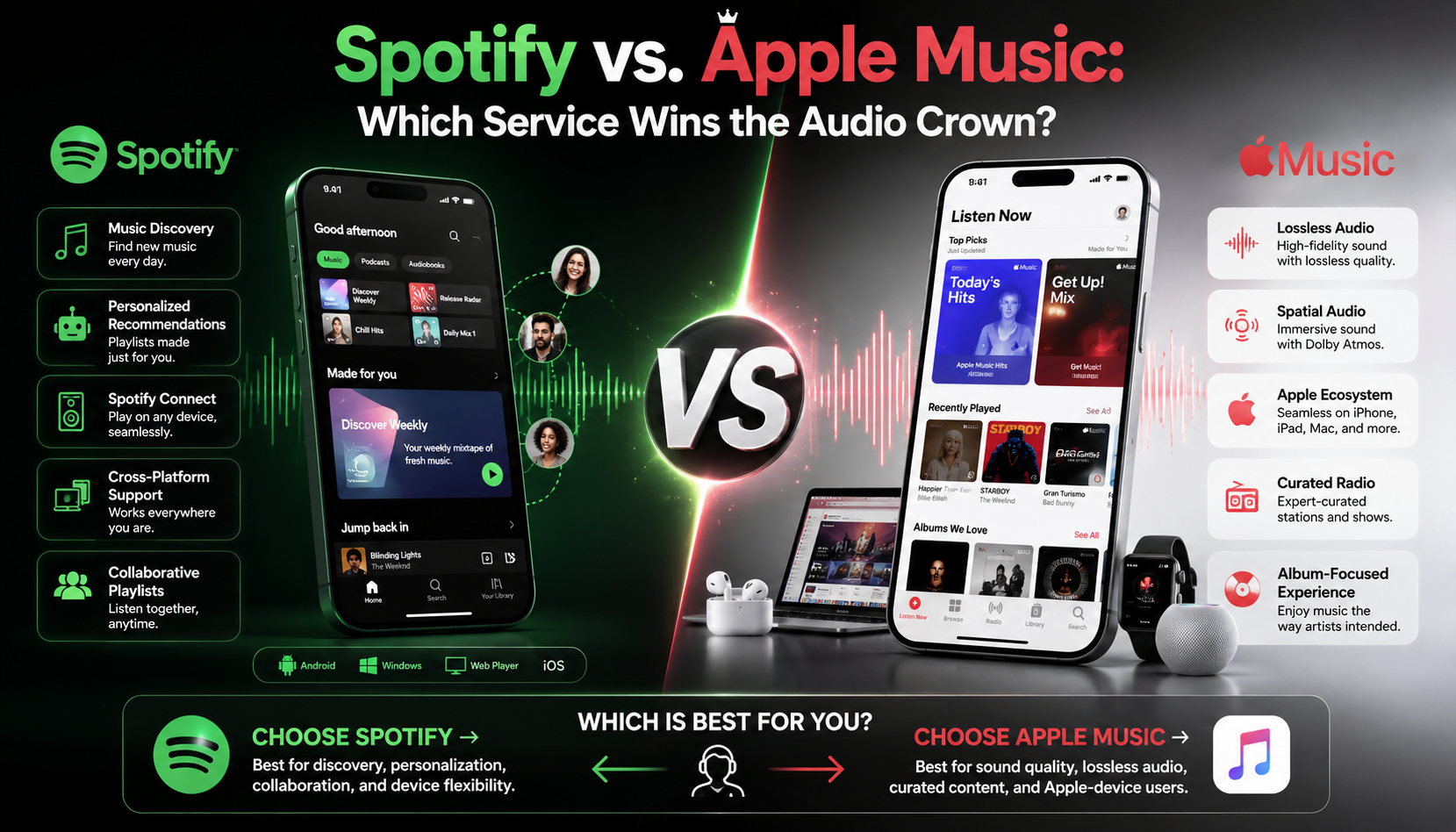
Spotify is not universally better than Apple Music. The better choice depends on the features you use most. Spotify stands out for music discovery, collaborative listening, device compatibility, and personalized playlists.
Features such as Discover Weekly, Daily Mixes, and Blend can make finding new music effortless. Spotify Connect also lets users control playback across compatible devices from their phones.
Apple Music takes a different approach. It combines a focused music interface with curated playlists, radio programming, synchronized lyrics, and high-quality audio. Its close integration with Apple devices is another major advantage.
Spotify may suit listeners who constantly explore new artists and playlists. Apple Music may appeal more to listeners who prefer albums, curated content, and premium audio. For listeners interested in the broader effects of music itself, music’s connection with memory and focus offers another perspective on the listening experience.
Your choice should also consider your existing devices. Android and Windows users can access Apple Music, but Apple device owners may enjoy deeper integration.
In short, Spotify is stronger for discovery and flexibility, while Apple Music excels in audio quality and a focused music experience.
Discovery Algorithms vs. Curated Radio
Spotify relies heavily on algorithms to understand listening habits and recommend music. Its personalized playlists can identify patterns across songs, artists, genres, and listening behavior.
Discover Weekly is a standout example. It introduces listeners to tracks that match their preferences while encouraging exploration beyond familiar artists.
Apple Music combines personalization with stronger emphasis on human curation. Its editorial playlists and radio programming provide recommendations shaped by music editors and industry professionals.
Apple Music also offers live radio programming through stations such as Apple Music 1. These stations can feature artist interviews, premieres, and genre-focused programming.
The difference comes down to discovery style. Spotify is ideal for listeners who enjoy automated recommendations that constantly adapt. Apple Music works well for users who value editorial judgment and traditional radio-style programming. For younger listeners, the experience of music can also be shaped by how musical training influences development in children.
Neither approach is inherently better. If you enjoy finding unexpected tracks through algorithms, Spotify may feel more engaging. If you prefer curated playlists and artist-led programming, Apple Music may provide a more satisfying experience.
Why Are People Leaving Spotify for Apple Music?
Some listeners switch from Spotify to Apple Music because they want better audio quality, a focused interface, or stronger Apple ecosystem integration. Price changes and dissatisfaction with product direction can also influence individual decisions. For a broader comparison of streaming subscriptions, YouTube Premium and Spotify Premium offer another useful point of comparison.
One common complaint among audiophiles has been Spotify’s delayed rollout of a lossless listening option. Apple Music already includes lossless audio and Spatial Audio with Dolby Atmos in its standard subscription.
Some users also prefer Apple Music because its interface keeps music at the center of the experience. Spotify has expanded beyond music into podcasts and audiobooks, which some listeners enjoy. Others may prefer a platform that focuses more directly on songs, albums, artists, and radio.
Switching services can also become easier with playlist migration tools. Users can transfer much of their existing music library instead of rebuilding everything manually.
However, Spotify continues to offer major advantages. Its recommendation system, social features, and broad device support remain compelling reasons to stay.
The decision ultimately depends on whether audio fidelity and a focused interface outweigh Spotify’s discovery and ecosystem flexibility.
The Appeal of Lossless Sound and Clean UI
Lossless audio is a major attraction for listeners who use quality headphones, wired equipment, or dedicated home audio systems. Apple Music makes lossless tracks available without requiring a separate premium tier. To get the most from premium audio equipment, it is also important to know how to clean and maintain your headphones properly.
Compatible recordings can also support Spatial Audio with Dolby Atmos. This creates a more immersive listening experience when the content and playback equipment support the format.
The interface is another reason some users prefer Apple Music. Its design keeps albums, artists, songs, and curated playlists prominent. This can appeal to listeners who enjoy exploring complete discographies.
Spotify offers a more recommendation-driven experience. Its personalized playlists can be extremely useful, but some users may prefer a less algorithm-focused interface.
The difference is largely about listening philosophy. Spotify encourages constant discovery and personalized recommendations. Apple Music places greater emphasis on albums, sound quality, and editorial curation.
For listeners who want a clean music library and high-fidelity playback, Apple Music can be an appealing alternative. Those who value endless recommendations may still find Spotify more useful.
FAQ: Spotify vs. Apple Music
Does Apple Music offer a free trial for new users?
Yes, Apple Music offers a generous free trial period for new subscribers to test the platform. The exact duration of the trial often ranges from one to three months depending on promotional offers. Users gain full access to the entire catalog, spatial audio, and offline downloads during this promotional window. You can cancel your subscription anytime before the trial ends without being charged.
Can I transfer my playlists from Spotify to Apple Music?
You can easily transfer your favorite playlists from Spotify to Apple Music using third-party utility apps. Popular migration tools like SongShift, FreeYourMusic, and Soundiiz handle the entire transfer process within minutes. These apps match song metadata across platforms to rebuild your exact library automatically. This eliminates the tedious hassle of recreating custom playlists manually after switching services.
Using a playlist transfer tool saves time and avoids rebuilding your music library manually. If you are comparing Spotify vs. Apple Music, this makes switching to Apple Music much easier while keeping your favorite songs and playlists organized.
Which platform has better offline listening features?
Both platforms offer robust offline listening capabilities, letting you download thousands of songs for playback without internet access. Spotify allows you to download up to 10,000 songs across a maximum of five different devices. Apple Music allows up to 100,000 songs stored locally in your library across authorized devices. Apple Music wins this category for power users with massive personal collections.
Does Spotify work better with smart home devices?
Spotify offers significantly better integration with third-party smart home ecosystem products. Thanks to Spotify Connect, you can control playback seamlessly across smart speakers, gaming consoles, and TVs. Apple Music works brilliantly within the Apple ecosystem via Siri and HomePod devices, but cross-platform smart home support feels more restricted. If you use diverse smart hardware brands, Spotify provides a more flexible user experience.
Conclusion
Choosing between Spotify vs. Apple Music ultimately depends on your listening priorities. Spotify remains a strong choice for personalized discovery, collaborative playlists, and broad device compatibility.
Its recommendation tools make finding new music easy. Features such as Discover Weekly, Daily Mixes, Blend, and Spotify Connect also create a flexible listening experience.
Apple Music takes the lead for listeners who prioritize audio quality. Its lossless audio and Spatial Audio features are included without requiring a separate high-fidelity subscription.
Apple Music can also appeal to users who prefer curated playlists, radio programming, and a music-focused interface. Its ecosystem integration adds another advantage for Apple device owners.
Artist payouts can also influence the decision. Apple Music has historically offered relatively strong royalty economics, although actual earnings vary by artist and agreement.
Ultimately, there is no single winner for everyone. Choose Spotify for discovery and flexibility, or choose Apple Music for sound quality and Apple-focused integration. The best service is the one that fits your devices, listening habits, and priorities.