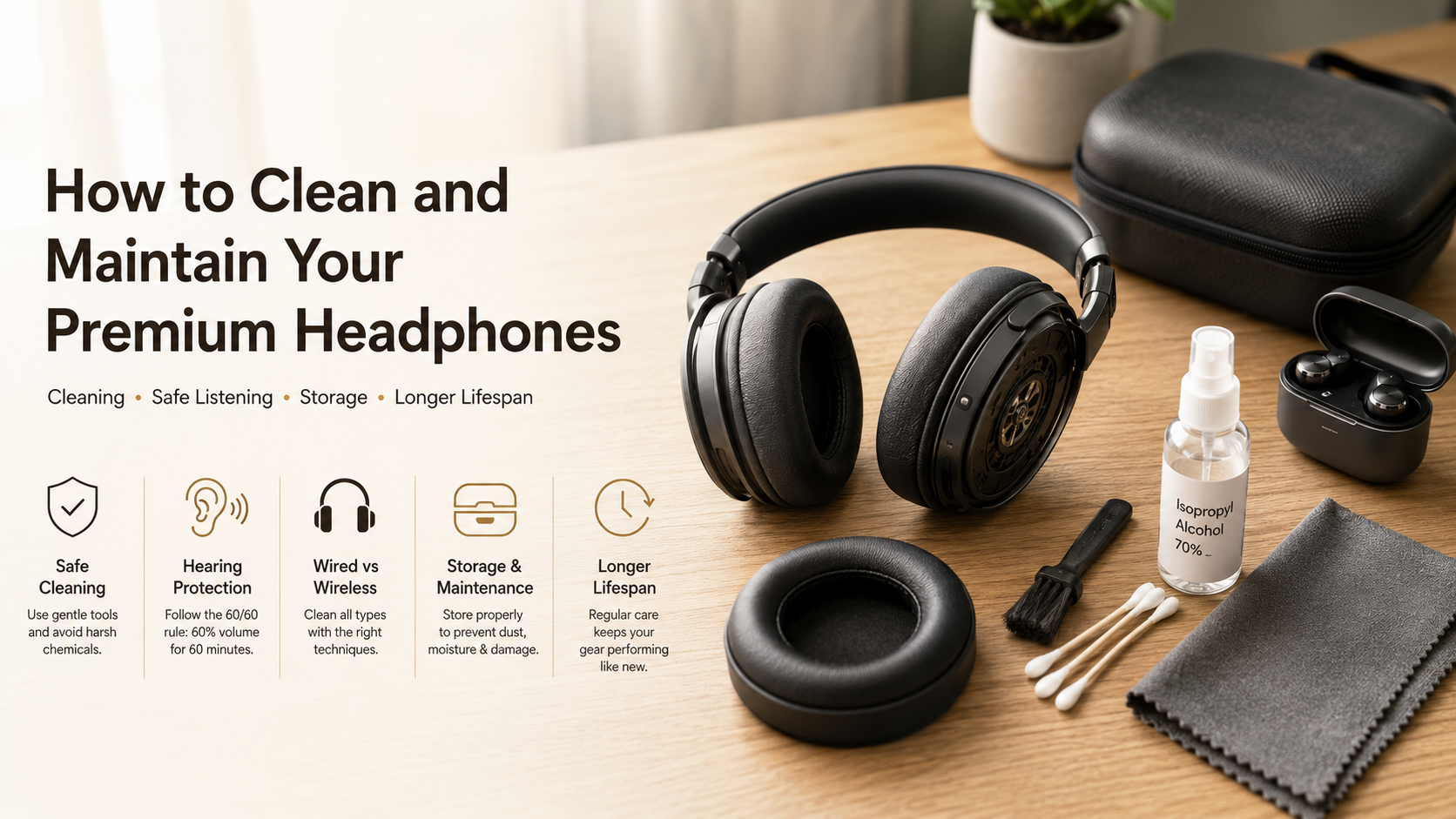
How to Clean and Maintain Your Premium Headphones
Investing in high-quality audio equipment requires proper care. Your premium headphones are designed to deliver excellent sound, but daily use can cause dirt buildup, wear, and performance issues over time.
Learning how to clean and maintain your premium headphones helps protect your investment. Before buying expensive audio equipment, understanding how to choose the right pair of headphones can also help you select a model that offers better durability and long-term value.
Dust, sweat, skin oils, and moisture can slowly affect headphone materials and internal components. Simple cleaning habits can prevent these problems and keep your audio experience consistent.
Whether you own over-ear studio monitors or luxury wireless earbuds, proper upkeep matters. According to industry insights from Audiopedia, regular physical maintenance prevents acoustic degradation and buildupThis guide explains the best cleaning methods, safe maintenance practices, listening habits, and expected headphone lifespans. By following these steps, you can enjoy clear audio performance for years.
What Is the 60 60 Rule for Headphones?
The 60 60 rule for headphones is a popular hearing safety guideline. It recommends keeping your listening volume below 60% of the maximum level. It also suggests taking a break after 60 minutes of continuous listening.
High-end headphones often produce powerful and detailed sound. However, listening at high volumes for long periods may increase the risk of hearing damage. Following safe listening habits helps protect your ears while allowing you to enjoy your favorite music.
Many modern headphones include volume monitoring features. These tools help users control sound levels and avoid unsafe listening patterns.
The 60 60 rule is especially important for people who use headphones daily. Students, office workers, travelers, and gamers often wear headphones for several hours. Regular breaks reduce ear fatigue and support long-term hearing health.
Protecting Your Hearing Health Daily
Maintaining healthy listening habits is just as important as cleaning your headphones. Even the best audio equipment cannot protect your ears from excessive volume levels.
Follow these simple practices:
- Keep volume levels moderate during everyday listening.
- Take short breaks during long sessions.
- Lower the volume in noisy environments.
- Avoid increasing volume to block outside sounds.
Reducing listening pressure allows your ears to recover naturally. This helps you enjoy detailed audio without unnecessary strain. Many people use headphones while studying, working, or listening to music for concentration. Understanding how music affects attention and memory can help users create healthier listening routines.
A balanced approach protects both your hearing and your premium audio equipment. Safe usage habits also improve your overall listening experience.
How to Clean High-End Headphones?
Cleaning high-end headphones requires care and the right tools. Premium materials such as leather, metal, fabric, and memory foam can be damaged by harsh cleaning methods.
Start by removing detachable ear cushions and accessories if possible. Use a soft microfiber cloth to remove dust, fingerprints, and surface oils from the headband and outer areas.
Avoid applying liquids directly to headphone drivers, charging ports, or electronic components. Excess moisture can damage internal parts and affect sound performance.
For ear cushions, use a slightly damp cloth with mild soap and water. The cloth should never be soaking wet. After cleaning, allow every part to dry completely before putting your headphones back together.
For mesh areas, use a soft-bristled brush to remove dust and debris gently. Do not press particles deeper into the headphone structure.
Regular cleaning keeps your headphones comfortable, hygienic, and visually appealing.
Gentle Care for Delicate Audio Drivers
The drivers inside your headphones are responsible for producing sound. They require careful handling because damage can affect audio quality permanently.
Use these maintenance tips:
- Remove surface dust with a dry cotton swab.
- Avoid touching the driver membrane.
- Keep liquids away from internal components.
- Store headphones in a clean, dry location.
Small cleaning habits can prevent major performance issues. Gentle care helps preserve the original sound signature of your premium headphones.
Avoid aggressive brushing or forceful cleaning around the driver area. A careful approach protects the delicate technology inside your audio equipment.
Why Are Gen Z Plugging Their Headphones In?
The growing popularity of wired headphones among Gen Z users shows that older technology can still feel fresh and relevant. This trend is explored further in our guide on why Gen Z is using wired headphones.
One major reason is reliability. Wired headphones do not require charging, pairing, or software updates. They provide an instant connection without concerns about battery life during travel, study sessions, or daily commutes.
Many users also appreciate the traditional audio experience of wired devices. A direct connection can reduce latency and provide consistent sound quality. Some audiophiles prefer wired headphones because they avoid wireless compression and maintain a simple signal path.
The return of wired audio is also connected to fashion and nostalgia. Vintage-style accessories have become popular among younger consumers who enjoy retro designs and a more intentional approach to technology.
This trend shows that both wired and wireless headphones have unique advantages. The best choice depends on personal preferences, listening habits, and audio priorities.
The Appeal of Analog Sound Quality
Wired headphones continue to attract music lovers because of their direct audio connection. They can deliver stable performance without depending on Bluetooth signals or battery power.
Many enthusiasts value wired models for these benefits:
- Consistent audio connection without wireless interruptions.
- Lower latency for gaming, recording, and video editing.
- No battery limitations during extended listening sessions.
- Simple plug-and-play usability with compatible devices.
Although modern wireless technology has improved significantly, wired headphones remain popular among users who prioritize reliability and detailed sound reproduction.
What Is the Best Way to Clean Headphones?
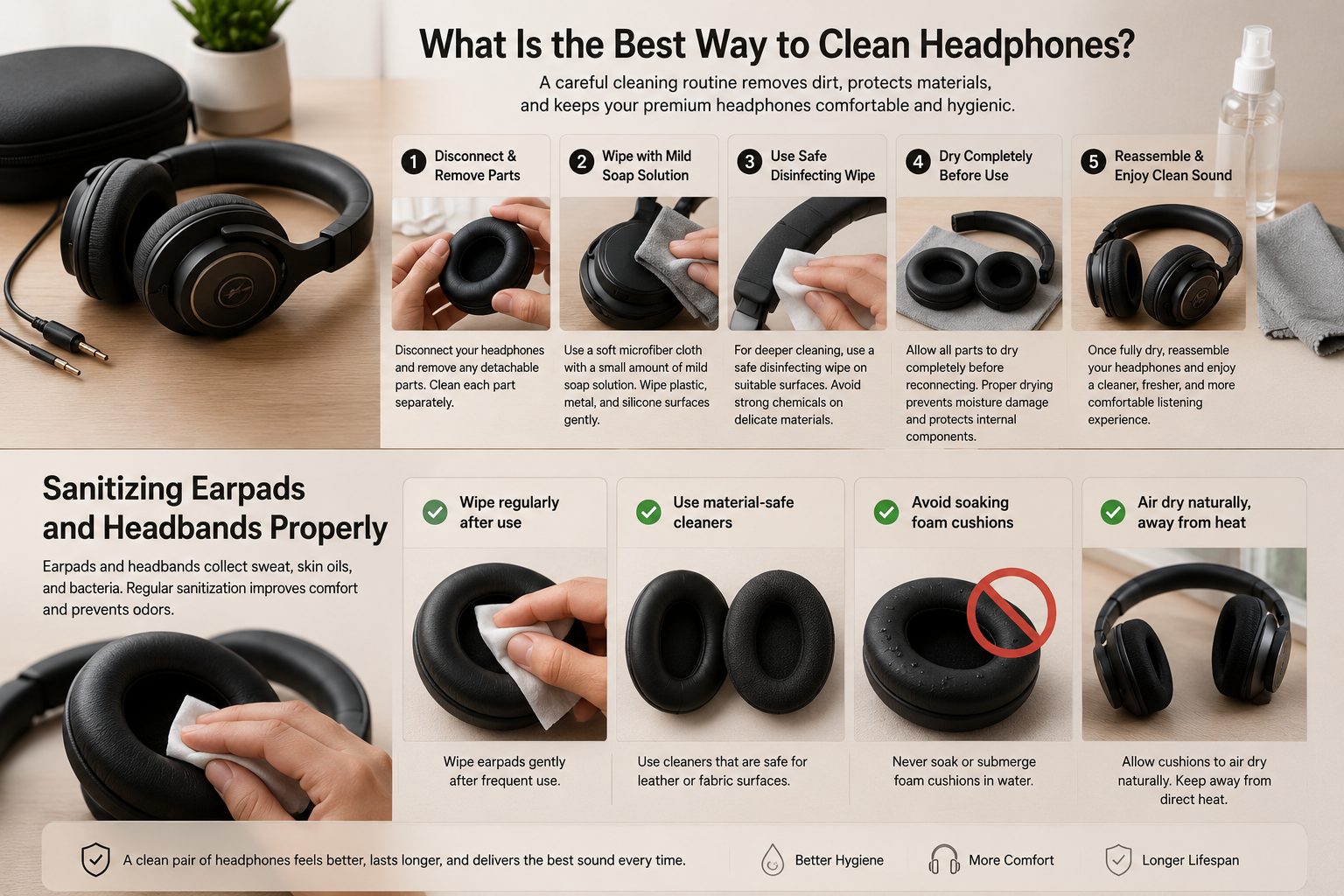
The best way to clean headphones is to use a careful routine that removes dirt without damaging sensitive materials. A proper cleaning method protects your premium headphones while keeping them comfortable and hygienic.
Begin by disconnecting your headphones from devices and removing any detachable parts. Clean ear pads, cables, and accessories separately when possible.
Use a soft microfiber cloth with a small amount of mild soap solution. The cloth should be slightly damp, not wet. Gently wipe plastic, metal, and silicone surfaces to remove fingerprints, sweat, and oils.
For deeper cleaning, use a safe disinfecting wipe on suitable surfaces. Avoid using strong chemicals on delicate materials such as genuine leather or soft fabric. Always check the manufacturer’s care instructions before applying any cleaning product.
Allow all parts to dry completely before reconnecting or wearing your headphones. Proper drying prevents moisture-related damage and keeps internal components protected.
Sanitizing Earpads and Headbands Properly
Headphone cushions and headbands collect sweat, skin oils, and bacteria during regular use. This is especially common for people who wear headphones during workouts or outdoor activities.
Regular sanitization improves comfort and prevents unpleasant odors. However, cleaning products should match the headphone material.
Follow these simple steps:
- Wipe earpads gently after frequent use.
- Use material-safe cleaners for leather or fabric surfaces.
- Avoid soaking foam cushions.
- Keep headphones away from direct heat while drying.
Allowing cushions to air dry naturally helps prevent cracking, shrinking, or material damage. A clean pair of headphones feels better and provides a more enjoyable listening experience.
What Is the Lifespan of Headphones?
The lifespan of headphones depends on build quality, usage patterns, storage habits, and maintenance. Budget models may last only one to two years, while well-built premium headphones can continue working for five to ten years or longer with proper care.
High-end headphones often use stronger materials such as aluminum, steel, and durable leather. These materials improve comfort and resistance to everyday wear.
However, even expensive headphones require maintenance. Sweat, moisture, dust, and accidental drops can shorten their useful life. Regular cleaning and careful handling help prevent avoidable damage.
Replacing worn parts can also extend headphone longevity. Many premium models allow users to replace ear cushions, cables, or batteries instead of replacing the entire device.
Understanding expected lifespan helps you make better purchasing decisions. A higher initial investment can provide better long-term value when the product receives proper care.
Factors Influencing Device Longevity
Several daily habits affect how long your headphones continue performing well. Environmental conditions and handling methods play an important role.
Key factors include:
- Cleaning frequency: Regular maintenance prevents buildup and material damage.
- Storage method: Protective cases reduce scratches, pressure damage, and cable problems.
- Usage environment: Humidity, sweat, and extreme temperatures can affect components.
- Handling habits: Careful use prevents broken hinges, loose connections, and damaged cables.
Store your headphones in a cool, dry place when not in use. Avoid wrapping cables tightly around the headband, as this can weaken internal wiring.
With consistent care, your premium headphones can deliver excellent sound quality and comfort for many years.
Frequently Asked Questions
Can I Use Rubbing Alcohol to Clean My Audio Cushions?
You can use isopropyl alcohol carefully on some headphone surfaces, but it is not suitable for every material. Alcohol wipes work well for durable plastic, silicone, and certain synthetic surfaces.
However, avoid using alcohol directly on genuine leather or delicate protein leather cushions. Strong cleaning agents can remove natural oils and cause cracking, dryness, or discoloration.
Before applying any cleaner, test it on a small hidden area first. This simple step helps prevent accidental damage to expensive audio equipment.
For most ear cushions, a slightly damp microfiber cloth with mild soap is a safer option. Always follow the manufacturer’s cleaning recommendations when available.
How Often Should I Sanitize My Daily Listening Gear?
If you use your headphones every day, cleaning them at least once a week is a good maintenance routine. Regular users should wipe down areas that touch the skin, including ear pads and headbands.
People who use headphones during workouts or outdoor activities should clean them more often. Sweat and moisture can create conditions where bacteria and odors build up quickly.
A simple cleaning schedule can include:
- Wiping surfaces after heavy use.
- Removing visible dust and debris regularly.
- Deep cleaning ear cushions periodically.
- Checking cables and connections for wear.
Consistent maintenance keeps your headphones fresh, comfortable, and ready for daily listening.
Do Wired Models Sound Better Than Wireless Alternatives?
Wired and wireless headphones each have different advantages. Wired models traditionally provide a direct audio connection with lower latency and no battery limitations.
Some audiophiles prefer wired headphones because they can deliver consistent sound without wireless transmission issues. They are especially popular for studio recording, gaming, and professional audio work.
Modern wireless headphones have improved significantly. Advanced Bluetooth codecs and better internal processing have reduced the difference in sound quality between premium wired and wireless models.
The better choice depends on your needs. Wired headphones may suit users who prioritize reliability and maximum control, while wireless models offer convenience and portability.
What Is the Safest Way to Store Audio Gear?
Proper storage protects your headphones from accidental damage and extends their lifespan. The safest option is a dedicated protective case that prevents scratches, pressure, and exposure to dust.
Avoid placing headphones loosely in bags where they can be crushed or tangled with other items. Excessive pressure can damage hinges, ear cushions, and internal components.
Follow these storage practices:
- Keep headphones inside a protective case when traveling.
- Store them away from direct sunlight and heat.
- Avoid tightly bending or twisting cables.
- Keep storage areas dry and clean.
Good storage habits are simple but effective. They help preserve both the appearance and performance of your premium headphones.
Conclusion
Maintaining your premium headphones does not require complicated tools or expensive products. Simple cleaning routines, safe listening habits, and proper storage can significantly improve performance and extend device life.
Following the 60 60 rule helps protect your hearing during long listening sessions. Regular cleaning removes sweat, dust, and oils that can affect comfort and sound quality.
Using the correct cleaning methods protects sensitive components while preserving the appearance of your audio equipment. Avoid harsh chemicals, excessive moisture, and careless handling to prevent unnecessary damage.
Understanding headphone lifespan also helps you get better value from your investment. High-quality headphones can provide years of reliable performance when maintained properly.
Whether you prefer wired audio or modern wireless technology, good care makes a difference. Apply these maintenance tips consistently to keep your headphones comfortable, clean, and ready to deliver excellent sound for years.