
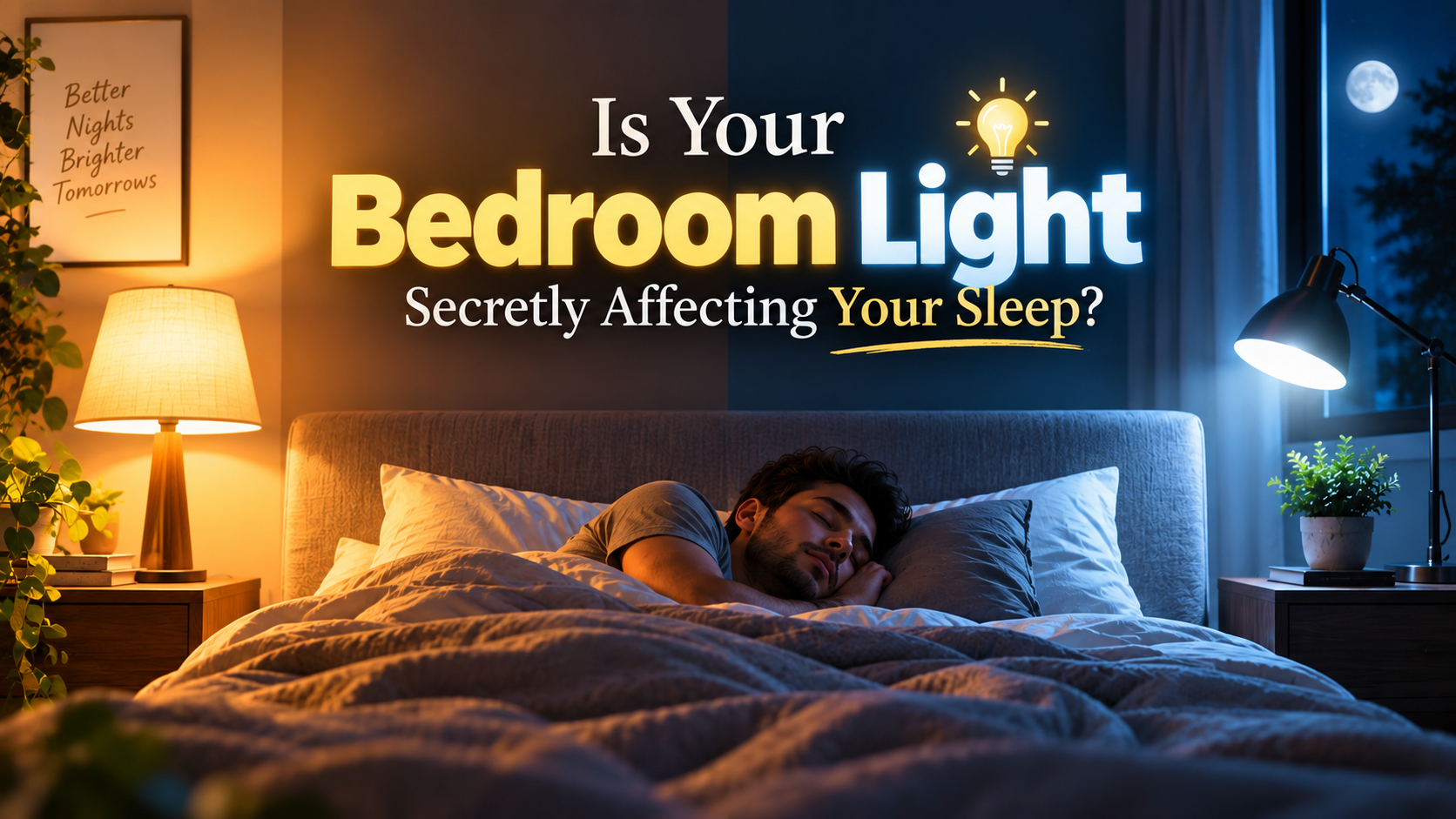
Wrong Light Bulb in Your Bedroom Sleep Effects
Many people spend years choosing better mattresses, pillows, and bedtime routines. Yet they often overlook the lighting in their bedroom. The wrong light bulb in your bedroom sleep effects can interfere with your natural sleep-wake cycle. Light acts as a signal for your internal clock. Bright evening light can tell your brain that it is still daytime.
Research shows that evening room light can suppress melatonin and delay its natural onset. One controlled study found that room light before bedtime delayed melatonin onset in nearly all participants. It also shortened the body’s melatonin production period by about 90 minutes. You can learn more about these findings in this research published on PubMed.
The effect depends on factors such as brightness, timing, spectrum, and exposure duration. Cool, blue-enriched light can be particularly stimulating during the evening.
In this guide, we explore how bedroom lighting affects sleep. We will cover disruptive light types, nighttime exposure, potential disadvantages, side effects, and the practical 3-3-3 rule.

Does sleeping with lights affect your sleep?
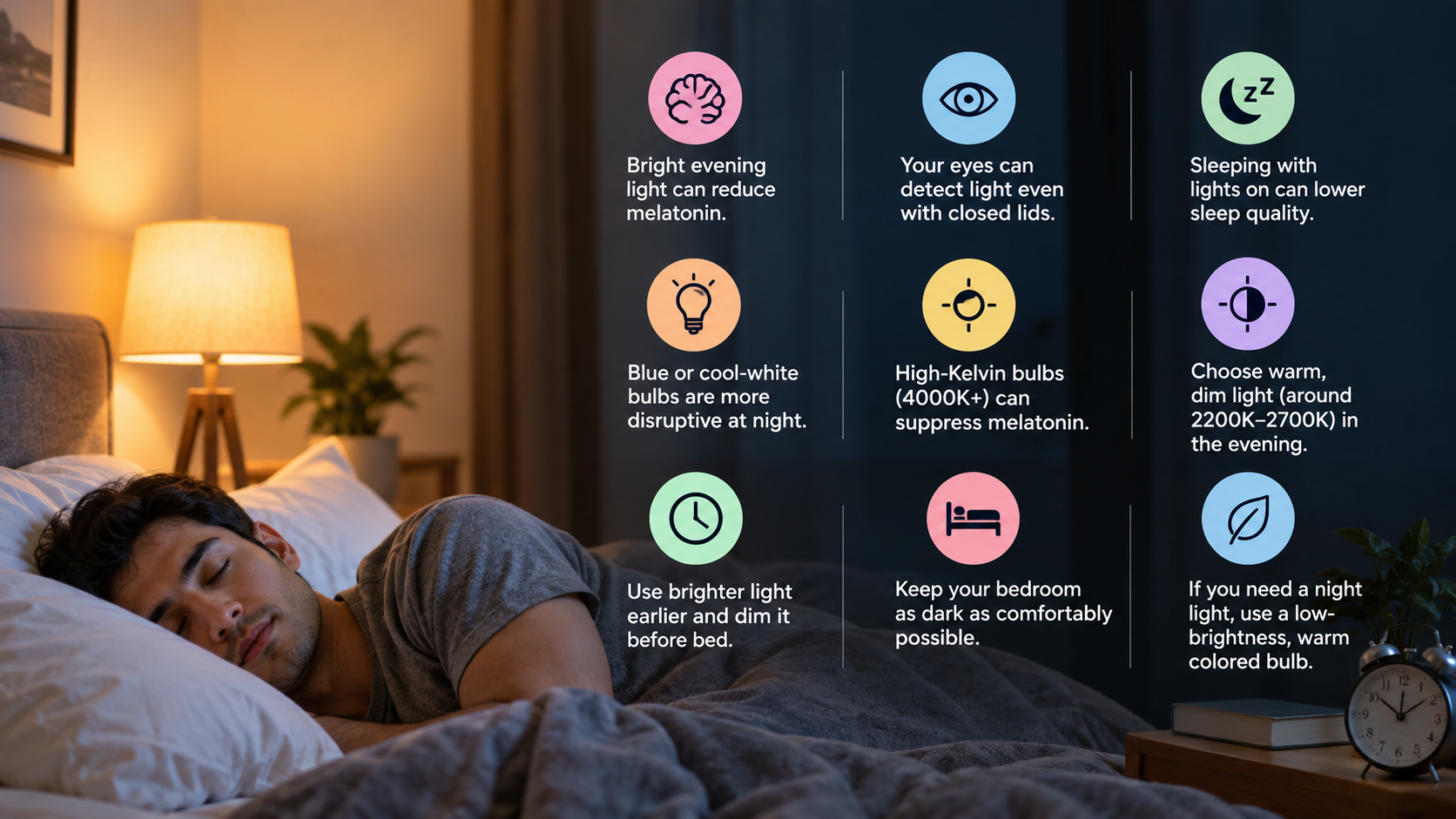
Yes, sleeping with lights on can affect sleep quality, although the effect varies by brightness and individual sensitivity. Your eyes can detect light even when your eyelids are closed. That light reaches retinal cells involved in regulating the circadian clock. The resulting signal can influence melatonin production and nighttime alertness.
Research has found that moderate light exposure during sleep can also affect physiological measures. In one laboratory study, 100 lux light increased nighttime heart rate and reduced heart-rate variability. Participants also showed greater insulin resistance the following morning.
This does not mean every night light will automatically cause poor health. A small, dim light is different from a bright ceiling bulb. However, keeping a bedroom as dark as comfortably possible is a practical sleep-hygiene measure.
If you need nighttime illumination, choose a dim, warm-colored light. Avoid placing bright bulbs directly within your line of sight.
Melatonin Suppression from Ambient Night Glow
Ambient bedroom light can interfere with your body’s normal melatonin rhythm. Melatonin is produced by the pineal gland and helps signal that nighttime has arrived. Darkness supports this process, while evening light can delay or reduce melatonin production.
A controlled study comparing normal room light with very dim light found a significant difference. Room light before bedtime delayed melatonin onset in almost every participant. It also shortened the duration of melatonin production by approximately 90 minutes.
The effect depends on more than simply whether a bulb is switched on. Brightness, wavelength, timing, and exposure duration all matter. Blue-enriched light tends to have a stronger circadian effect than warmer light.
For this reason, dimming bedroom lights before bed can support a more natural transition toward sleep. You do not need complete darkness immediately. Instead, gradually reduce light exposure during your evening routine.
What kind of light disrupts sleep?
Light that is bright, blue-enriched, or used close to bedtime can interfere with the body’s preparation for sleep. Short-wavelength light strongly stimulates melanopsin-containing retinal cells involved in circadian regulation. This stimulation can reduce melatonin and increase alertness.
Cool-white LEDs and other blue-enriched sources can therefore be less suitable for late-evening bedroom use. However, wavelength is not the only consideration. A bright warm bulb can still provide substantial light exposure and affect your circadian system.
Research comparing evening lighting conditions has found that reducing short-wavelength content can lower melatonin suppression.
For a bedroom, consider warm white or amber lighting with low brightness. Lower color temperature can reduce circadian stimulation, especially when paired with lower overall illumination. A warmer bulb does not make a bright room automatically sleep-friendly. Choosing energy-efficient LED bulbs for your home can also help you select suitable lighting while reducing unnecessary energy use.
The goal is simple: use brighter light earlier and progressively dimmer, warmer light as bedtime approaches.
The Problem with High-Kelvin Bedroom Bulbs
High-Kelvin bulbs produce cooler light that resembles daylight more closely. Bulbs around 4000K or higher are commonly used for workspaces, kitchens, and task lighting. They can provide excellent visibility during the day but may be less appropriate close to bedtime.
Research has shown that evening light containing more short wavelengths can suppress melatonin more strongly. One study comparing 4100K fluorescent lighting with blue-depleted LED lighting found less melatonin suppression under the blue-depleted condition.
This does not mean every bulb above 3000K will disrupt your sleep. Brightness and exposure duration also influence the response. A bright 2700K bulb can still provide substantial circadian stimulation.
For bedrooms, consider bulbs around 2200K–2700K for evening use. Keep them dim and avoid direct glare. If you read before bed, use a best desk lamp for working at night with focused, low-intensity lighting instead of bright overhead lighting.
What happens when you sleep with your lights on?
Sleeping with the lights on exposes your circadian system to a signal that normally belongs to daytime. The response depends on the light’s intensity, spectrum, timing, and duration. Bright light can suppress melatonin and increase physiological alertness.
Laboratory research provides evidence that nighttime light can influence cardiovascular and metabolic responses. In one study, participants sleeping under moderate 100-lux light had a higher nighttime heart rate and greater insulin resistance the next morning.
However, these findings should not be interpreted as proof that bedroom lights directly cause chronic disease. Laboratory exposure is not identical to years of real-world exposure.
The immediate concern is often circadian disruption and poorer sleep conditions. Bright light can make it harder for the body to maintain a strong nighttime signal. If you need a light while sleeping, keep it very dim and positioned away from your face.
Elevated Nighttime Heart Rate and Blood Pressure
Nighttime light can influence cardiovascular activity during sleep. Your body normally shifts toward a calmer state during rest. Heart rate generally falls, while autonomic activity changes to support recovery.
A laboratory study found that moderate light exposure during sleep increased nighttime heart rate and reduced heart-rate variability. Participants also showed increased insulin resistance the following morning.
These findings suggest that light during sleep can influence autonomic and metabolic function. However, one-night laboratory findings cannot establish that sleeping with a lamp causes chronic hypertension or cardiovascular disease.
The intensity of the light matters considerably. A bright ceiling fixture creates a much stronger exposure than a small, dim night-light.
For better sleep conditions, switch off unnecessary lights before bed. If complete darkness is impractical, use the lowest brightness that still provides safe visibility. Position the source away from your face and avoid cool-white illumination. These habits also support efforts to conserve electricity effectively by reducing unnecessary lighting use.
These simple changes reduce unnecessary nighttime light without requiring expensive equipment or complicated routines.
What are the disadvantages of sleeping with lights on?
The disadvantages of sleeping with lights on mainly relate to disrupted circadian signaling and potentially poorer sleep. Bright nighttime exposure can suppress melatonin and affect the body’s normal transition into sleep. It may also increase physiological arousal under certain conditions.
Poor sleep itself can affect concentration, memory, mood, reaction time, and daytime energy. These effects are not necessarily caused directly by the light. Instead, they can result when nighttime lighting contributes to shorter, delayed, or fragmented sleep.
Research has also identified short-term metabolic and cardiovascular effects from moderate light exposure during sleep.
Another disadvantage is practical. Leaving bright bedroom lighting on throughout the night consumes electricity without providing much benefit. Turning off unnecessary lights is also one way to reduce your electricity bill naturally while improving your nighttime environment.
Common problems associated with excessive nighttime illumination include:
- Delayed sleepiness before bedtime
- Reduced melatonin signaling
- Greater nighttime alertness
- Possible sleep fragmentation
- Increased morning tiredness
- Unnecessary electricity consumption
The strongest practical solution is simple. Keep the bedroom dark, quiet, and comfortable while maintaining a consistent sleep schedule.
What are the side effects of sleeping with the lights on?
The potential side effects of nighttime light exposure depend heavily on brightness, duration, spectrum, and individual circumstances. Strong evidence shows that evening and nighttime light can affect melatonin and circadian timing. Research also suggests that moderate light during sleep can influence short-term cardiovascular and metabolic measures.
However, claims that bedroom lighting directly causes diabetes, depression, immune problems, or major weight gain are stronger than the evidence supports. These conditions have many contributing factors, and observational associations do not prove that nighttime light is the direct cause.
The more defensible concern is circadian disruption and sleep quality. Repeated exposure to bright light at night may make it harder to maintain a strong biological distinction between day and night.
Potential effects worth considering include:
- Delayed melatonin production
- Later sleep timing
- Greater nighttime alertness
- Changes in heart rate during sleep
- Short-term changes in insulin sensitivity
- Reduced sleep quality in some people
Reducing unnecessary nighttime illumination is therefore a sensible sleep-hygiene step.
What is the 3-3-3 rule for sleep?
The 3-3-3 rule for sleep is a simple wind-down framework that can help organize your evening routine. In this article, the rule means stopping heavy meals three hours before bed, dimming overhead lights three hours before bed, and turning off digital screens 30 minutes before bed.
This approach combines several common sleep-hygiene principles. Reducing evening light can help lower circadian stimulation before bedtime. Research shows that evening light can suppress melatonin and delay its natural onset.
The rule should not be treated as a medically established formula. Its value comes from creating a consistent routine rather than from the exact numbers.
Try applying it gradually:
- 3 hours before bed: Finish heavy meals.
- 3 hours before bed: Start reducing bright overhead lighting.
- 30 minutes before bed: Put away phones and other bright screens.
- At bedtime: Keep the bedroom dark and comfortable.
If three hours of dim lighting is impractical, start with the final hour. Consistency matters more than following the rule perfectly.
Frequently Asked Questions
Which light bulb color is best for sleeping?
Warm amber or red light is generally better for sleep because these colors are less likely to interfere with melatonin production than blue or cool-white light. A wrong light bulb in your bedroom can make nighttime lighting unnecessarily stimulating.
Can wearing an eye mask cancel out bedroom light?
A comfortable, well-fitting eye mask can block most bedroom light and reduce nighttime visual stimulation. However, a wrong light bulb in your bedroom can still expose you to harsh lighting before bedtime, so warmer, dimmer bulbs remain preferable.
Is sleeping with a dim nightlight bad for your health?
A very dim red or amber nightlight is generally less disruptive than bright blue or cool-white lighting. Avoiding the wrong light bulb in your bedroom can help create a darker, calmer environment that supports normal sleep patterns.
How do I know if my bedroom light bulb is too bright?
Check the bulb’s color temperature, brightness, and how comfortable it feels in the evening. A wrong light bulb in your bedroom may be too bright or cool if it causes glare, feels harsh, or makes it harder to relax before bedtime.
Conclusion
Your bedroom should be an intentional sanctuary designed for physiological restoration and mental peace. Unfortunately, installing the wrong light bulb in your bedroom sleep effects can unravel your natural health defenses by halting melatonin synthesis, elevating your nocturnal heart rate, and fragmenting critical deep rest cycles. Harsh blue and cool white wavelengths deceive your brain into thinking it is daytime, leaving you depleted, fatigued, and vulnerable to long-term metabolic strain.
Reclaiming restorative rest does not require complicated lifestyle overhauls. Start by auditing your current bedroom lighting and creating a calm home environment that supports relaxation. Replace cool, daylight-mimicking bulbs with warm, low-wattage amber fixtures under 2700 Kelvin. Practice the 3-3-3 rule by dimming ambient lamps three hours prior to turning in, and eliminate stray glows with blackout curtains or an eye mask. By taking charge of your evening lighting environment today, you will protect your circadian rhythm, restore your body’s vital sleep stages, and wake up energized every morning.