
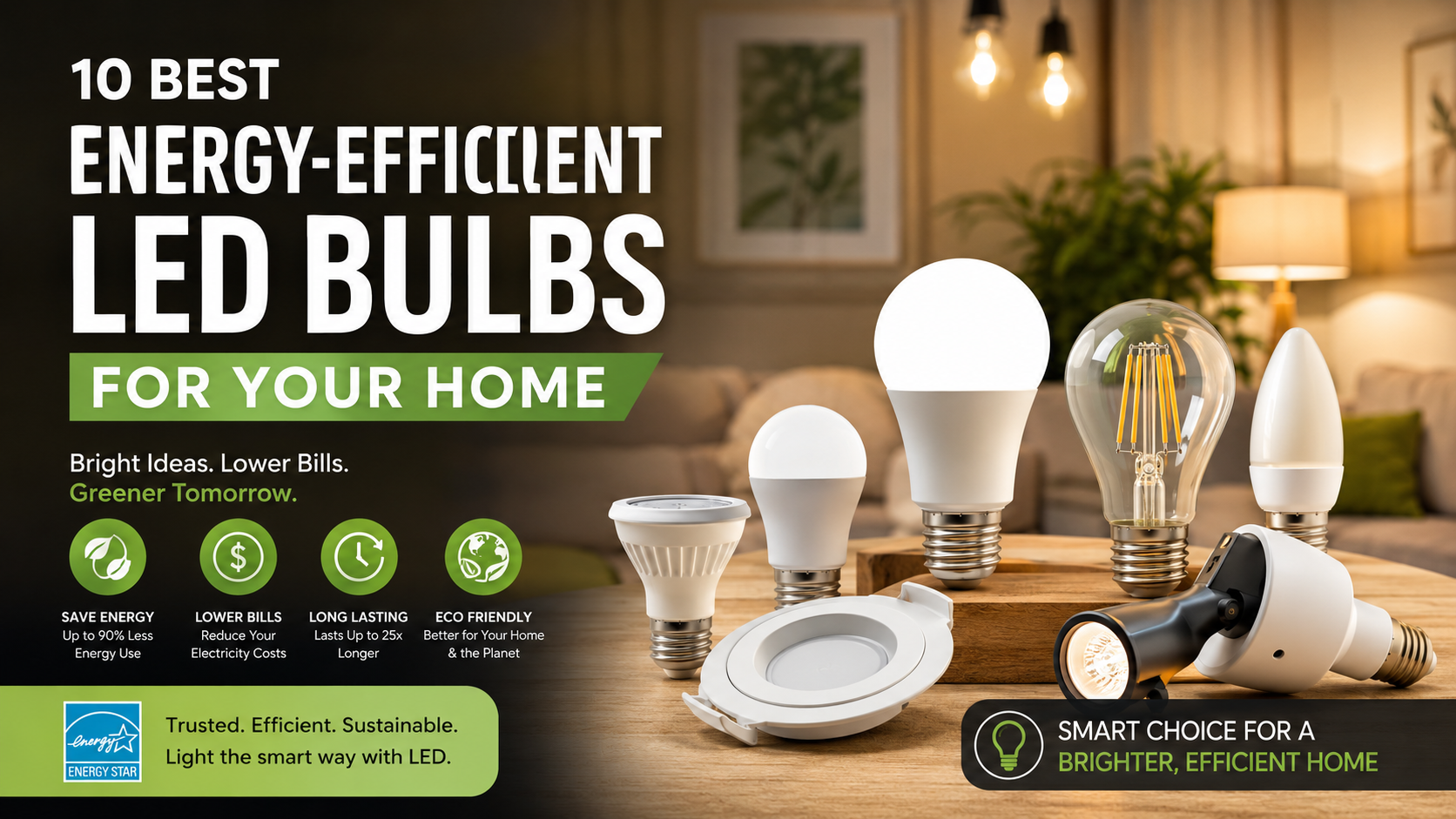
10 Best Energy-Efficient LED Bulbs for Your Home
Switching to energy-efficient LED bulbs is one of the smartest and easiest upgrades you can make to lower your household electricity bills and reduce your environmental footprint. Modern lighting technology has evolved rapidly, offering incredible brightness, long lifespans, and versatile color temperatures that fit every room in your house. According to the U.S. Department of Energy, residential LEDs use up to 90% less energy and last up to 25 times longer than traditional incandescent lighting. Navigating the market can feel overwhelming with so many options available on store shelves and online marketplaces.
This comprehensive guide helps you understand what is the most efficient LED bulb for a home, which LED bulb is best for home use, what are the best LED lights for home, how to choose LED bulbs for home, the most energy efficient led bulbs 10 best choices for your home, and which watt LED bulb is best for home.
What Is the Most Efficient LED Bulb for a Home?
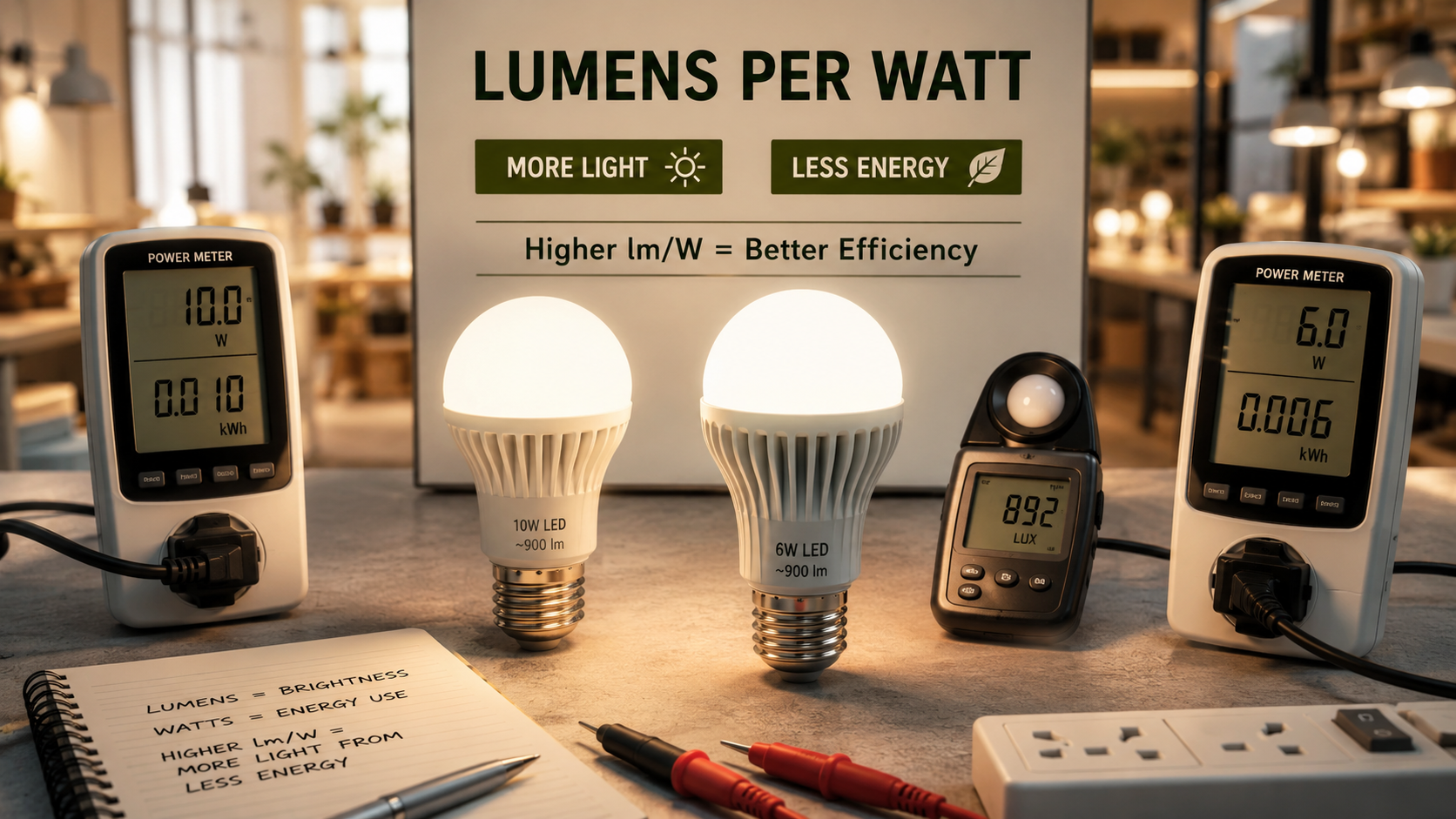
The most efficient LED bulbs for home use deliver high brightness while consuming very little electricity. Lumens measure the amount of visible light a bulb produces, while watts measure its energy consumption. For efficiency, focus on how many lumens a bulb produces per watt. A higher lumen-per-watt ratio means more light from less electricity.
When comparing bulbs, also look for trusted certification programs such as ENERGY STAR. Efficient LEDs produce much less wasted heat than traditional incandescent and halogen bulbs. This makes them a practical choice for frequently used fixtures throughout the home. Replacing older bulbs can reduce electricity consumption without requiring major changes to your existing lighting.
If you’re looking for additional ways to reduce household energy consumption beyond lighting, see our guide to reduce electricity bills naturally.
For the best results, consider brightness, color temperature, bulb size, and fixture compatibility. The most efficient bulb is not always the highest-lumen model. Instead, choose one that provides the right amount of light for the room while using the least electricity.

Choosing Bulbs With High Lumen-per-Watt Ratios
A bulb’s lumens-per-watt ratio is one of the most useful measurements for comparing LED efficiency. It tells you how much visible light the bulb produces for each watt of electricity it consumes. A higher number generally indicates better energy efficiency.
For example, two bulbs may provide similar brightness but use different amounts of electricity. The bulb producing the same number of lumens at a lower wattage offers better efficiency. This becomes particularly important when lights operate for several hours each day.
Many high-performance LED bulbs provide more than 100 lumens per watt. However, efficiency should not be your only consideration. You should also check color quality, dimming support, expected lifespan, and compatibility with your fixture.
For everyday household lighting, look for a bulb that balances brightness, efficiency, durability, and comfort. This approach can help lower long-term electricity consumption while maintaining suitable illumination throughout your home.
Which LED Bulb Is Best for Home?
The best LED bulb for your home depends on the room, fixture, brightness requirements, and atmosphere you want to create. A single bulb type may not work equally well in every area. Choosing bulbs according to each room can improve both comfort and functionality.
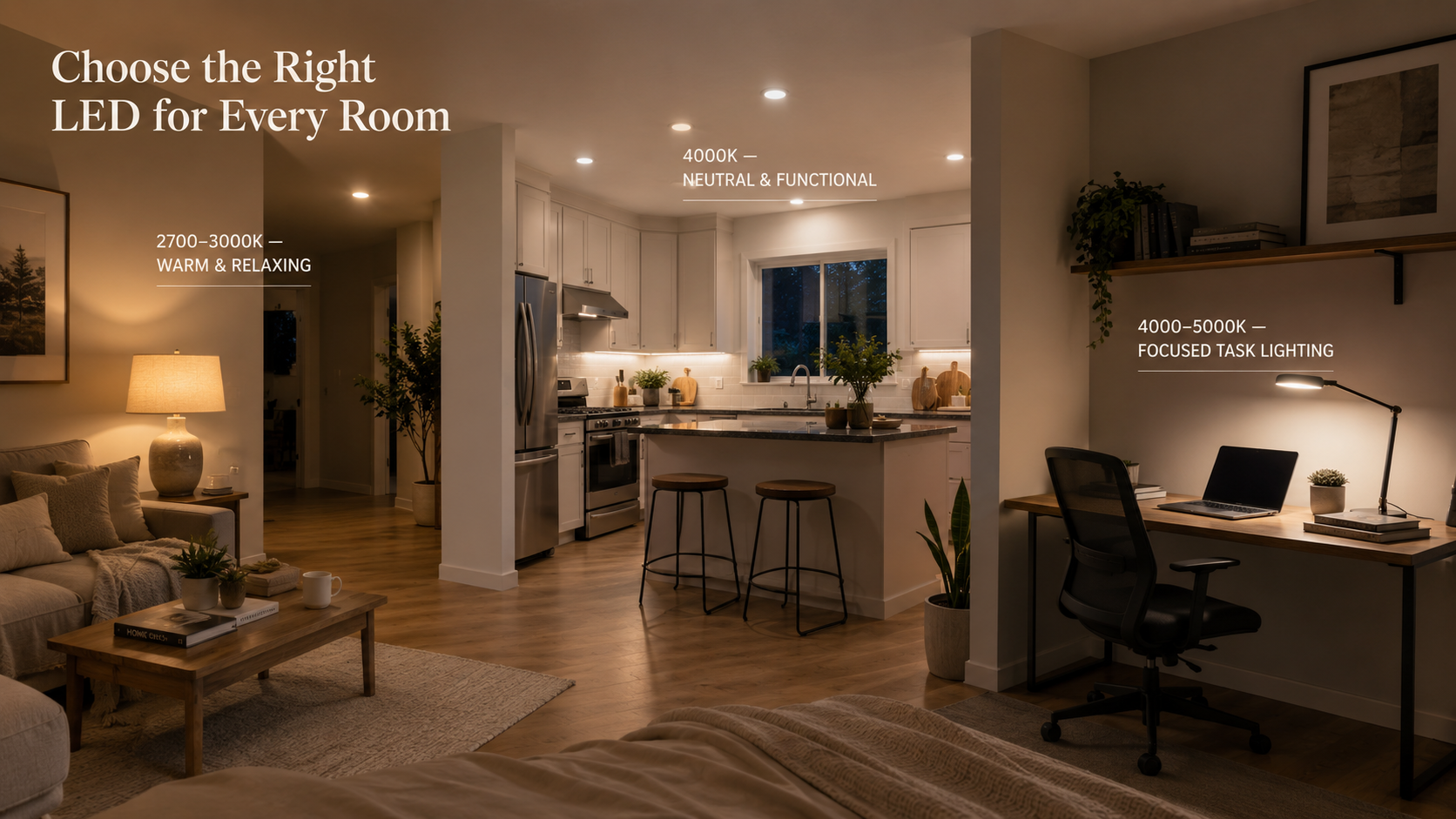
For living rooms and bedrooms, warm white LEDs between 2700K and 3000K can create a comfortable and relaxing atmosphere. Kitchens, bathrooms, and home offices may benefit from brighter light. Cooler temperatures around 4000K to 5000K can provide a more focused appearance for task-oriented areas.
Bulb quality also matters. Established manufacturers such as Philips, Cree, and GE offer residential LED options in different brightness levels and designs. Look for products with suitable color rendering, reliable construction, and compatibility with your fixtures.
Before buying, compare lumens instead of relying only on traditional wattage equivalents. The right LED bulb should provide enough light without wasting energy or creating unnecessary glare.
Selecting the Right Color Temperature
Color temperature, measured in Kelvin (K), strongly affects how a room looks and feels. Choosing the right temperature can make your lighting more comfortable and functional. It is therefore worth considering alongside brightness and energy efficiency.
Warm white bulbs generally range from about 2700K to 3000K. Their softer appearance works well in bedrooms, living rooms, dining areas, and other spaces where a relaxed atmosphere is desirable. They also provide a familiar appearance similar to traditional incandescent lighting.
If you are setting up a home workspace, choosing suitable task lighting can also make nighttime work more comfortable. See our guide to the best desk lamp for working at night for additional lighting ideas.
Instead of using one color temperature throughout your home, select bulbs based on how each space is used. Combining warm lighting for relaxation with cooler lighting for practical tasks can create a more balanced household lighting setup.
What Are the Best LED Lights for Home?
The best LED lights for home use come in several designs, each suited to different applications. Standard A19 bulbs are versatile choices for ceiling fixtures, lamps, and other general-purpose lighting. They provide broad illumination and are easy replacements for many traditional household bulbs.
Recessed LED downlights are useful in kitchens, hallways, and modern living spaces. Their flush-mounted design provides a cleaner appearance while directing light where it is needed. Decorative filament LEDs can add a vintage appearance to exposed fixtures without giving up the efficiency advantages of LED technology.
Smart LED lights provide another option for homeowners who want additional control. Depending on the model, you can schedule lighting, adjust brightness, or change color settings through a smartphone app or voice assistant.
The best choice depends on your fixture, room, and lighting goals. Before purchasing, check the bulb’s shape, base type, brightness, color temperature, dimming support, and dimensions. This helps ensure the bulb performs properly after installation.
Integrating Smart LED Lighting Features
Smart LED lighting adds automation and remote control to conventional household illumination. Instead of manually switching every light, compatible smart bulbs can connect to a smartphone app, smart-home system, or voice assistant. This can make everyday lighting easier to manage.
One useful feature is scheduling. You can program lights to turn on or off at specific times. This can help reduce unnecessary electricity use when lights are accidentally left on. Some systems also allow you to adjust brightness according to the time of day.
Smart LEDs can provide additional convenience in bedrooms, living rooms, entryways, and other frequently used areas. Some models also support adjustable color temperatures or multiple color profiles.
However, smart functionality can increase the purchase price compared with standard LEDs. You also need to consider connectivity and compatibility with your existing smart-home setup.
For homeowners who value automation, remote control, and flexible lighting, smart LEDs can be useful. For simple energy savings, however, a standard efficient LED may provide better value.
How to Choose LED Bulbs for Home?
Choosing LED bulbs for your home requires more than comparing prices or wattage. Start by checking lumens, because they indicate the actual brightness produced by the bulb. Traditional wattage comparisons can be useful, but they should not be your primary measurement when comparing modern LEDs.
Next, consider the bulb’s Color Rendering Index (CRI). A CRI of 80 or higher is generally suitable for many residential applications and can help colors appear more natural under artificial lighting.
Dimming capability is another important consideration. Not every LED bulb works correctly with every dimmer switch. If you have an existing dimmer, verify that the bulb specifically supports dimming and is compatible with the switch.
Physical size also matters. Check the bulb’s shape and dimensions before installing it inside enclosed fixtures, pendant lights, ceiling fans, or recessed housings. Some fixtures may also have specific heat or ventilation requirements.
Finally, compare the bulb’s expected lifespan, warranty, color temperature, and energy consumption. Considering these factors together makes it easier to choose a reliable and efficient LED bulb for your home.
Understanding Bulb Base and Shape Compatibility
Physical compatibility is an essential part of choosing the right LED bulb. A bulb can have excellent efficiency and brightness but still be unsuitable if its base or shape does not match your fixture.
Many household fixtures use a medium screw base, commonly identified as E26 in North America. However, other fixtures may use smaller candelabra-style bases or specialized pin configurations. The exact base required depends on the fixture.
Bulb shape is equally important. Standard A19 bulbs work well in many lamps and ceiling fixtures, while BR30 and PAR38 designs are commonly used for recessed or directional applications. Decorative filament bulbs may also have different shapes intended for exposed fixtures.
Before purchasing replacements, remove the existing bulb and inspect its base and shape. Check the fixture specifications if the markings are unclear. You should also compare the bulb’s physical dimensions with the available space.
Taking these steps helps prevent compatibility problems and ensures a secure electrical connection. It also reduces the risk of purchasing bulbs that cannot fit properly inside your existing household fixtures.
Most Energy-Efficient LED Bulbs: 10 Best Choices for Your Home
Choosing the most energy-efficient LED bulbs involves comparing efficiency, durability, brightness, design, and intended use. Different rooms and fixtures may require different bulb types, so there is no single option that works perfectly everywhere.
For everyday household lighting, the Philips LED Dimmable A19 provides a versatile option. The Cree Lighting Essential focuses on value, while the GE Relax LED suits spaces where a warmer atmosphere is preferred.
Smart-home users can consider the Sengled Smart Wi-Fi LED or Philips Hue White and Color Ambiance for connected lighting features. For recessed fixtures, the EcoSmart BR30 is designed for directional applications.
Other options in this selection include the Amazon Basics A19 for budget-focused buyers, the Feit Electric Filament for a vintage appearance, and the Sylvania Ultra for long-term household use. The Hyperikon PAR38 is suited to applications requiring robust directional lighting, including outdoor security.
When comparing these options, consider lumens per watt, lifespan, warranty, brightness, color temperature, and fixture compatibility rather than choosing only by brand.
Evaluating Warranty and Lifespan Performance
An LED bulb’s rated lifespan can have a major effect on its long-term value. Unlike traditional bulbs that may require frequent replacement, quality LEDs are designed to operate for many thousands of hours. This can reduce the frequency of replacements in heavily used fixtures.
Many higher-quality LED options advertise rated lifespans of 15,000 to 25,000 hours or more. However, the stated rating should not be the only factor you consider. Look at the manufacturer’s warranty and product specifications as well.
A longer warranty can provide additional confidence when purchasing multiple bulbs for your home. It also gives you a clearer indication of the manufacturer’s support if a product fails earlier than expected.
Heat management and fixture compatibility can also affect real-world performance. An LED bulb used in an unsuitable enclosed fixture may not perform according to its advertised lifespan.
Before buying, compare the rated lifespan, warranty period, expected usage, and fixture requirements. A slightly more expensive bulb may provide better long-term value if it lasts longer and performs reliably. This is particularly important for lights that remain switched on for several hours each day.
Which Watt LED Bulb Is Best for Home?
The best LED wattage for your home depends on the brightness you need rather than the wattage alone. Modern LEDs produce substantially more light from less electricity than traditional incandescent bulbs. Therefore, comparing lumens is more useful than simply matching old wattage numbers.
As a general comparison, an LED using around 8 to 10 watts can provide brightness similar to a traditional 60-watt incandescent bulb. For brightness comparable to a 100-watt incandescent bulb, an LED using roughly 13 to 15 watts may be suitable.
Lower-output bulbs can work well for bedside lamps, accent lighting, and nightlights. Options around 4 to 6 watts may provide sufficient illumination for these applications.
However, room size and fixture placement also matter. A large room may need multiple bulbs rather than one extremely bright bulb. Smaller spaces can become uncomfortable if the lighting is unnecessarily intense.
Instead of choosing the highest wattage available, identify the required lumen output first. Then select an LED that provides that brightness with the lowest practical energy consumption.
Matching Wattages to Room Size and Fixtures
Matching bulb output to the room and fixture helps create comfortable lighting without unnecessary energy use. The correct choice depends on room size, ceiling height, fixture type, and how the space is used.
Small areas such as powder rooms, hallways, and compact entryways generally need less total light than large open spaces. Bedrooms may also benefit from softer illumination, particularly when used primarily for relaxation.
Larger kitchens and living rooms often require higher overall lumen output. Instead of relying on one powerful bulb, consider using several efficient LEDs across multiple fixtures. This can distribute light more evenly and reduce harsh shadows.
The fixture itself also affects your choice. A directional recessed bulb can concentrate light in one area, while a standard A19 bulb can provide broader illumination. Always check the fixture’s maximum wattage and compatibility requirements before installation.
A practical approach is to plan lighting room by room. Determine how much brightness each space needs, select an appropriate color temperature, and then choose an efficient LED that provides the required lumens. This creates a balanced lighting setup while avoiding unnecessary electricity consumption.
If you are looking for broader ways to use electricity more efficiently at home, you can also read our guide on how to conserve electricity effectively.
Frequently Asked Questions
Do LED bulbs get hot when they are turned on?
Energy-efficient LED bulbs do produce thermal energy while operating, but they dissipate this heat away from the light-emitting diodes using internal heat sinks. Because of this design, they run significantly cooler than traditional incandescent or halogen bulbs, which convert most of their energy into wasted heat. However, enclosed fixtures can still trap some thermal buildup, so choosing bulbs specifically rated for enclosed spaces is always recommended to ensure maximum operational lifespan.
Can I use dimmer switches with any LED bulb?
You cannot use standard dimmer switches with every LED bulb on the market. Standard dimmers were originally designed for high-wattage incandescent loads and often cause flickering, buzzing, or premature failure when paired with low-wattage LEDs. To achieve smooth, reliable dimming performance, you must purchase bulbs explicitly labeled as dimmable and pair them with modern LED-compatible dimmer switches installed in your electrical system.
What causes LED bulbs to flicker occasionally?
LED flickering is usually caused by compatibility issues between the bulb and an older dimmer switch, loose wiring connections within the fixture, or unstable household voltage fluctuations. Sometimes, using a non-dimmable bulb on a dimmer circuit triggers this annoying blinking behavior. Upgrading to high-quality dimmable LEDs and ensuring tight socket connections typically resolves the issue and restores steady, reliable illumination to your room.
Are more expensive LED bulbs actually worth buying?
More expensive LED bulbs from trusted, well-known manufacturers are usually worth the investment because they offer superior build quality, accurate color rendering, and longer lifespans. Cheap, unbranded alternatives often fail prematurely, suffer from rapid lumen depreciation, or fail to meet stated efficiency claims. Buying reliable, certified bulbs ensures you receive the full energy-saving benefits and long-term performance you expect for your home.
Conclusion
Upgrading your living space with energy-efficient LED bulbs represents a smart, cost-effective investment that pays dividends on your monthly utility bills. By carefully selecting the right lumen outputs, appropriate color temperatures, and correct wattages, you can completely transform the atmosphere of every room in your house. Remembering the top choices and selection criteria covered in this guide ensures you make informed, eco-friendly decisions every time you shop for lighting. Embrace these modern technologies today to enjoy brighter, longer-lasting, and highly sustainable illumination throughout your entire home.
For more ideas on creating an energy-conscious home and making environmentally responsible everyday choices, also explore our guide on how to lessen air pollution.
If you’re also moving into a new home or rental, our tips for first-time renters can help you plan your household setup and expenses.