Will Damaged Solar Panels Still Work? Safety & Output Guide
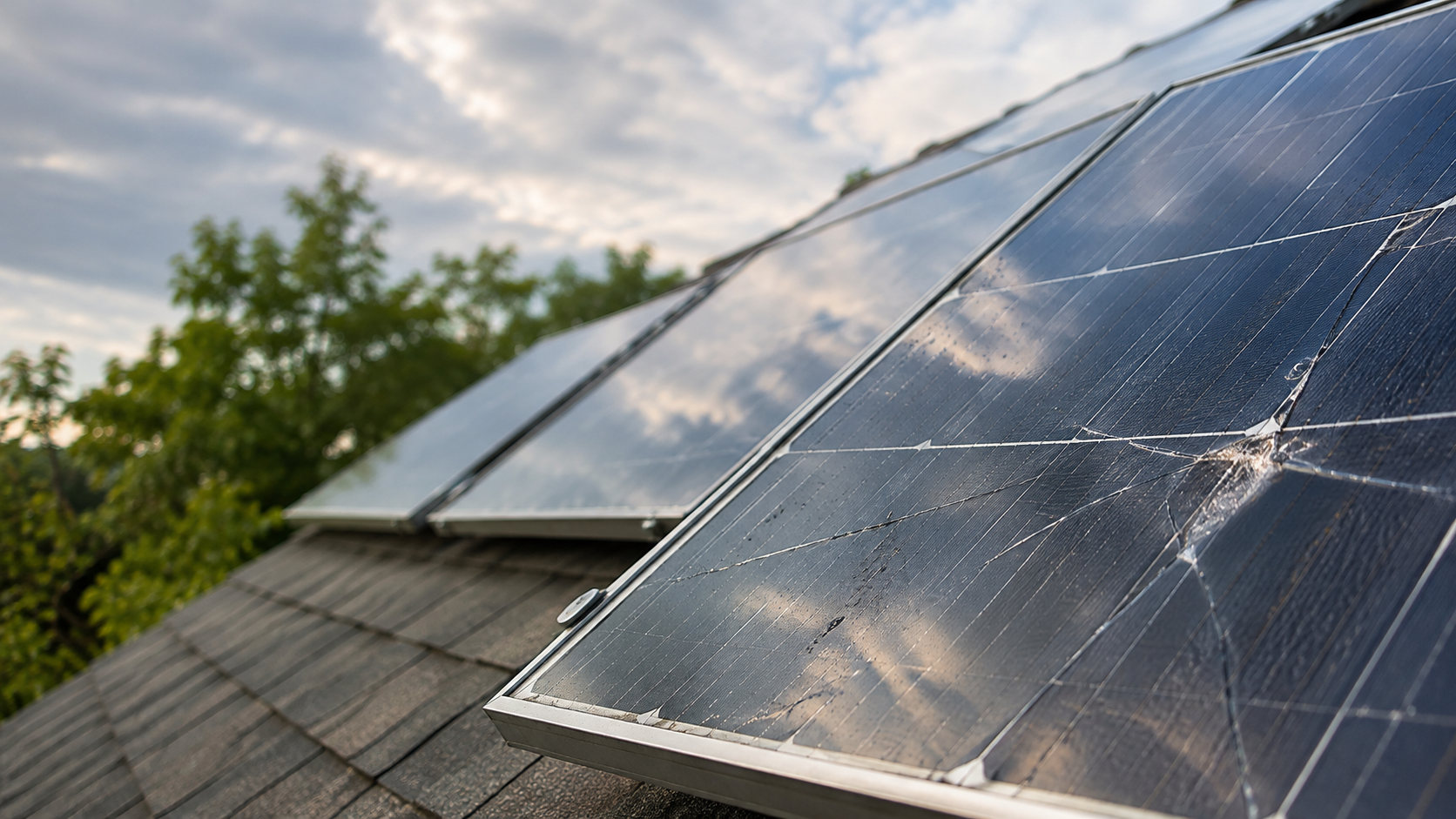
Wondering will damaged solar panels still work after a severe hailstorm or a falling tree branch strikes your roof? The short answer is yes. Many damaged solar panels continue generating electricity, but their performance and safety can suffer.
Solar panels contain interconnected photovoltaic cells that convert sunlight into electricity. Physical damage can affect these cells, electrical connections, and protective layers. According to the National Renewable Energy Laboratory (NREL), photovoltaic modules experience several degradation mechanisms that affect their long-term performance.
However, continued electricity production does not mean a damaged panel is safe to operate. Cracked glass, damaged backsheets, and internal fractures can allow moisture to enter. These problems may cause electrical faults, overheating, and reduced energy production.
Understanding the type of damage helps homeowners make informed decisions. This guide explains how damaged solar panels work, their safety risks, expected lifespan, and replacement costs. It also covers when to seek professional inspection and whether repairs or replacements are necessary.
Will Damaged Solar Panels Still Work?
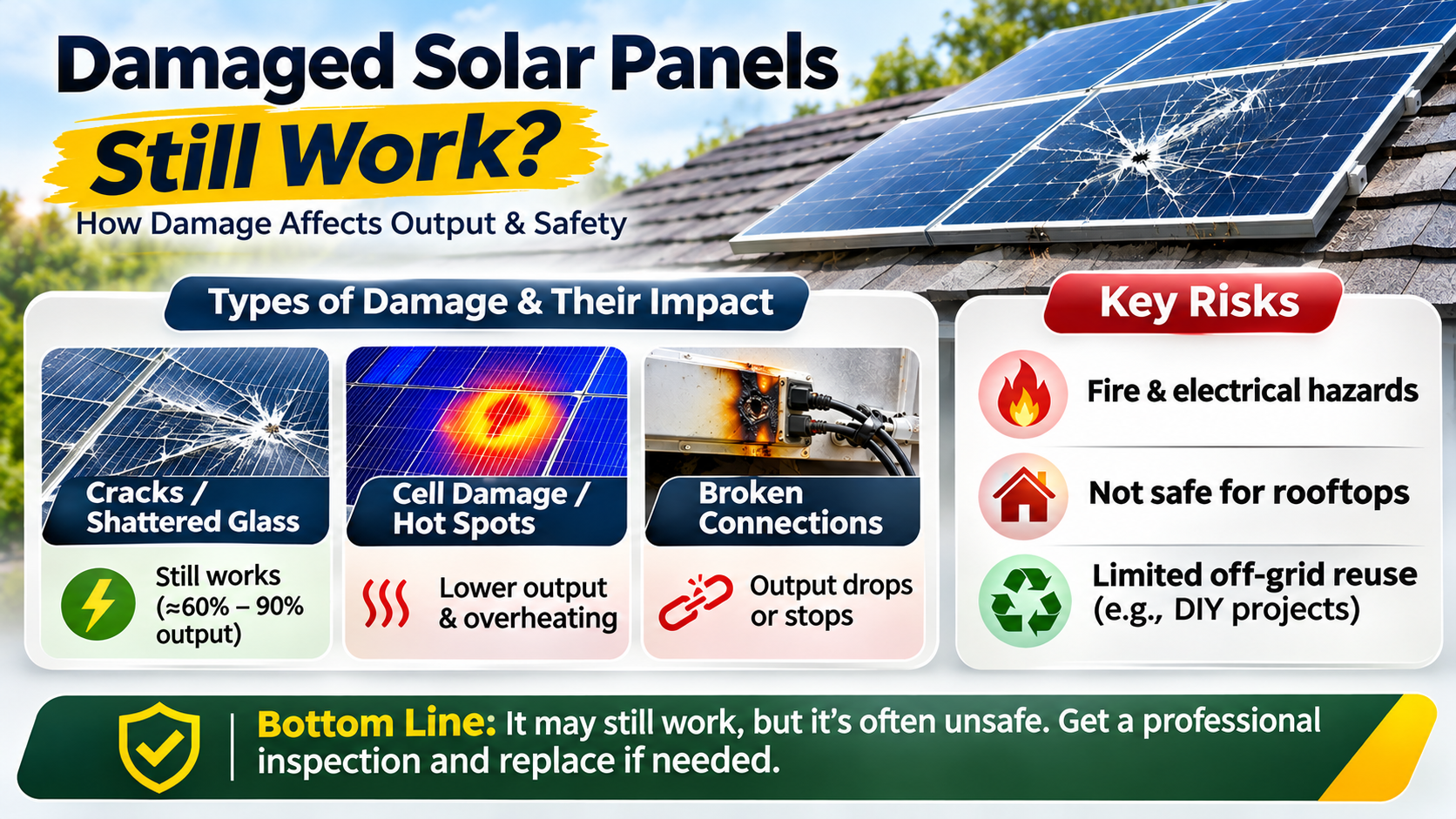
Yes, damaged solar panels can still generate electricity, depending on the severity and location of the damage. Solar cells convert sunlight into electrical energy, even when some sections have experienced physical damage. However, their ability to produce electricity may decrease.
For example, a minor frame dent might have little effect on electrical performance. However, cracked glass or damaged photovoltaic cells can affect power generation. The impact depends on whether the damage reaches the internal components.
Most solar panels connect multiple cells in electrical circuits. When cells or their connections become damaged, electricity production can become less efficient. Bypass diodes may help maintain current flow around certain affected cell groups. However, they cannot eliminate every performance loss.
According to the U.S. Department of Energy, cracked modules may initially maintain expected production. Nevertheless, their condition can worsen over time.
How Cracks Affect Daily Energy Output
Cracks can reduce solar panel output by affecting the cells and electrical connections inside the module. Even small fractures may become more serious as temperatures change throughout the day. Repeated heating and cooling can gradually extend existing cracks.
Microcracks are particularly difficult to identify because they may develop beneath the protective glass. They can interrupt electrical pathways and reduce the active area available for generating electricity.
Here are some common effects of cracked solar panels:
- Reduced electricity production: Damaged cells may generate less electricity than healthy cells.
- Hot spots: Electrical irregularities can create unusually hot areas within the module.
- Moisture intrusion: Cracked glass can allow water to reach internal components.
- Gradual degradation: Existing damage may worsen with repeated exposure to weather.
The actual production loss varies by panel design and damage severity. Therefore, monitoring software alone cannot confirm whether a damaged panel remains safe. A qualified solar technician should inspect the module and test its electrical performance.
Can I Still Use a Broken Solar Panel?
You should not continue operating a solar panel with broken glass or visible structural damage without professional inspection. Even when the module still generates electricity, damaged protective layers can expose internal components to moisture and environmental conditions.
Rainwater and humidity can enter through damaged glass or backsheets. This exposure may cause corrosion, insulation failure, and electrical faults. Damaged cells can also develop hot spots under certain operating conditions. These hot spots may damage surrounding materials and create additional safety concerns.
The risk depends on the type of damage. A minor cosmetic frame mark is different from shattered glass or a cracked backsheet. However, homeowners should never assume that a visibly damaged module is safe.
The U.S. Department of Energy recommends replacing modules with broken glass or damaged backsheets. Professional inspection helps identify hidden electrical problems and determine the appropriate corrective action.
Immediate Safety Steps for Homeowners
Discovering a damaged solar panel requires careful attention. Solar modules can generate electricity whenever sunlight reaches their surfaces. Therefore, even a disconnected or damaged module may present electrical hazards.
Follow these precautions after discovering visible damage:
- Keep your distance: Avoid touching the damaged glass, panel frame, cables, or mounting equipment.
- Stay off the roof: Never climb onto the roof to inspect, cover, or repair a broken module.
- Keep others away: Prevent children, pets, and other household members from approaching the affected area.
- Contact a professional: Arrange an inspection with a qualified solar technician or installer.
- Follow shutdown instructions: Ask your installer whether the system needs isolation and follow the manufacturer’s approved shutdown procedure.
Do not attempt electrical repairs yourself. A professional can safely isolate the system, inspect damaged components, and perform necessary testing.
What Is the Lifespan of a Solar Panel?
The average lifespan of a modern solar panel is generally around 25 to 30 years. However, this does not mean every panel stops working after three decades. Many modules continue producing electricity beyond their original performance warranty.
Solar panels gradually lose some electricity-generating capacity as they age. This process is called solar panel degradation. Research cited by NREL indicates that crystalline silicon modules commonly experience annual degradation around 0.5%, although actual rates vary.
Manufacturers often provide performance warranties lasting 25 to 30 years. These warranties typically guarantee a minimum percentage of the panel’s original rated output at specified intervals. The exact guarantee depends on the manufacturer and product.
Proper installation, suitable ventilation, and routine maintenance help extend panel life. For more practical ways to protect your investment, explore how long solar panels last with proper maintenance. However, severe weather, physical impacts, and manufacturing defects can cause premature damage.
It is important to distinguish between a panel’s expected service life and its warranty period. A warranty provides specific coverage, not a guarantee that every component will remain problem-free.
Factors That Shorten Panel Longevity
Several environmental and installation-related factors can reduce solar panel lifespan. Although modern modules undergo durability testing, continuous exposure to harsh conditions can gradually affect their protective materials and electrical components. Proper installation also plays an important role in preventing premature damage, so understanding residential solar panel installation can help homeowners avoid common installation-related problems.
Some of the most common factors include:
- Severe weather: Hailstorms, strong winds, and falling branches can crack glass or damage frames.
- Poor installation: Incorrect mounting pressure or inadequate support can create mechanical stress.
- Extreme temperatures: Repeated heating and cooling can contribute to material degradation.
- Moisture exposure: Water entering damaged protective layers can cause corrosion and electrical problems.
- Heavy snow loads: Excessive mechanical pressure can damage modules and their mounting structures.
- Coastal conditions: Salt exposure can accelerate corrosion in vulnerable metal components.
Regular inspections help identify early warning signs. Homeowners should check for visible cracks, discoloration, loose mounting hardware, and unexpected production changes. Professional maintenance is particularly important after severe weather events.
What Happens If a Solar Panel Gets Damaged?
When a solar panel gets damaged, its internal components may experience electrical and structural problems. The effects depend on whether the damage affects the protective glass, photovoltaic cells, electrical connections, or backsheet.
Cracked front glass can allow moisture to reach the internal encapsulation materials. Over time, this exposure may cause corrosion, discoloration, and delamination. These changes can weaken electrical connections and reduce the module’s ability to generate electricity.
Damage to photovoltaic cells can also interrupt the normal flow of electrical current. In certain conditions, affected cells may develop hot spots. These areas experience higher temperatures than surrounding sections and can damage nearby materials.
The inverter may also detect abnormal electrical conditions. Depending on the system design, this can trigger warning messages, reduced production, or protective shutdowns.
Not every damaged panel experiences all these problems. However, visible damage should never be ignored. A qualified technician can use electrical testing and thermal imaging to identify problems that are not visible during a basic inspection.
Impact on Connected String Panels
The effect of one damaged solar panel on other modules depends on the system’s electrical configuration. In traditional string inverter systems, multiple panels connect in series. Their electrical characteristics influence the performance of the entire string.
When one module develops an electrical fault, it may affect the current or voltage available from that string. This can reduce overall energy production, particularly when the damaged module creates a significant mismatch.
However, modern systems include technologies that can limit some of these effects. Bypass diodes help current flow around certain affected cell groups. Module-level power electronics, such as microinverters and DC optimizers, can also reduce the impact of individual panel performance problems.
The actual effect depends on the inverter, wiring arrangement, and type of damage. Therefore, one damaged panel does not automatically mean every connected module will stop working.
A professional system inspection can identify the affected module and determine whether replacement is necessary. Monitoring individual panel performance can also help locate unexpected production losses.
How Much Does It Cost to Replace a Damaged Solar Panel?
Replacing a damaged solar panel typically costs between $300 and $1,000 in the United States, including equipment and professional labor. However, the final price depends on the panel model, system configuration, roof accessibility, and extent of damage.
A replacement module may cost approximately $150 to $350, depending on its wattage, brand, and availability. Professional labor adds to the total because technicians must inspect the system, access the roof, remove the damaged module, and install a compatible replacement.
Additional expenses may apply when the damage affects mounting equipment, wiring, connectors, or nearby modules. Older solar systems can also require compatible replacement panels that are difficult to source.
Replacing multiple damaged modules during one service visit may reduce the average labor cost per panel. Homeowners should request a detailed estimate before approving the work.
These figures are general estimates, not guaranteed prices. Actual replacement costs vary significantly by location and installation requirements.
Warranty Coverage vs. Insurance Claims
Before paying for a replacement, check whether your solar panel manufacturer or homeowner’s insurance policy covers the damage. These two options provide different types of protection.
Manufacturer warranties generally cover manufacturing defects, material failures, and specified performance losses. However, standard product warranties usually exclude accidental damage caused by external events, such as falling branches or hailstorms.
Homeowner’s insurance may cover sudden and accidental damage caused by certain weather events. Coverage depends on your policy, exclusions, deductible, and local insurance requirements.
Here is how the two options typically differ:
| Coverage Type | What It Usually Covers |
|---|---|
| Manufacturer warranty | Manufacturing defects and specified performance issues |
| Homeowner’s insurance | Eligible accidental damage from covered events |
| Installation warranty | Certain workmanship and installation-related problems |
If a storm damages your solar panels, document the damage from a safe location. Contact your installer and insurance provider to understand the inspection and claims process.
Always review the warranty terms and insurance policy before arranging a replacement. This helps you avoid unexpected expenses and identify the most appropriate coverage option.
Conclusion
So, will damaged solar panels still work? Yes, many damaged solar panels can continue generating electricity, but their performance and safety may be compromised. Cracked glass, broken photovoltaic cells, and damaged electrical connections can reduce energy production and create potential safety hazards.
If you notice visible damage, avoid touching the panel or attempting DIY repairs. Contact a qualified solar technician to inspect the system and determine whether the module needs repair or replacement. Also, check your manufacturer’s warranty and homeowner’s insurance for possible coverage.
Ultimately, timely inspections and proper maintenance protect your solar investment. Even if damaged solar panels still produce electricity, addressing the problem early can prevent further damage, reduce safety risks, and help your solar system deliver reliable electricity for years to come.