
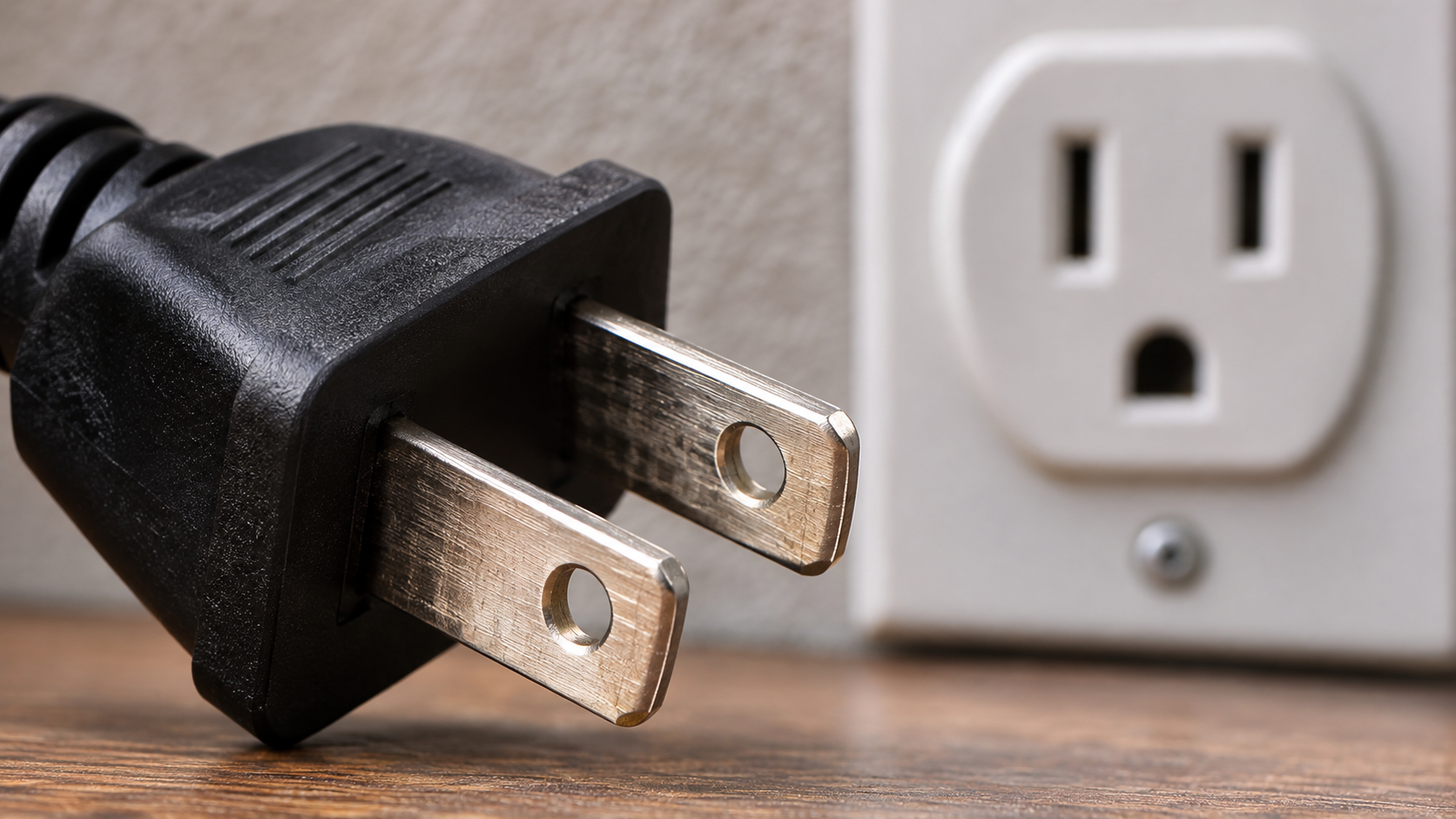
The Real Reason for Holes in Plug Prongs Explained
Have you ever looked closely at an electrical plug and wondered why its metal prongs have small circular holes? You probably use these plugs every day without noticing this unusual feature.
These openings are not manufacturing defects or decorative additions. They originally served a mechanical purpose in older electrical outlets. Today, they also provide practical benefits during plug manufacturing.
The holes in plug prongs are particularly interesting because their original purpose has changed over time. Older receptacles used small internal features to engage these openings. Modern receptacles generally rely on contact pressure instead.
The design also helps manufacturers position metal blades during production. In certain situations, specialized equipment can use plug openings for additional security.
Understanding this small design feature reveals how electrical plugs have evolved. This guide explains why electrical plug prongs have holes, how they work, and what different outlet openings are called.
Why Do Some Plug Prongs Have Holes?
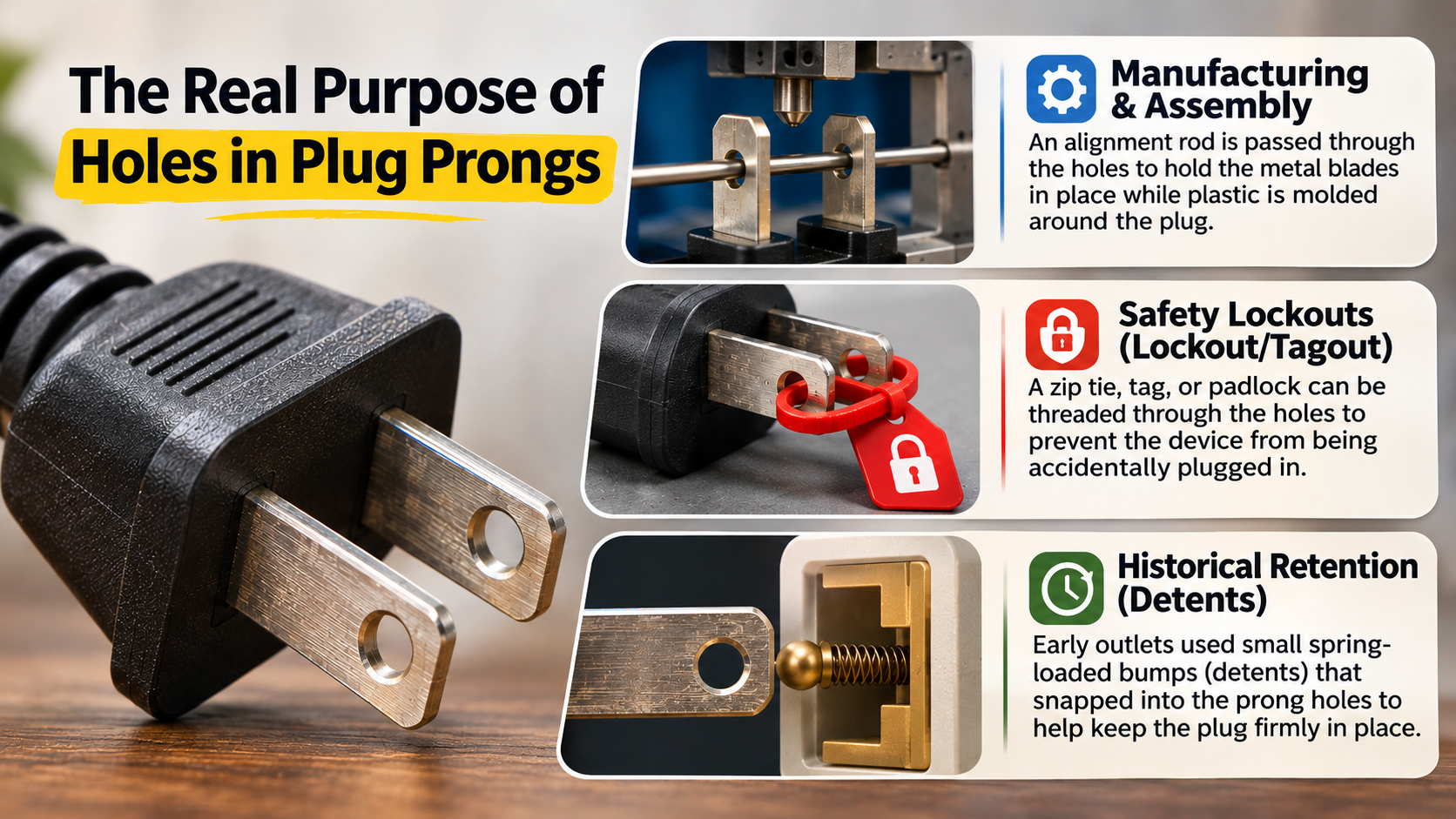
The holes in plug prongs originally helped secure electrical plugs inside compatible wall receptacles. Older outlet designs included small raised metal features called detents. These features fitted into the openings and helped prevent plugs from slipping out accidentally.
However, modern electrical outlets generally use a different retention method. Their internal spring contacts grip the flat metal blades through pressure. Modern safety requirements also establish minimum and maximum plug-retention forces. As a result, manufacturers largely stopped relying on detents in ordinary straight-blade receptacles.
The openings still remain on many electrical plugs. They are useful during manufacturing and preserve compatibility with older receptacle designs.
Mechanical Grip and Spring Detents
In older receptacle designs, spring-loaded metal contacts featured small raised bumps. When you inserted a plug, these bumps entered the holes in its prongs. This mechanism is similar to how other mechanical switches use physical components to control electrical connections, as explained in How a Magnetic Switch Clicks and Works.
This created additional mechanical resistance against accidental removal. The design helped keep appliance cords connected during everyday use.
Modern receptacles usually work differently:
-
Spring contacts press against the flat sides of plug blades.
-
Contact pressure provides the required holding force.
-
The receptacle design must allow safe insertion and removal.
-
Older detent-style designs may still exist in certain applications.
Therefore, the holes do not automatically make every modern plug fit more securely. If a plug repeatedly falls out, a worn or damaged receptacle could be responsible. Consider having a qualified electrician inspect it.
Why Is There a Hole in an Electrical Plug?
The holes in electrical plug blades have both historical and manufacturing purposes. Their original purpose involved helping older receptacles retain inserted plugs. However, modern receptacles generally achieve retention through spring pressure.
Another practical use involves manufacturing. During production, manufacturers must position metal blades accurately before forming the surrounding plastic plug body. Small openings can provide convenient points for holding or locating these metal components.
This helps maintain consistent blade positioning during assembly. Proper alignment matters because plug blades must fit their matching receptacles correctly.
The openings also preserve compatibility with older outlet designs. Some specialized locking connectors continue using mechanical engagement features. However, ordinary household plug holes should not be confused with dedicated locking mechanisms.
Manufacturing and Production Efficiency
Electrical plug manufacturing requires accurate positioning of metal blades. The blades must remain correctly aligned while manufacturers form the insulating plastic body around them. Understanding how different materials behave during manufacturing also helps explain why manufacturers select specific materials for electrical components. You can explore this further in States of Matter Explained: Solids, Liquids & Gases.
Holes can provide useful locating points during this process. Special fixtures or positioning pins can help hold the metal components in place.
This offers several production benefits:
-
Consistent alignment: Helps maintain the correct distance between metal blades.
-
Stable positioning: Reduces unwanted movement during assembly.
-
Reliable production: Supports repeatable manufacturing processes.
-
Compatibility: Preserves a familiar design used across many plug types.
However, the openings are not simply material-saving features. Their manufacturing role depends on the particular production method.
What Are Hole Plugs Used For?
The term hole plugs can describe several different products. Their purpose depends on where they are installed. Electrical enclosures, furniture panels, and wall openings may use plastic or rubber plugs to cover unused holes.
For example, electricians install knockout seals in electrical boxes. These covers close unused openings and help protect the enclosure. They also prevent accidental contact with internal components.
Another product is a child safety outlet plug. This insulated accessory covers an unused electrical socket opening. It helps prevent children from inserting objects into accessible receptacles.
These products serve different purposes from the holes in metal electrical plug prongs. Understanding this distinction prevents confusion when discussing electrical components.
Protecting Enclosures and Childproofing
Protective plugs help cover openings that should remain closed. Their design depends on the enclosure or electrical component involved.
Common examples include:
-
Electrical knockout plugs: Cover unused openings in junction boxes and electrical enclosures.
-
Panel hole plugs: Seal unused openings in equipment panels.
-
Child safety outlet plugs: Cover accessible receptacle openings to reduce accidental access.
These accessories are generally made from insulating materials. Plastic, nylon, and rubber are common choices.
However, not every opening can safely accept an ordinary plastic cover. Electrical enclosures must use suitable components that preserve their required protection.
Similarly, child safety outlet plugs are not a substitute for properly installed tamper-resistant receptacles. Electrical appliances also require proper precautions when they are not in use. Learn more about whether you should unplug your washing machine before vacation to understand another important aspect of household electrical safety.
What Are the Holes in a Plug Socket Called?
The openings on an electrical wall socket are generally called slots, receptacle openings, or contact openings. Their names depend on their functions and the electrical system.
A standard North American grounded household receptacle typically has three openings. Two vertical slots connect to the hot and neutral conductors. A third, usually rounded opening connects to the grounding conductor.
Each opening serves a specific electrical purpose. The hot slot supplies electrical current to an appliance. The neutral slot provides the return path. The grounding opening provides a protective path for fault current.
These openings also have different shapes and dimensions. This helps compatible plugs fit in their intended orientation. However, outlet configurations vary between countries. Not every electrical socket uses the same arrangement or opening dimensions.
Standard Outlet Blade Orientations
A standard polarized North American receptacle uses different slot widths. The neutral slot is wider than the hot slot. This allows compatible polarized plugs to enter in only one orientation.
The three openings have distinct functions:
-
Hot slot: Supplies electrical power to the connected appliance.
-
Neutral slot: Provides the normal return path for electrical current.
-
Ground opening: Connects to the protective grounding conductor.
The grounding connection helps provide a low-impedance path for fault current. This allows protective devices to operate when an electrical fault occurs. Understanding electrical systems also helps homeowners identify ways to reduce unnecessary energy consumption. Explore how to conserve electricity effectively for practical household energy-saving advice.
The different slot dimensions also help maintain correct polarity. However, these arrangements apply to specific North American receptacle configurations. Other countries use different plug and socket standards.
Final Thoughts
The small holes in electrical plug prongs have an interesting history. They originally helped older receptacles retain plugs through mechanical detents. Modern outlets generally rely on spring-contact pressure instead.
Today, these openings also assist with manufacturing and preserve compatibility with older designs. They are not simply decorative features or universal locking mechanisms.
Understanding their purpose makes everyday electrical components easier to recognize. For more information about electrical standards and safety, visit the National Electrical Manufacturers Association (NEMA).
Electrical appliances also contribute to household energy consumption, making it useful to understand how to reduce your electricity bill naturally