Why Do Colors Fade Over Time?
Have you ever wondered why vibrant shirts, painted walls, and outdoor furniture gradually lose their brilliance? Understanding why colors fade helps you protect the items you value and keep them looking fresh for longer.
Over time, environmental factors interact with pigments and dyes, changing their chemical structure and reducing their original intensity. According to the National Institute of Standards and Technology (NIST), environmental exposure and weathering can affect the durability of materials and protective coatings.
In this article, we explore why colors fade, how sunlight accelerates color loss, and what fading reveals about material deterioration. We also examine age-related changes in color perception, which colors may fade faster, and what scientists know about the earliest colors on Earth.
Why do colors fade?
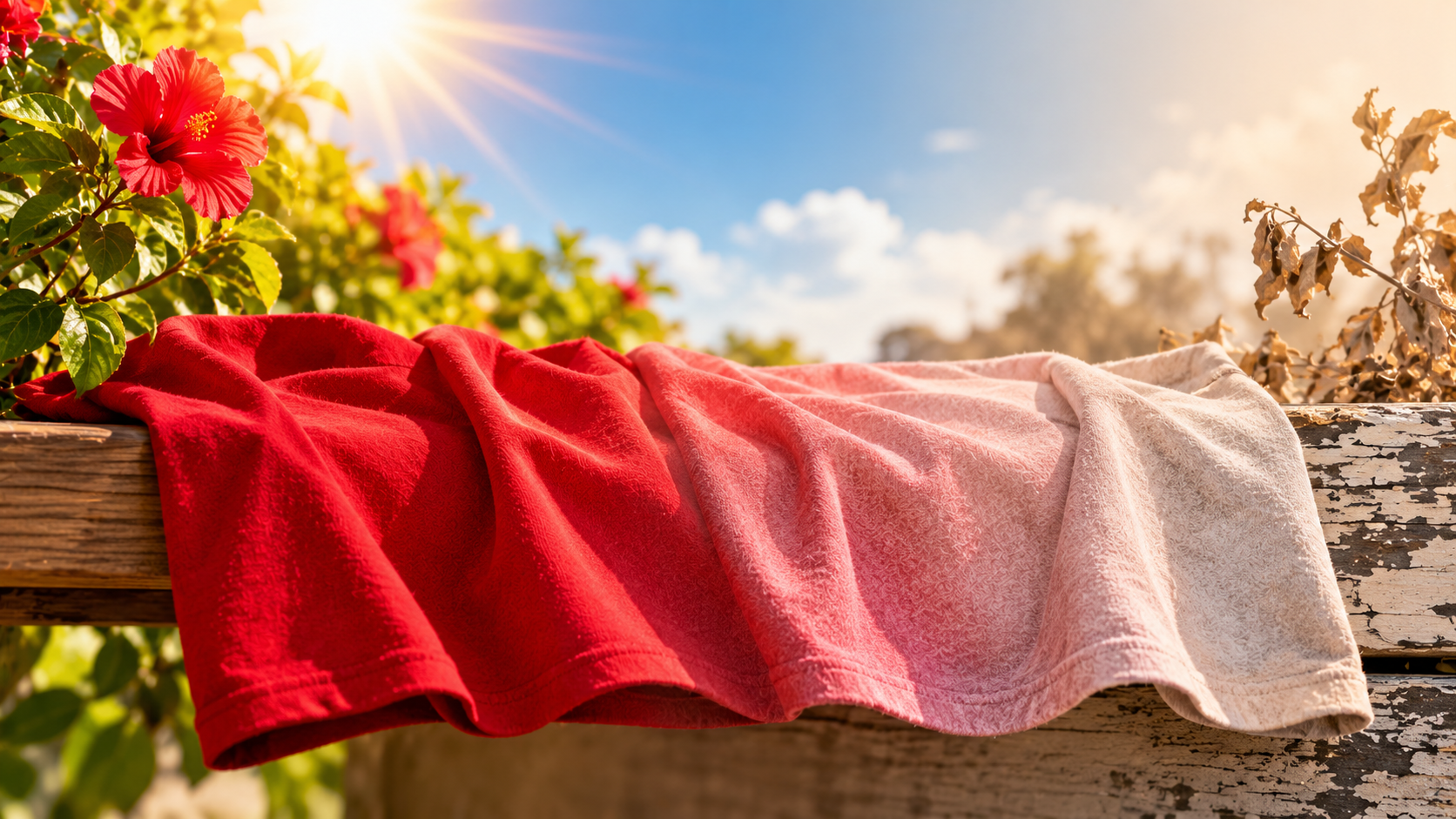
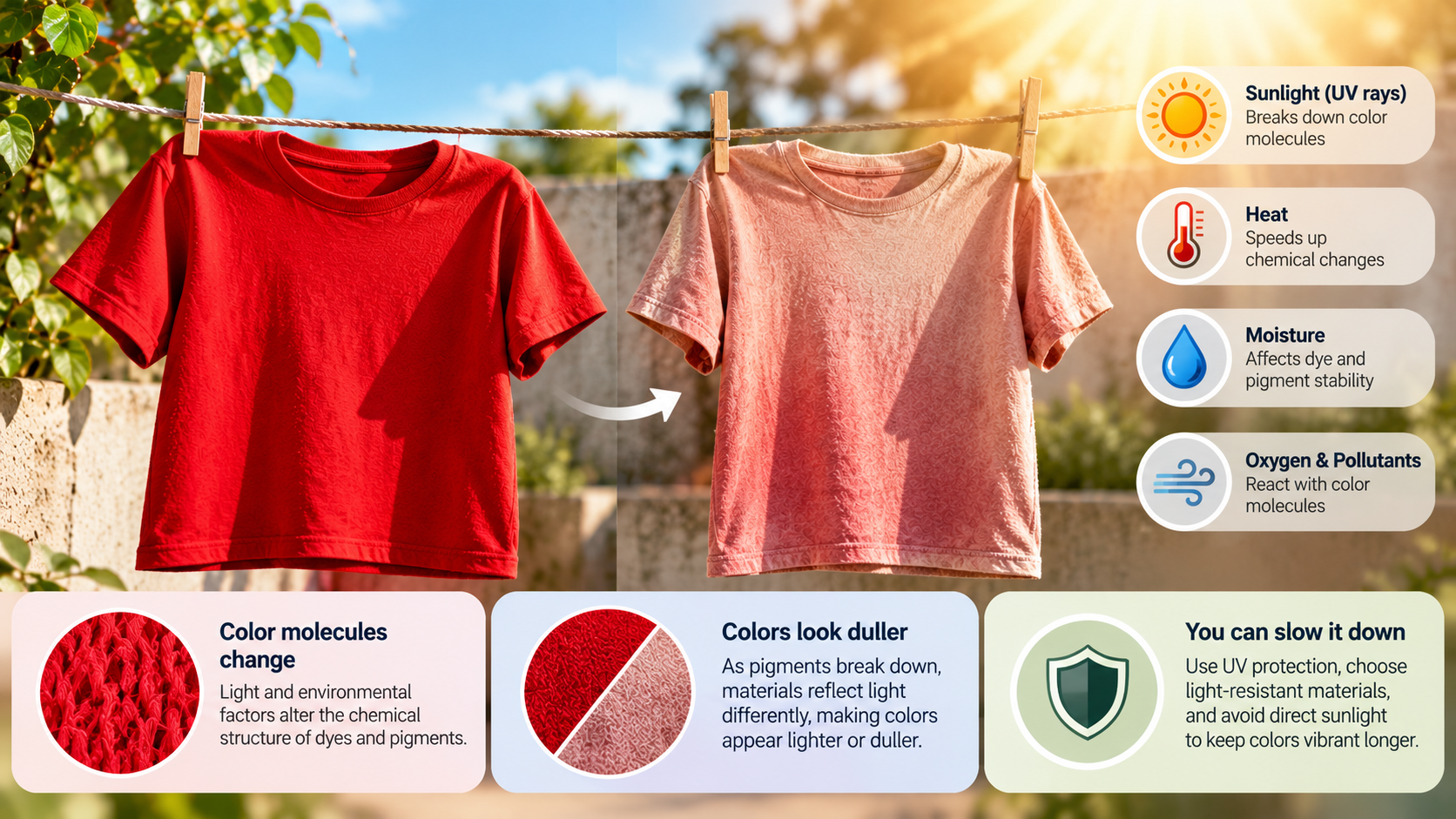
Colors fade when pigments and dyes undergo chemical changes due to environmental stressors. These include sunlight, heat, moisture, oxygen, and certain pollutants. As the color-producing molecules change, materials absorb and reflect light differently. This makes their original colors appear duller, lighter, or completely different.
The process affects many everyday items, including clothing, plastic products, painted walls, and outdoor furniture. However, not all materials fade at the same rate. Their durability depends on the type of pigment or dye, the surrounding environment, and the quality of protective coatings. Some materials retain their color for decades, while others show noticeable fading after relatively short exposure.
Manufacturers often add stabilizers and protective coatings to slow color deterioration. Although these treatments help, they cannot always prevent fading entirely. Understanding the causes of color loss helps you choose durable materials and protect them from unnecessary environmental exposure.
The role of chemical bonds
The chemical structure of a pigment plays an important role in determining how long it retains its original color. Different pigments and dyes respond differently to light, heat, moisture, and oxygen. Some have stable molecular structures, while others break down more easily under environmental stress.
When light reaches a colored surface, certain molecules absorb its energy. If the absorbed energy triggers chemical reactions, the molecules can change or decompose. This process is called photodegradation when light causes the damage. As the color-producing structures change, the material may lose its intensity or develop a different shade.
The surrounding material also matters. Paint contains pigments mixed with binders, while fabrics contain dyes within or on their fibers. Chemical reactions between these components can affect color stability. Choosing light-resistant pigments and storing sensitive items away from harsh environmental conditions can help preserve their appearance.
Why does color fade in sunlight?
Sunlight is a major cause of color fading because it contains ultraviolet (UV) radiation, visible light, and infrared radiation. These forms of energy affect colored materials in different ways. UV radiation and visible light can trigger chemical reactions that alter pigments and dyes, while infrared radiation can heat surfaces and accelerate certain forms of deterioration. Learn more about atmospheric light scattering and why the sky is blue to understand how light interacts with the environment.
When sunlight reaches a colored object, its energy can change the molecules responsible for producing that color. This process may cause the surface to become lighter, duller, or unevenly discolored. The effects accumulate with repeated exposure, making fading more noticeable over time.
Fabrics placed near sunny windows, outdoor furniture, vehicle paint, and printed materials are particularly vulnerable. However, the rate of fading depends on the specific material and its exposure conditions. Items made with light-resistant pigments may retain their color much longer than those containing less stable dyes.
Reducing direct sunlight and choosing materials designed for outdoor use can help slow this process.
Ultraviolet radiation impact
Ultraviolet radiation can damage many dyes and pigments by triggering chemical reactions that alter their molecular structures. Although UV light is an important cause of fading, visible light can also contribute significantly to color loss. The relative effects depend on the material and the type of colorant involved. Similar light-related risks affect electronic devices, including the camera sensors discussed in this guide to lasers and phone cameras.
When sensitive colorants absorb light, chemical reactions can break down their color-producing structures. Oxygen and other substances may participate in these reactions, accelerating discoloration. Some materials also become brittle or weaker as light exposure damages their underlying structure.
You can reduce UV-related damage through several practical measures:
- Use UV-protective window films to reduce radiation entering indoor spaces.
- Choose UV-resistant paints and coatings for outdoor surfaces.
- Keep sensitive fabrics and artwork away from direct sunlight.
- Limit prolonged exposure to strong natural or artificial light when possible.
These precautions can extend the life of colored materials. However, filtering UV radiation alone may not prevent all fading because visible light can also damage certain pigments and dyes.
What does it mean when a color fades?
When a color fades, it usually means that the material’s appearance has changed because of light exposure, chemical reactions, weathering, or aging. Sometimes, the change affects only the colorant. In other cases, the underlying material also deteriorates.
For example, fading automotive paint may indicate damage to the paint system caused by prolonged sunlight and weather exposure. The clear coat can become dull, chalky, or damaged, reducing the surface’s protection. However, fading alone does not necessarily mean that the metal underneath is rusting.
Outdoor fabrics provide another example. Repeated exposure to sunlight, moisture, and cleaning products can weaken certain fibers while changing their color. Over time, the fabric may become brittle or more likely to tear.
Recognizing these changes can help you decide when maintenance is necessary. Depending on the material, you may need to clean the surface, apply a suitable protective coating, or replace a deteriorating item. Addressing the cause early can prevent further damage and extend the material’s useful life.
Why do colors fade as we get older?
Colors may appear less vivid as we age because the eyes undergo natural changes. One important change occurs in the crystalline lens, which gradually becomes more yellow and less transparent. This reduces the amount of light reaching the retina and changes how certain wavelengths pass through the eye. For more background on how vision works, explore the human eye, its parts, and its functions.
Age-related changes can also affect contrast sensitivity and the ability to distinguish subtle differences between colors. As a result, some colors may appear less bright or distinct than they did earlier in life. These changes vary from person to person and do not affect everyone equally.
Lighting conditions can make these differences more noticeable. Dim rooms, poor contrast, and inadequate illumination may make it harder to distinguish colors clearly. Brighter, well-balanced lighting can improve color visibility in everyday settings.
Although aging naturally affects vision, sudden changes in color perception should not automatically be attributed to age. Eye conditions can also alter how colors appear. If you notice a sudden or significant change, consult an eye-care professional for an appropriate assessment.
Which color fades the fastest?
There is no single color that always fades the fastest. The rate of fading depends on the specific pigment or dye, its chemical structure, the material containing it, and the conditions surrounding it. Two objects with the same visible color can fade at very different rates if their colorants differ. If you’re interested in how colors influence visual identity, see how to choose colors for company branding.
Some organic red pigments are particularly sensitive to light. Historical paintings containing certain red dyes have experienced significant fading after exposure. However, other red pigments can remain stable for long periods. Yellow, blue, green, and other colors can also fade quickly when their pigments are light-sensitive.
Sunlight intensity, exposure time, moisture, temperature, and protective coatings all influence the result. For example, a red car may retain its color longer than a blue fabric if its paint uses more durable colorants and protective coatings.
When choosing colored materials for outdoor use, look for UV resistance, lightfastness ratings, and products specifically designed to withstand weather exposure. These properties provide more useful information about durability than color alone.
What was the first color to exist?
The question of the first color depends on whether you mean color in the universe or the earliest biological pigments found on Earth. These are different scientific questions, and the evidence does not support a single, simple answer for both.
In the early universe, matter and radiation existed under extremely hot and dense conditions. As the universe expanded and cooled, atoms eventually formed, allowing light to travel more freely. The radiation released during this period has since cooled into what scientists observe today as the cosmic microwave background. Describing the universe’s earliest light as simply orange or red oversimplifies this complex history.
On Earth, scientists have discovered evidence of ancient biological pigments preserved in rocks. In 2018, researchers reported pigments approximately 1.1 billion years old from marine shale in Mauritania. These pigments came from chlorophyll-related molecules produced by ancient photosynthetic organisms.
When concentrated, the extracted pigments appeared red to deep purple. When diluted, they appeared bright pink. This discovery provides evidence of some of the oldest known biological colors preserved in the geological record. It does not establish pink as the first color ever to exist.
FAQ SECTION
How can I prevent my clothes from fading in the wash?
Washing clothes inside out in cold water with mild detergent significantly reduces color fading. Hot water opens fabric fibers and releases dye molecules, while harsh agitation causes friction. Air-drying items away from direct sunlight also protects the fabric integrity.
Do indoor lights cause colors to fade?
Yes, indoor lighting can cause fading over time, though much slower than sunlight. Halogen and incandescent bulbs emit UV radiation and heat, while fluorescent lights also release small amounts of UV light that gradually break down sensitive dyes.
Can faded colors be restored?
Faded clothes can sometimes be re-dyed using commercial fabric dyes, and faded plastic or wood can be restored with specialized restorer liquids or fresh paint. However, the original molecular bond of the faded material cannot be reversed naturally.
Does fabric softener make colors fade faster?
Fabric softeners can leave a microscopic coating on fibers that attracts dirt and alters how light reflects off the fabric, making colors look duller over time. Skipping softeners or using wool dryer balls helps maintain fabric brightness.
Conclusion
Understanding why do colors fade empowers you to protect your belongings and make informed purchasing decisions. From the destructive power of UV radiation breaking down chemical bonds to the natural aging of human vision, color loss is an inevitable part of physical reality. By recognizing that fading signals material breakdown—especially in vulnerable shades like red—you can take proactive steps to shield your items from excessive sunlight and harsh environments. Applying simple maintenance habits, such as washing clothes in cold water or using UV protectants, preserves both beauty and durability. Embrace these insights to keep your surroundings vibrant and long-lasting for years to come.