
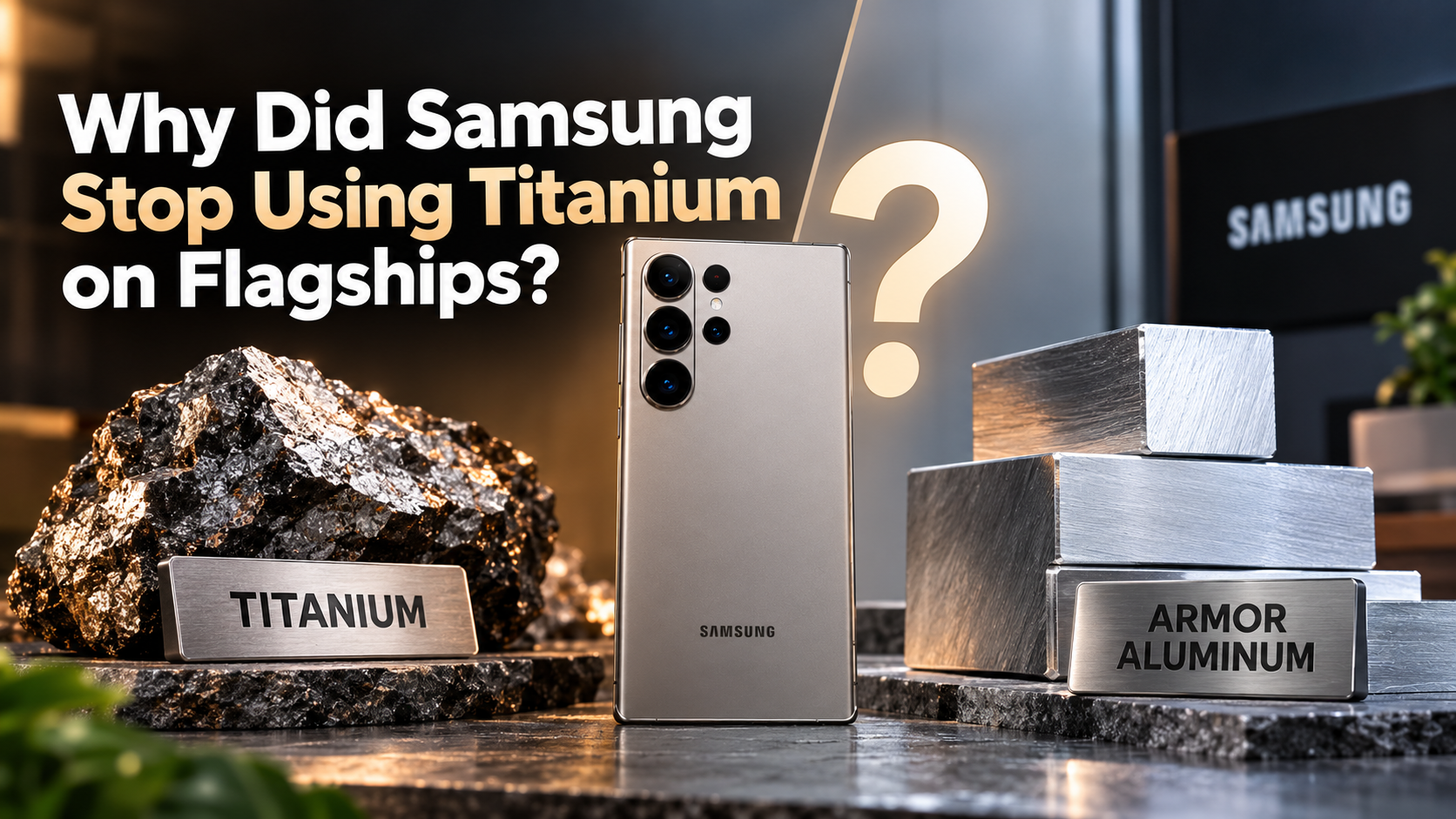
Why Did Samsung Stop Using Titanium on Flagships?
When smartphone makers design flagship devices, every gram and millimeter matters. Why did Samsung stop using titanium on its latest flagship phone? The answer involves material costs, thermal management, weight, manufacturing, and overall device design.
The question became especially relevant after Samsung used a titanium frame on the Galaxy S24 Ultra and Galaxy S25 Ultra. Samsung then returned to Armor Aluminum for the Galaxy S26 Ultra.
The change does not mean titanium failed as a smartphone material. Titanium offers excellent strength and a premium feel. However, aluminum can provide a better overall balance for a thin, lightweight flagship.
According to official product teardowns documented by iFixit, integrating new metallic alloys into mass-market electronics requires complex mechanical engineering, specialized bonding layers, and substantial cost adjustments.
This guide explains Samsung’s material strategy in simple terms. It covers thermal performance, manufacturing, weight, durability, competition with Apple, and Samsung’s history with the Galaxy Note7.
Why did Samsung stop using titanium?
So, why did Samsung stop using titanium on the Galaxy S26 Ultra? Samsung moved away from titanium on the Galaxy S26 Ultra and returned to Armor Aluminum. The decision reflects a broader engineering trade-off rather than a simple rejection of titanium. For more context on Samsung’s latest hardware, see Samsung Galaxy Z Fold8: Everything We Know So Far.
Samsung describes the S26 Ultra as its slimmest Ultra yet. It has a 214-gram body and a refined Armor Aluminum frame.
Titanium is strong and premium, but it is also more expensive and harder to machine than aluminum. Its lower thermal conductivity can also make heat management more challenging.
Aluminum provides several practical advantages for smartphone design. It is lightweight, easier to machine, and widely used in high-volume electronics manufacturing. It can also support efficient heat transfer through the phone’s metal structure.
Samsung has not publicly stated that one single issue caused the material change. Therefore, it is more accurate to view the switch as a balance between weight, durability, manufacturing, thermal design, and product positioning.
The Galaxy S26 Ultra also uses a redesigned vapor chamber. Samsung says it delivers 21% greater thermal performance. That suggests thermal engineering remained a major priority alongside the frame redesign.
The switch does not prove titanium is unsuitable for phones. Instead, it shows that material selection depends on the entire device architecture.
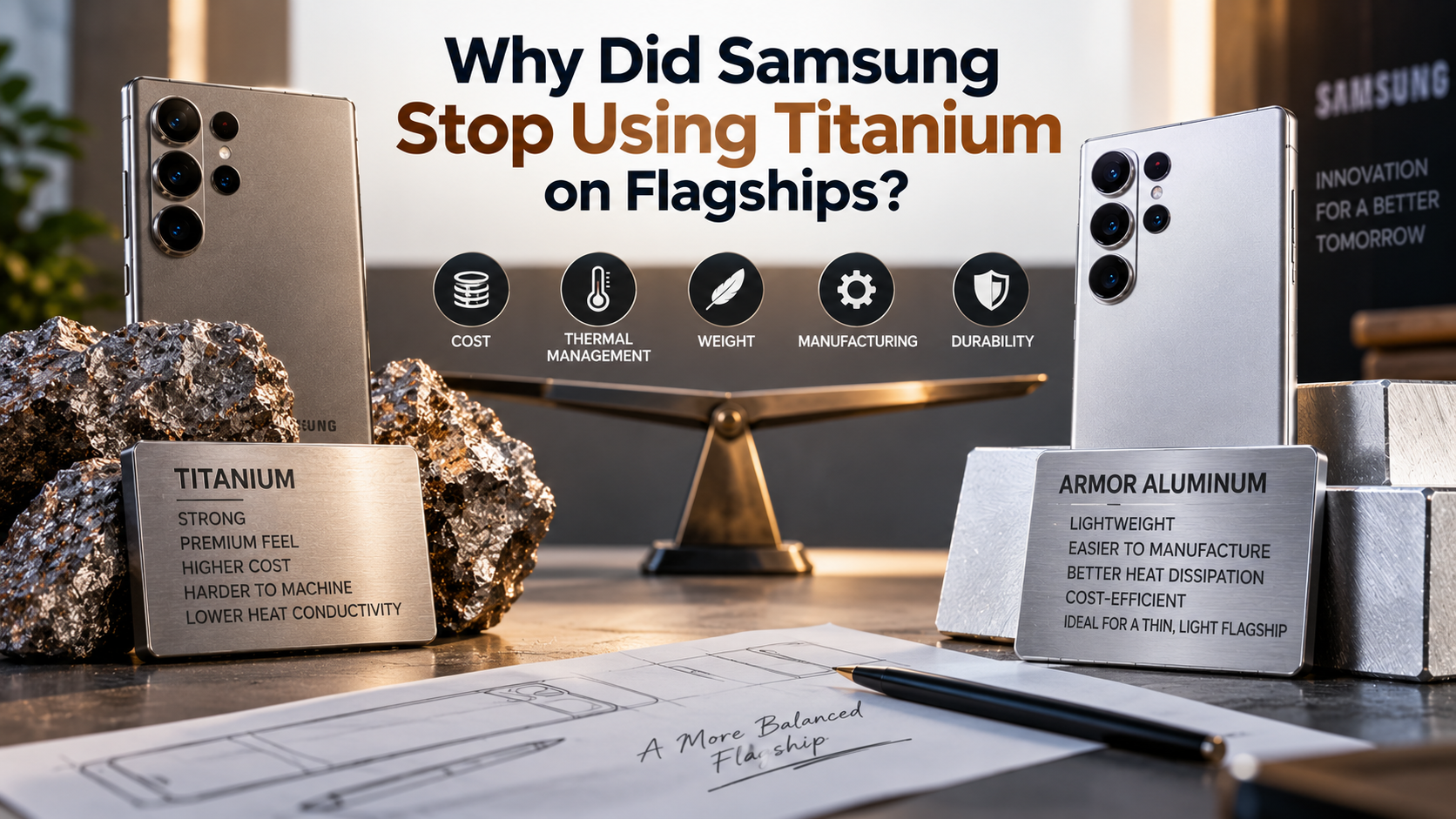
Thermal Dissipation and Production Realities
Thermal management is one of the most important considerations in a modern flagship smartphone. Powerful processors generate substantial heat during gaming, camera processing, artificial intelligence tasks, and extended multitasking. Camera processing is also becoming more demanding with advances in AI camera technology in smartphones.
Aluminum conducts heat more effectively than titanium. That property can help distribute heat through the device and support internal cooling components. However, the frame is only one part of a phone’s thermal system.
Samsung’s Galaxy S26 Ultra uses a redesigned vapor chamber alongside its Armor Aluminum frame. The new vapor chamber improves thermal performance by 21%.
Manufacturing also matters. Titanium generally requires more demanding machining and finishing processes than aluminum. Those processes can increase production complexity and affect manufacturing costs.
For a flagship produced at enormous scale, small manufacturing differences can become significant. Samsung therefore has strong reasons to choose a material that supports efficient production, low weight, reliable cooling, and competitive pricing.
These factors help explain why Samsung may have reconsidered titanium. The company can still deliver a premium flagship without relying on titanium for the frame.
The change does not prove titanium is unsuitable for phones. Instead, it shows that material selection depends on the entire device architecture.
Who is Samsung’s biggest enemy?
Samsung’s biggest smartphone rival remains Apple, especially in the premium flagship market. This rivalry also helps explain why Samsung continually reviews its hardware strategy and design choices. For buyers comparing the two ecosystems, iPhone or Android for students offers another useful perspective.
Both companies compete heavily across North America, Europe, Asia, and other major smartphone markets. Apple’s iPhone benefits from strong brand loyalty, tight hardware and software integration, and a mature ecosystem.
Samsung competes through Galaxy hardware, Android flexibility, camera technology, displays, artificial intelligence, and its broader device ecosystem. Each company constantly looks for ways to make its flagship products more appealing.
The rivalry also influences industrial design. When Apple introduces a major hardware change, Samsung faces pressure to respond. The same applies when Samsung introduces a major feature that changes consumer expectations.
Chinese manufacturers such as Xiaomi, Huawei, Oppo, and Vivo also create significant competition. Their strongest pressure often appears in value-focused and premium Android markets.
However, Apple’s influence on Samsung’s ultra-premium strategy remains particularly important. Consumers frequently compare the latest Galaxy Ultra directly with the latest iPhone Pro models.
For that reason, questions such as why did Samsung stop using titanium cannot be viewed only through manufacturing. Premium smartphone design is also shaped by competition, branding, and consumer expectations.
The Battle for Premium Market Share
Premium smartphones compete on more than specifications. Buyers also consider materials, weight, durability, cameras, displays, software, battery life, and ecosystem features.
That makes the choice between titanium and aluminum more complicated than a simple premium-versus-cheap comparison. Titanium can create a luxury impression, while aluminum can help reduce weight and support efficient engineering.
Samsung’s Galaxy S26 Ultra illustrates this approach. The phone uses Armor Aluminum while becoming thinner and lighter than the previous Ultra generation. The S26 Ultra measures 7.9 mm thick and weighs 214 grams.
The decision also shows how flagship design priorities can change between generations. A material that works well for one model may not provide the best balance for the next.
Samsung therefore competes with Apple by optimizing the complete device rather than relying on one premium material. Material choice is only one part of the flagship experience.
This broader approach also helps explain why did Samsung stop using titanium in its latest Ultra model. The company appears to prioritize the overall balance between performance, comfort, durability, cooling, and manufacturing.
Does Samsung use real titanium?
Yes, Samsung has used genuine titanium in recent Galaxy Ultra smartphones. The Galaxy S24 Ultra and Galaxy S25 Ultra both featured titanium frames. This focus on premium hardware also connects with the broader topic of best budget smartphone under 30000, where material choices and features often differ considerably.
Samsung specifically describes the Galaxy S25 Ultra as having a titanium frame. However, Samsung did not use titanium throughout the entire phone.
The material was limited to the frame rather than serving as the complete structural material for every internal component. This distinction is important because smartphone marketing can make a material sound more extensive than it actually is.
A titanium frame does not mean the entire chassis or internal structure is made from titanium. Instead, manufacturers typically combine different materials to balance strength, weight, cooling, and cost.
Samsung’s latest change is also clear. The Galaxy S26 Ultra uses Armor Aluminum instead of a titanium frame. The frame protects internal components and exterior edges without adding excessive bulk.
Samsung does not publicly specify the titanium grade used in the S25 Ultra on its official product information. Therefore, claims about a specific titanium grade or exact internal titanium-aluminum bonding structure should be treated cautiously.
Understanding this distinction is important when asking why did Samsung stop using titanium. The change concerns the frame material, not the complete construction of the smartphone.
Grade 2 Titanium vs Grade 5 Alloys
Titanium alloys can differ considerably in strength, hardness, machinability, and corrosion resistance. Grade 2 titanium is commercially pure titanium, while Grade 5 is a stronger titanium alloy containing aluminum and vanadium.
These differences matter when engineers design a smartphone frame. A stronger alloy can provide excellent structural performance, but it may also introduce different machining and manufacturing requirements.
However, Samsung does not publicly identify the exact titanium grade used in the Galaxy S25 Ultra. For that reason, it is not accurate to state as fact that Samsung chose Grade 2 titanium.
The more reliable conclusion is that Samsung selected titanium for the frame because it offered a premium combination of strength, durability, and design appeal.
The subsequent return to Armor Aluminum does not prove that one titanium grade was unsuccessful. Instead, it shows that Samsung’s priorities changed with the Galaxy S26 Ultra.
For readers comparing smartphone materials, the key distinction is simple: titanium and aluminum each involve different engineering trade-offs.
This distinction also prevents an overly simple explanation of why did Samsung stop using titanium. The material itself was not necessarily the problem. Samsung had to consider how the frame worked with the phone’s complete design.
What was Samsung’s downfall?
Samsung has never experienced a complete corporate collapse. However, the Galaxy Note7 crisis remains one of the company’s most serious product failures.
In 2016, some Galaxy Note7 batteries overheated and caught fire. Samsung first launched a replacement program, but replacement devices also experienced battery failures.
The company eventually recalled the entire product and discontinued the model. The crisis severely damaged consumer confidence and created major financial and reputational costs.
It also forced Samsung to reconsider how it tested batteries and managed product safety. The company later announced extensive changes to its battery and quality-control procedures.
These measures included the Eight-Point Battery Safety Check, which Samsung introduced after investigating the Note7 incidents.
The episode remains an important example of how component-level problems can affect an entire global product launch. It also demonstrates why modern flagship engineering involves more than attractive materials.
Safety, reliability, testing, manufacturing controls, and long-term durability all matter. These principles remain relevant when considering Samsung’s current hardware decisions.
The Note7 crisis is not directly responsible for the move away from titanium. However, it highlights the importance of evaluating every material and component as part of the complete device.
Rebuilding Brand Trust Through Quality
Samsung responded to the Note7 crisis with major changes to its battery safety procedures. The company introduced an Eight-Point Battery Safety Check covering multiple stages of battery testing and inspection.
The process included durability testing, visual inspection, X-ray examination, disassembly testing, charge and discharge testing, and other evaluations.
Samsung also introduced broader safety measures across product development. These changes addressed battery components, assembly, device design, and software charging controls.
The crisis therefore became a major turning point for Samsung’s quality assurance practices. It showed the company that battery safety required more than conventional testing.
Today, Samsung continues to emphasize battery safety and quality controls across its Galaxy products. That history is relevant when evaluating any new hardware decision.
The lesson extends beyond batteries. Premium materials, advanced processors, cooling systems, and thin designs all require careful engineering.
A successful flagship is not defined by one specification. It depends on how well every component works together.
This broader engineering philosophy also helps put why did Samsung stop using titanium into perspective. Samsung must balance aesthetics with reliability, thermal performance, manufacturing efficiency, and everyday usability.
What was Samsung’s worst phone?
The Galaxy Note7 is widely regarded as Samsung’s most serious smartphone product failure. Its battery problems caused overheating and fires, eventually leading to a worldwide recall and the phone’s permanent discontinuation.
The crisis began shortly after the Note7 launched in 2016. Samsung initially attempted to address the problem through a replacement program. However, some replacement units also developed dangerous battery issues.
Samsung ultimately ended production and recalled the entire model. The financial impact reached billions of dollars, while the reputational damage affected the company’s flagship smartphone business.
The Note7 failure was particularly damaging because the device was positioned as a premium flagship. Its hardware and features had generated strong attention before the battery crisis overshadowed the launch.
Samsung later conducted a detailed investigation into the incidents. The company announced new battery testing procedures and broader safety measures as part of its response.
Calling the Note7 the “worst phone” is subjective. However, it is fair to describe it as Samsung’s most notorious smartphone failure because of its safety problems, recall, and lasting impact.
The crisis also provides useful context for Samsung’s broader approach to hardware. Modern flagship development requires careful attention to every component, from batteries and processors to frames and cooling systems.
The Lasting Impact of the Note 7
The Galaxy Note7 crisis changed Samsung’s approach to smartphone battery safety. Following the recall, the company introduced its Eight-Point Battery Safety Check and additional quality-control procedures.
Samsung’s new process examined batteries at several stages. It included electrical testing, physical inspection, X-ray analysis, durability testing, and charging evaluations.
The company also expanded safety controls beyond the battery itself. Samsung said its enhanced measures covered device design, materials, hardware strength, and software controls for battery charging.
The Note7 therefore became a major lesson in the importance of quality assurance. A premium smartphone can have excellent cameras, displays, and performance, yet still fail if one critical component is unreliable.
That lesson remains relevant to modern flagship design. Thinner phones, larger batteries, faster processors, and improved cooling systems create new engineering challenges.
Samsung’s later products demonstrate a stronger focus on balancing performance with reliability. The Note7 remains a reminder that engineering quality matters more than specifications alone.
The same principle applies to frame materials. Titanium may look and feel premium, but Samsung must consider the complete engineering package before choosing it for a flagship.
Frequently Asked Questions
Why does Samsung prefer Armor Aluminum over stainless steel?
Samsung favors Armor Aluminum because it offers remarkable drop resistance while remaining substantially lighter than stainless steel. Aluminum also exhibits superior thermal conductivity, transferring component heat away from sensitive processors quickly. This material choice optimizes device ergonomics, protects internal circuitry during sudden drops, and maintains comfortable handling weights for large smartphones.
Will titanium scratch more easily than aluminum on phone frames?
Pure titanium resists deep dents better than aluminum due to its natural hardness. However, cosmetic surface coatings applied to titanium frames can pick up fine hairline scratches over daily use. Aluminum frames with hard-anodized finishes provide comparable superficial scratch resistance, though heavy impacts can dent softer aluminum edges more visibly.
Did heat issues influence phone frame material changes?
Yes, device thermals strongly influence structural material choices. High-end modern mobile chipsets generate substantial internal heat during graphic-intensive tasks. Because materials like aluminum transfer heat significantly faster than titanium, using aluminum allows internal cooling systems to dissipate thermal energy effectively, preventing performance throttling and battery degradation over time.
Is titanium heavier than aluminum on mobile devices?
Titanium is denser and noticeably heavier than aluminum. When engineers build devices using titanium, they must use thinner layers or combine it with lighter internal alloys to keep the overall device weight reasonable. Pure aluminum unibodies naturally provide a much lighter hand feel for comparable physical dimensions.
Conclusion
Smartphone material selection is a balancing act involving durability, weight, thermal management, manufacturing, cost, and design. Understanding why did Samsung stop using titanium requires looking at all these factors rather than focusing on one specification.
Samsung used titanium on the Galaxy S24 Ultra and S25 Ultra, but the Galaxy S26 Ultra returned to Armor Aluminum. Samsung’s current flagship combines that frame with a redesigned vapor chamber and a slimmer, lighter body.
The change does not mean titanium is a poor smartphone material. Titanium remains strong, premium, and useful for high-end devices. However, aluminum can provide advantages in weight, thermal behavior, manufacturing, and overall design flexibility.
Samsung’s material strategy also reflects how quickly flagship priorities change. The ideal frame material for one generation may not suit the next.
The Galaxy Note7 provides another important lesson. Its battery crisis showed that reliability and safety must remain more important than short-term hardware appeal.
For buyers, the best approach is to look beyond marketing terms. Consider weight, cooling, durability, battery performance, ergonomics, and overall construction before choosing a flagship phone.