
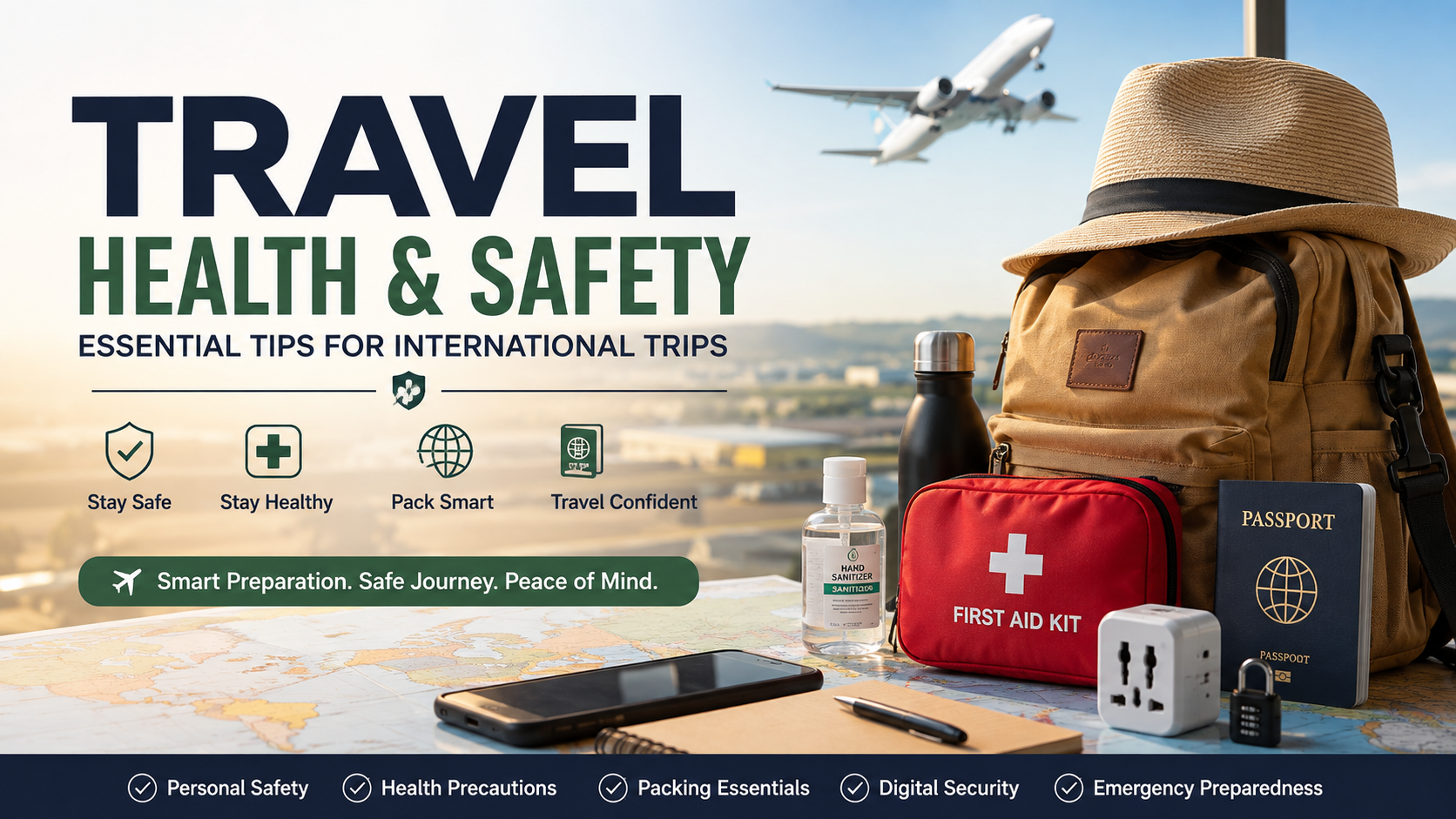
Travel Health and Safety: Essential Tips for International Trips
Planning an adventure abroad is an exciting milestone, but prioritizing your well-being requires proper preparation. When stepping outside your home country, understanding travel health and safety can mean the difference between a dream vacation and an absolute disaster. Navigating unfamiliar cultures, transportation systems, and healthcare environments demands a proactive approach. According to the Centers for Disease Control and Prevention, preparation before departure significantly reduces health risks abroad.
This guide answers critical questions regarding travel health and safety, covering security protocols, packing essentials, and expert methodologies to keep you secure. Mastering travel health and safety ensures you stay protected from takeoff to touchdown.
What are the safety tips for international travel?
Ensuring personal security while exploring foreign destinations requires situational awareness, preparation, and good judgment. Staying alert can reduce your exposure to petty crime, scams, and unexpected emergencies. When checking into your accommodation after a long flight, consulting a reliable hotel room cleaning checklist for travelers ensures your temporary living space is hygienic and secure before you settle in.
Research your destination before departure. Check neighborhood safety information and identify areas that may be risky after dark. Avoid walking alone in poorly lit or isolated areas at night. Keep digital copies of your passport and identification separate from the originals. Store your passport securely when local rules allow it, but carry it when legally required.
Blend in with the local environment by avoiding flashy jewelry and expensive electronics. Stay especially alert in crowded tourist areas, airports, train stations, and public transportation hubs. These locations can attract pickpockets and distraction thieves.
Trust your instincts if a situation feels unsafe. Leave the area and move toward a busy public place, hotel, police station, or reputable business. Having a basic safety plan makes it easier to respond calmly when problems occur.
Protecting Your Valuables and Digital Data Abroad
Protecting your belongings and personal information is an important part of international travel safety. Carry only the valuables you need each day. A secure cross-body bag or money belt can help keep your passport, cards, and cash close to you. RFID-blocking products may reduce certain types of unauthorized card scanning, but they should not replace normal precautions.
Avoid connecting to unsecured public Wi-Fi when accessing banking, shopping, or other sensitive accounts. If you must use public networks, use a reputable VPN and enable multi-factor authentication on important accounts. Cellular data or a trusted personal hotspot can be safer alternatives.
Back up important documents before leaving home. Store copies of your passport, visa, insurance details, prescriptions, and emergency contacts in secure cloud storage. Keep offline copies on your phone as well.
Use strong device passwords and enable remote tracking or wiping. These steps can limit the damage if your phone, laptop, or luggage is lost or stolen.
What Are the 10 Essential Travel Items?
Packing strategically helps you stay comfortable, healthy, and prepared during international trips. Focus on items that solve common problems rather than filling your luggage with unnecessary extras.
A universal power adapter is essential when traveling between countries with different electrical outlets. A compact first-aid kit can handle minor problems such as cuts, blisters, and headaches. Include adhesive bandages, antiseptic wipes, and suitable pain relievers.
A reusable water bottle can help you stay hydrated, but check local water safety before drinking from untreated sources. A filtered bottle can provide an additional layer of protection where appropriate. If you are preparing for situations where clean water may not be readily available, learning about water storage and purification methods for survival can provide additional practical knowledge.
Other useful items include:
- A lightweight rain jacket
- Comfortable walking shoes
- A portable power bank
- Prescription medications in original containers
- Wet wipes and tissues
- A compact microfiber towel
- A small travel lock
Your exact packing list should depend on the destination, climate, activities, and trip length. Check airline rules before packing batteries, medications, liquids, or other restricted items.
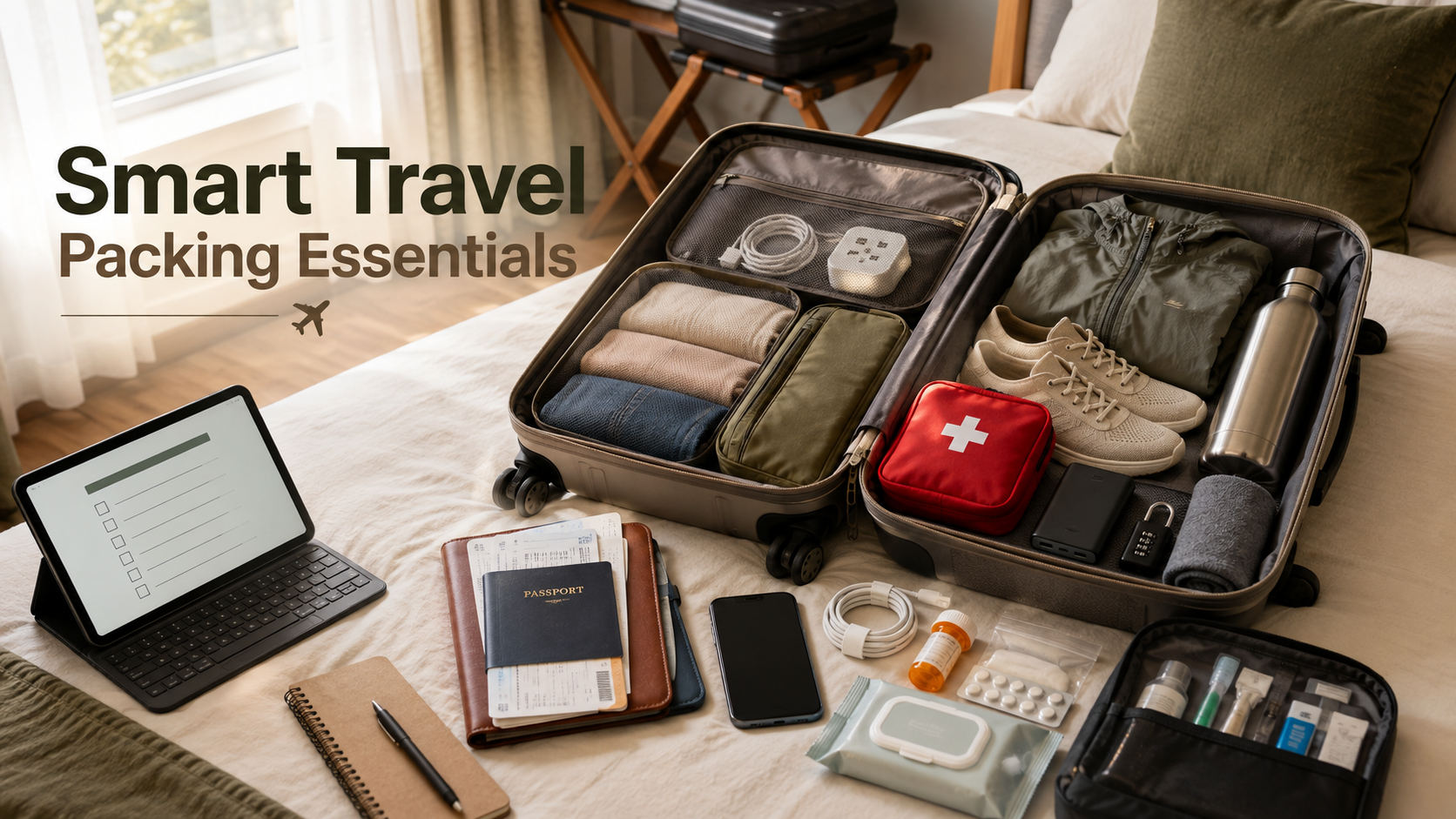
Packing Smartly for Maximum Mobility and Efficiency
Efficient packing makes international travel easier, especially when you move between airports, trains, hotels, and city streets. The goal is not simply to carry less. It is to keep essential items accessible while avoiding unnecessary weight.
Packing cubes can separate clothing, accessories, and personal items. They also make it easier to find specific belongings without unpacking your entire bag. Choose lightweight luggage with durable wheels if your itinerary involves frequent transfers.
Technology can also make travel easier. For example, travelers who rely on tablets for navigation, entertainment, or work may want to consider how long Android tablets last and what users say about their lifespan before depending on an older device during a long trip.
Similarly, travelers carrying Apple devices can explore iPad accessories cheaper than Apple to find potentially more affordable options for charging, protection, and everyday use.
Always keep your most important items in your carry-on. Pack essential medications, travel documents, valuables, electronics, chargers, and at least one change of clothes there. Checked luggage can be delayed, misplaced, or damaged during connections.
Keep a small emergency kit within easy reach. Include basic toiletries, necessary medication, charging cables, and important contact information.
Before leaving, review your itinerary and remove items you are unlikely to use. A lighter bag gives you more mobility and reduces physical strain. It also makes public transportation and walking between accommodations much easier.
What Are 10 Safety Tips?
Simple daily habits can significantly improve travel safety abroad. Start by avoiding unsolicited transportation offers at airports, stations, and tourist areas. Use official taxi stands or reputable rideshare services where available. Verify the vehicle and driver details before getting inside.
Keep emergency numbers saved on your phone and written on a physical card. Include your country’s embassy or consulate, travel insurer, accommodation, and trusted contacts.
Never leave food or drinks unattended in bars, clubs, or restaurants. If you lose sight of a drink, consider replacing it rather than taking unnecessary risks.
Stay informed about local conditions. Follow reliable government or local authority updates during severe weather, demonstrations, transportation disruptions, or other emergencies.
Ten practical habits include:
- Research your destination.
- Avoid isolated areas at night.
- Protect your passport and money.
- Use official transportation.
- Keep emergency contacts accessible.
- Secure your phone and accounts.
- Avoid displaying expensive belongings.
- Watch your food and drinks.
- Monitor local safety alerts.
- Trust your instincts when something feels wrong.

Maintaining Situational Awareness in Crowded Areas
Crowded tourist attractions, markets, airports, and public transportation systems can create opportunities for pickpockets and distraction theft. Staying aware of your surroundings is therefore one of the simplest international travel safety tips.
Keep your phone secure when walking through busy areas. Avoid becoming completely absorbed in navigation apps, messages, or photographs. If you need to check directions, step into a secure location such as a café, hotel lobby, or shop.
Keep bags closed and positioned where you can see them. In crowded areas, consider wearing a cross-body bag in front of your body. Avoid placing wallets or phones in easily accessible back pockets.
Pay attention when strangers create unusual distractions. Someone asking unnecessary questions, bumping into you, or creating confusion may be attempting to separate you from your belongings.
When using public transportation, keep luggage within sight. Avoid leaving phones, passports, or wallets unattended on seats or tables. A few simple habits can make crowded environments considerably safer.
What Are Your Top 10 Travel Tips?
Successful international travel depends on preparation as much as spontaneity. Start by checking your payment methods before departure. Notify your card issuer when necessary and confirm that your cards work internationally. Carry a backup payment method in case your primary card is lost or blocked.
Learn a few basic phrases in the local language. Words such as hello, thank you, excuse me, and help can make everyday communication easier. They can also help during emergencies.
Download offline maps and translation tools before leaving home. These resources remain useful when mobile data or Wi-Fi is unavailable.
Book important accommodations and transportation early when your destination has limited availability. Keep confirmation details accessible both online and offline.
Carry some local currency for small purchases, transportation, markets, or businesses that do not accept cards. Avoid carrying large amounts of cash.
If you are planning a longer trip or considering making travel a bigger part of your lifestyle, you may also find travelling the world while you’re still young enough to enjoy it useful for broader travel planning and perspective.
Finally, share your basic itinerary with someone you trust. Staying connected without constantly checking in can provide an additional layer of security during your trip.
Overcoming Language Barriers and Cultural Misunderstandings
Respecting local customs can make international travel smoother and reduce avoidable misunderstandings. Before departure, research basic local etiquette, cultural norms, and dress expectations. Requirements can vary significantly between destinations and even between different regions of the same country.
Pay particular attention to religious sites. Some locations may require specific clothing, footwear rules, photography restrictions, or quiet behavior. Understanding these expectations beforehand prevents accidental disrespect.
Religion and culture can also influence how societies understand institutions, economics, and public life. For readers interested in that broader relationship, the importance of religion in political economy provides additional context.
Research common tipping practices and dining customs before arriving. Payment expectations differ between countries, so assumptions based on your home country may cause confusion.
Language barriers can also create challenges. Learn a few useful local phrases and save important translations offline. A translation application can help when ordering food, asking for directions, or explaining a problem.
Use simple language when communicating. Speak clearly rather than loudly, and avoid assuming that everyone speaks English.
Most importantly, observe how locals behave. When unsure about an unfamiliar custom, watching first and asking politely is often safer than making assumptions.
List of Things to Do Before Travelling Overseas
Preparation should begin well before your departure date. Start by checking your passport validity and visa requirements. Many destinations require several months of passport validity, although exact requirements vary by country. Confirm the rules with official government sources before traveling.
Check whether your destination requires visas, entry permits, transit documents, or proof of onward travel. Processing times can vary, so avoid leaving these tasks until the final week.
Review recommended health precautions for your destination. Consult an appropriate healthcare professional about vaccinations, medications, and other travel health requirements. Carry necessary prescriptions in their original containers.
Consider purchasing comprehensive travel insurance. Look for coverage that matches your needs, including emergency medical treatment, evacuation, cancellation, and baggage problems.
Before departure, create secure copies of important documents. Include your passport, visa, insurance information, reservations, and emergency contacts. Share your itinerary with a trusted person at home.
Also check your phone plan, payment cards, weather conditions, transportation options, and accommodation details. A structured checklist can prevent small administrative problems from becoming major travel disruptions.
Finalizing Administrative and Medical Checklists
The final weeks before departure are the right time to review your travel documents, medical preparations, and emergency plans. Confirm that your passport and visa meet your destination’s entry requirements. Requirements can change, so verify them through official sources shortly before departure.
Review your health insurance and travel insurance policies. Confirm whether they cover medical treatment overseas, emergency evacuation, trip interruption, and other situations relevant to your trip.
Organize physical copies of essential documents in a secure travel folder. Keep digital copies in protected cloud storage as a backup. Important documents may include your passport, visa, insurance policy, flight details, hotel reservations, prescriptions, and emergency contacts.
Check your medication supply before leaving. Carry enough for the trip and account for possible delays. Keep medicines in their original packaging and check destination-specific restrictions when necessary.
Finally, review your emergency plan. Know how to contact local emergency services, your accommodation, your insurer, and your country’s diplomatic representatives.
Completing these checks early reduces last-minute stress. It also gives you more time to fix problems before you leave home.
Additional Considerations for Modern Travelers
Travelers today may also need to think about technology, finances, employment, and personal circumstances before taking an extended trip.
For example, understanding the difference between freelance and full-time careers can be useful for people who want more flexibility to work while traveling. Before making such a decision, consider income stability, insurance, taxes, work obligations, and reliable internet access.
Financial planning matters as well. Creating a clear distinction between needs and wants when spending money can help travelers control unnecessary expenses and preserve money for emergencies.
Technology is another consideration. Travelers interested in emerging technologies may encounter autonomous machines and service robots in airports, hotels, and other public environments. Understanding humanoid robots, their technology, uses, and future can provide useful context as these systems become more visible in everyday life.
Similarly, developments in security-focused technology, including hardware-rooted AI architecture and security, demonstrate how modern devices and systems are increasingly designed around security and trusted hardware.
FAQ
Do I really need travel insurance for an international trip?
Yes, purchasing comprehensive travel insurance is strongly recommended for every international journey you take. Standard domestic health insurance policies rarely cover medical expenses incurred overseas, leaving you vulnerable to significant out-of-pocket costs if an accident or illness occurs. Furthermore, travel insurance protects your financial investment against unexpected trip cancellations, severe weather delays, and lost luggage mishaps.
What should I do if my passport is stolen abroad?
If your passport is stolen while traveling internationally, you must immediately report the theft to local police authorities to obtain an official report. Next, contact your home country’s nearest embassy or consulate to begin the emergency passport replacement process. Having digital copies of your passport stored securely in cloud storage will help with the replacement verification procedure.
How can I avoid high international roaming fees?
You can avoid expensive international roaming charges by unlocking your phone before departure and purchasing a local prepaid SIM card upon arrival. Alternatively, many modern smartphones support digital eSIM technology, allowing you to download an international data plan before you even leave home. Utilizing offline maps and messaging apps also minimizes your reliance on active cellular data while exploring foreign cities.
Are vaccinations mandatory for international travel?
Vaccination requirements vary entirely based on your specific destination country, your medical history, and current global health advisories. Some nations require proof of specific vaccinations before granting entry. Always consult official government travel health websites weeks before your departure to confirm mandatory immunizations and recommended preventative medications.
What if travel plans involve family or relationship concerns?
International travel can sometimes involve complicated personal circumstances, including relationships, family responsibilities, or major life decisions. People with specific personal histories may find resources such as love and marriage for people who have been in prison relevant when considering relationships, communication, and life changes after incarceration.
Can travel preparation support a healthier lifestyle?
Yes. Regular movement, sensible food choices, adequate hydration, sleep, and stress management can all contribute to a healthier trip. Travelers looking for broader wellness guidance can explore these inspiring ways to live a healthy lifestyle.
What technology should I consider taking on a trip?
The right technology depends on your destination and travel needs. A reliable smartphone, power bank, charging accessories, and possibly a tablet or laptop can be useful. Travelers who prefer simple communication devices may also be interested in developments such as the Nokia 123 Shield feature phone from HMD.
Conclusion
Mastering travel health and safety requires a balance of excitement, careful planning, and rigorous attention to personal well-being. By internalizing these key travel health and safety principles, you protect yourself against unforeseen risks and maximize your enjoyment abroad. Maintaining constant focus on travel health and safety ensures that potential hazards are managed effectively throughout your entire journey. From securing comprehensive insurance and packing smart items to learning proper water storage and purification methods for safe hydration across foreign regions, every proactive step counts.
Travel preparation can also extend beyond immediate safety, reinforcing why global travel health and safety is so vital. Managing your spending, choosing appropriate technology, understanding local culture, and planning your lifestyle around travel can make longer-term adventures more practical. Take these strategies to heart, prioritize your health and security, and step out into the world with confidence. Your ongoing commitment to travel health and safety can help make every single journey much safer, smoother, and far more memorable.