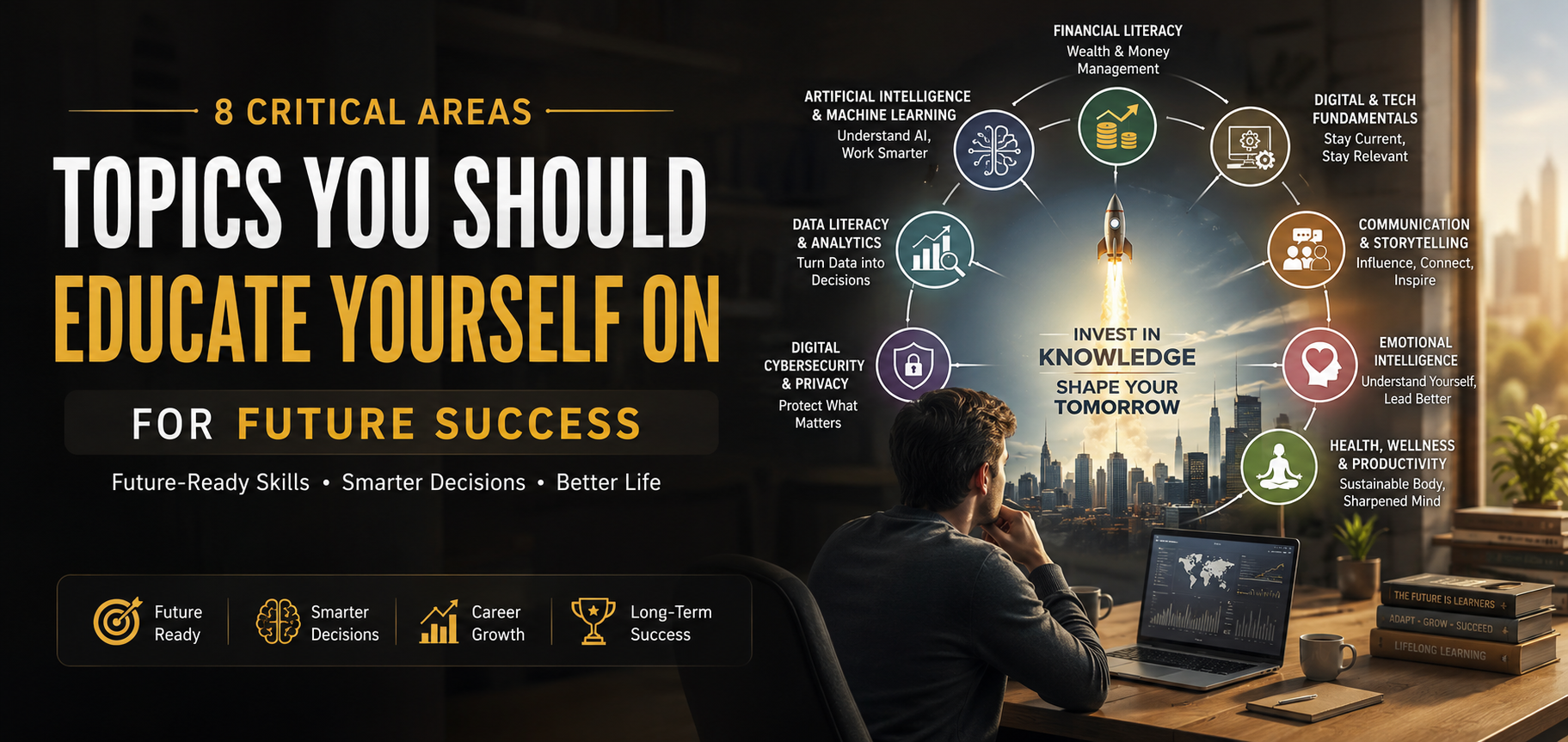
Topics You Should Educate Yourself On: 8 Critical Areas for Future Success
The modern professional landscape is shifting at an unprecedented pace, driven by rapid technological advancements and changing economic paradigms. Therefore, to stay competitive, resilient, and adaptive, there are several foundational topics you should educate yourself on to safeguard your personal and professional future. Continuous learning is no longer just a commendable habit; consequently, it has become a core necessity for survival in a highly dynamic global market. By intentionally expanding your knowledge base, you can proactively adapt to industry disruptions rather than merely reacting to them when they arrive.
Understanding these pivotal subjects allows you to make highly informed decisions about your career, personal finances, and daily well-being. Furthermore, organizations like the World Economic Forum consistently emphasize that cognitive flexibility, complex problem-solving, and lifelong learning are the most critical skills for the modern workforce. In this comprehensive guide, we will break down eight essential domains that demand your immediate attention. From technological literacy to emotional intelligence, mastering these areas will provide you with a significant competitive edge and a clearer path forward. As a result, taking the time to study these subjects deeply will transform how you perceive opportunities and manage unexpected global changes.
1. Artificial Intelligence and Machine Learning
Artificial intelligence (AI) is fundamentally transforming how we work, communicate, and solve complex problems across every major sector. Thus, understanding the basics of machine learning, neural networks, and generative AI tools is no longer reserved strictly for software engineers or data scientists. To remain relevant in your career, you must learn how to collaborate effectively with AI systems rather than fearing potential job replacement. For example, this evolution involves understanding prompt engineering, recognizing automation trends, and identifying how AI can optimize your daily workflows for maximum efficiency.
Furthermore, integrating AI into your routine allows you to offload repetitive tasks and focus heavily on high-level strategic thinking. Consequently, professionals who master the interface between human creativity and machine intelligence will naturally lead their respective industries. You should focus on how these technologies process information and how they can be applied ethically within your business domain. Meanwhile, staying ahead of this technological curve ensures you remain an asset to any forward-thinking organization.
2. Financial Literacy and Advanced Wealth Management
Traditional savings accounts and basic budgeting methods are no longer sufficient to secure your long-term financial freedom in today’s economy. Instead, investigating the foundational topics you should educate yourself on must include modern investment vehicles, complex tax strategies, and global macroeconomic trends. You should deeply understand the mechanics of compounding interest, index funds, real estate investment trusts, and strategic asset diversification. Moreover, tracking global inflation and monetary policy changes will help you shield your hard-earned capital from sudden market volatility.
Indeed, true financial literacy requires a shift from a scarcity mindset to an investment mindset, focusing on building sustainable passive income streams. By mastering these concepts, you learn how to make your money work efficiently for you over extended periods. Similarly, understanding tax laws can save you significant capital, which you can then reinvest back into high-growth assets. Therefore, securing your financial future demands consistent research, disciplined asset management, and an ongoing understanding of changing financial markets.
3. Data Literacy and Analytics
Data is the definitive currency of the modern digital economy, influencing everything from corporate strategy to political campaigns. Whether you work in marketing, healthcare, engineering, or education, the ability to read, analyze, and argue with data is immensely valuable. Specifically, this is one of the most practical topics you should educate yourself on to improve your analytical capabilities. You must understand how to look at complex data sets and extract meaningful patterns that can drive organizational growth. Businesses worldwide are actively seeking professionals who can confidently interpret metrics and translate them into actionable operational adjustments.
Core Data Skills to Acquire
-
Data Visualization: Learn to translate complex raw numbers into clear, accessible charts and graphs for stakeholders.
-
Statistical Thinking: Understand how to spot structural biases, logical anomalies, and common errors in corporate reports.
-
Predictive Analysis: Learn how historical data trends can accurately forecast future customer behaviors and market demands.
Consequently, professionals who can comfortably bridge the gap between raw numbers and human strategy will always remain in high demand. Developing this skill set allows you to back up your business proposals with objective, undeniable facts rather than mere intuition. Thus, data mastery inherently enhances your professional credibility.
4. Digital Cybersecurity and Privacy
As our personal and professional lives move entirely online, digital security has quickly become a paramount global concern. Therefore, regarding the core topics you should educate yourself on, digital self-defense is absolutely non-negotiable. Understanding how to protect your digital footprint is vital for safeguarding your personal identity, private financial records, and proprietary corporate data. You should educate yourself on the core principles of zero-trust architecture, multi-factor authentication, and sophisticated end-to-end encrypted communications. Recognizing advanced phishing attempts, malware distribution tactics, and social engineering traps can easily prevent catastrophic financial and data breaches.
Moreover, as remote work remains highly prevalent, securing your home network and personal devices is an absolute necessity. Because of this, organizations are increasingly holding individual employees accountable for data hygiene and compliance with international privacy laws. By understanding how hackers exploit digital vulnerabilities, you can build an ironclad perimeter around your online presence. In conclusion, protecting your data preserves your digital autonomy and ensures long-term security in an interconnected world.
5. Emotional Intelligence and Adaptive Leadership
While technical skills might land you an initial interview, high emotional intelligence (EQ) secures long-term leadership success and career longevity. Thus, emotional literacy involves developing profound self-awareness, active empathy, and the unique ability to navigate complex social dynamics smoothly under immense pressure. As modern workplaces become more decentralized, remote, and culturally diverse, leaders must connect deeply with teams across various geographical regions. Therefore, developing strong EQ enables you to manage personal stress, resolve interpersonal conflicts constructively, and inspire peak performance in others.
Furthermore, adaptive leadership requires you to listen actively and validate the diverse perspectives of your team members. As a result, this collaborative approach fosters a corporate culture of psychological safety, which directly boosts innovation and employee retention rates. Leaders who lack emotional intelligence often struggle with team cohesion and suffer from high turnover rates within their departments. In contrast, investing time into understanding human psychology and communication strategies will dramatically elevate your managerial capabilities.
6. Sustainable Living and Environmental Literacy
Climate change, resource scarcity, and shifting geopolitical dynamics are rapidly reshaping global regulations, corporate supply chains, and consumer behaviors. Thus, sustainability principles represent major topics you should educate yourself on if you wish to remain relevant in modern enterprise. You must understand how environmental changes impact global trade, resource allocation, and government compliance policies across various industries worldwide. For this reason, consumers are increasingly demanding transparency, actively favoring brands that demonstrate genuine environmental responsibility and ethical sourcing practices.
Key Aspects of Sustainability Education
-
Circular Economy: Learn how waste reduction, recycling, and sustainable product design drive modern business efficiency.
-
Carbon Footprint Awareness: Understand how regulatory carbon taxes affect global manufacturing costs and product pricing.
-
Renewable Energy Systems: Study how solar, wind, and hydrogen technologies are actively replacing traditional fossil fuels.
Ultimately, environmental literacy empowers you to anticipate green regulations and implement sustainable practices within your current career field. Consequently, embracing eco-friendly innovation helps future-proof businesses against resource depletion and aligns your professional endeavors with global conservation goals.
7. Health Optimization and Biohacking
The future of healthcare is moving rapidly away from reactive treatment toward proactive prevention and cellular optimization. For that reason, physical well-being stands out among the vital topics you should educate yourself on for sustainable productivity. Educating yourself on personalized nutrition, sleep architecture, circadian biology, and preventative medicine can drastically extend both your lifespan and healthspan. Understanding how chronic stress and poor lifestyle choices impact your long-term cellular health allows you to make better daily adjustments. Meanwhile, investing time into researching longevity science ensures you maintain peak cognitive function and high physical performance as you age.
Furthermore, biohacking involves using scientific data to tweak your environment and biology for enhanced physical and mental output. For instance, this approach includes tracking biomarkers, optimizing your microbiome, and managing cognitive load through mindfulness and deliberate recovery strategies. By taking full ownership of your physical health, you reduce the long-term risk of burnout and chronic illness. Therefore, a healthy body serves as the vital foundation for achieving all your professional and personal ambitions.
8. Critical Thinking and Media Literacy
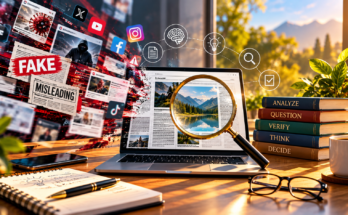
We live in an era of unprecedented information overload, which frequently makes objective truth incredibly difficult to discern online. Because of this reality, sharp critical thinking skills are absolutely vital to filter out widespread misinformation, sensationalized news, and personal confirmation bias. You must learn to analyze information sources objectively, question foundational assumptions, and evaluate scientific evidence carefully before forming firm opinions. This rigorous mental discipline protects you from cognitive manipulation and empowers you to make rational, independent decisions in daily life.
Additionally, media literacy helps you understand the underlying motives and algorithmic structures behind the content you consume daily. By recognizing how digital platforms profit from emotional outrage, you can consciously choose to engage with media more mindfully. Moreover, this intellectual resilience is highly valuable in business environments where biased data can lead to expensive strategic mistakes. In short, cultivating an objective, analytical mind ensures you remain grounded, logical, and deeply informed amidst digital noise.
FAQ Section
What are the most important topics you should educate yourself on today to remain competitive?
The most critical topics you should educate yourself on include artificial intelligence, advanced financial management, data literacy, and cybersecurity. Additionally, focusing on emotional intelligence, sustainable living, and health optimization ensures a holistic approach to personal growth. Prioritizing these diverse areas helps you build a resilient, future-proof skill set that adapts smoothly to sudden global market shifts.
By dedicating time to these subjects, you cultivate both technical proficiency and emotional maturity, which are highly valued in modern workplaces. Consequently, this comprehensive educational foundation allows you to solve complex problems, protect your personal assets, and lead teams effectively. Ultimately, staying informed about these domains guarantees you remain a highly relevant, deeply capable professional in an increasingly automated world.
How does learning about artificial intelligence benefit non-technical professionals in their daily careers?
AI literacy helps non-technical professionals automate routine tasks, streamline workflows, and make highly accurate, data-driven decisions. By understanding what machine learning algorithms can achieve, you can use generative tools to write content, analyze financial reports, or manage complex projects more efficiently. Therefore, this strategic knowledge keeps you highly competitive and prevents your skills from becoming obsolete in an evolving job market.
Furthermore, understanding AI allows you to bridge the communication gap between technical development teams and corporate stakeholders. As a result, you can identify unique ways to integrate automation into your current department, driving efficiency and reducing operational overhead. Embracing AI tools transforms you into an innovative leader who knows how to leverage technology for business growth.
Why is data literacy considered an essential skill for the future across all business sectors?
Data literacy is essential because modern corporations rely heavily on empirical data to drive their core growth strategies. Understanding how to interpret analytics allows you to contribute meaningfully to corporate goals and back up your ideas with concrete facts. Thus, it transforms you from a passive observer into a highly strategic asset for any forward-thinking team or organization.
When you can confidently read and interpret data patterns, you minimize the risk of making costly business mistakes based on pure guesswork. For example, you can accurately measure project success, optimize marketing campaigns, and identify hidden operational inefficiencies with ease. In a world driven by digital information, data literacy serves as the ultimate tool for achieving professional clarity and influence.
What is the quickest and most effective way to improve my personal financial literacy?
The fastest way to improve financial literacy is by reading foundational investment books and taking structured online financial courses. Start by mastering basic budgeting, understanding tax dynamics, studying asset allocation models, and learning how low-cost index funds operate. Consistent, incremental learning combined with practical application yields massive long-term financial confidence and wealth accumulation over your lifetime.
Additionally, tracking macroeconomic factors like inflation, interest rates, and stock market trends helps you make highly informed purchasing and investing decisions. Consequently, consulting with certified financial planners and using wealth management tools can further refine your strategy. Developing this financial acumen ensures that your hard-earned income is consistently working to secure your long-term independence.
How can I develop better critical thinking skills to combat daily online misinformation?
You can develop critical thinking by actively questioning information sources, checking facts thoroughly, and seeking out opposing viewpoints. Avoid accepting emotional headlines at face value and analyze the underlying empirical evidence, logical consistency, and potential motives instead. Practicing this cognitive discipline daily sharpens your logic, reduces confirmation bias, and improves your overall decision-making accuracy.
It is also beneficial to study common logical fallacies so you can easily spot weak arguments in media reports or corporate presentations. Meanwhile, taking a deliberate pause before sharing information online helps prevent the spread of sensationalized or inaccurate data. Cultivating this analytical mindset protects your mental clarity and allows you to form independent, well-reasoned conclusions.
Conclusion
Committing to continuous learning is the single best investment you can make for your personal and professional future. The various topics you should educate yourself on—ranging from artificial intelligence to financial literacy—serve as a powerful roadmap for navigating the complexities of the modern world. Embracing these subjects ensures you remain highly versatile, deeply knowledgeable, and thoroughly prepared for sudden, unpredictable market shifts. As industries evolve, individuals who prioritize expanding their intellectual horizons will naturally secure the best career opportunities.
Ultimately, true security lies not in what you currently know, but in your ongoing ability to learn, unlearn, and relearn continuously. Take proactive control of your personal growth journey today by picking one specific focus area from this list and diving into it deeply. If you’re looking for an easy way to keep learning on the go, explore these best educational podcasts to expand your knowledge and stay informed. As you build expertise across these diverse domains, you will experience greater confidence, adaptability, and professional value. The commitment you make to education today will directly shape your prosperity, stability, and leadership capabilities tomorrow.