
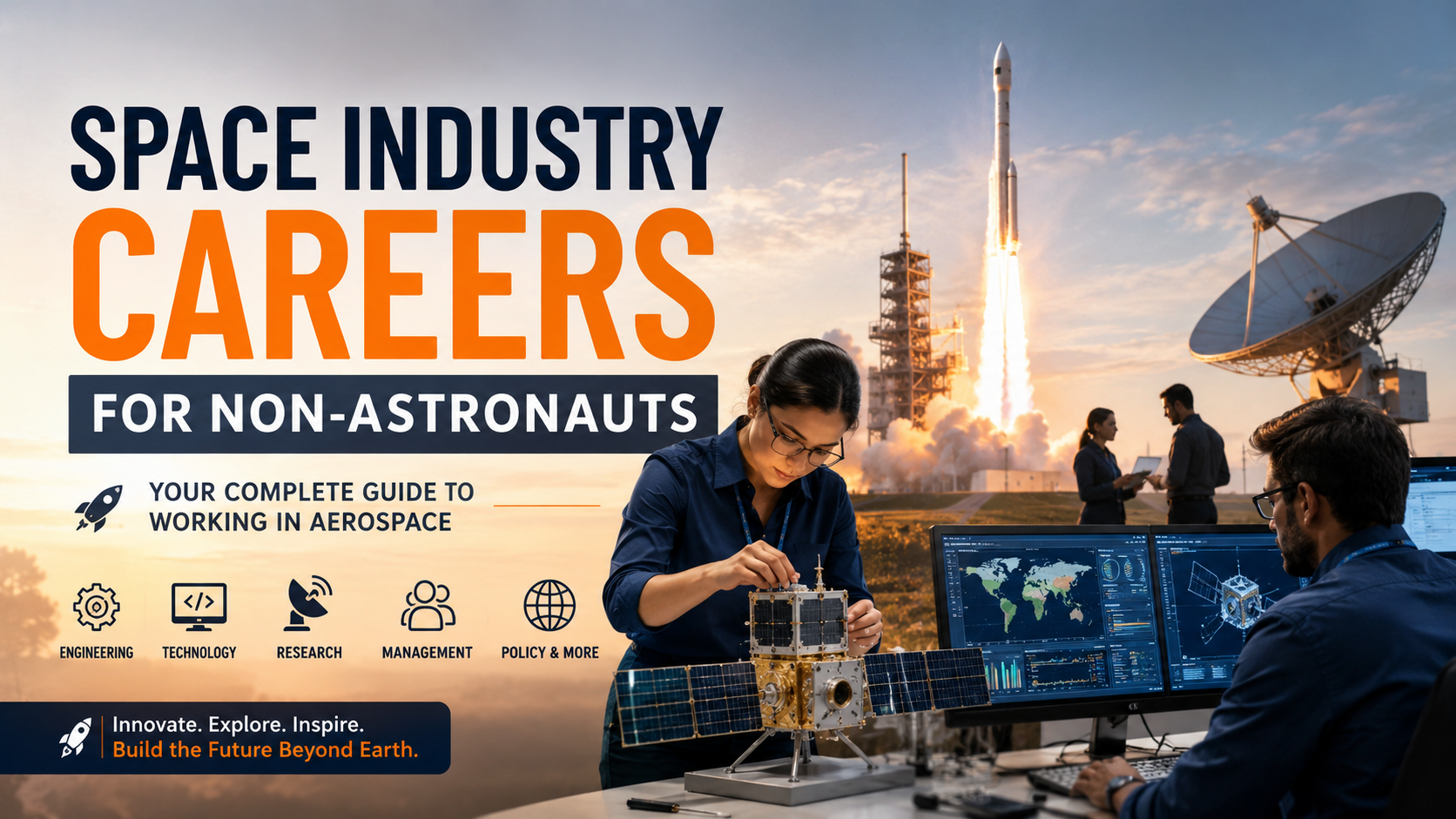
Space Industry Careers for Non-Astronauts: Your Complete Guide to Working in Aerospace
Dreaming of working in the cosmos without stepping foot inside a rocket? The truth is that space industry careers for non-astronauts make up over 99 percent of the entire aerospace workforce. Behind every successful rocket launch or planetary rover landing stands a massive team of engineers, data scientists, project managers, and policy makers. According to the National Aeronautics and Space Administration, diverse talents drive modern space exploration forward every single day. This comprehensive guide explores vital NASA positions, global trends, opportunities for graduates from premier institutions like the Indian Institutes of Technology, local Indian aerospace paths, and salary expectations to help you chart your professional journey.
What jobs are there in NASA that aren’t astronauts?
NASA offers thousands of rewarding careers that do not involve traveling to space. In fact, the majority of NASA employees work on Earth, supporting missions through engineering, research, operations, technology, and administration. These professionals make every launch, satellite mission, and scientific discovery possible. If you’re exploring space industry careers for non astronauts, NASA provides opportunities for people with technical and non-technical backgrounds alike.
Aerospace engineers design spacecraft, propulsion systems, and advanced flight technologies. Computer scientists develop software for autonomous navigation, artificial intelligence, and mission data processing. Project managers coordinate complex programs, while financial analysts ensure billion-dollar missions remain on schedule and within budget. NASA also employs public affairs specialists, communications experts, human resources professionals, and legal advisors who keep the organization running efficiently. Meanwhile, astrobiologists, planetary scientists, and materials researchers conduct laboratory studies that support future exploration. Every successful mission depends on these highly skilled professionals working together behind the scenes.
Essential Ground Support and Research Roles
Ground support and research teams play a critical role in every NASA mission. These professionals monitor spacecraft health, analyze mission data, and solve technical problems without leaving Earth. During launches and orbital operations, specialists continuously track telemetry, evaluate system performance, and respond to unexpected issues in real time.
Materials scientists test advanced metals and composite materials under extreme temperatures and pressure. Quality assurance engineers inspect mission hardware before launch to ensure reliability. Mission control specialists oversee spacecraft operations and communicate with astronauts when required. Researchers also improve propulsion systems, robotics, and scientific instruments for future missions. Their detailed testing and analysis reduce mission risks and increase the chances of long-term success. These essential positions demonstrate that many exciting space industry careers for non astronauts exist entirely on the ground.
What career is Gen Z most interested in?
Generation Z increasingly prefers careers that combine advanced technology with meaningful social and environmental impact. Many young professionals are drawn to the space sector because it offers innovation, sustainability, and opportunities to solve global challenges. As commercial space companies continue expanding, space industry careers for non astronauts have become more attractive than ever.
Popular career choices include space data analytics, satellite technology, Earth observation, and artificial intelligence for aerospace applications. Other growing fields include commercial space tourism, sustainable propulsion engineering, and orbital debris management. Gen Z also values flexible work environments, continuous learning, and careers that contribute to scientific progress. They want to develop technologies that improve life on Earth while supporting future exploration of the Moon, Mars, and beyond. This combination of innovation, purpose, and career growth makes the modern space industry especially appealing to younger generations.
Sustainable Aerospace and Climate Tech Focus
Environmental sustainability has become a major driver for young aerospace professionals. Many graduates pursue careers involving Earth observation satellites, climate research, and environmental monitoring. These satellite systems provide valuable information about forests, oceans, weather patterns, and greenhouse gas emissions.
By combining environmental science, data analytics, and aerospace engineering, professionals help governments and researchers make informed decisions about climate change. Engineers also develop cleaner propulsion technologies and more efficient spacecraft to reduce the environmental impact of future missions. This blend of innovation and sustainability strongly aligns with Gen Z values. As global demand for climate data continues to grow, these roles represent some of the fastest-growing space industry careers for non astronauts.
What are some careers in the space industry?
Today’s space industry offers far more opportunities than becoming an astronaut. The growing commercial space economy requires professionals from engineering, business, science, technology, healthcare, and law. Whether you enjoy designing spacecraft or managing international projects, there are numerous space industry careers for non astronauts available across both public agencies and private companies.
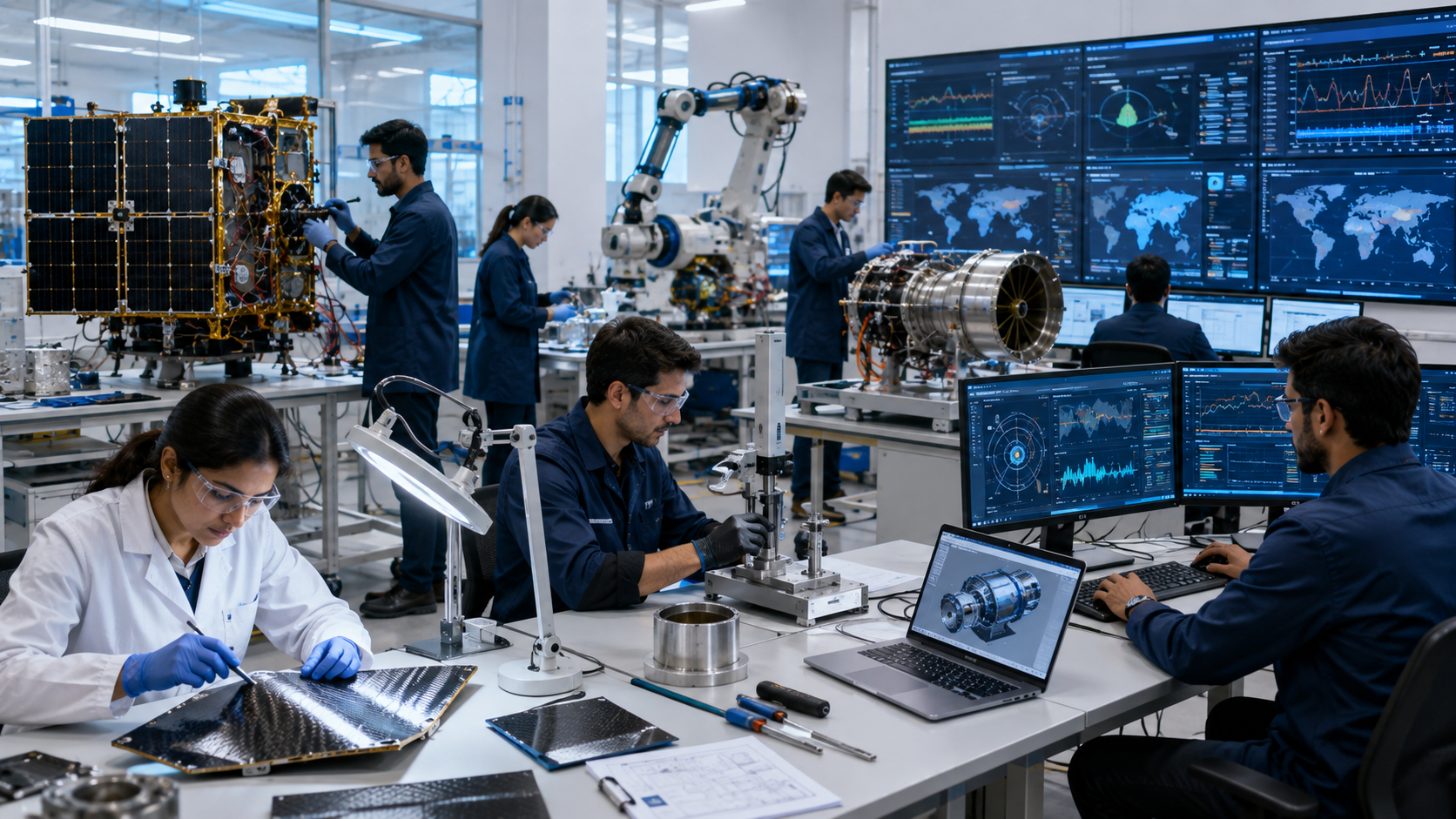
Some of the most in-demand roles include:
- Satellite communications engineers
- Software developers
- Data scientists
- Systems engineers
- Mission planners
- Aerospace lawyers
- Business development managers
- Supply chain specialists
- Cybersecurity professionals
- Technical writers
- Life support systems engineers
- Research scientists
These professionals develop satellites, negotiate launch contracts, improve mission safety, manage global communications networks, and create technologies that support future lunar and Martian missions. The industry’s rapid growth continues to create opportunities across technical and non-technical disciplines.
Specialized Fields in Commercial Aerospace
Commercial aerospace companies require highly specialized professionals to improve launch efficiency and reduce mission costs. Orbital mechanics experts calculate spacecraft trajectories, while propulsion engineers design engines for reusable launch vehicles. Their work directly supports the growing demand for affordable access to space.
Other specialists focus on spacecraft manufacturing, robotics, avionics, satellite integration, and launch operations. Engineers also develop reusable rocket technologies that reduce operational expenses and increase launch frequency. As private companies continue expanding satellite constellations and deep-space missions, demand for these specialized roles keeps increasing. These positions represent some of the most exciting space industry careers for non astronauts in today’s global aerospace industry.
Can I go to NASA after IIT?
Graduating from an Indian Institute of Technology (IIT) provides an excellent academic foundation for an international aerospace career. However, it’s important to understand that direct civil service positions at NASA generally require U.S. citizenship because of federal employment regulations. This means most IIT graduates cannot immediately join NASA as government employees.
That said, many IIT alumni successfully collaborate with NASA through universities, research institutions, and aerospace contractors. Graduates often pursue advanced studies before joining organizations such as SpaceX, Blue Origin, Boeing, or research laboratories that work closely with NASA. Within India, ISRO and emerging private space companies also actively recruit talented IIT graduates. Strong skills in mechanical engineering, electrical engineering, computer science, or artificial intelligence make candidates highly competitive worldwide. For ambitious students, this remains one of the most practical pathways toward space industry careers for non astronauts.
Pathways Through International Graduate Programs
Many IIT graduates strengthen their career prospects by earning master’s or doctoral degrees from leading universities such as MIT, Stanford, or other internationally recognized institutions. These universities often collaborate with NASA research centers and major aerospace companies through funded projects and internships.
Graduate programs provide valuable research experience, access to cutting-edge laboratories, and opportunities to build professional networks. Students frequently participate in satellite development, robotics research, planetary science, and advanced aerospace engineering projects. These experiences improve employment prospects with aerospace contractors and commercial space organizations worldwide. Building technical expertise alongside strong professional connections significantly increases the chances of securing rewarding space industry careers for non astronauts.
FAQ SECTION
What educational background is best for a non-astronaut space career?
A degree in aerospace engineering, mechanical engineering, computer science, or physics provides a strong foundation. However, specialized roles also welcome backgrounds in business administration, law, graphic design, and communications. Diverse skill sets ensure that organizations can build comprehensive teams capable of handling both technical and administrative challenges successfully.
Are there non-technical jobs available in aerospace companies?
Yes, commercial space companies require extensive non-technical support to operate efficiently. Essential business functions include human resources, financial auditing, corporate law, marketing, supply chain management, and technical writing. These professionals ensure that large engineering teams have the administrative and financial resources necessary to execute complex missions on schedule.
How does the Indian space sector compare to NASA for job seekers?
NASA operates primarily as a government space agency with strict citizenship requirements for direct civil servant roles. In contrast, India features a hybrid ecosystem combining public agencies like ISRO with vibrant private sector startups. Both environments offer incredible scientific challenges, but Indian private firms often provide faster career progression for young graduates.
Can international students work at NASA after studying in the US?
Direct employment at NASA is legally restricted to U.S. citizens due to national security regulations. However, international students frequently secure employment with NASA contractors, private aerospace corporations, and international research universities. Networking during graduate studies helps foreign nationals find rewarding aerospace careers within compliant commercial frameworks.
Conclusion
Exploring space industry careers for non-astronauts reveals a massive, thriving global ecosystem that extends far beyond flight crews. Whether you dream of building software for Martian rovers, managing launch logistics for private rocket companies, or analyzing satellite climate data, countless pathways exist. Understanding aerodynamic principles—such as why do some rockets not have fins—can even give you a technical edge when designing advanced flight hardware. By leveraging strong academic credentials from institutions like the IITs or tapping into India’s booming private space sector, ambitious professionals can build lucrative and impactful careers. The cosmos is open to everyone willing to apply their unique skills. Take the first step today, update your resume, and start your journey toward an exciting future in the aerospace industry.