
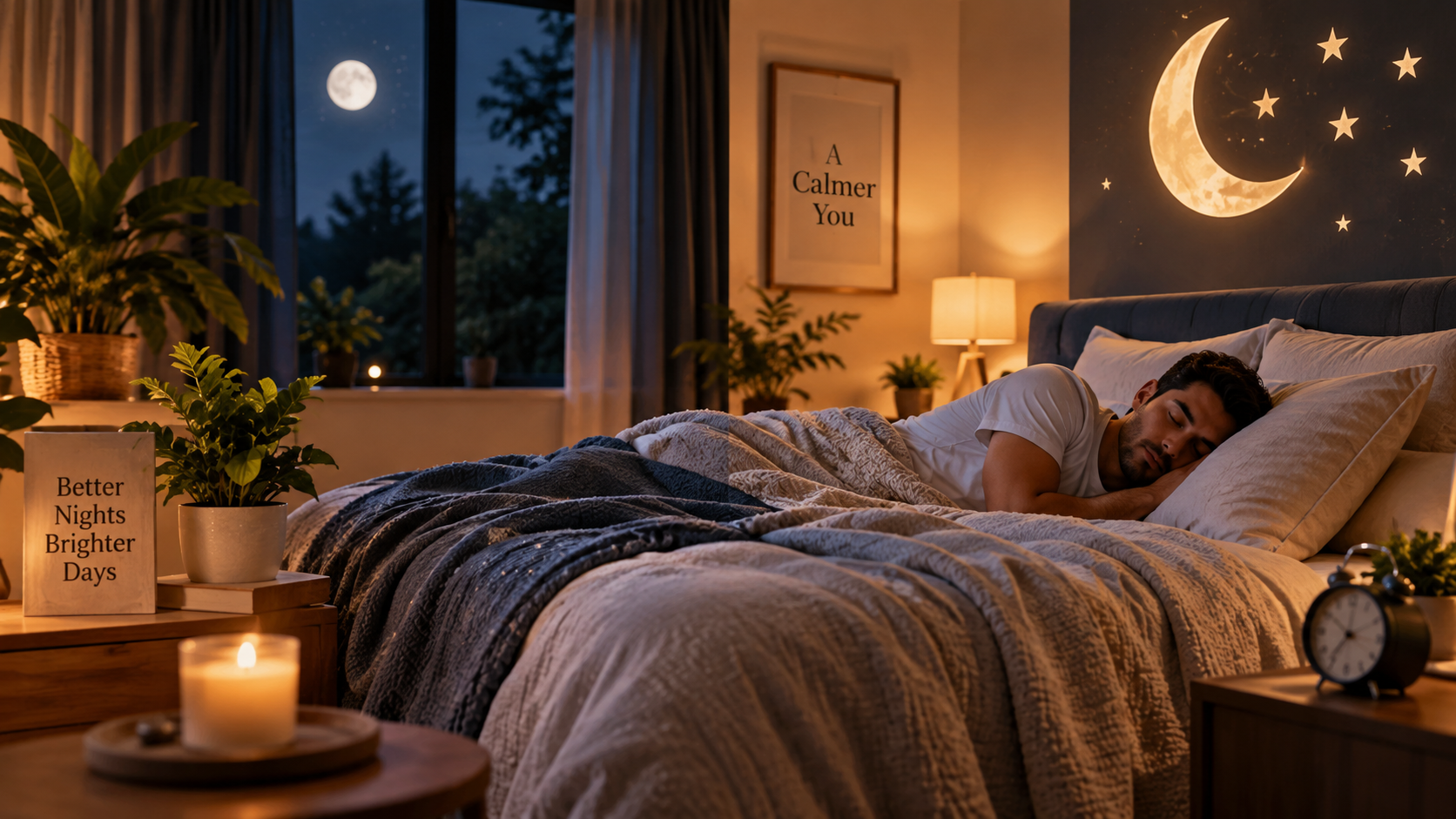
Designing the Ultimate Sleep-Friendly Bedroom Environment
Creating a restful sanctuary starts with understanding how your surroundings affect your nightly rest. A truly sleep-friendly bedroom environment reduces common sleep disruptors, such as street noise, artificial light, excess heat, and uncomfortable bedding. The CDC’s sleep guidance recommends keeping the bedroom dark, quiet, cool, and comfortable to support better sleep.
Many people toss and turn without realizing their bedroom may work against them. An uncomfortable mattress, cluttered surfaces, bright lights, or late-night screen use can make relaxation harder. Small environmental changes can create stronger cues that it is time to unwind.
This guide explores the key features of a healthy sleep space. You will learn what makes a bedroom sleep-friendly and how the popular 3-3-3 sleep rule may structure your evening routine. The Sleep Foundation’s bedroom environment guide also highlights factors such as temperature, noise, light, bedding, and bedroom comfort. We will also examine calming bedroom colors, room conditions, humidity, and the traditional Egyptian sleeping method.

What is a sleep-friendly environment?
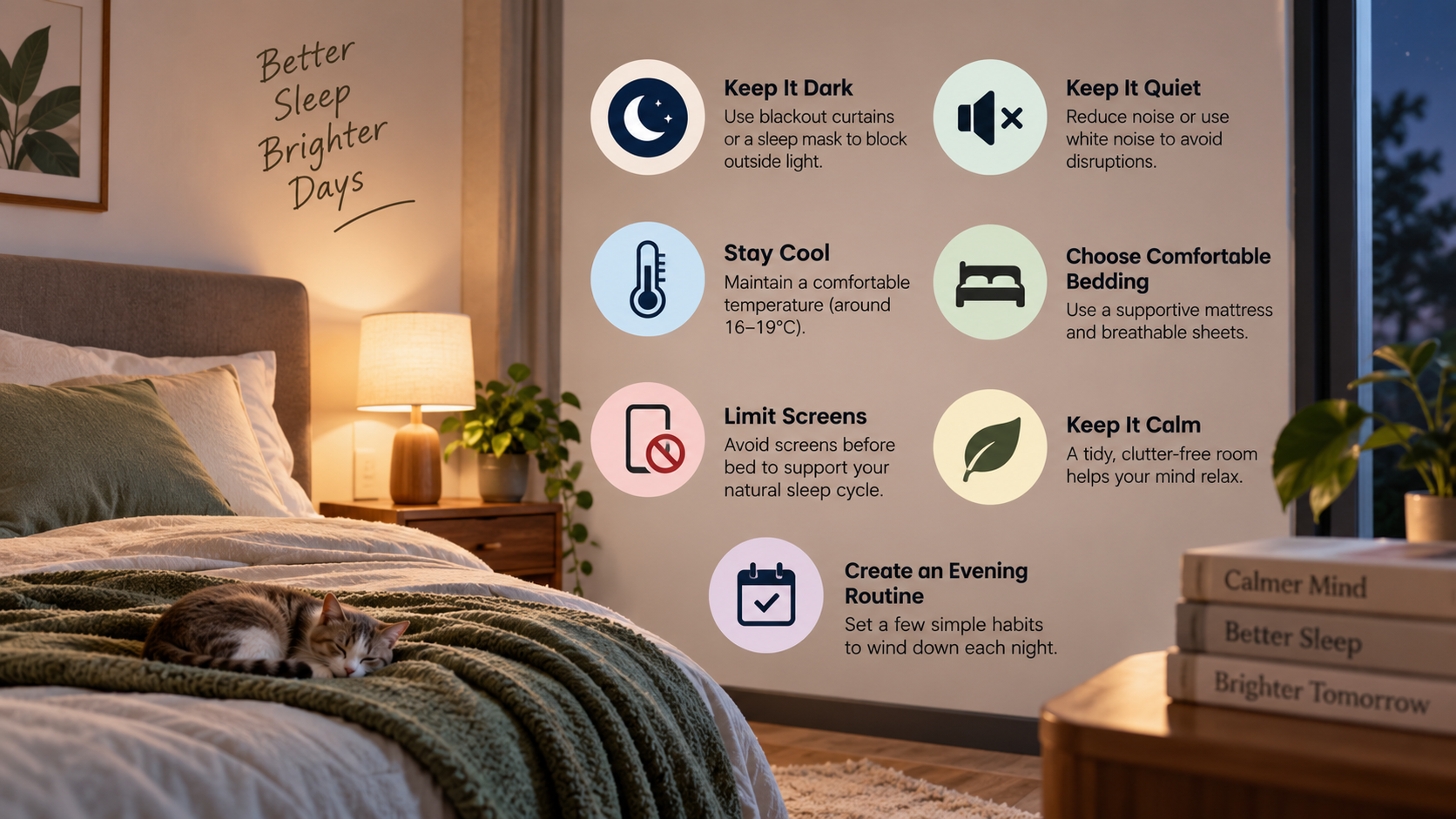
A sleep-friendly environment is a bedroom arranged to support relaxation and consistent sleep. It should reduce unnecessary light, noise, heat, clutter, and other distractions. A dark, quiet, and comfortably cool room can make it easier for your body to settle into its normal nighttime rhythm. For broader strategies, see tips for a calmer home environment.
Temperature preferences vary, but many sleep experts recommend a relatively cool bedroom. A commonly suggested range is around 60 to 67 degrees Fahrenheit, or roughly 16 to 19 degrees Celsius. Your ideal temperature may differ based on clothing, bedding, and personal comfort.
Your mattress and bedding also matter. Choose supportive materials that do not trap excessive heat. Breathable cotton or linen can help improve comfort during warmer nights.
Consider these practical changes:
- Use blackout curtains when outside light disrupts sleep.
- Remove unnecessary electronic lights from the bedroom.
- Keep the room tidy and visually calming.
- Reduce sudden noises with earplugs or steady background sound.
- Reserve the bed mainly for sleep and relaxation.
The Power of Sensory Deprivation
Reducing unnecessary sensory stimulation can make your bedroom feel calmer at night. Bright lights, sudden sounds, uncomfortable temperatures, and distracting textures may interrupt relaxation. A darker and quieter room can therefore provide better conditions for settling into sleep.
Blackout curtains can reduce intrusive streetlights and early morning sunlight. If complete darkness is not practical, a comfortable sleep mask can provide another option.For noise, steady background sound or white noise may help mask unpredictable sounds from traffic, neighbours, or household activity. Learning about how quiet can boost well-being can also help you understand the broader effects of reducing unwanted noise.
Touch and temperature matter too. Rough bedding, heavy blankets, or excessive heat can make it harder to remain comfortable. Choose breathable sheets and bedding that suit your sleeping style.
The goal is not to eliminate every sensation. Instead, create a predictable environment with fewer sudden interruptions. A consistent combination of darkness, quiet, comfortable temperature, and suitable bedding can help your bedroom feel more relaxing.
What is the 3-3-3 rule for sleep?
The 3-3-3 rule for sleep is a simple wind-down concept that creates boundaries before bedtime. However, there is no single universally accepted version of this rule. Different sleep guides use the three numbers in different ways.
One version suggests avoiding heavy meals around three hours before bed. It recommends limiting drinks closer to bedtime and avoiding screens during the final hour. These habits can reduce discomfort and help create a clearer transition from daytime activity to nighttime relaxation. You can also explore evening routines for restful sleep to build more consistent bedtime habits.
Another version focuses on short relaxation activities. You might spend three minutes tidying your bedroom, three minutes breathing slowly, and three minutes doing gentle stretches. This approach can make your evening feel more structured.
The exact numbers are less important than consistency. A predictable routine gives you time to reduce stimulation before getting into bed.
Your routine might include:
- Finishing demanding tasks earlier.
- Dimming household lighting.
- Limiting stimulating screen use.
- Preparing your bedroom for sleep.
- Practicing gentle breathing or stretching.
Why Evening Boundaries Protect Melatonin
Evening boundaries can support the body’s natural transition toward sleep. Bright light, especially strong light exposure late at night, can affect the circadian system and influence melatonin timing. Screens can contribute to this exposure, although their effect varies with brightness, duration, content, and individual sensitivity.
Reducing bright light during the final part of the evening can therefore make your bedroom feel more sleep-ready. You can dim lamps, lower screen brightness, and use warmer lighting as bedtime approaches.
A consistent bedtime also matters. Going to bed and waking at similar times can strengthen your body’s regular sleep-wake pattern. This routine works best when combined with other healthy habits.
Rather than treating one hour without screens as a guaranteed solution, view it as part of a broader evening routine. Lower light, fewer stimulating activities, and consistent timing can create better conditions for natural sleepiness.
If you use your phone before bed, consider switching to quieter activities. Reading a paper book, listening to calm audio, or practicing gentle breathing may help you transition more gradually. A digital detox can also help restore mental health by reducing unnecessary screen exposure and stimulation.
What color room makes you sleepy?
Soft, muted colors can make a bedroom feel calmer and more relaxing, although no single paint color guarantees better sleep. Blue, green, muted gray, beige, and warm off-white shades are often associated with peaceful bedroom designs. Personal preference also matters because a color that feels calming to one person may feel distracting to another.
Soft blue can create a cool, quiet visual atmosphere. Muted green can provide a connection to natural surroundings. Warm neutrals can make the room feel comfortable without creating strong visual stimulation.
By contrast, highly saturated reds, oranges, and bright yellows may feel more energetic. This does not mean these colors directly prevent sleep, but they may create a more stimulating atmosphere for some people.
When choosing a bedroom color, consider the room’s natural and artificial lighting. Test paint samples at different times of day before committing to a full wall.
The goal is simple: choose low-intensity, visually comfortable colors that help your bedroom feel peaceful rather than energetic.
Calming Paint Finishes and Tones
The paint finish can influence how light behaves across your bedroom walls. Highly reflective surfaces can create noticeable glare when exposed to lamps, sunlight, or other strong light sources. A matte or low-sheen finish generally produces less reflection and can create a softer visual appearance.
Muted shades can also support a calmer bedroom atmosphere. Soft sage green, dusty blue, warm beige, gentle gray, and creamy off-white are practical options. These tones work well because they are generally less visually intense than highly saturated colors.
Consider the room’s existing furniture and lighting before selecting a shade. A color that looks soothing in a showroom may appear different under warm bedside lamps or bright daylight.
You can also use bedding, curtains, rugs, and artwork to introduce subtle colors without repainting the entire room. For more ideas, explore decorating tips for renters that can help improve a home’s visual atmosphere without major changes. Keep patterns relatively simple if visual clutter makes you feel distracted.
A calming bedroom does not require a specific color formula. Instead, focus on soft tones, low visual contrast, and comfortable lighting that make the room feel restful at night.
What is the best type of room environment for optimal sleep?
The best bedroom environment for sleep is generally dark, quiet, comfortable, and cool enough to prevent overheating. There is no single room setup that works for everyone, so personal comfort should guide the final adjustments.
Many sleep recommendations suggest keeping the bedroom relatively cool. A commonly recommended range is around 65 to 68 degrees Fahrenheit, although some people sleep comfortably outside this range. Breathable bedding can also prevent excessive heat buildup around the body.
Good ventilation helps prevent a room from feeling stale or stuffy. If outside air quality is poor, however, opening windows may not be appropriate. In that situation, natural ways to filter air in your room can provide an alternative.
Your physical surroundings also influence relaxation. Remove work documents, excessive clutter, and unnecessary electronics if they keep your attention active at bedtime.
A practical sleep environment should include:
- Comfortable temperature and bedding.
- Minimal disruptive noise.
- Low or no nighttime light.
- Adequate ventilation.
- A supportive mattress and pillow.
- A clean, uncluttered sleeping area.
Keeping Bedroom Humidity Balanced
Bedroom humidity can influence comfort during sleep. Very dry air may contribute to a dry throat, irritated nasal passages, or uncomfortable skin. Excessively humid conditions can make a room feel warmer and may support mold and dust mite growth.
A commonly recommended indoor relative humidity range is 30% to 50%. However, the ideal level can vary depending on your climate, building, and personal comfort. A small hygrometer can help you determine whether your bedroom is unusually dry or humid.
If humidity is too low, a humidifier may add moisture. If it is too high, better ventilation or a dehumidifier may help. Clean humidifiers regularly because poorly maintained units can introduce unwanted particles or microorganisms into the air.
Humidity should also be considered alongside temperature. High humidity can make warm rooms feel more uncomfortable because sweat evaporates less efficiently.
Rather than adding equipment automatically, measure the room first. Maintaining comfortable humidity and good ventilation can create a more pleasant sleep environment without unnecessary changes.
What is the Egyptian sleeping method?
The Egyptian sleeping method refers to a traditional cooling technique often described as using a damp sheet or lightweight cloth during hot weather. The basic idea relies on evaporation. Moisture evaporating from the fabric can remove heat from the surrounding surface and create a cooling sensation.
To try the technique, a lightweight sheet can be dampened with cool water and thoroughly wrung out. It should remain slightly moist rather than soaking wet. A dry towel or protective layer can be placed over the mattress to prevent excessive moisture from reaching the bedding.
Good airflow is important because evaporation works more effectively when air moves across the damp fabric. A fan can help circulate air, although it should be positioned safely.
This method may provide temporary relief during hot nights, but it is not suitable for everyone. Excess moisture can make bedding uncomfortable and may contribute to dampness if the room has poor ventilation.
For a more practical long-term solution, consider breathable bedding, appropriate room temperature, ventilation, and a suitable fan or cooling system. The goal is to stay comfortably cool without creating a damp sleeping environment.
FAQ SECTION
How dark should my bedroom really be for deep sleep?
For a sleep-friendly bedroom environment, aim for a very dark room, minimizing light from streetlights, electronics, and other sources that may disrupt your natural sleep-wake cycle. Blackout curtains or an eye mask can help.
What is the ideal bedroom temperature for sleeping?
A sleep-friendly bedroom environment is generally cool, with around 60–67°F (15–19°C) often recommended for adults. Breathable bedding and adjustable layers can help maintain comfortable temperatures throughout the night.
Can indoor plants improve my bedroom’s sleep quality?
Indoor plants can make a sleep-friendly bedroom environment feel calmer and more comfortable, but evidence that they directly improve sleep quality is limited. Choose low-maintenance plants and avoid excessive humidity or overcrowding.
CONCLUSION
Transforming your bedroom into a sleep-friendly bedroom environment is one of the most effective, accessible investments you can make for your long-term health. Restorative sleep does not happen by accident; it requires an intentional physical space where your mind and body feel completely secure. By managing bedroom lighting, stabilizing room temperatures, and choosing soothing wall colors, you actively remove the sensory hurdles that keep you awake.
Small behavioral frameworks like the 3-3-3 rule complement these environmental shifts, ensuring your evening habits support your physical surroundings. Whether you hang blackout curtains, apply a fresh coat of slate-blue paint, or try ancient evaporative cooling methods during hot summer months, each enhancement builds a stronger foundation for peaceful nights.
Begin by addressing the single largest disruption currently present in your room, whether that means cooling down the air or clearing out bedside clutter. Over time, these deliberate changes compound into deep, unbroken rest that leaves you energized each morning. Commit to upgrading your sleeping sanctuary today and experience the life-changing benefits of truly restorative sleep.