
Essential Chemistry Lab Safety Equipment and Critical Safety Rules
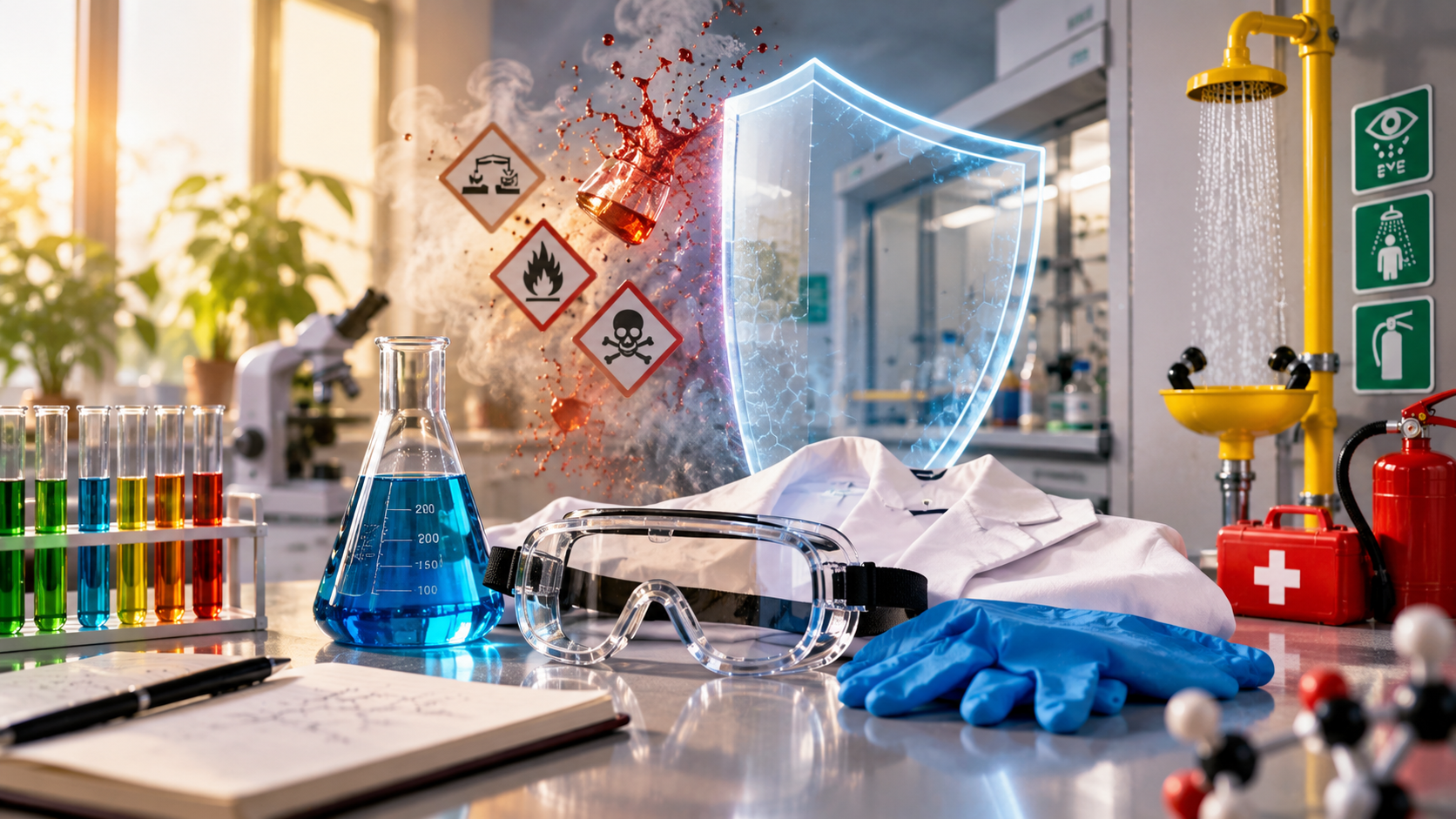
Working in a laboratory creates opportunities for discovery, but chemical work also carries serious risks. Volatile reagents, corrosive acids, reactive compounds, and heat sources require careful handling. Using the right chemistry lab safety equipment creates an important barrier between hazardous materials and people.
Safety protocols from OSHA emphasize engineering controls, personal protective equipment, and consistent work procedures. These measures help reduce exposure to chemical, physical, and thermal hazards.
Without suitable safety systems, routine laboratory tasks can become dangerous quickly. A chemical spill, broken glass container, or uncontrolled reaction can cause burns, respiratory exposure, or fires. Proper protective systems also help limit damage to laboratory facilities.
This guide explains the essential equipment used in chemistry laboratories. It also covers five critical safety devices, common laboratory equipment, and key operating rules. Understanding these measures helps students, technicians, and researchers work more safely and respond effectively during emergencies.

What safety equipment is used in a chemistry lab?
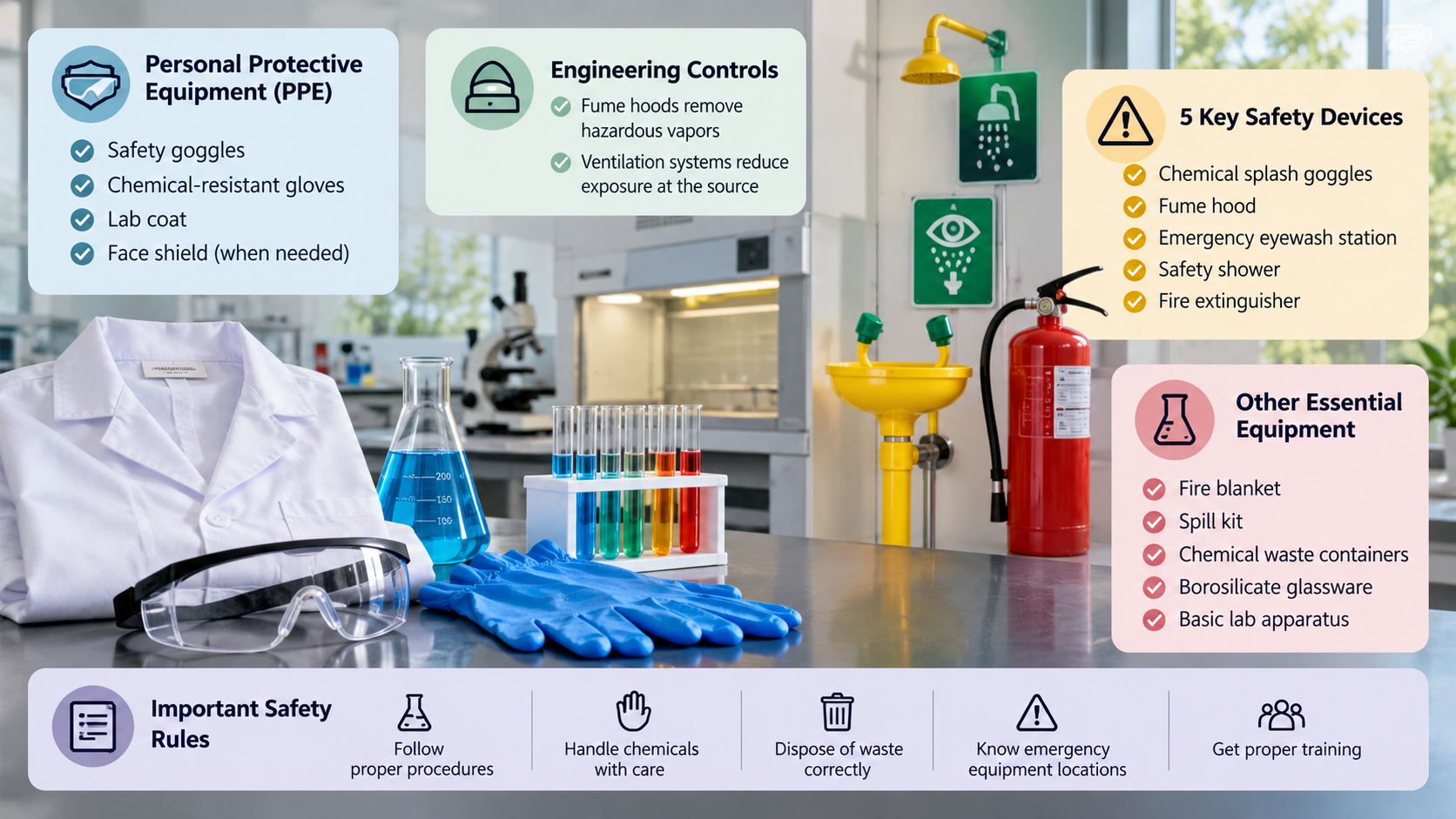
Chemistry laboratories use two main layers of protection: personal protective equipment (PPE) and engineering controls. PPE protects individuals from direct exposure during routine laboratory activities. Common examples include chemical splash goggles, suitable gloves, laboratory coats, and face shields for higher-risk procedures. For broader context, see our guide to what a laboratory is and the different types of laboratories.
Engineering controls protect people by reducing hazards at their source. Chemical fume hoods remove hazardous vapors from the breathing zone. Emergency eyewash stations provide rapid flushing after eye exposure. Safety showers help remove chemicals from the body after significant spills.
Other essential chemistry lab safety equipment includes fire extinguishers, fire blankets, spill kits, and appropriate chemical waste containers. Spill kits may contain absorbent materials, neutralizing agents, and other materials selected for specific hazards.
Together, these systems create multiple layers of protection. PPE reduces direct contact, while engineering controls help prevent hazardous substances from reaching workers. Laboratories should select equipment based on the chemicals, procedures, and risks involved.
Engineering Controls Versus Personal Protective Equipment
Engineering controls and PPE serve different purposes but work together. These physical safety systems reduce or isolate hazards before they reach the worker. Examples include chemical fume hoods, local exhaust ventilation, machine guards, and other protective systems.
reduce or isolate hazards before they reach the worker. Chemical fume hoods, local exhaust ventilation, machine guards, and other physical systems are common examples.
A fume hood can capture hazardous vapors and reduce their concentration in the laboratory. This makes it an important control when handling volatile, toxic, or strongly odorous substances. Proper airflow and correct hood use are essential for effective protection.
Personal protective equipment provides an additional barrier between the worker and the hazard. Chemical goggles protect the eyes from splashes, while suitable gloves help reduce skin exposure. Laboratory coats can also protect clothing and skin from minor contamination.
PPE should not replace effective engineering controls when those controls are available. Instead, the two layers should complement each other. Choosing the correct chemistry lab safety equipment requires considering the substance, concentration, procedure, and potential exposure route. Following laboratory procedures is equally important because even high-quality equipment cannot eliminate every hazard.
What are 5 important lab safety equipment?
Five important pieces of laboratory safety equipment provide basic protection during many chemistry procedures: chemical splash goggles, chemical fume hoods, emergency eyewash stations, safety showers, and fire extinguishers.
Chemical splash goggles protect the eyes from corrosive liquids, irritating chemicals, and unexpected splashes. A chemical fume hood helps remove hazardous vapors, gases, and aerosols from the worker’s breathing zone during appropriate procedures.
Emergency eyewash stations provide immediate access to flushing water when chemicals contact the eyes. Rapid flushing can limit exposure while further medical assistance is arranged when necessary.
Safety showers are designed for situations involving significant chemical contamination of the body or clothing. They provide a rapid way to flush affected areas.
Fire extinguishers provide initial fire response when a suitable extinguisher is available and the situation is safe to address. Laboratories may require different extinguisher types depending on the hazards present. Workers should know equipment locations and receive appropriate training before an emergency occurs.
What are the equipment used in a chemistry laboratory?
Chemistry laboratories contain both experimental equipment and protective systems. Common laboratory apparatus includes borosilicate glassware, such as Erlenmeyer flasks, beakers, graduated cylinders, volumetric flasks, pipettes, and reflux condensers. These items support measuring, mixing, heating, and chemical reactions.
Reaction equipment may include magnetic stirrers, hotplates, analytical balances, heating mantles, thermometers, and temperature-control devices. Researchers may also use vacuum pumps, filtration systems, and specialized reaction vessels.
Protective equipment remains essential alongside these tools. Fume hoods help control hazardous vapors, while appropriate shields can reduce injury risks from pressurized or vacuum equipment. Chemical waste containers should be compatible with their contents and clearly identified.
Laboratories may also use grounded solvent storage cabinets, spill-control materials, and dedicated containers for broken glass. The correct chemistry lab safety equipment depends on the substances and procedures involved. Before using any apparatus, workers should inspect it, understand its operating requirements, and follow established laboratory procedures to reduce preventable accidents.
Safe Glassware Selection and Thermal Management
Borosilicate glassware is commonly used in chemistry because it can tolerate substantial temperature changes better than ordinary glass. However, even heat-resistant glass can fail when damaged, improperly heated, or subjected to unsuitable conditions. Understanding the different types and uses of laboratory glassware can help users select appropriate equipment for specific procedures.
Before heating or pressurizing glassware, inspect it carefully for chips, cracks, scratches, and other visible damage. Small defects can become failure points during heating, cooling, or vacuum operations. Damaged glassware should not be used for hazardous procedures.
Stable support is also important. Use suitable stands, clamps, and other supports to prevent vessels from tipping during reactions. When heating vessels, use appropriate heating equipment and follow the procedure’s temperature requirements.
Avoid sudden temperature changes unless the equipment is specifically designed for them. Do not place hot glass directly on cold surfaces because thermal stress can cause breakage.
Good thermal management combines proper equipment selection with careful handling. These practices complement other chemistry lab safety equipment and help reduce burns, spills, broken glass, and uncontrolled reactions.
What are 10 important safety rules for chemistry labs?
Safe laboratory work depends on consistent habits, appropriate training, and clear procedures. The following ten rules cover common practices that help reduce chemical and physical hazards. A clear understanding of what a laboratory is and how laboratories are organized can also provide useful context for following these safety practices:
- Wear appropriate PPE. Use chemical splash goggles, suitable gloves, laboratory coats, and other protection required by the procedure.
- Use a functioning fume hood. Perform work involving hazardous, volatile, or toxic substances inside the appropriate ventilation system.
- Never pipette by mouth. Use mechanical pipette aids designed for laboratory work.
- Add acid to water. Add concentrated acid slowly to water when the procedure requires dilution. Never reverse the process.
- Know emergency equipment locations. Identify exits, eyewash stations, safety showers, alarms, and fire equipment before starting work.
- Keep food and drinks out. Do not eat, drink, apply cosmetics, or chew gum in laboratory work areas.
- Secure loose items. Tie back long hair and secure loose clothing, cords, and accessories that could create hazards.
- Label chemical containers. Include the chemical identity, relevant concentration, and required hazard information.
- Separate chemical waste. Use designated containers for incompatible waste streams, including appropriate solvent and heavy-metal waste.
- Follow authorization and supervision requirements. Do not perform unauthorized experiments or work without required supervision and training.
These rules should support, not replace, your laboratory’s specific safety procedures and risk assessments.
Frequently Asked Questions
What should you do if chemicals splash into your eyes?
Immediately yell for assistance and proceed straight to the nearest emergency eyewash station. Hold your eyelids wide open using your fingers and lower your eyes into the water stream. Flush your eyes continuously for a full fifteen minutes while rolling your eyeballs to clear trapped irritants. Have someone notify safety personnel and retrieve the chemical safety data sheet for arriving emergency responders.
Why is wearing contact lenses discouraged in chemistry labs?
Contact lenses trap volatile chemical vapors and caustic liquid splashes against the cornea. The capillary space between the lens and your eye prevents natural tearing from flushing irritants away, which accelerates severe corneal scarring. In an emergency, involuntary eyelid spasms can make removing contact lenses almost impossible, significantly delaying critical eyewash decontamination.
How do you select the correct gloves for handling chemicals?
Match glove materials to the specific solvents and reagents listed on the substance’s safety data sheet. Disposable nitrile gloves offer standard protection against incidental contact with many common salts and light acids, but chlorinated solvents quickly penetrate them. Heavy corrosive acids or organic solvents often demand specialized neoprene, butyl rubber, or multi-laminate materials to prevent chemical breakthrough.
What is the proper procedure for cleaning broken laboratory glassware?
Never pick up broken glassware using bare or gloved hands, as sharp shards easily puncture protective materials. Alert coworkers in the area to step back from the hazard zone. Use a stiff hand broom and dustpan to collect the large fragments, and use moist paper towels to sweep up tiny slivers. Dispose of all collected fragments into a designated, rigid sharps container.
Conclusion
Maintaining a secure laboratory environment relies on high-quality equipment, situational awareness, and strict adherence to safety protocols. As covered, standard chemistry lab safety equipment—ranging from personal barriers like splash goggles to infrastructure like fume hoods—forms an essential defense against severe hazards. When paired with clear operational rules, like preventing chemical cross-contamination and adhering to proper acid dilution, labs can innovate safely without compromising researcher well-being.
Establishing consistent safety habits ensures that protective gear remains an active shield rather than passive hardware. Taking the time to inspect glassware, double-check glove compatibility, and keep eyewash stations accessible turns regulatory safety into a practical, life-saving routine. Respect the chemistry, prepare for unexpected hazards before opening any reagent bottle, and prioritize personal safety above all else.