
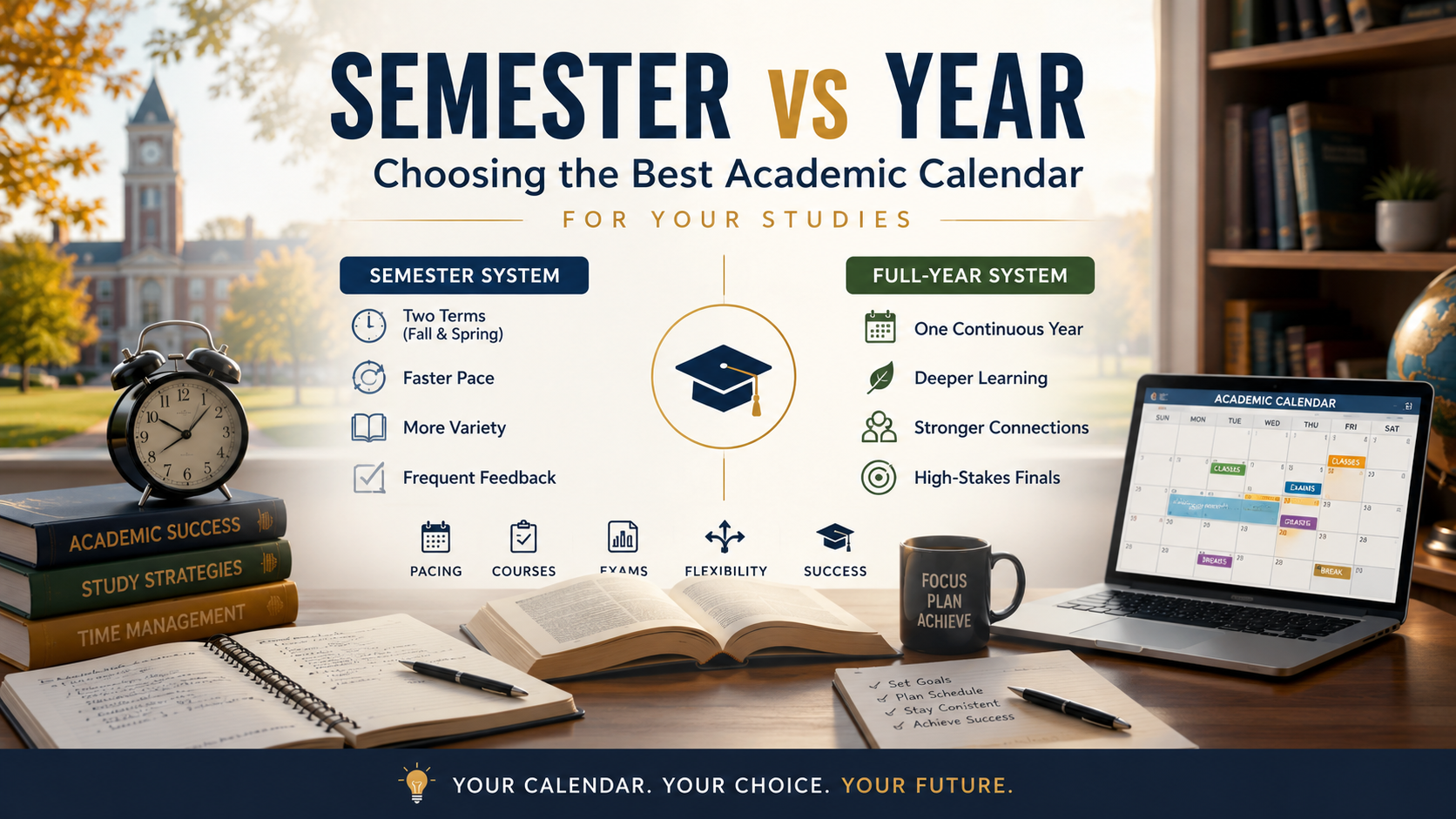
Semester vs Year: Choosing the Best Academic Calendar for Your Studies
When planning your higher education journey, understanding your academic calendar is vital. The debate of semester vs year tracking shapes how you absorb information. It dictates how you manage your time and balance your life outside the classroom. Whether you are transitioning from high school or looking to study abroad, pacing directly impacts your success. Selecting a layout that contradicts your habits can lead to unnecessary stress and friction.
According to the U.S. Department of Education, academic calendar design influences everything from financial aid to scheduling. Some universities divide their periods into two intensive blocks. Other institutions use a linear, year-long framework. Each system has unique benefits and challenges that dictate your routine. This guide breaks down the core differences to help you choose the right path for your learning style.
Understanding the Basics: Semester vs Year Systems
To make an informed decision, you must understand how these two systems function. They distribute teaching hours, exams, and vacation periods differently throughout the calendar year. The underlying philosophy of each system changes the rhythm of campus life. This structural layout deeply affects when you are busy and when you can rest.
What Is a Semester System?
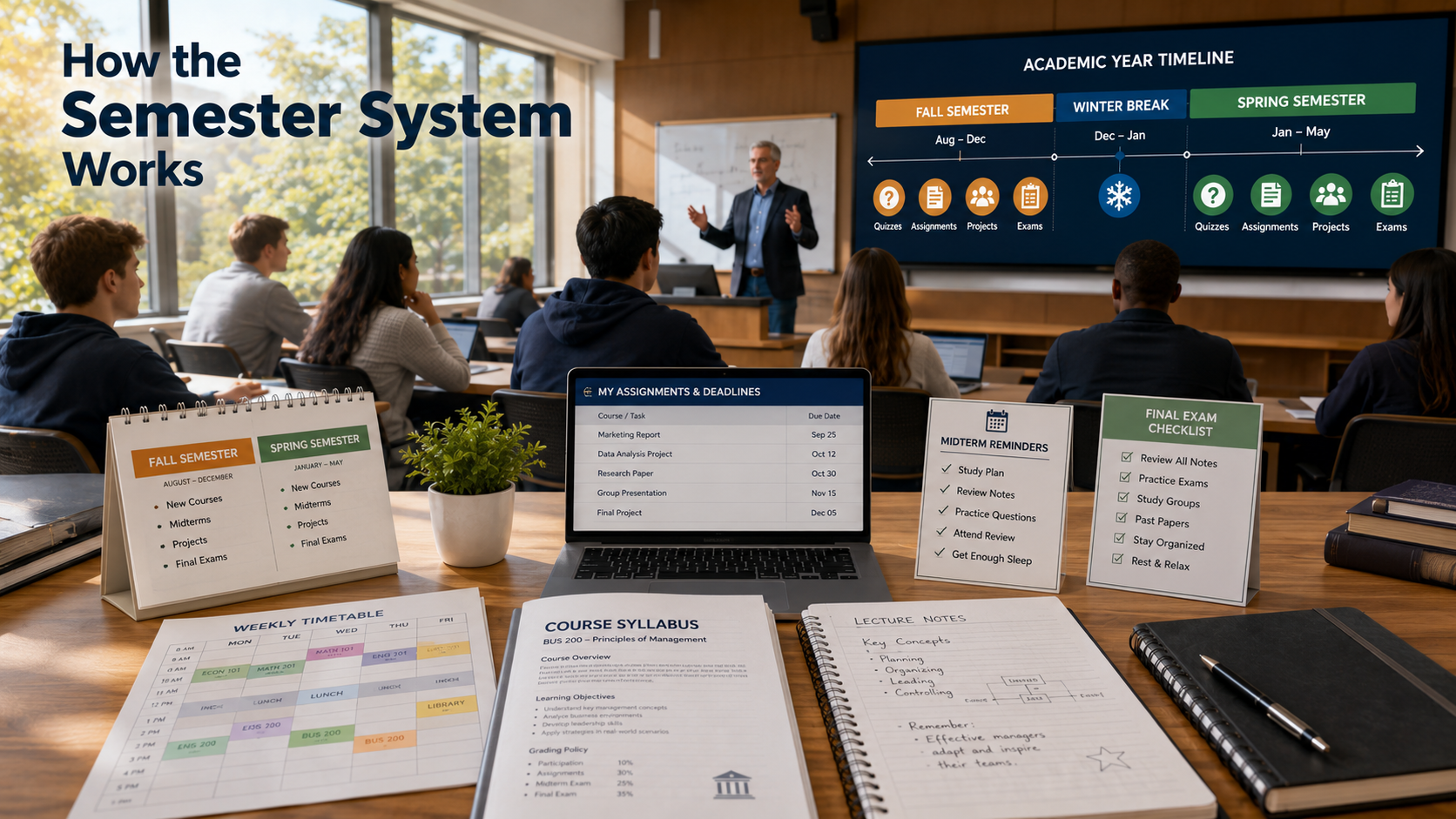
The semester system divides the academic year into two main terms: fall and spring. Each term typically lasts 15 to 17 weeks of active instruction. Students take a specific set of courses for one term, complete finals, and receive permanent grades. When the next term begins in January, they start entirely new classes with a clean slate. This system is highly popular in North American higher education and rotates topics rapidly.
Because the timeframe is short, the educational energy remains consistently high. Students quickly settle into a fast routine of weekly readings, quizzes, and projects. This structure prevents procrastination since major assessments occur every few weeks. It also allows students to experience a vast array of subjects within a single academic year. By changing classes in January, you double the number of professors you meet and expand your academic network. This rapid rotation keeps the college experience fresh, dynamic, and highly adaptable for students who enjoy fast transitions.

What Is a Full-Year System?
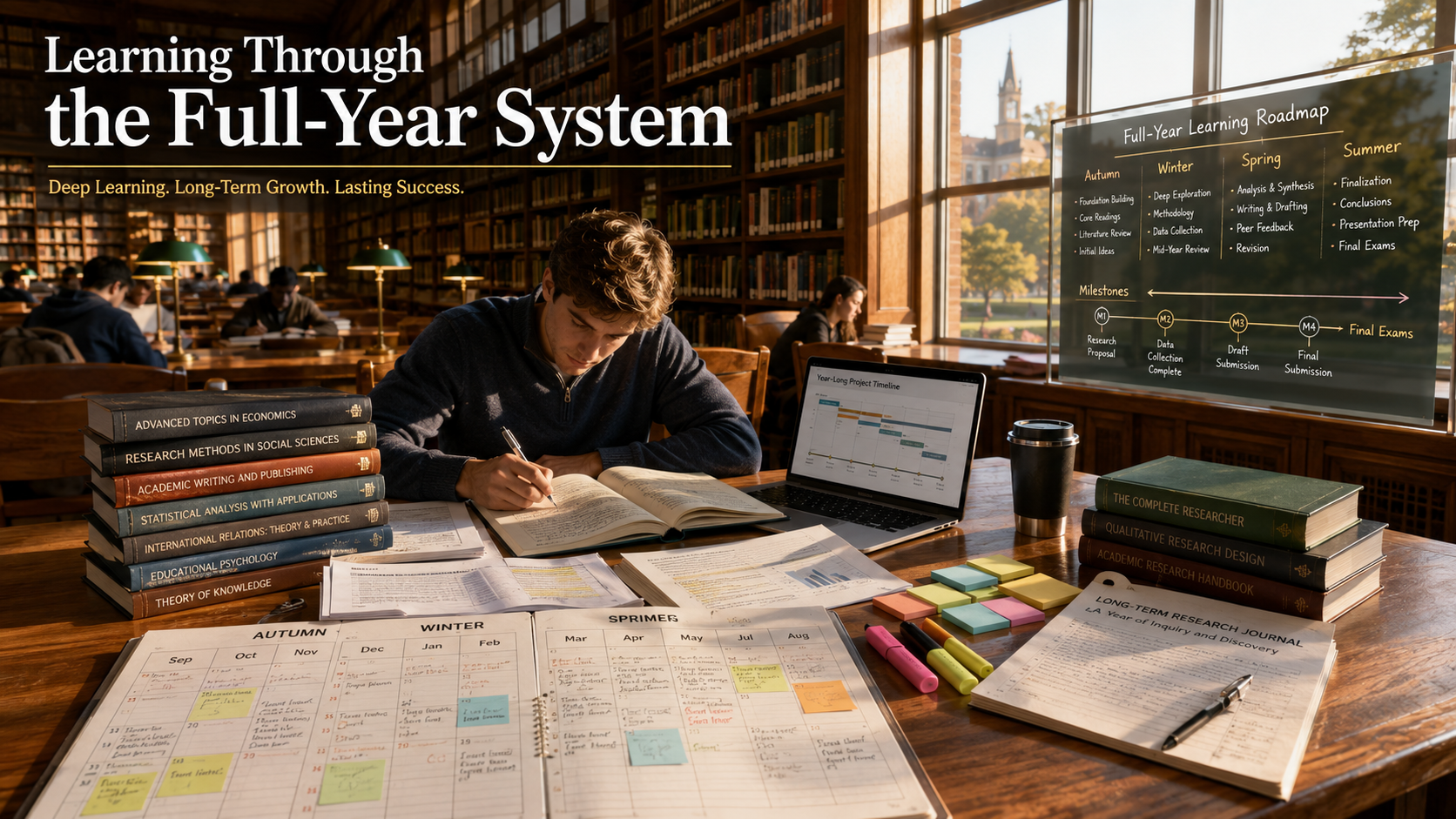
A full-year system tracks courses continuously from autumn until early summer without a mid-year disruption. Instead of breaking classes into distinct blocks, you take the same modules for roughly 30 to 32 weeks consecutively. Final exams and primary evaluations usually occur at the very end of the academic year. This linear approach is traditional in many European universities, fostering a deeply immersion-focused environment.
This continuous structure allows you to absorb complex academic material at a measured, organic pace. Instead of rushing through a textbook in three months, you explore the nuances of a subject over an extended timeline. Professors have the freedom to assign massive, year-long research projects and extensive reading lists. Students build exceptionally strong bonds with their peers and mentors because the classroom community remains intact for the entire year. While it requires immense long-term dedication, this format eliminates the chaotic stress of mid-year adjustments and allows for a profound, deeply specialized intellectual journey.
Course Load and Pacing: Semester vs Year Timelines
The speed at which you cover material changes when comparing a semester vs year schedule. In a semester framework, the pace is inherently fast and energetic. Because you only have 15 weeks per class, professors dive into complex topics quickly. You might take four or five classes at once. This requires sharp time-management skills to juggle multiple assignments. However, the distinct benefit is variety. If you do not enjoy a class, the term ends quickly.
Conversely, year-long systems offer a slower, more deliberate educational journey. You study the same subjects deeply over many months, allowing ideas to mature. This structure allows you to build a stronger relationship with your professors and classmates. The pacing feels manageable on a week-to-week basis because there is no rush. However, you must maintain your stamina, as autumn material is still tested the following May.
Impact on Exams and Grading Systems
Grading philosophies differ wildly between these two academic timelines, altering how students approach study habits. The distribution of stress throughout the year depends on how your institution structures evaluations. Comparing a semester vs year setup highlights two distinct paths to earning your degree.
-
Semesters offer frequent milestones: You receive midterm grades, final grades, and GPA updates twice a year. This continuous feedback loop allows you to pivot and change study habits if your grades slip early on. It reduces long-term anxiety because a single poor performance does not ruin an entire year.
-
Yearly systems rely on high-stakes finals: Your entire grade often depends on a massive exam period at the end of the year. While this eliminates December finals stress, it creates immense pressure during the spring. You must remember months of lectures for one decisive afternoon.
Flexibility, Degree Terminology, and Graduation Timelines
If you want control over your schedule, the calendar style matters immensely for your academic trajectory. The semester model provides excellent structural flexibility for modern students. Since courses reset twice a year, you can easily alter your major, take a leave, or add a minor. If you drop a class, you can usually retake it just a few months later.
Full-year systems are much more rigid by design. If you fail a core module in a year-long program, you often wait an entire calendar year to retake it. This structural rigidity can delay your graduation significantly if you encounter unexpected life events. However, year-long programs usually offer stable schedules that align well with long-term industrial placements and local internships.
FAQ SECTION
How many classes do you take in a semester vs year system?
In a semester system, full-time students generally take four to five courses per term, totaling eight to ten classes per year. In a full-year system, you typically register for five to six modules at the beginning of the year. You maintain those exact same subjects until the summer. While the total number of subjects might seem similar, the execution is entirely different. The semester system requires you to switch focus halfway through the year, which demands quick adaptation. The yearly system demands sustained attention on fewer simultaneous topics over a longer duration, allowing deep exploration without a winter reset.
Which format works best for international study abroad programs?
The semester system is usually much easier for international study abroad arrangements because of global alignment. Most exchange programs operate on a half-year basis, allowing you to plug into an autumn or spring term abroad. Comparing the semester vs year options shows that a full-year university can create severe credit transfer complications. If your home university uses year-long modules, you will likely need to commit to studying abroad for an entire academic year. This ensures you do not miss critical course content or final examinations anchored to the end of the year.
Do semester systems have shorter winter breaks?
Yes, universities using a semester system often have different winter break structures compared to year-long schools. A semester break typically lasts three to four weeks between late December and mid-January. This completely separates the fall and spring terms. This break is highly relaxing because your autumn exams are already finished, leaving you with no looming assignments. Year-long institutions also offer winter breaks, but students frequently must spend that time reviewing notes. Because their courses are only half-finished and major exams lie ahead, the winter break feels like a temporary pause.
Can I graduate faster in a semester system?
You can generally graduate faster within a semester structure due to how credits are distributed. Because classes reset every 15 weeks, schools frequently offer shortened summer and winter accelerated sessions. By taking these extra terms, you can accumulate credits quickly and graduate in three years instead of four. Year-long programs rarely offer this acceleration because their foundational courses span 30 weeks consecutively. This makes it impossible to condense them into a one-month summer blitz. If you want to fast-track your entry into the workforce, the semester model offers the flexibility you need.
Which calendar system causes less academic burnout?
Burnout depends entirely on your personal learning, working, and testing preferences, as both systems distribute pressure differently. The semester system creates short, intense bursts of stress because midterms and finals arrive quickly every few months. However, the frequent clean slates can keep you motivated because a stressful class ends quickly. The full-year system offers a low-stress environment for the first six months, allowing you to learn at a leisurely pace. However, pressure builds heavily toward the final months, creating immense psychological strain during spring exams.
CONCLUSION
Choosing between a semester vs year academic system comes down to how you prefer to learn, work, and manage stress. The semester system offers rapid variety, frequent fresh starts, and incredible flexibility for students who want to customize their path. Meanwhile, the traditional full-year system provides the time needed for deep intellectual exploration, comprehensive research projects, and a steadier daily pace.
Neither calendar is universally superior to the other; your success depends on matching the institutional structure with your personal habits. Those who thrive under constant milestones, enjoy changing subjects quickly, and prefer a clear separation between terms should consider semester-based universities. On the other hand, students who prefer long-term focus, steady deep analysis, and can handle a single high-stakes examination period are often better suited to a year-long program. If you’re also deciding on the right academic path, check out our guide on Diploma vs Degree: Which Is Better? to understand how different qualifications can impact your education and career. Analyze your goals, review your options, and choose the environment where you will truly find your rhythm.