Can the Samsung Galaxy S26 Replace a Dedicated Digital Camera?
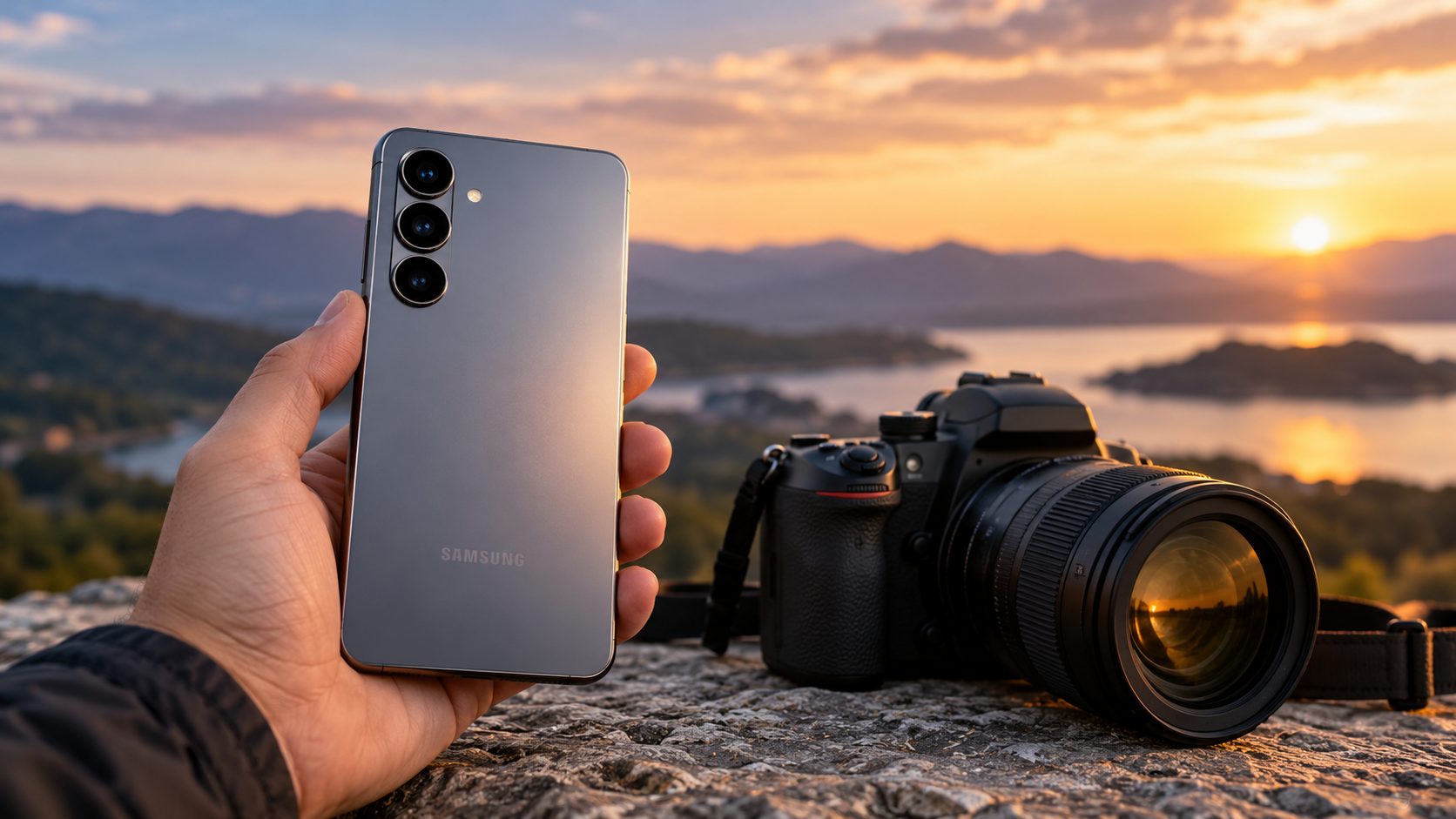
Smartphone photography continues to evolve rapidly. Every year, manufacturers introduce better sensors, improved lenses, and smarter image-processing technology. These advancements make many creators question whether the Samsung Galaxy S26 can replace a dedicated digital camera.
Modern smartphones combine optical hardware with computational photography. They can capture detailed images, improve exposure, reduce noise, and process photographs automatically. Samsung’s latest flagship continues this approach with its ProVisual Engine and versatile camera system.
This development matters to content creators, travelers, and everyday photographers. Dedicated cameras require additional equipment, investment, and photography knowledge. A flagship smartphone offers portability, instant editing, connected apps, and effortless sharing.
However, smartphone cameras still face physical limitations. Smaller sensors and fixed lenses cannot reproduce every advantage of dedicated camera equipment. To understand the differences, let’s examine the Galaxy S26’s photography capabilities, repair options, Samsung’s camera history, and DSLR competition.
Is the Samsung Galaxy S26 Good for Photography?
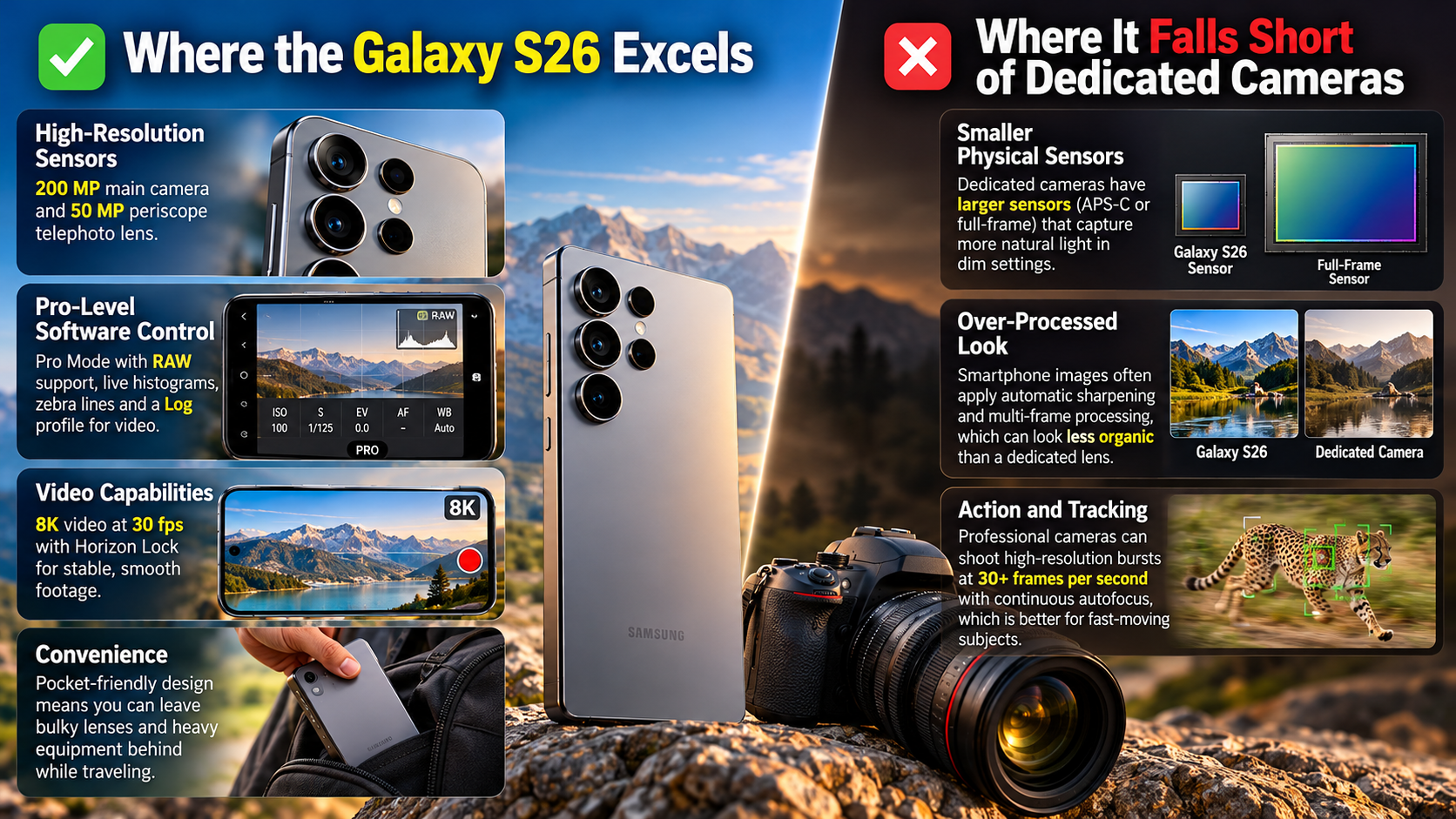
Yes, the Samsung Galaxy S26 offers a capable camera system for everyday photography, travel, and social media content. Its three rear cameras cover different shooting situations without requiring additional equipment. The main camera captures detailed images, while the ultra-wide lens handles landscapes and group photographs. Its dedicated telephoto camera provides 3x optical zoom for distant subjects.
Samsung provides complete product details, camera features, and specifications on its official Galaxy S26 | S26+ product page.
According to Samsung’s official specifications, the standard Galaxy S26 includes:
- 50MP wide camera: Captures everyday photographs with optical image stabilization.
- 12MP ultra-wide camera: Provides a wider perspective for landscapes and architecture.
- 10MP telephoto camera: Offers 3x optical zoom for distant subjects.
- 12MP front camera: Handles selfies and video calls.
The phone also supports 8K video recording at 30fps. These features make it a versatile photography device. However, professional photographers may still need dedicated equipment for specialized shooting requirements.
Computational Imaging Powers Low-Light Photography
Camera hardware alone does not determine smartphone image quality. Computational photography plays an equally important role in modern mobile imaging. The Galaxy S26 combines its camera hardware with Samsung’s ProVisual Engine. This processing technology helps improve image quality across different lighting conditions. For a deeper understanding of these features, explore how AI camera technology in smartphones improves image processing and photography.
The camera system processes image information to balance exposure, preserve details, and reproduce natural-looking colours. Its processing capabilities also help reduce visible noise in photographs. Optical image stabilization assists when capturing handheld photographs or recording videos.
However, computational processing cannot eliminate every limitation of small camera sensors. Independent testing by DXOMARK identifies increased noise and reduced fine detail in challenging low-light conditions. This becomes particularly noticeable in darker environments.
For everyday photography, the Galaxy S26 delivers useful results without complicated camera settings. However, dedicated cameras still offer greater control over exposure, interchangeable lenses, and sensor performance. These advantages become more important when shooting professionally or working in difficult lighting.
Can a Samsung Phone Camera Be Replaced?
Yes, technicians can replace a damaged camera module in many Samsung smartphones, including supported Galaxy models. Physical damage, autofocus problems, and camera malfunctions may require component replacement. The exact repair procedure depends on the device model and the damaged component.
Samsung’s authorized service centres can inspect the device and recommend suitable replacement parts. Independent repair shops may also offer camera replacement services. However, their component quality, repair procedures, and service guarantees can vary.
Before arranging a repair, consider these important factors:
- Original replacement parts: Genuine components help maintain expected camera performance.
- Repair expertise: Technicians need suitable equipment and experience with smartphone disassembly.
- Water resistance: Opening the phone can compromise its original protective seals.
- Repair warranty: Check whether the service provider covers replacement parts and labour.
Repairing a smartphone camera can restore its functionality. However, professional servicing is generally safer than attempting complex internal repairs without suitable experience. Before arranging a repair, check your device’s protection and repair coverage. Our guide explains what Samsung Care+ covers and costs, including important coverage considerations.
Camera Replacement Requires Proper Testing and Calibration
Replacing a smartphone camera involves more than removing the damaged component. Technicians must follow the manufacturer’s repair procedure and check whether the replacement works correctly. This includes inspecting autofocus, image stabilization, camera switching, and overall image quality.
Modern smartphones contain delicate connectors and tightly assembled internal components. Incorrect handling can damage nearby parts or affect the device’s protective seals. Therefore, professional repair services should use compatible replacement modules and appropriate tools.
Software testing is also important after completing the repair. Technicians can check whether the camera application recognizes the replacement component. They should also test photographs, video recording, autofocus, and stabilization where supported.
Not every camera replacement requires a separate software calibration procedure. Requirements depend on the particular component and device model. Samsung’s official repair documentation should guide the process.
For users, the practical priority is choosing a qualified technician. A properly completed repair should restore the camera’s supported functions without introducing additional hardware problems.
Did Samsung Discontinue Its Digital Camera Business?
Yes, Samsung withdrew from the standalone digital camera market during the mid-2010s. The company gradually stopped developing and selling its dedicated camera products across several markets. Its decision followed declining demand for traditional compact cameras and growing smartphone adoption.
Samsung previously competed in the digital photography market through its NX mirrorless camera lineup. Models such as the Samsung NX1 attracted attention for their advanced imaging hardware and video capabilities. The NX1 featured an APS-C sensor and became an important product in Samsung’s camera history.
However, Samsung eventually shifted its attention towards smartphones and other consumer electronics. Its camera development strategy increasingly focused on mobile photography and image sensors.
Although Samsung no longer maintains its former NX camera lineup, its standalone camera history remains relevant. It demonstrates how quickly the photography industry has changed. Smartphones now handle many photography tasks that previously required separate camera equipment.
Samsung’s NX Mirrorless Cameras Left a Lasting Legacy
Samsung’s NX lineup represented an important chapter in its digital photography business. These cameras combined interchangeable lenses with relatively compact mirrorless bodies. They attracted photographers who wanted greater creative control without carrying traditional DSLR equipment.
The Samsung NX1 was particularly notable for its APS-C sensor, fast autofocus, and advanced video recording capabilities. It demonstrated Samsung’s ability to compete in the enthusiast camera market.
The NX series also reflected the company’s interest in developing imaging hardware and connected photography experiences. However, there is insufficient evidence to claim that specific NX camera patents or technologies were directly transferred into Galaxy smartphone sensors.
Samsung’s withdrawal from the standalone camera market did not mean the company abandoned imaging technology. Instead, its consumer photography products increasingly centred on smartphones.
Today, Galaxy devices combine camera sensors, image-processing hardware, and computational photography. This approach reflects the industry’s broader transition towards mobile imaging.
Is a DSLR Better Than the Samsung Galaxy S26?
A DSLR can outperform the Samsung Galaxy S26 in several demanding photography situations. However, the difference depends on the camera body, lens, shooting conditions, and photographer’s experience. Smartphone buyers interested in comparing mobile camera performance can also explore Google Pixel vs. Samsung Galaxy night photography to understand how the two brands handle challenging lighting conditions.
Many DSLRs feature larger APS-C or full-frame sensors. These sensors can capture more light and preserve greater image detail under suitable conditions. Dedicated cameras also provide interchangeable lenses for specialized photography.
Their advantages become particularly useful for professional portraits, wildlife photography, sports, and commercial assignments. Photographers can select specific lenses, adjust manual exposure settings, and use external lighting equipment.
However, smartphones have practical advantages that traditional cameras cannot easily match. The Galaxy S26 offers portability, automatic processing, built-in editing, and immediate sharing.
For everyday photography, carrying a dedicated DSLR may be unnecessary. The Galaxy S26 can handle many personal and content creation requirements. Nevertheless, photographers who need extensive manual control or specialized optics may prefer dedicated camera equipment.
Optical Precision Outperforms Software Blur in Certain Situations
One important difference between smartphone photography and dedicated cameras is how they produce background blur. A DSLR uses its lens and sensor combination to create natural optical depth of field. Photographers can control this effect through aperture, focal length, and subject distance.
Smartphones often use computational photography to simulate background separation. Software identifies the subject and applies artificial blur to surrounding areas. This approach works well for many everyday portraits.
However, complicated scenes can expose limitations in software-based background separation. Fine hair, transparent objects, and overlapping subjects sometimes produce unnatural edges. Dedicated camera lenses generally provide more consistent optical rendering.
Professional photographers also benefit from specialized lenses, external flashes, and advanced exposure controls. These features provide greater flexibility during studio sessions and commercial assignments.
The Galaxy S26 remains convenient for casual portraits and social media content. However, dedicated camera equipment offers more predictable creative control when image quality and precision are essential.
Final Verdict: Can the Samsung Galaxy S26 Replace a Digital Camera?
The Samsung Galaxy S26 can replace a dedicated digital camera for many everyday photography needs. Its versatile camera system, computational photography, and video capabilities make it suitable for travelers, casual photographers, and social media creators.
However, it cannot completely replace professional camera equipment. Larger sensors, interchangeable lenses, optical depth of field, and advanced manual controls remain important advantages of dedicated cameras.
Your choice ultimately depends on your photography requirements. If convenience, portability, and instant sharing matter most, the Galaxy S26 may be sufficient. If you regularly photograph wildlife, professional portraits, commercial products, or demanding low-light scenes, a dedicated camera remains worth considering.
The most practical approach is to choose equipment based on the photographs you actually want to create. A smartphone and a dedicated camera serve different purposes, and neither needs to replace the other.