Red vs Green Light Flashlights: Which One Wins?
When choosing between red vs green light flashlights, many outdoor enthusiasts, hunters, and tactical operators find themselves facing a tough decision. Each colored light interacts differently with human night vision, animal eyesight, and electronic gear. Understanding these differences helps you make an intelligent choice for your specific nocturnal needs. Whether you are navigating a dark trail, preserving your night-adapted vision, or tracking game across an open field, the right color matters immensely. According to guidelines from the National Park Service, managing artificial light properly protects both human night vision and local wildlife behaviors. This comprehensive guide answers the top questions about red and green illumination to help you decide which option truly wins.
What Are the Differences Between Green and Red Flashlights?
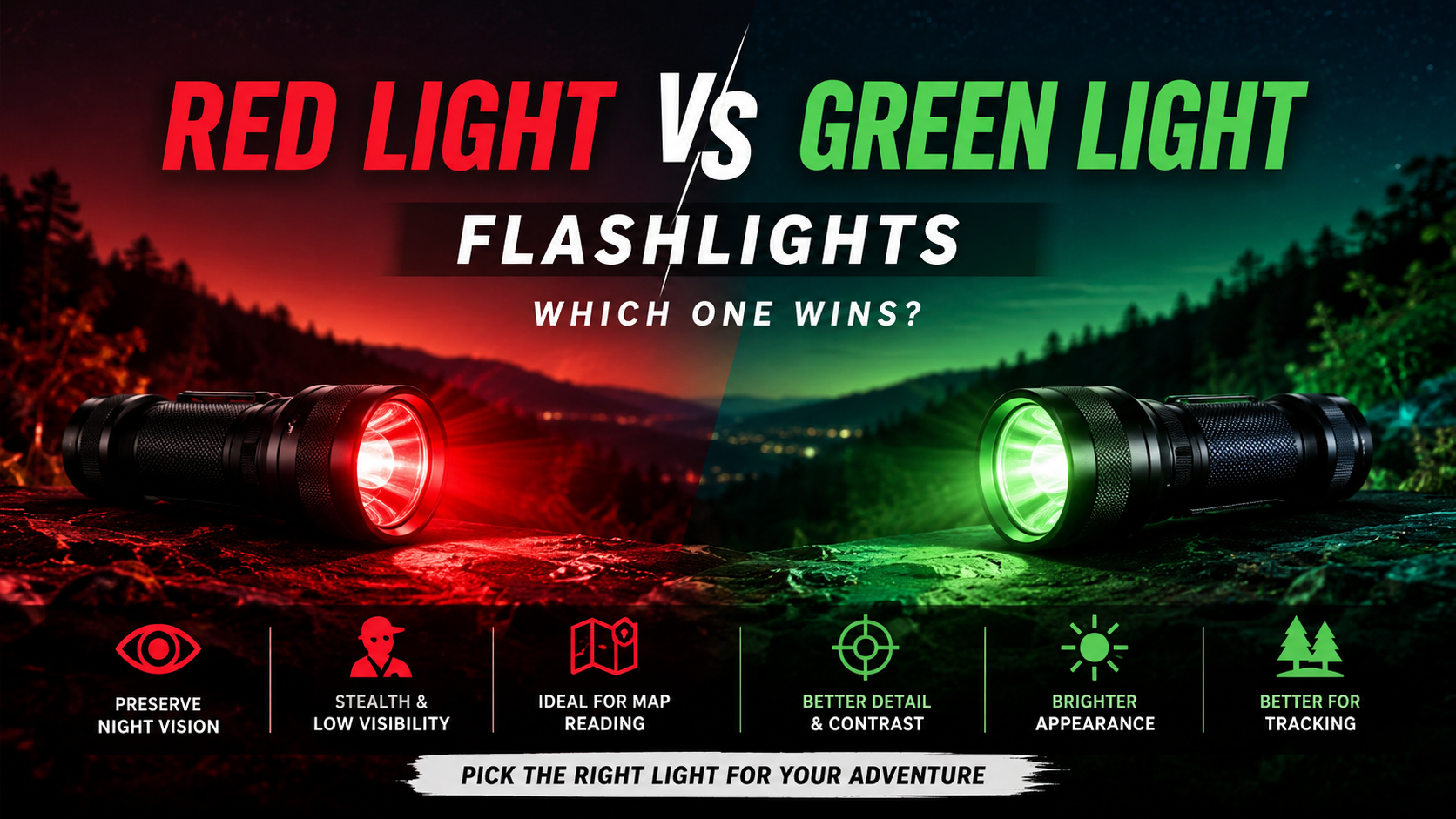
The main differences between green and red flashlights involve brightness, visibility, night vision, and practical use. Red light has a longer wavelength and produces less stimulation of the eye’s rod cells. This makes it useful for preserving dark adaptation during nighttime activities. Green light has a shorter wavelength and appears brighter to human vision at similar output levels. As a result, green illumination can reveal details, shapes, and surface changes more clearly in dark environments.
Red light is generally preferred when maintaining night vision is the priority. It can help users read maps, check equipment, or move around without severely affecting dark adaptation. Green light works well when visual clarity and contrast matter more.
For more information about how red light behaves in other everyday optical devices, see our guide on why optical mice use red lights.
Understanding Wavelength and Visibility
Wavelength helps explain why these colors perform differently. Red light has a longer wavelength, while green light has a shorter wavelength within the visible spectrum. Human vision is especially sensitive to green wavelengths, so green often appears brighter at comparable power levels. Red light, however, is less disruptive to dark-adapted vision.
Environmental conditions can also affect performance. Fog, smoke, dust, and vegetation may scatter or absorb light differently. Neither color is automatically superior in every condition. Your surroundings and intended use should guide your choice. For outdoor activities, a red flashlight can support low-profile illumination, while green light can improve visual detail and contrast. Understanding these differences makes it easier to choose the right flashlight for hiking, camping, hunting, astronomy, or tactical applications.
Why Do the Military Use Red Flashlights?
Military personnel and tactical users often choose red flashlights to help preserve night vision. When the eyes move from a bright environment into darkness, they need time to become fully dark-adapted. This process can take many minutes, and full adaptation may take longer. Bright white light can significantly reduce that adaptation and temporarily make it harder to see in darkness.
Red light generally has a smaller effect on dark adaptation than bright white light. This makes it useful for tasks that require limited illumination at night. Soldiers may use red light to read maps, check equipment, or move through a dark area while reducing the impact on their night vision.
Red light does not make a user invisible. It can still be detected, especially at close range. However, a dim red beam may be less visually conspicuous than a bright white beam. This makes red illumination useful when preserving night vision and limiting unnecessary light are important.
Tactical Advantage and Stealth
Stealth is an important consideration during nighttime military and tactical activities. A bright flashlight can create a noticeable beam and make the user’s position easier to identify. Red light can provide enough illumination for simple tasks while reducing the impact on dark-adapted vision.
This balance can be helpful during navigation, equipment checks, or map reading. Users can perform basic tasks without relying on a bright white beam. Red illumination may also reduce the amount of visible light produced around the user, particularly when a low-output setting is used.
However, red light is not completely hidden from other people or cameras. Its visibility depends on distance, brightness, surroundings, and the observer’s equipment. For that reason, red light should be viewed as a low-impact lighting option rather than a guaranteed stealth solution.
The main tactical benefit is preserving useful night vision while providing limited illumination. This can reduce the need to repeatedly adjust to darkness after using a flashlight.
What Is the Best Light Color for a Flashlight?
The best flashlight color depends on what you need the light to accomplish. White light remains the most versatile option for everyday use because it provides strong illumination and natural color recognition. It is useful for walking, emergencies, repairs, and general outdoor activities.
Colored light becomes more valuable for specialized situations. Red light is a popular choice for astronomy, camping, map reading, and nighttime navigation. It can provide enough illumination for simple tasks while having less impact on dark adaptation than bright white light. Green light can appear brighter to human vision and may provide useful contrast when examining terrain or objects at night.
Your environment also matters. A flashlight used around a campsite may need different features from one used for hunting or professional work. Multi-color flashlights offer a practical solution because they let users switch between white, red, and green modes.
Before choosing a flashlight, consider brightness, beam distance, battery life, and the type of activity involved.
Matching Light Color to Tasks
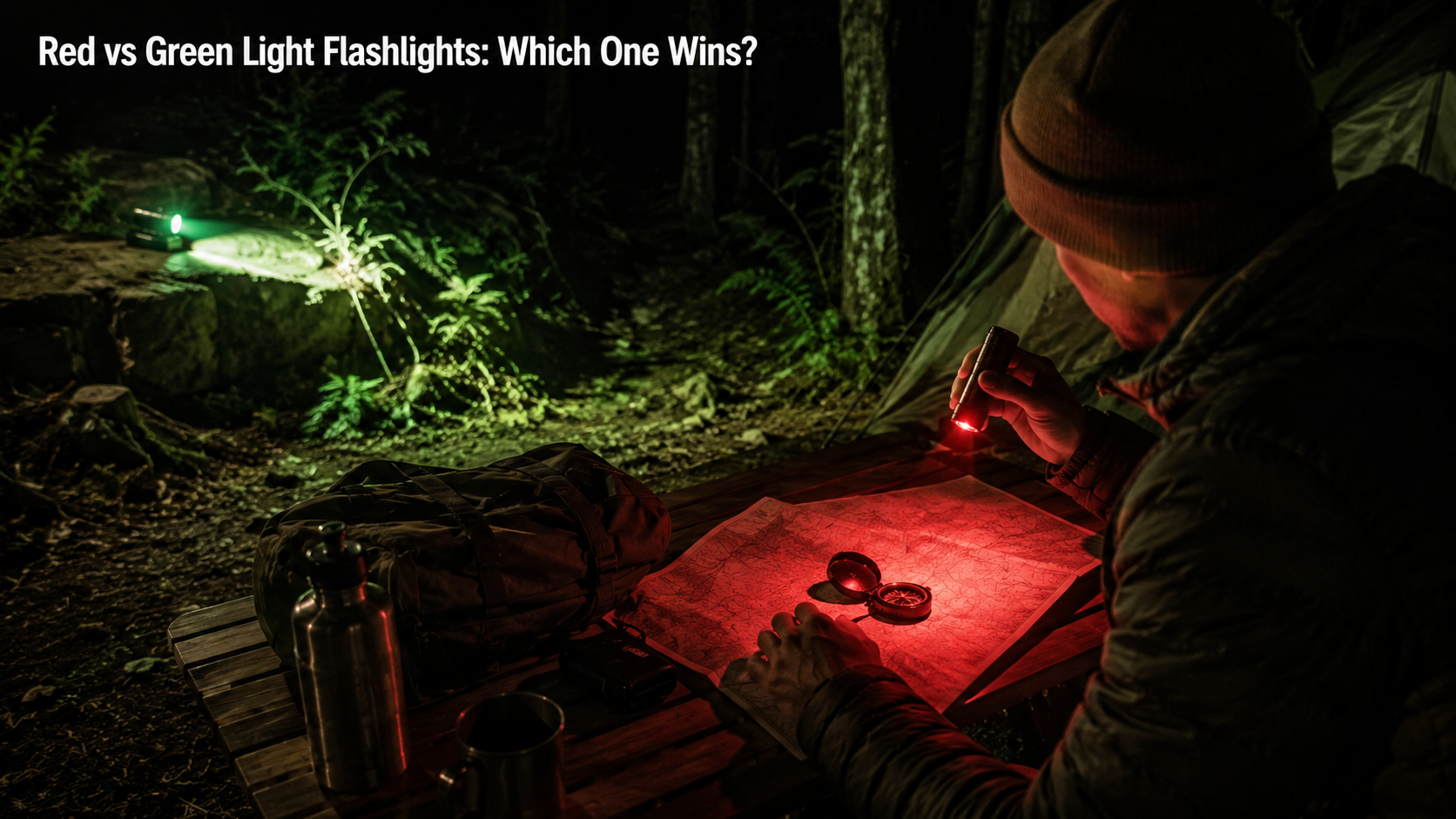
Choosing the right light color starts with identifying the task. Red light is well suited to activities where preserving dark adaptation matters. It can help with reading maps, checking gear, and moving around a campsite without using a bright white beam. Astronomers also commonly use red illumination because it can reduce disruption to dark-adapted vision.
Green light can be useful when visual clarity and contrast are more important. Human eyes are highly sensitive to green wavelengths, so green illumination can appear bright at relatively low output. This may help users distinguish terrain features, objects, or surface details in darkness.
White light remains the best all-purpose choice for most everyday situations. It provides broad illumination and makes it easier to identify colors accurately.
A multi-color flashlight can provide the most flexibility. Look for models with separate brightness controls and reliable switching between colors. The right combination depends on your environment, activity, and need for night vision preservation.
Is Red Light or Green Light Better?
Neither red nor green light is universally better. Each color provides different benefits, so the right choice depends on your activity and surroundings. Red light is generally better for preserving dark adaptation and providing low-level illumination at night. It is especially useful for camping, astronomy, map reading, and nighttime navigation.
Green light can appear significantly brighter to human vision at similar output levels. This can make it useful when you need to identify details, objects, or terrain features in low-light conditions. It may also provide strong visual contrast for certain outdoor applications.
Your priorities should determine which color you choose. If maintaining night vision is important, red is usually the better option. If visual clarity and perceived brightness matter more, green may have an advantage.
Environmental conditions can also change the result. Fog, dust, moisture, vegetation, and background lighting all influence visibility. Testing both colors in your typical environment can help you make a practical decision. A flashlight with multiple color modes can provide the greatest flexibility.
For a deeper look at the different applications and characteristics of red illumination, read our guide to red light flashlight differences.
Performance in Variable Environments
Environmental conditions can significantly affect flashlight performance. Humidity, fog, dust, smoke, and vegetation can scatter or absorb light. These effects may change how bright a beam appears and how far you can see.
Green light often appears brighter to human observers because the eye is highly sensitive to green wavelengths. This can make green useful when identifying objects or terrain in low-light conditions. Red light usually provides less apparent brightness, but that lower visual impact can be beneficial when preserving dark adaptation.
Background lighting also matters. A colored beam may perform differently under moonlight, streetlights, or complete darkness. The surface being illuminated can affect contrast as well. Light-colored objects may reflect a beam differently from dark or heavily textured surfaces.
For outdoor use, there is no universal winner. Test your flashlight in the environment where you plan to use it. Compare brightness, beam visibility, contrast, and night-vision impact. This practical approach can help you select the most suitable color for your needs.
Red Light vs Green Light for Night Hunting
When comparing red light vs green light for night hunting, the better choice depends on the species, terrain, and equipment being used. Many hunters prefer red light because some game animals appear less responsive to longer-wavelength light than humans. However, animal responses vary by species and individual conditions, so red light should not be considered completely invisible to wildlife.
Green light can appear brighter to humans and may provide better visibility for identifying objects or navigating uneven terrain. This can be useful when a hunter needs greater visual clarity. However, a brighter beam may also be more noticeable to wildlife, depending on the species and situation.
The best choice also depends on local hunting regulations. Some areas restrict artificial lighting for certain types of hunting. Always check the applicable rules before using a colored flashlight.
For hunters, red light generally favors reduced visual impact, while green light can favor brightness and visibility. The ideal option depends on the target species, hunting conditions, and legal requirements.
Choosing for Specific Game Species
Different animals can respond differently to artificial light. Their visual systems are not identical to human vision, and reactions can vary between species. This means hunters should avoid assuming that every animal will ignore red or green light.
Some nocturnal mammals have vision that differs substantially from human color perception. Certain species may be less sensitive to longer wavelengths, while others may still detect a red beam under specific conditions. The intensity, distance, movement, and direction of the beam can also influence an animal’s response.
Green light may provide stronger apparent illumination for the human observer. This can help when scanning terrain or identifying objects in darkness. However, greater brightness does not necessarily mean better hunting performance.
Before choosing a hunting flashlight, consider the target species, terrain, and local regulations. Researching the visual behavior of the specific game animal can provide more useful guidance than relying on general color claims. When possible, use the lowest practical brightness and avoid unnecessary illumination. This can help maintain visibility while reducing disturbance to the surrounding environment.
FAQ SECTION
Do All Animals React the Same Way to Red and Green Light?
No, animals do not all react the same way to different light colors. Their eyes contain different photoreceptors, which affect how they detect specific wavelengths. When comparing red vs green light, some mammals may respond less strongly to red, while birds and insects can detect these wavelengths differently. Brightness and beam intensity also matter. Always research your target species before choosing a hunting or wildlife flashlight.
Can Green Light Attract Insects During Outdoor Activities?
Yes, green light can attract insects more than red light in many situations. Many insects are sensitive to shorter wavelengths, including blue, ultraviolet, and some green wavelengths. This makes red vs green light an important consideration during camping and other nighttime activities. Red light generally attracts fewer insects, although no color completely prevents insect activity. Using a dim red flashlight can help reduce unwanted insects around your campsite.
Will Red Light Affect My Ability to Sleep After Using It?
Red light generally has less impact on melatonin and circadian rhythms than blue or bright white light. This makes it useful for nighttime activities such as reading or moving around camp. In a red vs green light comparison, red is usually less disruptive to dark-adapted vision. However, brightness still matters. A very bright red flashlight can affect your nighttime environment, so use the lowest practical brightness when preparing for sleep.
Which Colored Light Uses More Battery Power?
Light color alone does not determine flashlight battery consumption. Power usage mainly depends on the LED, driver efficiency, brightness setting, and battery capacity. In a red vs green light comparison, green may appear brighter because human vision is more sensitive to green wavelengths. However, this does not mean green LEDs always use less power. Check the flashlight’s specifications and use lower brightness settings when longer battery life is important.
Conclusion
Choosing between red and green flashlights depends on your activity, environment, and lighting needs. The red vs green light comparison shows that both colors have practical advantages. Red light is useful for preserving dark adaptation and reducing visual disruption at night. Green light can provide stronger perceived brightness and useful contrast. Consider your surroundings, required visibility, and local regulations before choosing. A multi-color flashlight can offer greater flexibility for outdoor activities, hunting, camping, and nighttime navigation.