
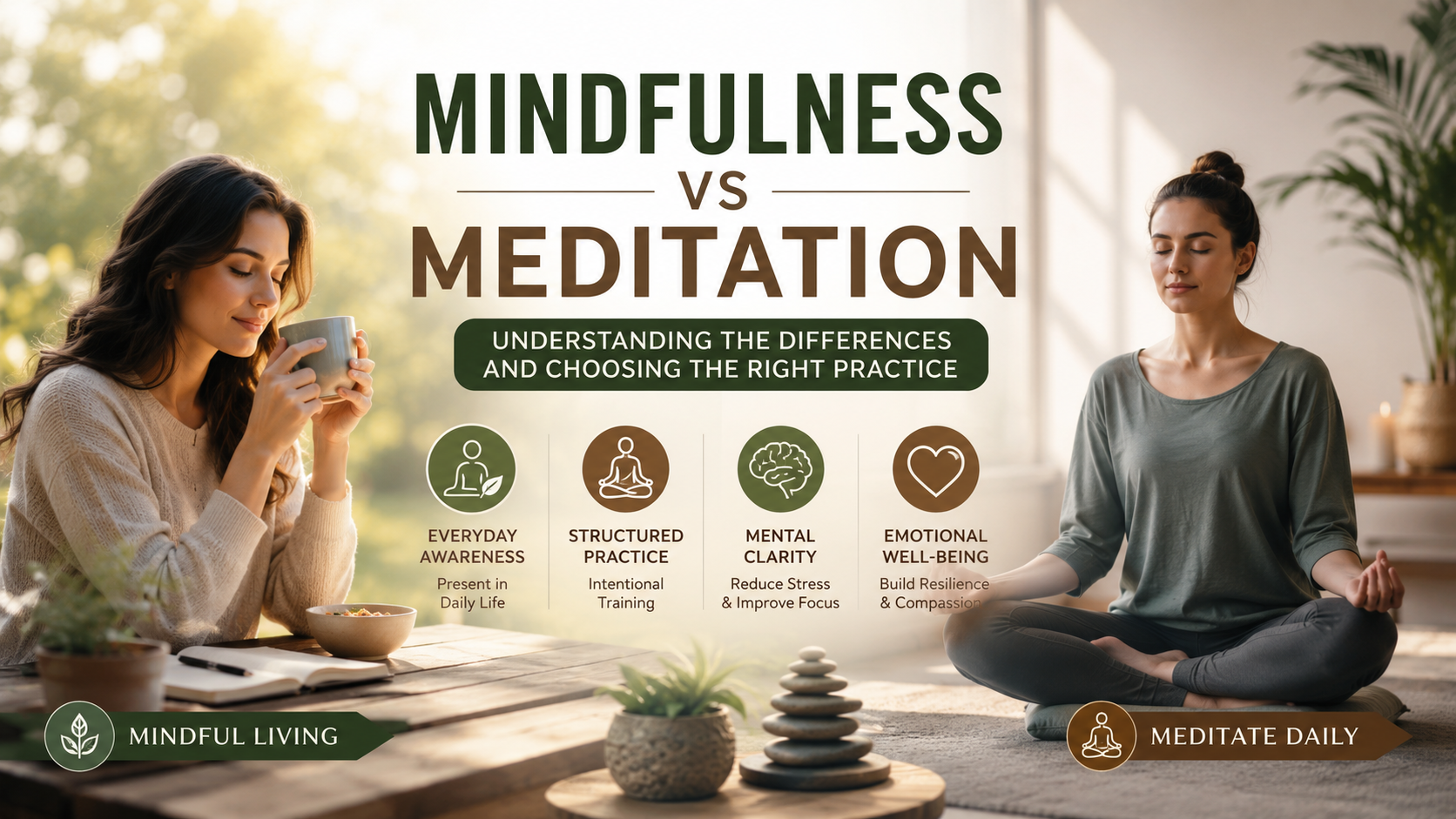
Mindfulness vs Meditation: Understanding the Differences and Choosing the Right Practice
Understanding the core differences in mindfulness vs meditation can completely transform how you approach mental wellness. While people often use these terms interchangeably in everyday conversations, they represent distinct concepts in mind-body training. According to health resources at the National Center for Complementary and Integrative Health, both practices offer unique, evidence-based benefits for stress management, sleep quality, and emotional regulation. Clarifying how they differ helps you select the right method for your lifestyle, schedules, and personal goals. In this guide, we break down definitions, compare core mechanics, explore distinct styles, and help you decide which path fits your current routine best.
What Is Mindfulness?
Mindfulness is a quality of mind characterized by non-judgmental, moment-to-moment awareness. It involves paying active attention to your current experience. You avoid getting lost in past memories, future anxieties, or mental chatter. When you practice mindfulness, you simply observe your thoughts, physical feelings, and environment. You do not try to alter them or react automatically. This open, receptive state allows you to step off emotional autopilot. Consequently, you respond to everyday events with intention and clarity instead of habitual panic.
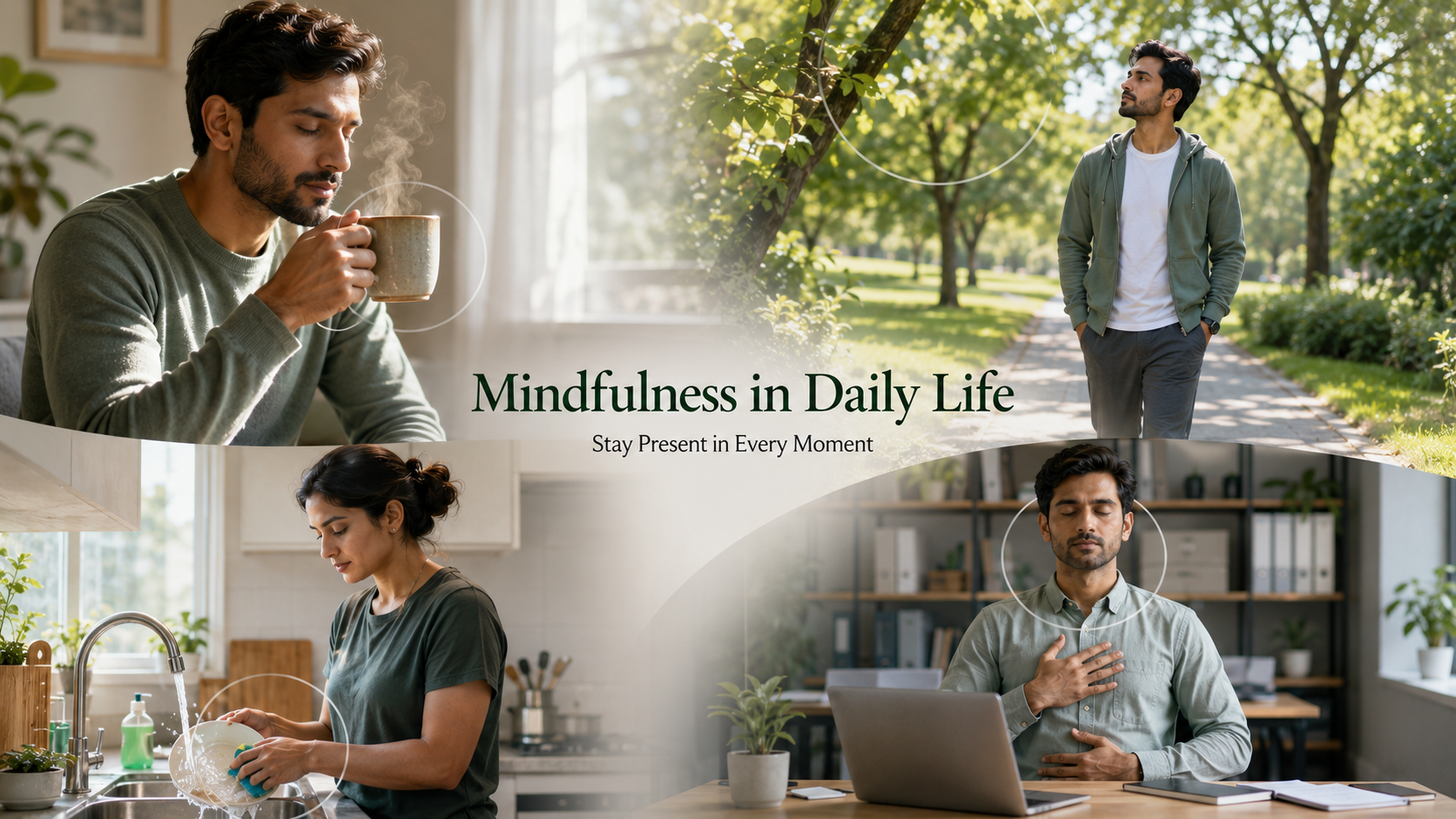
Because mindfulness is essentially a way of relating to your experiences, you can apply it anywhere. You can practice it during almost any waking moment of your daily life. You do not need a silent room, special cushions, or a scheduled block of time. For example, consider eating a meal without staring at a screen. You fully notice the rich textures, temperatures, aromas, and subtle flavors of every bite. In that moment, you are actively engaged in informal mindfulness. Over time, cultivating this grounded presence reduces stress. It also improves concentration and fosters greater emotional resilience across all areas of life.
Core Qualities of Mindful Awareness vs Formal Meditation
Mindful awareness is built upon several foundational principles that transform how you experience the present moment. The first key element is present-moment focus. This involves anchor-like attention on what is happening right now. It prevents you from ruminating on past events or worrying about future obligations. This gentle redirecting of focus brings immediate calm to a scattered mind. Therefore, it anchors your attention firmly in the physical reality of the present.
The second critical component is a non-judgmental attitude toward your thoughts and feelings. You do not label an emotion as inherently bad. Similarly, you do not view a thought as shameful. Instead, you observe it with open curiosity. You allow it to arise and pass naturally without pushing it away or clinging to it tightly. Finally, mindfulness encourages an attitude of beginner’s mind. It invites you to engage with familiar daily experiences as if seeing them for the very first time. Together, these core qualities cultivate deep self-awareness. They break negative thought loops and foster a compassionate relationship with your internal world.
What Is Meditation?
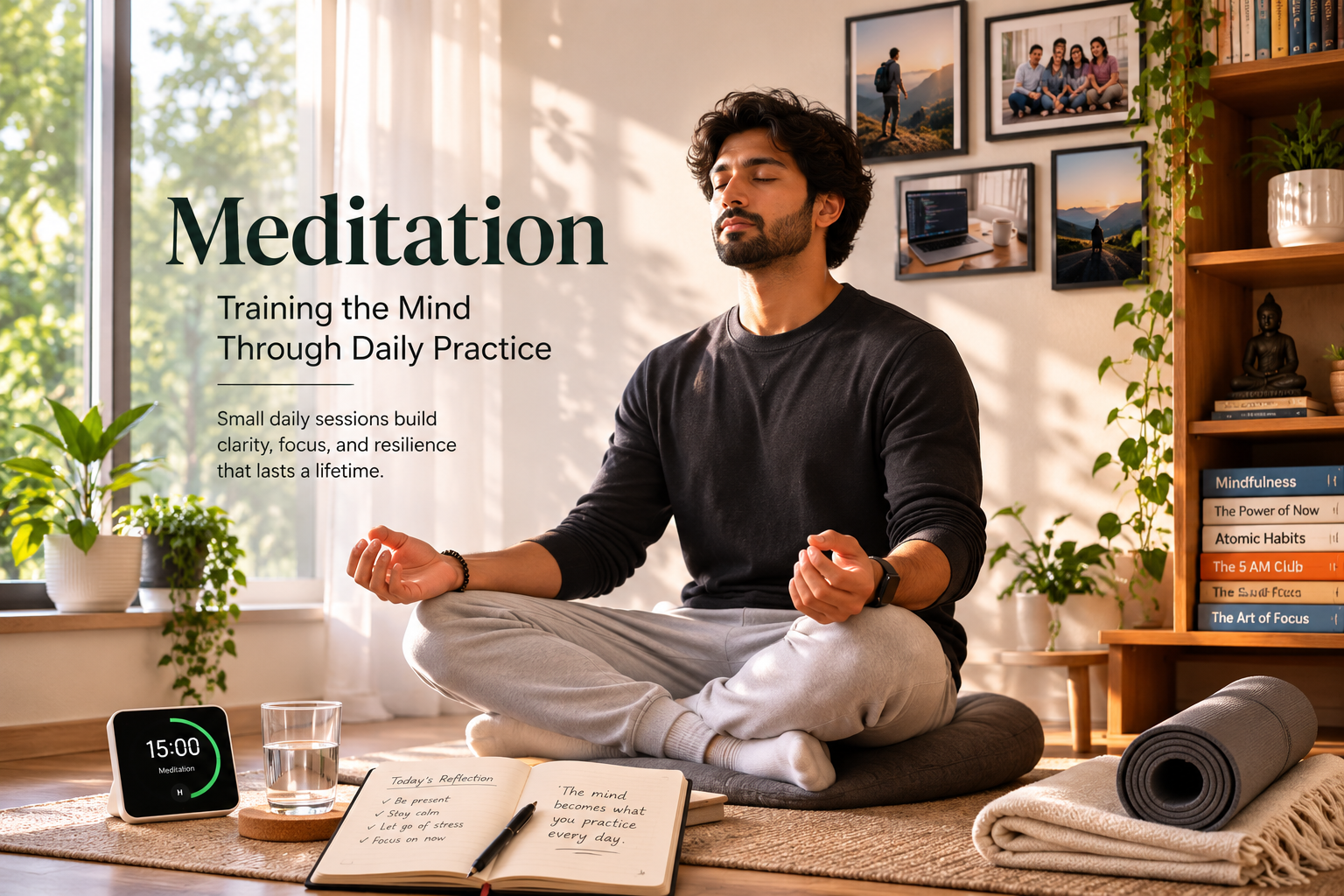
Meditation is an intentional, structured mental exercise designed to train specific attentional and emotional capacities. While mindfulness describes an ongoing quality or state of awareness, meditation is the formal container or exercise routine used to develop that awareness. You can think of meditation as going to a mental gym. You set aside a specific period, sit in a designated posture, and follow a systematic technique to strengthen your mind’s focus and internal clarity.
Through regular formal practice, meditation helps rewire neural pathways. This makes it easier to maintain emotional stability during challenging situations outside of practice sessions. It offers a structured environment where you systematically work with your mind. You work through distractions and build mental endurance over time. Whether practiced for five minutes or an hour, formal meditation creates a protected space away from daily demands. It allows you to cultivate quietude, deep relaxation, self-reflection, and sustainable mental discipline in your routine.

Common Types of Meditative Practices
Meditation encompasses a wide array of distinct traditions and techniques. Each style targets different aspects of mental and emotional development. One popular category is Focused Attention Meditation. In this practice, individuals concentrate their mind entirely on a single chosen anchor. Common anchors include the natural flow of the breath, a visual candle flame, or a repetitive sound. Whenever the mind inevitably wanders away, you gently return your focus. This builds strong cognitive control and sharpens overall concentration skills.
Another widely practiced approach is Loving-Kindness Meditation, or Metta. This style focuses on cultivating compassion, empathy, and goodwill toward oneself and others through the silent repetition of positive phrases. Additionally, techniques like Transcendental Meditation rely on specific mantras. These mantras allow the active mind to settle inward into a state of deep rest and quiet awareness. Exploring these diverse meditation styles enables you to find an approach that aligns perfectly with your individual emotional needs, spiritual preferences, and personal growth goals.
Mindfulness vs Meditation: Understanding the Core Differences
To clearly grasp the distinction in mindfulness vs meditation, it helps to picture meditation as the formal training ground. In contrast, mindfulness acts as the practical skill applied in daily life. Meditation is the structured vehicle. Meanwhile, mindfulness is often the ultimate destination or state of mind you seek to cultivate. You can practice meditation to cultivate mindfulness. However, you can also bring mindful presence into ordinary activities without sitting down for a formal meditation session at all.
| Feature | Mindfulness | Meditation |
| Primary Definition | A state or quality of present awareness | A structured practice or training technique |
| Structure | Informal, spontaneous, and continuous | Formal, time-bound, and dedicated |
| Location & Setting | Anywhere (e.g., washing dishes, walking, working) | Dedicated space, seated posture, quiet environment |
| Primary Goal | Stay grounded in real-time experiences | Train specific mental faculties over time |
Understanding these fundamental differences helps remove common misconceptions. You do not need to sit still for hours to improve your mental wellbeing. While meditation requires dedicated time, specific postures, and a controlled setting, mindfulness seamlessly weaves into your standard daily routine. Evaluating mindfulness vs meditation shows that both tools work together synergistically. Formal meditation sessions build your capacity for sustained focus. Consequently, this makes it significantly easier to remain mindful, grounded, and non-reactive when facing stressful events throughout your busy workday.
The Interconnected Relationship Between Mindfulness and Meditation
The relationship between these two practices is deeply interconnected, yet they remain distinct functional tools for personal growth. Can you practice mindfulness without meditating? Absolutely. Consider taking three conscious, slow breaths while stuck in frustrating traffic. Alternatively, picture giving your full, undivided attention to a colleague during a conversation. These actions represent pure mindfulness. They require no formal sitting practice whatsoever. You simply bring full, non-judgmental presence to the active moment.
Conversely, can you perform meditation without cultivating mindfulness? Yes, because certain specialized forms of meditation focus strictly on complex visualizations, intricate breath manipulation exercises, or rhythmic mantra repetitions. These methods do not explicitly emphasize open, non-judgmental monitoring of immediate feelings. However, the hybrid approach known as mindfulness meditation brings both worlds together seamlessly. In this practice, you use the formal, quiet container of a seated meditation session specifically to cultivate and refine the skill of non-judgmental present-moment awareness.
Health Benefits: Analyzing Mindfulness and Meditation Science
Both disciplines offer extensive, scientifically documented physical, emotional, and cognitive health benefits. Modern neuroscience demonstrates that regular engagement with these practices promotes positive structural changes in the brain through neuroplasticity. Clinical protocols like Mindfulness-Based Stress Reduction combine formal sitting techniques with informal daily awareness exercises. Medical professionals use these combined methods to treat chronic pain, anxiety, and depression effectively across diverse patient populations.
Research reveals that consistent practice significantly lowers systemic cortisol levels. It calms the overactive sympathetic nervous system and improves overall cardiovascular metrics. Cognitively, attention training strengthens neural connections in the prefrontal cortex. This enhances working memory, focus, and executive function. Emotionally, practitioners exhibit decreased activation in the amygdala, which is the brain’s fear center. This shift leads to reduced stress reactivity, improved mood stability, and enhanced resilience when navigating life’s unexpected challenges. Exploring mindfulness vs meditation highlights how both approaches protect long-term mental health.
How to Choose Between Mindfulness vs Meditation Practices
Deciding whether to prioritize informal mindfulness or structured meditation comes down to your personal lifestyle, personality traits, available time, and primary wellness goals. Neither approach is inherently superior to the other. Instead, each serves different practical functions depending on your current needs. Assessing your daily routine, attention span, and schedule allows you to select the starting point that offers the least friction and highest chance of long-term success.
If your schedule is unpredictable and tightly packed, starting with informal mindfulness allows you to build self-awareness without restructuring your calendar. On the other hand, if you thrive on structure, clear routines, and measurable progress, establishing a formal meditation practice may feel far more rewarding. By reviewing the core concepts of mindfulness vs meditation, you can choose an approach that feels approachable, engaging, and sustainably integrated into your lifestyle.
Choose Mindfulness If:

-
Your daily schedule is highly unpredictable, leaving little room for dedicated 20-minute quiet sessions.
-
You frequently find yourself operating on automatic pilot while performing routine tasks, chores, or work assignments.
-
You want immediate, practical tools to defuse rising acute stress, anxiety, or emotional frustration during busy workdays.
-
You find it extremely uncomfortable or overwhelming to sit still in silence for extended periods without moving.
Choose Meditation If:
-
You thrive on structured habits, clear schedules, and dedicated daily routines with defined start and end times.
-
You specifically want to build deep mental concentration, emotional discipline, and long-term cognitive focus.
-
You enjoy guided audio sessions, structured breathwork patterns, or quiet, contemplative solitude away from distractions.
-
You want a formal, dedicated quiet space to step entirely away from outer demands and look inward.
How to Integrate Mindfulness and Meditation Into Your Routine
Combining formal meditation with daily informal mindfulness creates a powerful, balanced approach to mental wellbeing. Think of formal meditation as your foundational training period where you strengthen your muscle of attention. Meanwhile, daily mindfulness acts as the practical application of that strength in real-world scenarios. Together, they reinforce each other. They make present-moment awareness far more accessible during high-stress situations.
To begin integrating both smoothly without feeling overwhelmed, start with manageable, micro-commitments. Begin your morning with just five minutes of formal sitting meditation. Focus entirely on the rising and falling movement of your breath. Then, choose one regular daily activity. Examples include drinking your morning coffee, washing the dishes, or walking to your car. Commit to experiencing that chosen task with complete, undivided sensory awareness. Balancing mindfulness vs meditation in this way establishes a sustainable, highly effective wellness habit.
Frequently Asked Questions
Is mindfulness meditation different from regular meditation?
Comparing mindfulness vs meditation reveals that mindfulness meditation is a distinct category within the broader universe of meditation techniques. Traditional meditation encompasses a vast range of practices, including visualization exercises, mantra repetitions, and complex breathwork. Mindfulness meditation specifically focuses on observing your internal thoughts, bodily sensations, and external surroundings non-judgmentally as they arise in real time. Rather than manipulating the breath or focusing exclusively on a mantra, you cultivate an open, accepting awareness of whatever enters your consciousness. This makes it a unique hybrid that builds both formal focus and real-world awareness.
Can beginners start with mindfulness without meditating?
Yes, beginners can easily start practicing mindfulness without ever engaging in formal sitting meditation. You can introduce mindfulness into your life immediately by bringing full, conscious awareness to routine daily activities like eating, showering, driving, or walking. You simply focus your physical senses on the textures, sounds, and movements of the current activity. Meanwhile, you gently bring your mind back whenever it wanders. Because it requires no special equipment, quiet spaces, or formal sitting postures, informal mindfulness serves as an accessible, stress-free entry point for anyone looking to reduce daily anxiety.
How long does it take to see results from these practices?
Many individuals experience an immediate sense of physical relaxation and mental clarity after completing just one mindfulness exercise or brief meditation session. However, long-term neuroplastic brain changes and lasting psychological benefits typically develop with consistent, regular practice over time. Clinical studies on programs like Mindfulness-Based Stress Reduction demonstrate that committing to daily practice for eight weeks leads to measurable reductions in brain stress centers. It also creates noticeable improvements in emotional regulation, working memory, and focus. Ultimately, consistency matters far more than session length when building these benefits.
Which practice is better for reducing acute stress?
When weighing mindfulness vs meditation for acute stress happening in real time—such as feeling overwhelmed during a difficult work meeting or experiencing sudden traffic frustration—informal mindfulness techniques are usually most effective. Applying quick grounding techniques, like taking three conscious breaths or tuning into physical feet-on-the-floor sensations, immediately breaks the acute stress response. However, formal daily meditation is superior for addressing chronic, long-term stress. Regular meditation lowers overall stress reactivity over time, building deep baseline resilience that prevents everyday situations from becoming overwhelming in the first place.
Do I need a quiet room to practice mindfulness?
No, you do not need a quiet room or a peaceful environment to practice mindfulness. In fact, practicing mindfulness in noisy or busy settings—like a crowded subway, a noisy office, or a busy family kitchen—can actually strengthen your ability to remain grounded amidst chaos. Mindfulness is not about eliminating surrounding distractions or forcing quietness. Instead, it is about observing your current environment, internal reactions, and sensory experiences without judgment. You simply observe everything exactly as it exists in the present moment, wherever you happen to be.
Conclusion
Understanding the dynamic of mindfulness vs meditation shows that these two approaches are complementary rather than competing. Mindfulness offers a flexible way of engaging with life as it unfolds. Meanwhile, meditation provides the dedicated mental gym session needed to build focus and emotional balance.
Prioritizing your psychological wellbeing begins with exploring fundamental questions about mental health and what we know about ourselves. You do not need to choose one practice over the other permanently. By sitting for just a few minutes of meditation each morning and remaining present during daily tasks, you gain the benefits of both approaches. Start small today: pick one regular activity and commit to experiencing it completely.