
Open-Ear vs. In-Ear Earbuds: Which Is Actually Better for Your Ears?
Choosing between open-ear vs. in-ear earbuds affects more than your listening experience. Your choice can influence ear comfort, hygiene, and hearing safety. According to the World Health Organization, more than one billion young people risk permanent hearing damage from unsafe listening practices.
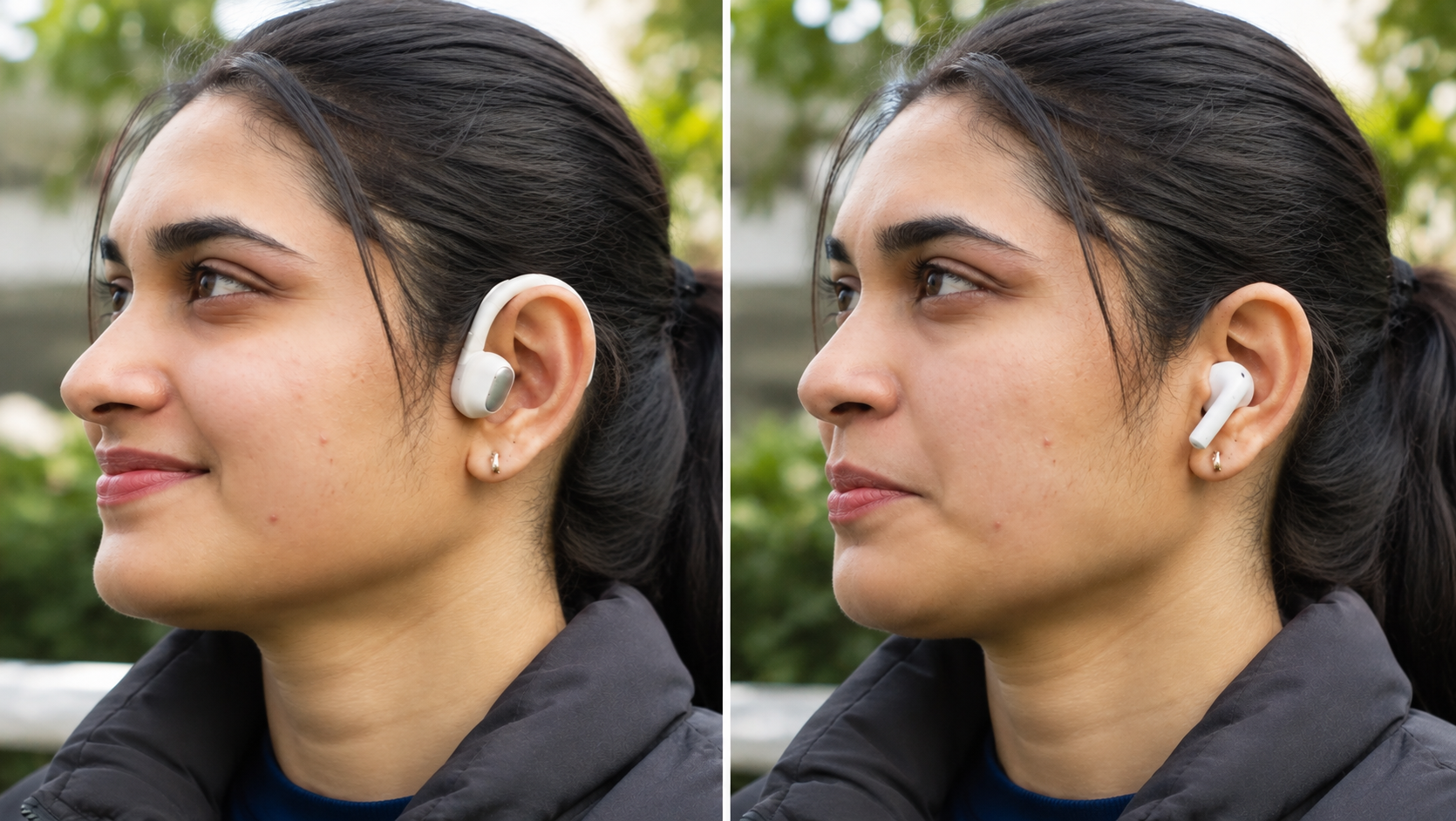
Traditional in-ear earbuds use silicone or foam tips to seal your ear canals. Newer open-ear designs sit outside the ear canal, allowing surrounding sounds to reach your ears naturally. Both styles have advantages, but their different designs affect your ears in different ways.
In this guide, we compare open-ear and in-ear earbuds to help you understand their health benefits and drawbacks. You’ll learn how each design affects ear hygiene, listening comfort, and hearing protection. We’ll also explore their sound quality, noise isolation, and everyday limitations. By the end, you’ll understand which earbud style better suits your listening habits.
Are Open Earbuds Better Than In-Ear Earbuds?
Open-ear earbuds can be better than traditional in-ear earbuds if you prioritize comfort, situational awareness, and reduced ear canal contact. They sit outside your ear canal instead of sealing it with silicone or foam tips. This design allows natural airflow and reduces friction inside your ears. It can also make extended listening more comfortable for people who dislike traditional ear tips.
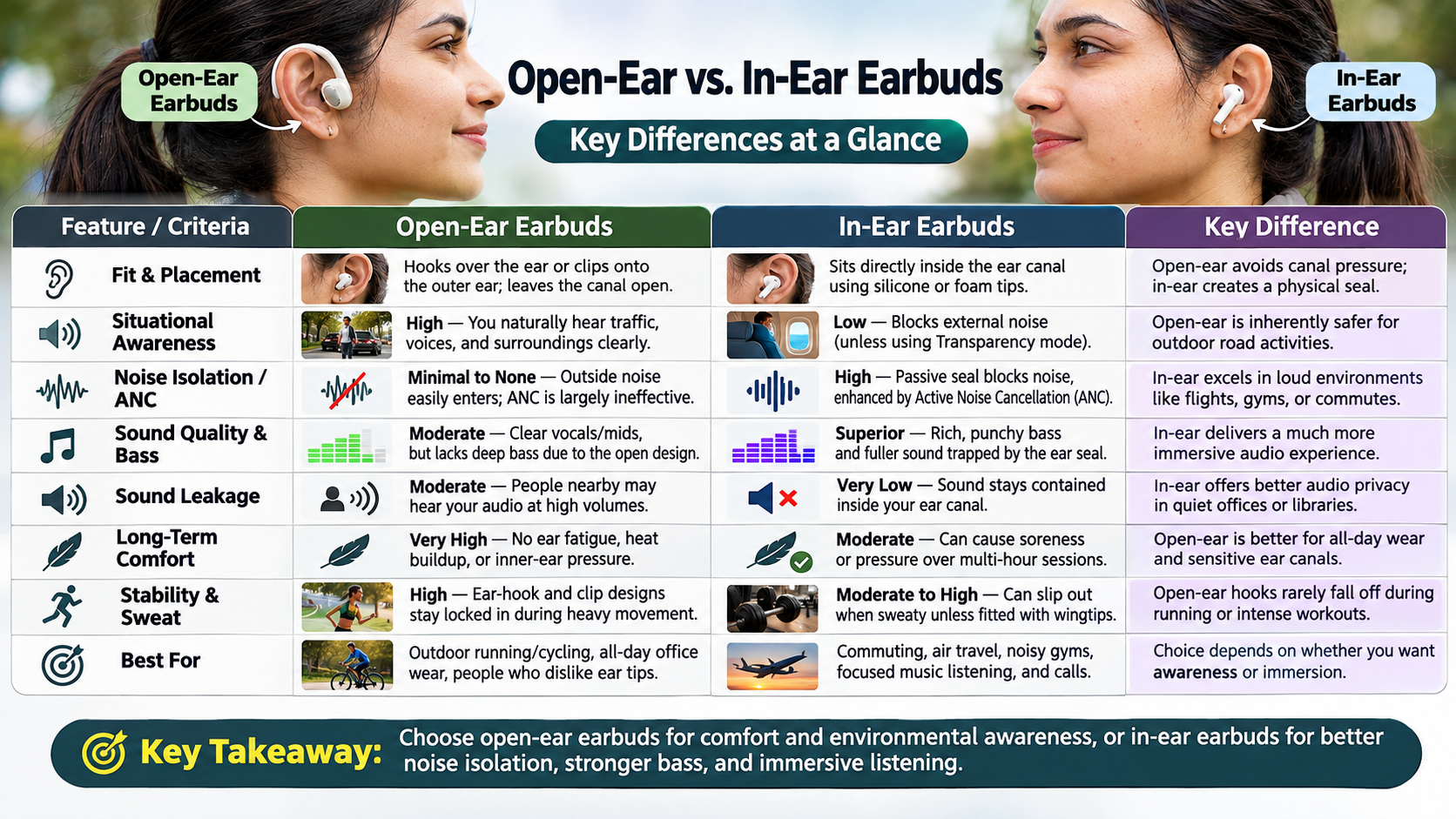
However, open-ear earbuds aren’t automatically healthier or safer in every situation. Their open design allows traffic, conversations, and other environmental sounds to reach your ears. This makes them useful for outdoor activities and busy workplaces. In contrast, in-ear earbuds offer better noise isolation and stronger bass response.
Ultimately, choosing between open-ear vs. in-ear earbuds depends on your environment and listening habits. Consider these differences before purchasing:
- Open-ear earbuds: Better environmental awareness and less ear canal contact.
- In-ear earbuds: Better noise isolation, bass response, and immersive listening.
- Both designs: Require responsible volume levels and regular listening breaks.

Matching Your Earbuds to Your Daily Environment
Your daily activities should influence your choice between open-ear and in-ear earbuds. Different environments create different listening requirements. Choosing the appropriate design can improve comfort and reduce the temptation to increase your volume unnecessarily.
Open-ear earbuds work particularly well in environments where environmental awareness matters. Their design lets you hear surrounding sounds without removing your headphones. Consider using them for:
- Outdoor walking and running.
- Cycling where permitted and safe.
- Office environments where conversations matter.
- Everyday activities around your home.
In-ear earbuds are more suitable when you need greater noise isolation. Their sealed design reduces surrounding noise and helps you hear audio clearly in louder environments.
For example, they can be useful during flights, train journeys, and focused study sessions. However, avoid using noise-isolating earbuds in situations requiring full environmental awareness. Cyclists and pedestrians should also follow local safety regulations. Neither design replaces awareness of surrounding hazards.
Are Open-Ear Earbuds Healthier?
Open-ear earbuds can offer certain ear health advantages over traditional in-ear designs. Their biggest advantage is reduced contact with the ear canal. Because they don’t require silicone tips inside your ears, they avoid some irritation associated with prolonged in-ear use. They also allow natural airflow instead of creating a sealed environment.
This design may feel more comfortable for people who experience itching, soreness, or irritation from traditional ear tips. It can also reduce moisture retention caused by tightly fitted earbuds. However, open-ear earbuds don’t eliminate infection risks. Poor hygiene, contaminated surfaces, and excessive moisture can still cause ear problems.
Another advantage involves environmental awareness. You can hear surrounding conversations and traffic more easily. However, this doesn’t protect your inner ear from excessive sound exposure. Listening volume and duration remain important, regardless of earbud design.
Protecting Your Hearing From Volume Spikes
Open-ear earbuds provide better environmental awareness, but they introduce another hearing-related challenge. Outside noise can interfere with your music, especially in crowded streets or busy public spaces. This may encourage you to increase the volume to hear your audio clearly.
Unfortunately, consistently listening at excessive volumes can damage the sensitive hair cells inside your inner ear. This damage can lead to permanent hearing loss or tinnitus. Open-ear designs cannot prevent this type of hearing damage simply by keeping your ear canals uncovered.
Follow these practical listening habits:
- Keep your listening volume at a comfortable level.
- Avoid increasing volume to overcome loud background noise.
- Take regular breaks during extended listening sessions.
- Use your device’s headphone safety notifications when available.
- Check the recommended exposure limits for your listening volume.
The WHO recommends keeping personal listening device volume below 60% of maximum when possible. However, this percentage isn’t a universal safety guarantee. Actual sound output varies between devices and headphones. Following the 60-60 rule for headphones can also help you develop safer listening habits. Listening duration matters just as much as volume.
What Are the Disadvantages of IEM?
IEMs also reduce awareness of surrounding sounds. This can become a safety concern when walking near traffic or participating in outdoor activities. Their passive noise isolation works differently from active noise cancellation, which uses additional technology to reduce background sounds. Understanding noise cancellation and adaptive audio modes can help you distinguish between these listening technologies. Additionally, their sealed design can make some users uncomfortable during extended listening sessions.
Another concern involves moisture and hygiene. Wearing in-ear earbuds during intense workouts can trap sweat around the ear canal. Combined with poor cleaning habits, this environment may increase irritation and infection risks. Incorrect insertion or frequent use can also push earwax deeper into the canal, potentially causing blockages.
IEMs also reduce awareness of surrounding sounds. This can become a safety concern when walking near traffic or participating in outdoor activities. Additionally, their sealed design can make some users uncomfortable during extended listening sessions.
However, these disadvantages aren’t unavoidable. Proper fit, regular cleaning, and responsible listening habits can reduce many associated risks.
Managing Ear Canal Pressure and Hygiene
Poorly fitted IEMs can create uncomfortable pressure around the ear canal. Wearing them for extended periods may also cause friction, soreness, or irritation. Choosing the correct ear tip size is essential for comfortable listening. Your earbuds should feel secure without creating excessive pressure.
Good cleaning habits can also reduce hygiene-related problems. Sweat, earwax, and dirt can accumulate on silicone and foam tips. Regular maintenance is essential, and following proper headphone cleaning and maintenance practices can help keep your audio equipment in good condition. Clean reusable ear tips according to the manufacturer’s instructions. Avoid using alcohol wipes unless the manufacturer confirms they’re safe for the materials.
Follow these practical hygiene tips:
- Clean removable silicone tips regularly.
- Allow ear tips to dry completely before reuse.
- Avoid sharing your earbuds with other people.
- Remove earbuds if you experience itching or soreness.
- Take regular breaks during extended listening sessions.
- Replace damaged or deteriorating ear tips.
You should also avoid inserting earbuds too deeply into your ear canals. If you experience persistent pain, discharge, or hearing changes, stop using them and consult a healthcare professional.
What’s the Difference Between In-Ear and Earbuds?
The main difference between in-ear headphones and standard earbuds involves their physical fit. In-ear earbuds use silicone or foam tips that enter the ear canal. These tips create a seal that reduces surrounding noise and improves bass response. This design makes them suitable for people who prefer immersive listening experiences.
Standard earbuds usually rest in the outer bowl of your ear without creating a tight seal. They allow more environmental sound to reach your ears naturally. However, their fit and sound quality can vary depending on their shape and design.
Open-ear headphones take this concept further. Many models use ear hooks, clips, or directional speakers that sit outside the ear canal. They deliver audio without requiring traditional ear tips.
Here are the main differences:
- In-ear earbuds: Enter the ear canal and provide passive noise isolation.
- Standard earbuds: Rest near the ear canal entrance with a less restrictive fit.
- Open-ear headphones: Keep the ear canal uncovered while delivering audio.
How Fit Changes Your Audio Experience
The way earbuds fit your ears directly affects sound quality and listening comfort. In-ear models create a seal that helps deliver stronger bass and clearer audio details. Because they reduce outside noise, you can often enjoy your music without increasing the volume as much.
Standard earbuds generally produce a more open listening experience. However, their sound may vary depending on how securely they sit inside your ears. Some frequencies, particularly bass, can sound less powerful without a proper acoustic seal.
Open-ear headphones use different technologies to deliver sound. Some direct audio toward your ears using small speakers. Others use bone conduction to transmit vibrations through your cheekbones.
These designs offer different listening experiences:
- In-ear models: Stronger bass and better passive noise isolation.
- Standard earbuds: Less isolation and a more natural connection to surrounding sounds.
- Air-conduction open-ear models: Audio delivery without sealing the ear canal.
- Bone-conduction headphones: Sound transmission through vibrations in the bones.
Your preferred listening experience ultimately depends on sound quality, comfort, and environmental requirements.
What Are the Disadvantages of Open-Ear Headphones?
Open-ear headphones offer comfort and environmental awareness, but they also have some limitations. Their biggest disadvantage is poor noise isolation. Because they leave your ear canals uncovered, surrounding sounds can easily interfere with your music or podcasts. This becomes particularly noticeable in crowded streets, busy offices, airplanes, and train stations. If you frequently listen in noisy environments, understanding how to choose the right noise-cancelling headphones can help you find a more suitable alternative.
Another limitation involves bass performance. Many open-ear models struggle to reproduce the same powerful low frequencies as sealed in-ear earbuds. Their sound can also become less clear in noisy environments.
Sound leakage is another potential drawback. Since open-ear headphones don’t create a tight acoustic seal, nearby people may hear some of your audio at higher volume levels. This can become distracting in quiet libraries, offices, or shared spaces.
Wind noise can also affect outdoor listening. Strong airflow may interfere with microphone performance or reduce perceived audio clarity, depending on the headphone design.
Dealing With Sound Leakage and Wind Noise
Sound leakage occurs when audio escapes from your headphones and becomes audible to people nearby. This is more common with open-ear designs because their speakers don’t create a sealed listening environment. The amount of leakage depends on speaker placement, volume, and headphone construction.
You can reduce this problem by making a few simple adjustments. First, keep your listening volume at a moderate level. Second, position your headphones according to the manufacturer’s fitting instructions. Proper placement can improve audio delivery and reduce unnecessary sound leakage.
Wind noise requires a different approach. Outdoor runners and cyclists may notice unwanted noise when strong air passes around their headphones. Models with wind-resistant microphones and suitable speaker positioning can help improve the experience.
Consider these practical tips:
- Lower your volume in quiet public spaces.
- Position open-ear speakers correctly.
- Choose models with wind-noise reduction features.
- Avoid maximum volume in noisy environments.
- Check microphone performance before purchasing headphones for outdoor calls.
Remember, open-ear headphones prioritize awareness and comfort rather than complete audio isolation.
Frequently Asked Questions
1. Can Open-Ear Earbuds Cause Hearing Loss?
Yes. Open-ear earbuds can cause hearing loss if you listen at excessive volumes for extended periods. Keeping your ear canals uncovered doesn’t protect your inner ear from loud sound exposure. Similar concerns apply to other popular wireless earbuds, and understanding whether AirPods are more likely to damage your hearing can provide additional context. Maintain comfortable listening levels and take regular breaks.
2. Are In-Ear Earbuds Bad for Everyday Use?
Not necessarily. In-ear earbuds are generally suitable for everyday use when they fit properly and remain clean. Avoid excessive listening volumes and remove them if you experience irritation or discomfort.
3. Are Open-Ear Earbuds Better for Ear Infections?
They may reduce certain irritation risks because they don’t sit inside your ear canals. However, they don’t completely prevent infections. Proper hygiene remains important with every headphone design.
4. Which Earbuds Are Better for Long Listening Sessions?
Open-ear earbuds may feel more comfortable during extended listening because they avoid direct ear canal contact. However, comfort depends on the individual design and fit. Regular breaks remain important regardless of your choice.
5. Do Open-Ear Earbuds Have Good Sound Quality?
Many modern open-ear earbuds provide clear vocals and balanced audio. However, they generally offer less bass and noise isolation than sealed in-ear models. Performance varies between manufacturers and headphone technologies.
Final Verdict: Open-Ear vs. In-Ear Earbuds
Choosing between open-ear vs. in-ear earbuds ultimately depends on your comfort preferences, listening environment, and audio requirements. Neither design is automatically healthier or safer for everyone.
Open-ear earbuds are worth considering if you dislike silicone ear tips, prefer environmental awareness, or want a less restrictive listening experience. In-ear earbuds are more suitable when you prioritize immersive audio, stronger bass, and noise isolation.
Regardless of your choice, responsible listening habits matter most. Keep your volume comfortable, clean your headphones regularly, and take breaks during extended sessions. These simple habits can help you enjoy your favorite audio while reducing avoidable hearing and ear health risks.