
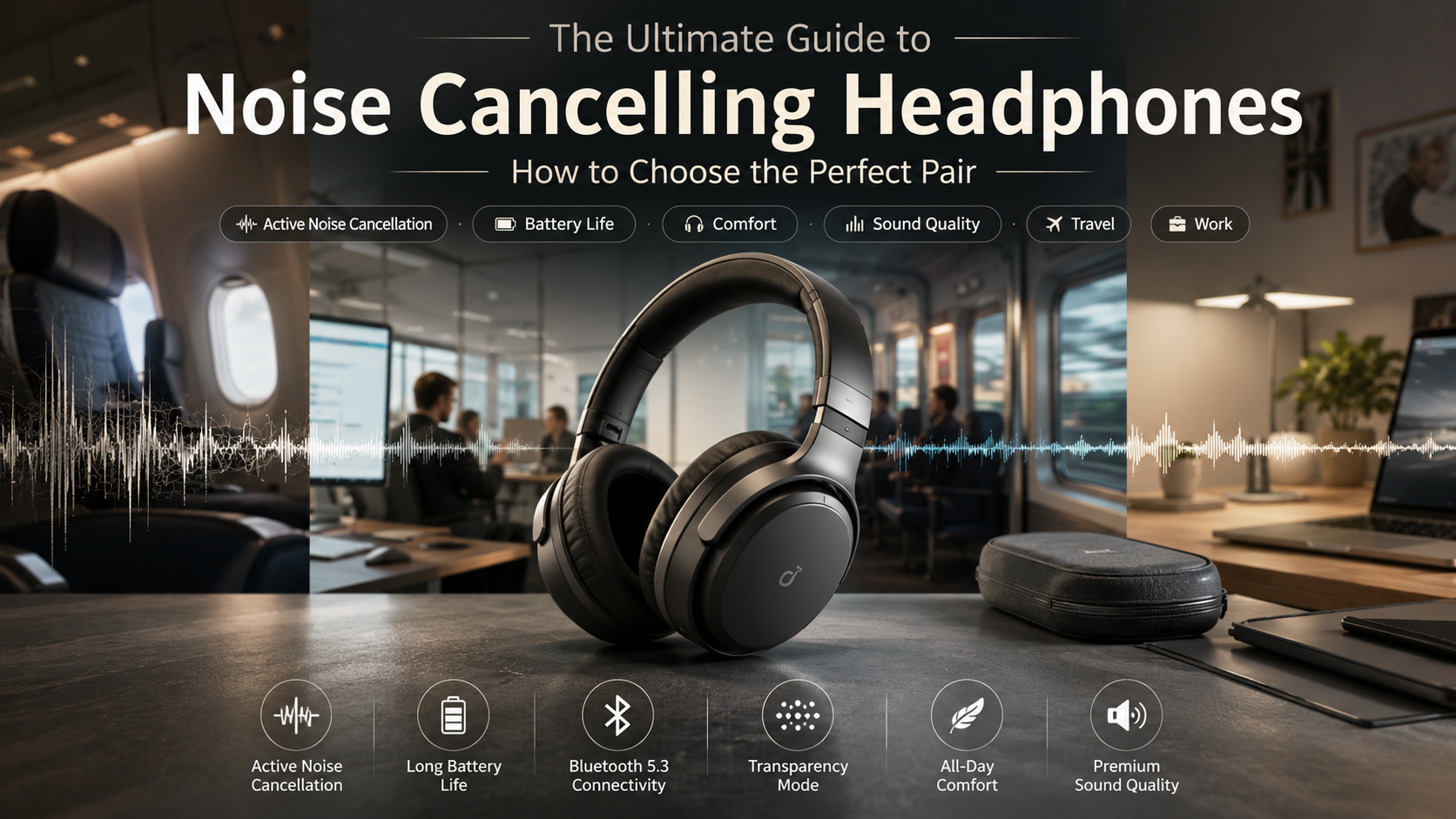
The Ultimate Guide to Noise Cancelling Headphones: How to Choose the Perfect Pair
The world is becoming louder every day, but your listening experience does not have to suffer. Whether you are working in a busy café, traveling on a long flight, or relaxing at home, noise cancelling headphones can help create a quieter and more focused environment.
These headphones have moved beyond being a premium travel accessory. Today, they are useful tools for work, entertainment, study, and everyday relaxation. By reducing unwanted background noise, they allow you to enjoy music, podcasts, and calls without increasing the volume to unhealthy levels.
The technology behind these devices has developed significantly over the years. One of the major contributors to commercial active noise reduction was Bose Noise Cancelling Headphones Technology, which originally explored noise reduction solutions for pilots before introducing the technology to consumers.
Modern headphones use advanced microphones, processors, and algorithms to detect surrounding sounds. They then create signals that reduce unwanted noise before it reaches your ears. This process delivers a cleaner and more immersive listening experience.
Understanding how this technology works can help you make a smarter buying decision. Different headphones offer different levels of comfort, battery life, sound quality, and noise reduction performance.
In this complete guide, we will explain how active noise cancellation (ANC) works, compare popular headphone designs, and explore the most important features to consider. You will learn what separates basic models from premium options and how to choose the right pair for your needs, lifestyle, and budget.
Whether you need headphones for travel, office work, gaming, studying, or daily commuting, this guide will help you find the features that matter most.
How Noise Cancelling Headphones Block Out the World
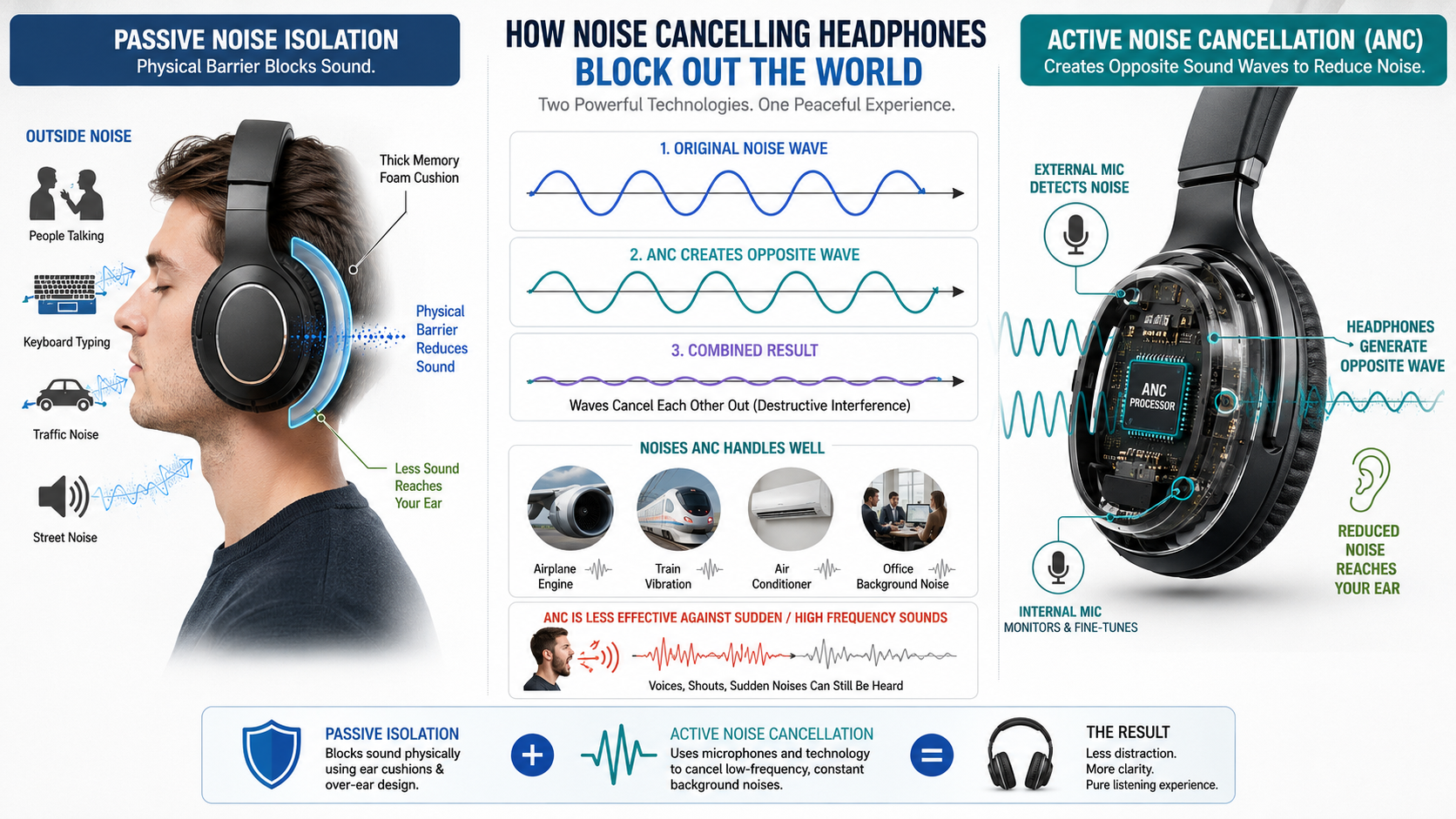

To understand the value of premium noise cancelling headphones, it helps to look at the technology behind them. Modern headsets use a combination of physical design and advanced electronics to reduce unwanted sounds.
Manufacturers rely on two main methods: passive noise isolation and active noise cancellation (ANC). Both methods improve your listening experience, but they work in very different ways.
Passive isolation depends on the physical structure of the headphones. Materials such as memory foam ear cushions and silicone ear tips create a barrier between your ears and outside sounds. This design blocks some noise before it reaches your ears.
Active noise cancellation uses electronic processing to reduce surrounding sounds. Small microphones inside and outside the headphones monitor environmental noise in real time.
The headphones then create an opposite sound wave, known as an inverted signal. This signal combines with the unwanted noise and reduces it through a process called destructive interference.
Together, passive isolation and ANC provide a more immersive audio experience. The best headphones combine both methods to deliver stronger noise reduction and clearer sound.
Passive vs. Active Noise Isolation: Understanding the Difference
Passive noise isolation is the simplest form of noise reduction. It does not require batteries, software, or electronic processing. Instead, it uses the physical design of headphones to block outside sounds.
Over-ear headphones achieve passive isolation through large ear cups and thick padding. Wireless earbuds use silicone tips that create a seal inside the ear canal.
This physical barrier works well against many everyday sounds. It can reduce voices, keyboard noise, and general background distractions. However, it cannot completely remove external noise.
Active Noise Cancellation (ANC) works differently. It uses built-in microphones to capture surrounding sounds. Internal processors analyze these sounds and generate an opposite waveform.
When the original noise and the generated signal meet, they partially cancel each other out. This makes ANC especially effective against consistent low-frequency sounds.
Common examples include:
- Airplane engine noise
- Train vibrations
- Air conditioners
- Office background sounds
ANC is less effective against sudden or unpredictable sounds, such as a person speaking nearby. For the best results, many premium headphones combine ANC technology with strong passive isolation.
The Science Behind Active Noise Cancellation
The technology behind ANC is based on the behavior of sound waves. Sound moves through the air as vibrations that create patterns of peaks and troughs.
When headphones detect an unwanted sound, their internal system creates a matching sound wave with the opposite pattern. This process is called destructive interference.
For example, if an outside noise creates a sound wave with a peak, the headphones produce a wave with a corresponding trough. When these waves interact, they reduce the overall sound level.
This process happens extremely quickly. Modern ANC headphones use advanced chips and algorithms to analyze sounds almost instantly.
The effectiveness of noise cancellation depends on several factors:
- Microphone quality
- Processing speed
- Headphone design
- Fit and seal quality
- ANC software performance
Because of these factors, two headphones with similar specifications may provide very different noise reduction results.
A comfortable fit is also important. Even the most advanced ANC system cannot perform well if outside sound easily enters through gaps around the ears.
Essential Features to Look For in Noise Cancelling Headphones
Choosing the right pair of active noise cancelling headphones requires more than checking the noise reduction rating. The best model depends on how and where you plan to use it.
Travelers may prioritize battery life and comfort. Office users may need clear calls and smart switching features. Music lovers may focus more on sound quality and customization options.
Understanding the most important features helps you avoid paying for options you do not need. It also ensures your headphones match your daily routine.
Before buying, consider factors such as battery performance, connectivity, comfort, sound quality, and smart features.
Battery Life and Charging Performance
Active noise cancellation requires additional processing power, which affects battery usage. Because of this, ANC headphones usually have shorter battery life than standard wireless models.
Most high-quality over-ear headphones provide around 20 to 30 hours of playback with ANC enabled. Some newer models can last even longer with efficient power management.
Fast charging is another useful feature. Many headphones provide several hours of listening time after only a short charging period.
When comparing battery performance, consider:
- Playback time with ANC turned on
- Charging speed
- Battery life with ANC disabled
- Charging port type
- Availability of wired listening options
For frequent travelers, longer battery life reduces the need to carry chargers everywhere. For daily commuters, quick charging can be especially convenient.
Smart Ambient Sound Modes and Modern Features
The best noise cancelling headphones do more than block outside sounds. Many modern models include intelligent features that help you control how much of the environment you hear.
Transparency mode or ambient mode uses external microphones to bring outside sounds into your headphones. This allows you to stay aware without removing your device.
This feature is useful when:
- Walking near traffic
- Listening for airport announcements
- Talking with coworkers
- Moving through public spaces
Many premium headphones also include additional smart features:
- Adaptive ANC: Automatically adjusts noise cancellation based on your surroundings.
- Custom equalizers: Let you adjust bass, mids, and treble through a mobile app.
- Multi-point Bluetooth: Allows connection to multiple devices, such as a laptop and smartphone.
These features improve convenience and make headphones easier to use throughout the day.
Finding the Right Fit: Why Headphone Design Matters
The design of your noise cancelling headphones plays an important role in comfort, sound quality, and noise reduction performance. A good fit improves passive isolation and helps the ANC system work more effectively.
Most headphones fall into two main categories: over-ear headphones and true wireless earbuds. Each style has its own advantages and limitations.
Your choice should depend on your daily activities, comfort preferences, and how you plan to use the headphones.
For example, frequent travelers may prefer over-ear models because they provide stronger isolation and long-lasting comfort. People who commute, exercise, or need maximum portability may prefer wireless earbuds.
Before choosing a pair, consider:
- How long you wear headphones each day
- Whether you travel frequently
- How much portability matters
- Your preferred sound experience
- Your comfort requirements
The right design will make your headphones more enjoyable and improve your overall listening experience.
Over-Ear Noise Cancelling Headphones
Over-ear headphones are often considered the best choice for maximum noise reduction. Their large ear cups completely surround your ears and create a strong physical barrier against outside sounds.
This design provides excellent passive isolation while giving the ANC system more support. As a result, many premium over-ear models perform extremely well in noisy environments.
They are especially useful for:
- Long flights
- Office work
- Studying
- Home listening sessions
- Professional audio use
The larger design also allows manufacturers to include bigger drivers. This can improve sound quality, bass response, and overall audio detail.
However, over-ear headphones are not perfect for everyone. Their larger size makes them less convenient to carry compared with earbuds. They can also feel warmer during extended use, especially in hot environments.
If comfort and strong noise reduction are your priorities, over-ear headphones remain one of the best options available.
True Wireless Noise Cancelling Earbuds
True wireless earbuds have become popular because of their compact size and convenience. They fit easily into pockets and are ideal for people who need portable audio throughout the day.
Modern wireless earbuds have improved significantly. Many models now offer advanced ANC technology that can reduce background noise effectively.
Their small design makes them perfect for:
- Daily commuting
- Exercise sessions
- Outdoor activities
- Quick phone calls
- Travel on the go
Unlike over-ear headphones, earbuds rely heavily on ear tip fit. A proper seal is necessary for strong passive noise isolation and better ANC performance.
However, earbuds usually cannot match the complete noise reduction of larger over-ear designs. Their smaller batteries may also require more frequent charging.
For users who value portability and convenience, true wireless earbuds provide an excellent balance between performance and flexibility.
Frequently Asked Questions About Noise Cancelling Headphones
How do noise cancelling headphones protect your hearing?
Noise cancelling headphones can help protect your hearing by reducing the need to increase volume in noisy environments. When people cannot hear their audio clearly, they often raise the volume to compete with surrounding sounds.
Long-term exposure to loud audio can increase the risk of hearing damage. Health experts commonly warn that repeated exposure to high sound levels can harm the delicate structures inside the ear.
ANC headphones reduce background noise, allowing you to enjoy music, podcasts, and calls at a lower volume. This creates a more comfortable listening experience without forcing your ears to work harder.
For example, commuters on buses or airplanes often increase their volume because of engine noise and conversations around them. With effective noise cancellation, they can maintain clearer audio at safer levels.
However, noise cancelling technology does not make listening at high volumes safe. Volume level and listening duration still matter. The best approach is to combine ANC with responsible listening habits.
Can noise cancelling headphones completely block out voices?
No, noise cancelling headphones cannot completely remove human voices. ANC technology works best with consistent, low-frequency sounds rather than sudden and unpredictable noises.
Examples of sounds ANC handles well include:
- Airplane engine vibrations
- Train movement
- Air conditioning systems
- Road noise
Human speech is more difficult to cancel because voices constantly change in tone, volume, and frequency. The technology cannot always react quickly enough to eliminate every conversation nearby.
However, good headphones can still reduce voices significantly. The physical design of the ear cups or ear tips blocks additional sound through passive isolation.
When combined with music or another audio source, ANC can make nearby conversations much less distracting. This is why many people use noise cancelling headphones for offices, libraries, and travel.
Is active noise cancellation safe while walking outside?
Active noise cancellation is generally safe when used responsibly. However, wearing headphones with strong noise reduction while walking near traffic can reduce your awareness of important environmental sounds.
Sounds such as:
- Car horns
- Emergency vehicles
- Bicycle bells
- Approaching vehicles
may be harder to notice with full ANC enabled.
For outdoor activities, many headphones offer Transparency Mode or Ambient Mode. These features allow outside sounds to pass through the headphones using built-in microphones.
This makes it easier to stay aware of your surroundings while still enjoying your audio.
When walking in busy areas, cycling, or crossing roads, consider reducing noise cancellation or using awareness modes. Safety should always come before audio immersion.
Do noise cancelling headphones drain your phone battery faster?
No, noise cancelling headphones do not significantly increase your smartphone or laptop battery usage. The additional processing required for ANC happens inside the headphones themselves.
The headphones use their own built-in battery to power:
- External microphones
- Noise processing chips
- ANC algorithms
- Wireless features
Your phone mainly provides the Bluetooth connection and audio signal. It does not handle the noise cancellation processing.
Because ANC requires extra power, your headphones will usually have shorter battery life when the feature is activated. Turning ANC off can extend headphone battery performance.
However, your phone battery will remain mostly unaffected whether ANC is enabled or disabled.
Why do some people feel ear pressure when using ANC?
Some users experience a sensation of pressure when first using active noise cancellation. This feeling is sometimes described as ANC pressure or a “blocked ear” sensation.
The headphones are not physically pushing against your eardrums. Instead, your brain may interpret the sudden reduction of low-frequency sounds as a pressure change.
This sensation can feel similar to:
- Riding in an elevator
- Flying in an airplane
- Changes in altitude
For most people, the feeling becomes less noticeable after regular use. It may also help to adjust the ANC level if your headphones provide different intensity settings.
If the sensation feels uncomfortable, taking short breaks or using a lower cancellation setting can improve comfort.
Conclusion: Choosing the Best Noise Cancelling Headphones for Your Needs
Investing in a quality pair of noise cancelling headphones can improve your focus, productivity, and everyday listening experience. These devices combine advanced technology with thoughtful design to create a quieter personal environment.
Whether you work remotely, travel often, study, or simply enjoy music, ANC headphones give you better control over the sounds around you.
The best choice depends on your lifestyle. Frequent travelers may benefit from over-ear headphones with strong noise reduction and long battery life. Active users may prefer lightweight wireless earbuds with a secure fit and reliable transparency features.
Before purchasing, consider the factors that matter most:
- Comfort during long listening sessions
- Battery performance
- Sound quality
- Noise cancellation strength
- Smart features
- Device compatibility
A great pair of headphones does more than play audio. It creates a personal space where you can concentrate, relax, and enjoy your favorite content without unnecessary distractions.
As noise levels continue to increase in modern life, noise cancelling headphones offer a practical way to improve your listening experience while maintaining comfort and control.
If you want to understand how audio influences concentration, emotions, and mental performance, explore our guide on how music affects the brain, memory, and focus to learn more about the connection between sound and cognitive function.