

Online or Distance Learning: Which Format Fits Your Educational Goals?
Choosing how to advance your education is a major decision. Today, non-traditional education pathways are more accessible than ever. If you want flexible study options, you may be comparing online or distance learning to find the format that suits your schedule, budget, and learning style. Although people often use these terms interchangeably, they describe different education delivery models. For broader context, you can also explore the future of online education and how digital learning may continue to evolve.
Regulatory organizations such as the Distance Education Accrediting Commission (DEAC) help maintain academic standards for eligible distance education institutions. However, the student experience can differ significantly between delivery methods. Online programs often use interactive digital classrooms, while traditional distance learning emphasizes independent study through physical or digital course materials.
Understanding these differences can help you protect your investment of time and money. This guide explains the key differences between online learning and distance learning, including credential validity, employer perceptions, flexibility, technology requirements, and potential disadvantages. By understanding each option, you can choose a format that better matches your educational goals.
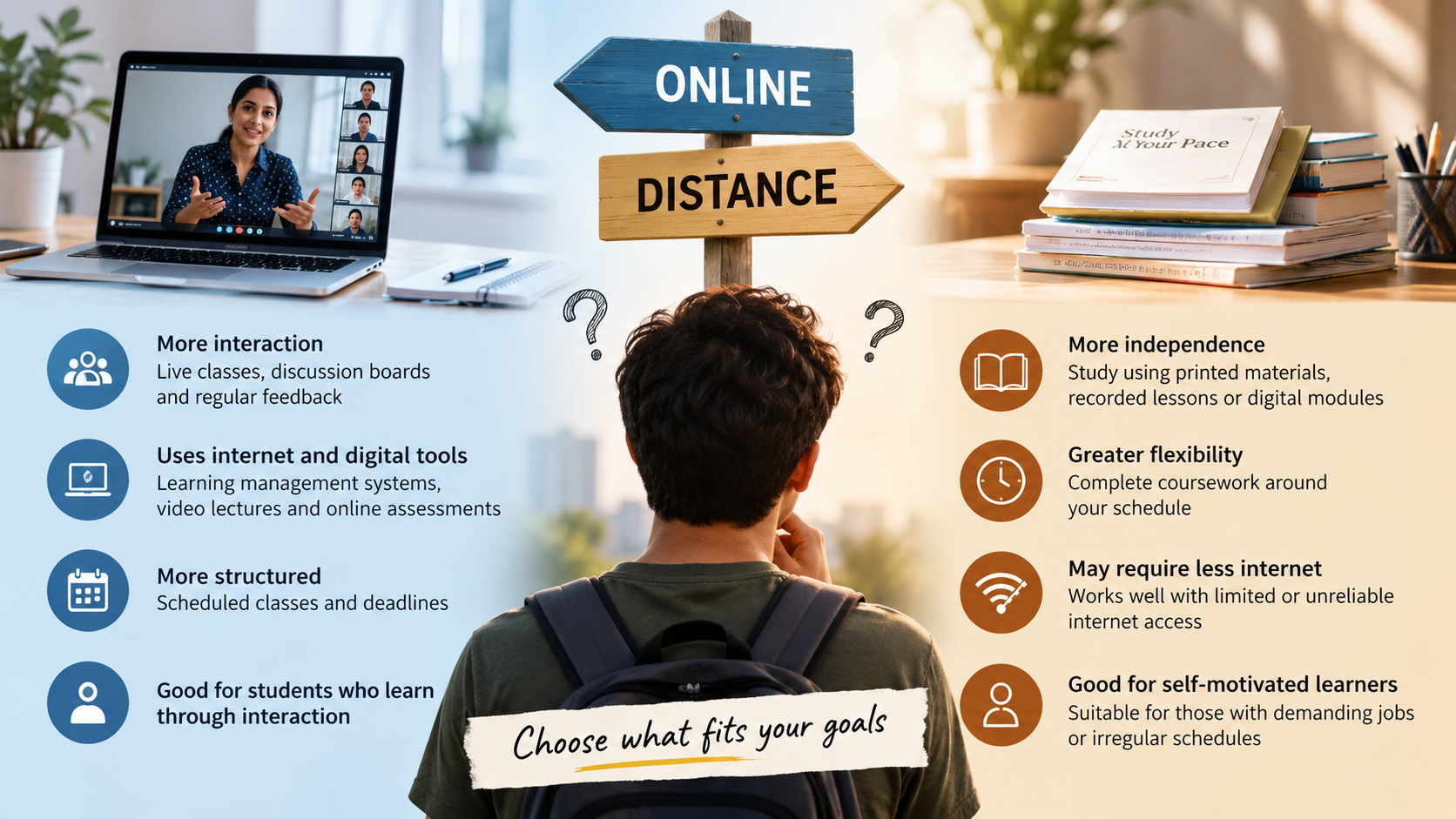

Which is better, online or distance learning?
Neither format is universally better. The right option depends on your schedule, budget, technology access, and preferred learning style. Online learning usually depends on reliable internet access, digital learning platforms, virtual lectures, and regular communication with instructors and classmates. This creates a more structured classroom experience from home. Students comparing these options can also review different types of alternative education to understand how non-traditional formats differ.
Distance learning generally provides greater independence. Students may receive textbooks, printed materials, recorded lessons, or digital modules. They can often complete coursework around their existing responsibilities without attending live sessions.
Online learning may suit students who benefit from regular interaction and immediate feedback. Distance learning can work better for people with demanding jobs, irregular schedules, or limited access to reliable internet services.
Before enrolling, consider how much structure you need to stay motivated. Also check whether the program requires live attendance, scheduled examinations, or frequent group activities.
The Deciding Factor: Engagement Versus Independence
The biggest difference often comes down to engagement versus independence. Online programs typically provide more opportunities for interaction through discussion boards, video meetings, group projects, digital quizzes, and virtual collaboration. These features can benefit students who learn through conversation and regular feedback. For instructors looking to make virtual sessions more interactive, icebreaker games for virtual classrooms can provide simple ways to encourage participation.
Distance learning usually places greater responsibility on the student. You may need to read course materials independently, plan your study hours, complete assignments, and monitor deadlines without frequent live interaction.
Consider your existing routine before choosing a format. A student working standard hours may appreciate scheduled online classes. Someone working rotating shifts may need the flexibility of independent distance study.
Your learning environment also matters. Online programs can require a quiet workspace and reliable connectivity. Distance programs may reduce those requirements, although many still use online portals for assignments and communication. Creating a minimalist study desk setup can also help students maintain an organized space for coursework and online classes.
The best choice is therefore less about which format sounds modern. It is about which structure you can realistically maintain throughout the entire program.
Which is better for me, ODL or online learning?
Choosing between Open and Distance Learning (ODL) and online learning requires an honest assessment of your routine, discipline, and technology access. ODL programs often provide flexible study arrangements and may use printed materials, recorded content, digital resources, or a combination of methods. This can suit students balancing employment, family responsibilities, or other commitments.
Online learning generally provides a more digitally connected experience. Students may use learning management systems, video lectures, online assessments, discussion forums, and scheduled virtual classes. Reliable internet access therefore becomes more important.
Consider how you normally learn. If you prefer independent reading and flexible study hours, ODL may provide a better fit. If you prefer regular deadlines, instructor interaction, and multimedia resources, an online program may offer more structure.
Also examine the specific institution rather than relying only on the program label. ODL and online courses can differ significantly in attendance rules, assessment methods, support services, and technology requirements.
Assessing Your Daily Schedule and Tech Comfort
Your daily schedule should play a major role in choosing between ODL and online learning. If you work long hours or have unpredictable responsibilities, a program with fewer mandatory live sessions may provide useful flexibility.
Technology comfort is another important consideration. Online programs can involve frequent video meetings, digital assignments, online examinations, learning platforms, and virtual communication. Students should have reliable internet access and enough confidence to use these tools.
ODL may provide more flexibility for students who prefer studying independently. However, it does not necessarily mean that technology is completely optional. Many modern ODL programs still use websites, student portals, email, and digital resources.
Before enrolling, check the program’s actual requirements rather than assuming how it works from its name. Ask whether attendance is mandatory, how assessments are conducted, and how quickly instructors respond to questions.
This comparison can help you identify a format that fits your schedule, technology access, study habits, and need for academic support.
Is an ODL degree valid?
Yes, an ODL degree can be valid and recognized when it comes from a properly authorized and accredited institution. However, recognition depends on the institution, program, jurisdiction, and applicable regulatory requirements. Students should therefore verify these details before enrolling rather than assuming every distance program has equal recognition.
Recognized higher education institutions can offer ODL programs that meet established academic and quality requirements. Employers, government organizations, and other universities may accept these qualifications when the institution and program meet the relevant standards.
Before applying, check the institution’s status through the appropriate official higher education or regulatory authority. Also confirm that the specific program is approved when separate program-level approval applies.
Recognition can matter for employment, professional licensing, government recruitment, and further education. Requirements may differ between countries and professions, so students should verify the rules that apply to their specific goal.
An ODL qualification can therefore be a legitimate academic pathway, but institutional recognition should always be verified before enrollment.
Verifying Institutional Accreditation Before You Apply
Checking accreditation and authorization should be one of your first steps when selecting an ODL institution. Do not rely only on claims made on a university’s website or advertisements. Look for confirmation through the relevant government education authority, accrediting organization, or official higher education directory.
Also verify whether the recognition applies to the specific institution and program you plan to study. Some fields have additional requirements, particularly when professional licensing or regulated employment is involved.
You should also review the institution’s examination system, curriculum, student support, and academic policies. These factors can affect your experience even when the qualification itself is recognized.
Keep copies of official accreditation or authorization information before paying fees. If the institution provides unclear answers about recognition, treat that as a warning sign and investigate further.
Taking these steps can reduce the risk of earning a qualification that does not meet your intended employment, professional, or postgraduate study requirements.
Which degree is more valuable, online or offline?
An accredited online degree is not automatically less valuable than an offline degree. The practical value of either qualification depends on factors such as institutional reputation, accreditation, field of study, curriculum, skills, and work experience.
Some subjects work particularly well online because they rely heavily on digital resources. Business, information technology, computer science, and many humanities programs can often be delivered effectively through digital platforms.
Other disciplines require substantial hands-on training. Clinical medicine, laboratory sciences, engineering practice, and performing arts may involve facilities or practical experiences that are difficult to reproduce entirely online.
Employers may also look beyond the delivery format. They often consider the institution, relevant skills, professional experience, portfolio work, internships, and the requirements of the specific role.
This means comparing online and offline degrees only by their delivery method can be misleading. Instead, examine the actual program and ask whether it provides the knowledge, practical experience, and recognition needed for your career goals.
How Employers Gauge Credential Worth in Practice
Employers typically evaluate more than the format used to deliver a degree. They may consider the institution’s standing, the relevance of the qualification, your technical abilities, professional experience, and evidence that you can perform the required work.
For technology and creative roles, practical evidence can be particularly useful. A portfolio, internship, personal project, certification, or previous employment can demonstrate skills that a degree alone may not show.
For technology and creative roles, practical evidence can be particularly useful. A portfolio, internship, personal project, certification, or previous employment can demonstrate skills that a degree alone may not show. Aspiring designers can also explore free tools for aspiring designers when building practical projects and portfolio work.
However, employer expectations vary by industry and organization. Some regulated professions may have specific education or licensing requirements. Always research the requirements for your target role before selecting an education format.
Rather than assuming an online degree has less value, examine the institution, accreditation, curriculum, career relevance, and practical opportunities attached to the specific program.
What Is the Disadvantage of Studying Online?
The main disadvantage of studying online is limited face-to-face interaction. Students may miss informal conversations, campus activities, physical facilities, and the social environment found in traditional education.
Online learning also requires strong self-management. Without a physical classroom, some students may struggle to stay focused, meet deadlines, or separate study time from household responsibilities. Screen fatigue can also become a concern when lectures, assignments, communication, and assessments happen digitally.
Technical problems can interrupt learning as well. Slow internet, software issues, device failures, or platform outages may affect classes and assessments. Students in areas with unreliable connectivity may face additional challenges.
Another limitation is student networking. Online communities can create meaningful connections, but they may not fully replace relationships built through daily campus interaction.
Disadvantages of Studying Online
- Less face-to-face interaction: Students may have fewer opportunities for direct conversations and social interaction with classmates and teachers.
- Requires self-discipline: Online courses demand strong time-management skills and consistent study habits without the structure of a physical classroom.
- Screen fatigue: Spending several hours attending lectures and completing assignments online can cause digital fatigue.
- Technical problems: Poor internet connections, device failures, and software issues can interrupt classes or assessments.
- Limited campus experience: Online students may miss physical libraries, laboratories, campus events, and other facilities.
- Fewer networking opportunities: Digital communication can help students connect, but it may not fully replace in-person networking.
- Home distractions: Household responsibilities, noise, family members, and other interruptions can make it harder to concentrate.
Online learning can still work effectively when students have reliable technology, a suitable study space, and strong time-management habits. However, prospective students should consider these challenges alongside the flexibility and convenience of online education and choose a learning environment that supports consistent study habits.
FAQ SECTION
Can I switch between distance education and online modes mid-degree?
Transfer options depend entirely on your institution’s academic policies. While some comprehensive universities allow students to transition between ODL tracks and virtual classrooms, course structures and credit systems often differ. You must consult your university registrar or academic advisor to evaluate whether your completed credits directly transfer into the new delivery format without extending your overall graduation timeline or adding unexpected tuition fees.
Are online degrees cheaper than traditional distance learning programs?
Distance learning programs are typically cheaper than online programs. ODL formats usually rely on standardized printed or recorded study materials, keeping university overhead costs low. Online degree programs often incorporate proprietary learning management systems, live video conferencing platforms, continuous digital student services, and interactive technology tools, which can result in tuition fees that closely resemble on-campus rates.
Do employers run background checks specifically to see if a degree was online?
Employers verify degree authenticity, accreditation status, major, and graduation date through background checks, but they rarely investigate delivery formats. Most accredited university transcripts and diplomas do not distinguish whether you earned credits online or in an on-campus lecture hall. Recruiters focus primarily on whether your degree comes from a recognized, legitimate educational institution.
CONCLUSION
Selecting between online or distance learning requires an honest look at your personal learning style, budget, and professional aims. Both educational models provide flexible, viable alternatives to conventional campus education, making advanced qualifications accessible to nontraditional students worldwide. The true difference lies in the day-to-day experience: online programs offer real-time interaction and structured digital participation, while open and distance learning grants independent pacing with minimal technological reliance.
Remember that institutional accreditation matters more than delivery method. An accredited degree, whether completed through a virtual web portal or through distributed distance study materials, carries genuine academic and professional weight. Match the learning method to your life circumstances, establish a dedicated study space, and choose the path that empowers you to reach your long-term educational goals with confidence.