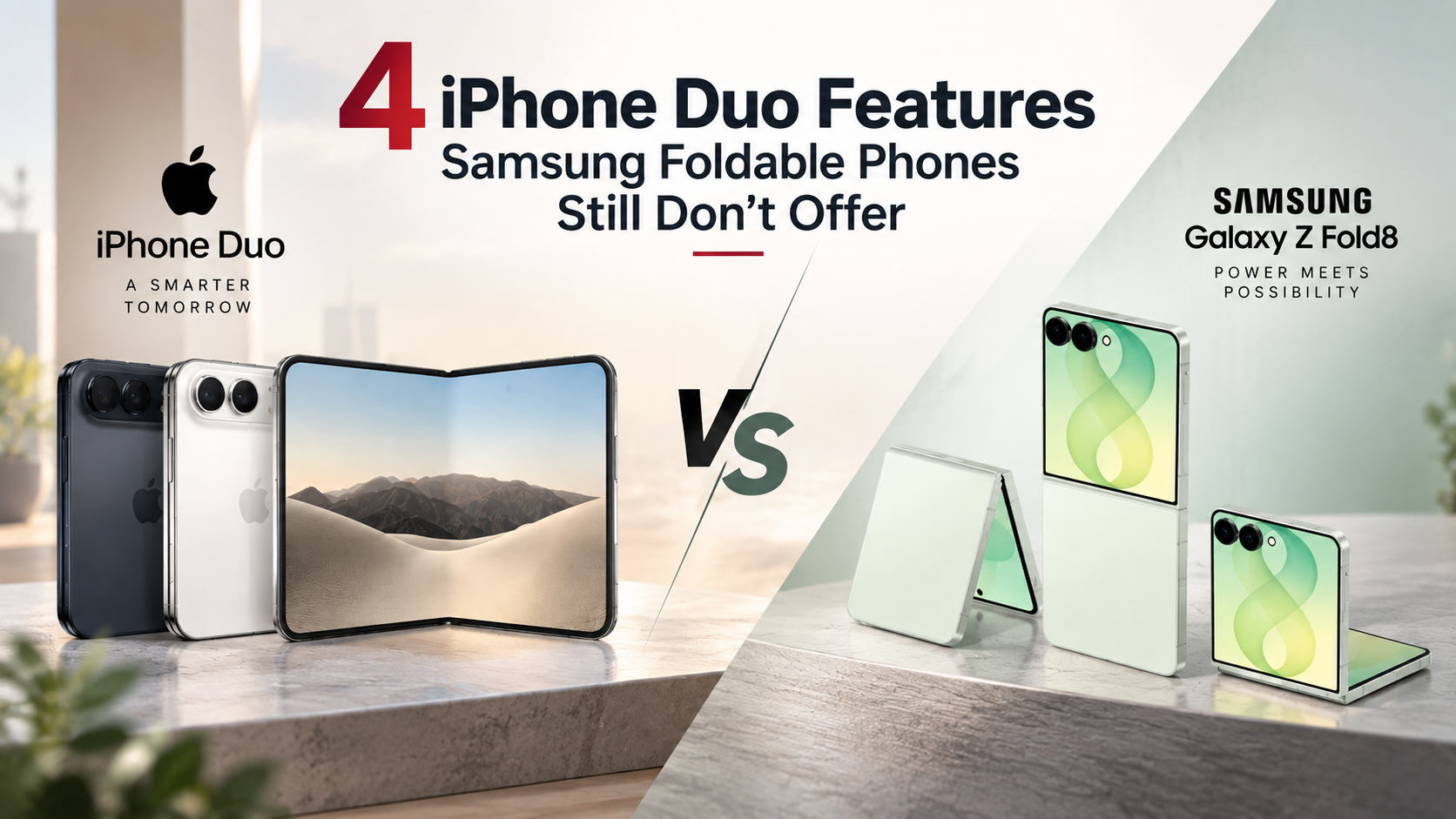
4 iPhone Duo Features Samsung Foldable Phones Still Don’t Offer
The iPhone Duo features attracting attention go beyond its foldable display and multitasking capabilities. Smartphone buyers looking for premium multitasking increasingly compare foldable phones. Samsung has built a strong position with its Galaxy Z Fold series. Apple has now entered the category with the iPhone Duo, its first foldable iPhone.
The comparison is about more than screen size. Buyers also care about software, cameras, security, durability, ecosystem integration, and everyday convenience. The iPhone Duo brings several Apple-specific experiences to a foldable design.
This guide explores four iPhone Duo features that give Apple a distinct advantage. It also compares the device with Samsung’s latest Galaxy Z Fold8. The goal is simple: explain where Apple’s foldable stands out and where Samsung remains competitive.
1. Hardware-Level 3D Face ID
One of the most recognizable iPhone security features is Face ID. It uses the TrueDepth camera system to create a detailed facial map for authentication. The system combines multiple sensors and infrared technology rather than relying on a standard 2D image.
This makes Face ID useful for more than unlocking the phone. It can authenticate supported payments, password autofill, app logins, and other protected actions. Face ID also works in low-light conditions because it does not depend on visible-light photography alone.
Samsung Galaxy Z Fold devices primarily use an under-display fingerprint sensor for biometric authentication. They can also offer facial recognition, but the security model differs from Apple’s hardware-based 3D facial authentication.
For users who frequently unlock their phones while wearing gloves or when their hands are occupied, Face ID can be convenient. The system also works automatically in many situations without requiring users to position a finger on a sensor.
This combination of dedicated hardware and software integration makes 3D facial authentication a notable iPhone advantage. It is one of the iPhone Duo features that could appeal to users who prioritize convenient biometric security.
2. Native Emergency SOS via Satellite
Another important iPhone Duo feature is Emergency SOS via satellite. When cellular and Wi-Fi connections are unavailable, supported iPhones can connect to satellites for emergency communication in supported regions.
The feature can help users contact emergency services when they are outside normal network coverage. Supported satellite services can also assist with roadside emergencies and location sharing through Find My, depending on the user’s location and service availability.
This capability is particularly useful for travelers, hikers, and people who spend time in remote areas. It can provide a communication option when conventional networks are unavailable.
Satellite features depend on regional availability and compatible services. Users should therefore check whether the feature works in their country before relying on it during travel.
Samsung also offers satellite-based communication on selected Galaxy devices and in selected markets. Availability varies by model, carrier, and region.
The broader advantage for iPhone users is the integration of satellite services directly into Apple’s operating system and emergency features. For buyers comparing iPhone Duo features with Samsung foldables, this built-in connectivity can be an important consideration.
3. True Apple Ecosystem Continuity
Apple’s ecosystem remains one of the strongest reasons to choose an iPhone. For users who already own a Mac, iPad, or Apple Watch, the iPhone Duo can become part of a connected workflow. This integration is especially useful when comparing AppleCare vs. Carrier Insurance: Which Is Better?, since protection options can also matter when multiple Apple devices are part of your daily setup.
Several features make switching between Apple devices simple:
- Universal Clipboard: Copy text, photos, or other supported content on an iPhone and paste it on a nearby compatible Mac or iPad.
- Continuity Camera: Use an iPhone as a camera for supported Mac applications.
- iPhone Mirroring: View and interact with an iPhone from a compatible Mac.
- AirDrop: Transfer photos, documents, and other files between compatible Apple devices.
- AirPlay: Stream supported content from an iPhone to compatible Apple devices and displays.
These features reduce the need for cables and third-party utilities. They can also save time for people who regularly move between mobile and desktop devices. Users who rely heavily on multiple Apple products may also benefit from understanding AppleCare coverage, costs, and plans in India before choosing how to protect their devices.
Samsung provides strong cross-device integration through Galaxy phones, tablets, Windows PCs, Quick Share, and DeX. However, Apple’s advantage comes from controlling both the hardware and operating systems across its ecosystem.
For buyers considering iPhone Duo features, this level of continuity can make the device especially useful within an existing Apple setup. The experience becomes more valuable as users add compatible Apple hardware.
4. Third-Party App Optimization and Native Social Media Camera APIs
App consistency is another area where iPhones have traditionally held an advantage. Developers generally target a smaller range of iPhone models and hardware configurations. This makes it easier to test apps across supported devices.
Popular social platforms can also use Apple’s camera and media frameworks directly. Apps such as Instagram, TikTok, and Snapchat can access system-level technologies for capturing and processing photos and videos.
This can produce more consistent results when users record content directly inside social apps. It can also reduce differences between the camera experience in the native Camera app and third-party applications.
Android has improved significantly in this area. Modern flagship devices can deliver excellent social-media camera quality, especially when manufacturers work closely with app developers.
However, Apple’s controlled hardware and software environment remains an important advantage. Developers can optimize features for a relatively predictable set of cameras, displays, processors, and operating-system versions.
For creators who frequently shoot and publish content directly from social apps, this consistency can make the iPhone Duo especially appealing. Among the iPhone Duo features, optimized third-party camera experiences could be particularly valuable for social-media creators and mobile content professionals.
Did Apple Announce the Foldable Phone?
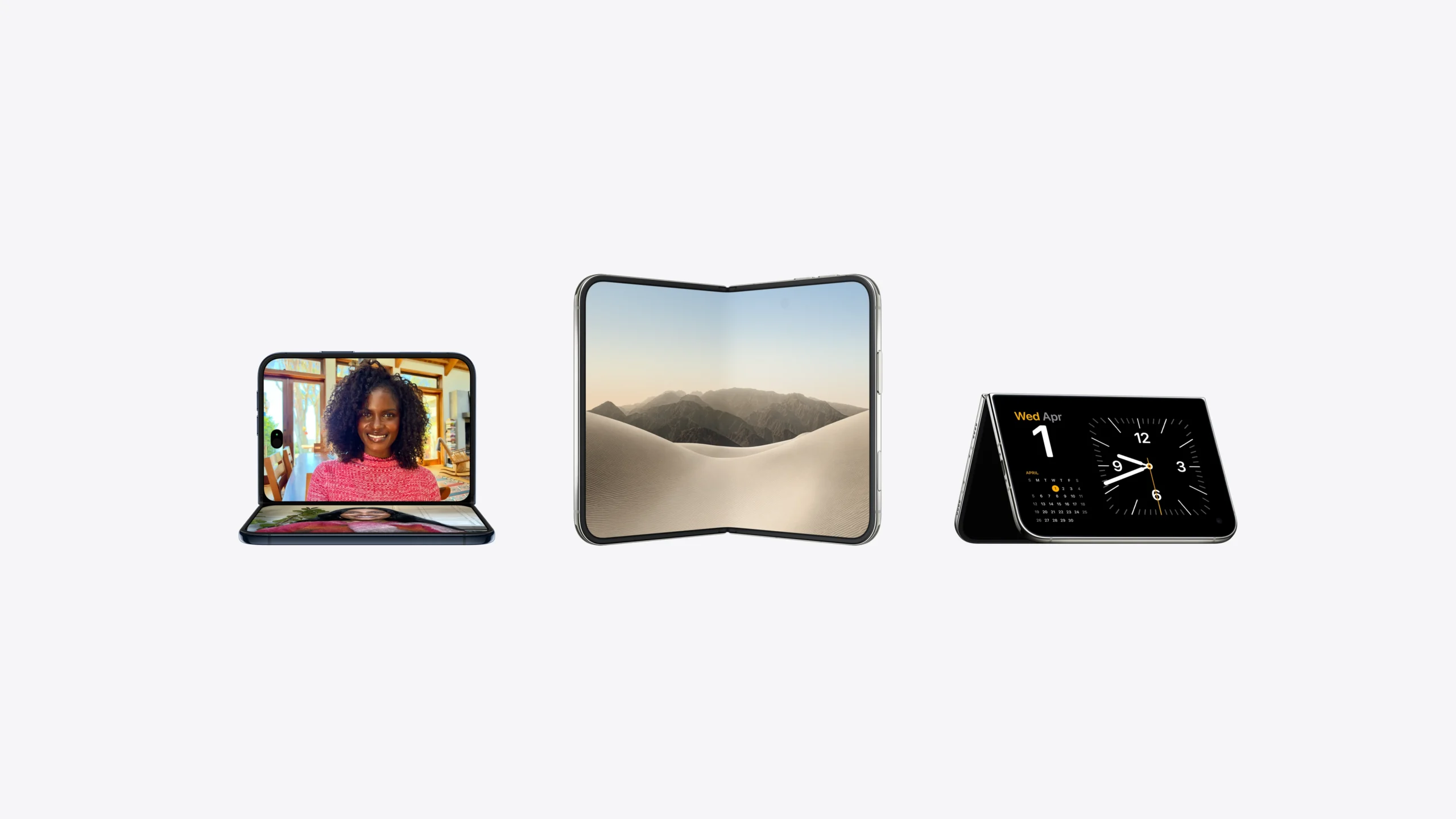
Yes. Apple officially announced the iPhone Duo on September 9, 2026. It is the company’s first foldable iPhone and combines a 7.6-inch inner OLED display with a 5.4-inch outer display. Apple says the inner screen is its largest iPhone display yet. The device uses a Grade 5 titanium design and supports a precision hinge.
Apple has also redesigned iOS 27 for the foldable form factor. The software supports different orientations and multitasking layouts. Users can run compatible apps side by side and position the phone at different angles.
The iPhone Duo is not yet available at the time of this article’s publication. Pre-orders begin October 16, 2026. Availability starts October 23, 2026.
That launch gives Apple a direct competitor to Samsung’s established Galaxy Z Fold lineup.
What Does iPhone Offer That Samsung Doesn’t?
The biggest difference is Apple’s combination of iOS 27 and its wider device ecosystem. iPhone Duo users can access familiar Apple services and continuity features across compatible Apple devices. AirDrop, Universal Clipboard, Continuity Camera, Handoff, and iCloud can make workflows easier for people already using Macs and iPads. These ecosystem benefits are also worth considering when comparing an iPhone or Android for students, especially for users who already rely on Apple devices for schoolwork.
The iPhone Duo also brings several security and connectivity features that distinguish Apple’s platform. Hardware-based Face ID provides secure facial authentication, while Emergency SOS via satellite can help users communicate when cellular and Wi-Fi connections are unavailable.
App optimization is another important advantage. Developers target a relatively focused range of iPhone hardware, allowing popular apps to integrate closely with iOS camera and image-processing technologies.
Samsung has powerful ecosystem features of its own. Galaxy phones also offer advanced multitasking, Quick Share, DeX, fingerprint authentication, and satellite-related emergency features on supported models and markets.
Therefore, the strongest iPhone advantage is not that Samsung lacks useful tools. It is Apple’s tightly integrated hardware, software, services, security, and accessory ecosystem.
Is the iPhone Duo a Phone?
Yes. The iPhone Duo is a fully functional smartphone that adds a larger folding display. When closed, it has a 5.4-inch outer OLED display for everyday tasks. Users can make calls, send messages, browse apps, take photos, and use normal iPhone features without opening it.
When opened, the device provides a 7.6-inch inner display. Apple designed this larger canvas for entertainment, gaming, browsing, and multitasking. The inner screen is also 50% larger than the display on the iPhone 18 Pro Max.
The design supports several positions. Users can place it on a surface for hands-free viewing or use different orientations for supported tasks. Apple also integrates a FaceTime camera beneath the inner display.
This makes the iPhone Duo a hybrid device. It works as a conventional phone when closed and a compact tablet-style workspace when opened.
Which Phone Is Best, Samsung Fold or iPhone?
There is no single winner for every buyer. The iPhone Duo and Samsung Galaxy Z Fold8 target similar customers but emphasize different experiences.
Samsung remains particularly strong for desktop-style productivity. Galaxy Z Fold8 supports Multi Window and Samsung DeX. DeX can turn the phone into a desktop-style workstation when connected to a compatible display, keyboard, and mouse.
Apple focuses on a more unified iPhone experience. The iPhone Duo combines iOS 27 with Apple’s services, cameras, security tools, and ecosystem. Its foldable design also introduces features such as Duo Preview, Duo FaceTime, and Smart Take.
The choice therefore depends on priorities. Samsung may suit users who want extensive window management and desktop connectivity. Apple may appeal more to buyers already invested in Macs, iPads, Apple Watch, and other Apple services. AI features on iOS can also add useful tools for users who want smarter everyday assistance.
Both devices offer premium hardware. Neither should be considered automatically superior for every type of foldable-phone user.
Do Samsung Phones Last Longer Than iPhone?
It is difficult to make a blanket claim that Samsung phones or iPhones always last longer. Modern premium foldables from both companies have improved significantly. However, foldable phones still involve more mechanical and display complexity than conventional smartphones.
Apple designed iPhone Duo with durability in mind. It uses a Grade 5 titanium frame, Ceramic Shield materials, a scratch-resistant inner display coating, and an IP68 rating for water and dust resistance. Apple also says the hinge is designed for long-lasting reliability.
Samsung’s Galaxy Z Fold8 also has a strong durability package. It uses an Armor Aluminum frame, Gorilla Glass materials, titanium layers beneath the display, an Armor FlexHinge, and an IP48 rating.
These specifications show meaningful progress from earlier foldables. Still, real-world longevity depends on usage, care, repairs, software support, and battery health.
Rather than claiming one brand universally lasts longer, buyers should compare the specific model, warranty, repair options, and expected ownership period.