

Internship vs Full-Time Job: Which Should You Choose?
Choosing between an internship vs full-time job marks a major turning point in your professional journey. Whether you are a fresh university graduate stepping into the corporate world or a career changer exploring new paths, this decision shapes your immediate income, long-term trajectory, and skill development. According to career guidance resources provided by the U.S. Bureau of Labor Statistics, evaluating early career pathways carefully helps professionals align their initial roles with their ultimate career goals. When weighing an internship vs full-time job, many ambitious job seekers struggle to determine whether taking a short-term temporary placement or committing to an entry-level position serves them best. This comprehensive guide explores the core differences between both options, analyzes their distinct advantages and drawbacks, and provides a clear framework to help you decide which path fits your current situation.

What Is Better, a Job or an Internship?
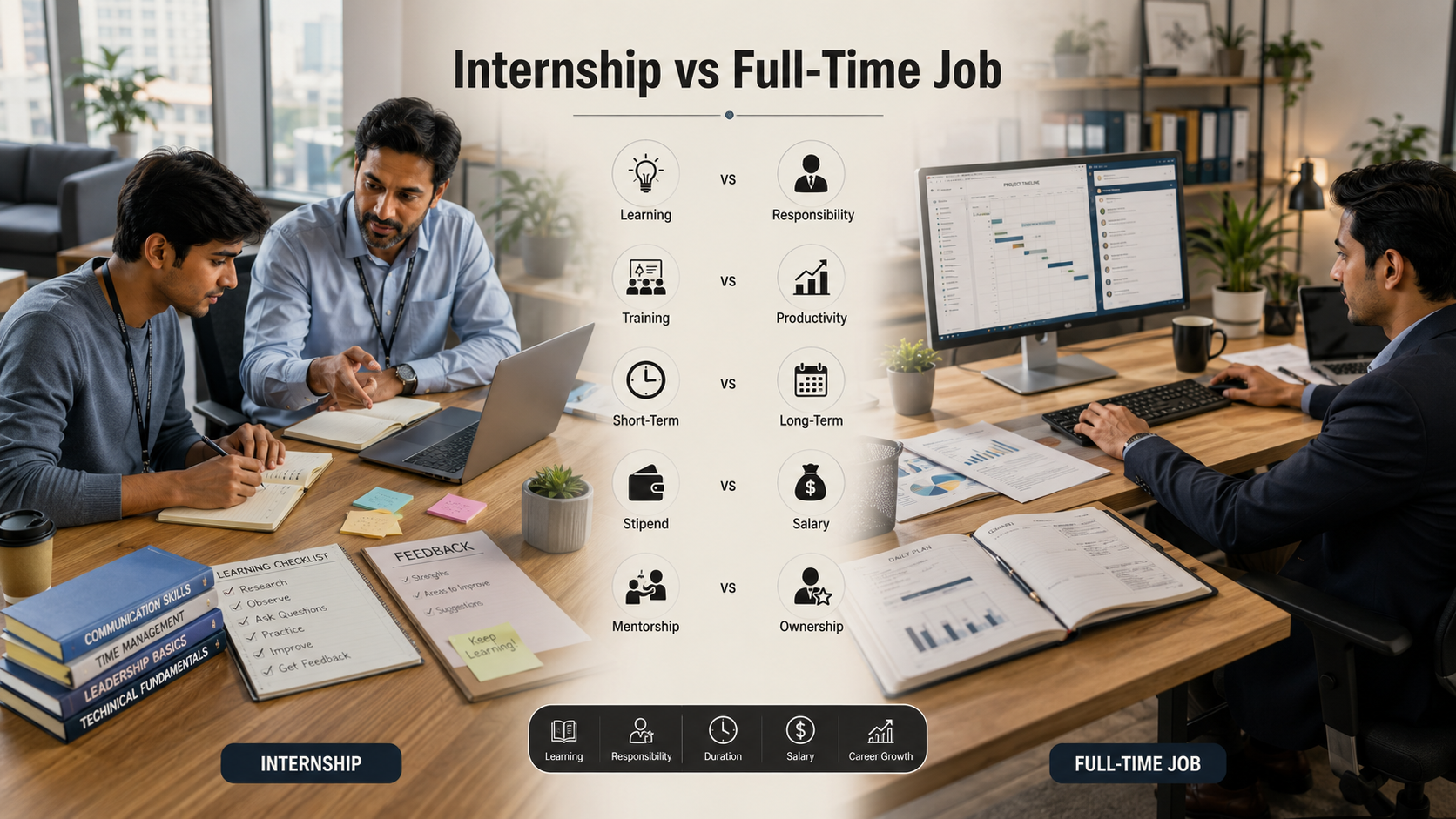
When comparing internship vs job, the better choice depends on your current skill level, financial situation, and long-term career goals. Neither option is universally better. Instead, the right choice depends on where you are in your professional journey and what you hope to achieve.
A full-time job offers immediate financial stability, regular income, and employee benefits. It also gives you full responsibility for projects and helps you develop professional discipline. Working in a permanent role allows you to build expertise, strengthen workplace relationships, and gain long-term industry experience.
An internship, however, focuses on learning and skill development. It provides a supportive environment where mistakes are part of the learning process. Most companies expect interns to grow rather than perform perfectly from the beginning. You receive mentorship, practical training, and exposure to real business processes that classrooms often cannot provide.
Internships are especially valuable for students, fresh graduates, and career changers. They allow you to explore different industries before committing to a full-time position. At the same time, many internships serve as pathways to permanent employment.
Before making your decision, evaluate your financial needs, current skills, and career objectives. If earning an income is your top priority, a job may be the better option. If gaining practical experience and exploring career opportunities matters more, an internship can provide greater long-term value. Understanding the differences between internship vs job helps you make a career decision that aligns with your personal and professional goals.
Why Experience Often Matters More Than Immediate Pay
Practical experience can create better career opportunities than focusing only on your first paycheck. While a full-time job provides immediate financial security, an internship helps you develop specialized skills that employers actively seek.
Companies value candidates who understand workplace tools, team collaboration, and real business workflows. These practical skills often make applicants more competitive than those with only academic knowledge. Internships also help you build confidence, improve communication, and expand your professional network.
Although internships sometimes offer lower pay than full-time jobs, the experience gained can lead to higher salaries later. Many employers prefer hiring candidates who already understand industry expectations and require less onboarding.
Instead of looking only at short-term income, consider the long-term return on your investment. Developing relevant skills, building professional relationships, and gaining hands-on experience can significantly improve your future earning potential.
What is the difference between a job and an internship?
An internship focuses primarily on education, mentorship, and skill development, whereas a job centers on delivering specific business outcomes and routine operational tasks. Companies design internship vs job positions with entirely different metrics for success. While a standard job expects employees to manage independent workloads immediately, an internship provides structured guidance, professional training, and close supervision. Interns spend significant time learning industry software, attending workshops, and shadowing senior team members. Conversely, regular employees assume full accountability for daily deliverables, department quotas, and recurring projects without requiring continuous educational oversight or baseline training programs.
Primary Operational Objectives
Professional roles prioritize productivity, efficiency, and meeting company targets from day one. Internships prioritize learning curves, skill acquisition, and professional growth over immediate commercial output. Employers evaluate regular employees on key performance indicators directly tied to revenue, while intern evaluations measure adaptability, enthusiasm, and willingness to learn new concepts.
Is 22 too old for an internship?
Being 22 years old is never too old for an internship, as many college seniors, recent graduates, and career transitioners start their professional journeys at this exact age. The modern job market embraces non-traditional timelines, meaning professionals regularly evaluate internship vs job options well into their twenties and thirties. Employers value maturity, strong communication skills, and diverse life experiences far more than a specific birthdate. Many organizations actively recruit 22-year-old candidates who completed extra coursework, military service, or personal projects before entering the corporate world. Your dedication and professional drive matter far more than your chronological age.
Embracing Non-Traditional Timelines
Many university graduates take gap years, change majors, or pursue creative endeavors before seeking corporate experience. Entering the workforce at 22 brings valuable emotional maturity and focus to a workplace. Companies often view older interns as future leaders who grasp workplace norms and professional accountability much faster than younger peers.
Is an internship considered a job?
An internship is legally and practically considered a temporary form of employment or training, but it differs fundamentally from a permanent career job. When evaluating internship vs job classifications, labor laws often distinguish between educational training programs and standard staff positions. Many internships provide official compensation, employee benefits, and formal onboarding processes identical to regular jobs. However, the primary designation remains temporary and educational. Some unpaid programs focus strictly on academic credit, while modern corporate programs function as extended interviews designed to evaluate candidates for full-time job conversions after graduation.
Legal Status and Compensation
Labor regulations require employers to evaluate whether an internship primarily benefits the student or the company. If the intern performs routine operational tasks that drive revenue, federal guidelines mandate financial compensation. This means modern internships share many administrative characteristics with traditional part-time or temporary jobs.
Paid internship vs job
Comparing a paid internship vs job reveals major distinctions in compensation structures, benefits eligibility, and overall financial security. While standard jobs offer competitive salaries, comprehensive healthcare, retirement matching, and paid time off, internships usually provide lower hourly wages or fixed stipends without extensive corporate benefits. However, high-demand fields like technology, finance, and engineering often offer lucrative paid internships that rival entry-level salaries. Financial compensation varies wildly by industry, company size, and geographic location. Evaluating these financial aspects helps candidates budget effectively while gaining essential practical experience for their resumes.
Benefits and Total Compensation
Traditional jobs feature robust compensation packages including health insurance, tuition reimbursement, and bonuses. Internships rarely include comprehensive benefits, focusing instead on mentorship and skill-building. Understanding this total compensation trade-off ensures you manage your personal finances realistically while building foundational professional experience.
Internship vs job salary
The salary gap between an internship vs job is substantial, reflecting the difference between a learning phase and a production role. Entry-level jobs provide stable, full-time annual salaries or hourly wages designed to support independent living. Internships typically pay hourly rates or modest stipends scaled for part-time or short-term summer commitments. For example, a software engineering job might yield a six-figure salary, whereas a summer software internship might pay a prorated hourly rate based on a ten-week program. Reviewing current market data helps set realistic expectations for your earning potential during different career stages.
Long-Term Earnings Potential
Short-term internship earnings are lower, but completing a quality internship often secures a high-paying full-time job offer. Employers frequently extend conversion bonuses and higher starting salaries to successful interns. This strategic investment boosts your long-term career trajectory and accelerates your path toward advanced salary milestones.
Should I Get a Job or an Internship?
Choosing between a job and an internship starts with an honest assessment of your financial situation, experience, and career goals. If you have strong technical skills, need a stable income, and feel ready for workplace responsibilities, applying for a full-time job is often the practical choice. You earn a salary, receive employee benefits, and gain valuable professional experience.
However, if you have limited practical knowledge or are still exploring career options, an internship can be a smarter starting point. Internships provide structured learning, mentorship, and networking opportunities that prepare you for future employment. Many organizations also treat internships as extended evaluations and frequently offer permanent roles to high-performing interns.
Take time to consider your current priorities. Immediate financial responsibilities may require a full-time position. If you have greater flexibility, investing several months in an internship can strengthen your resume and improve your long-term career prospects. Choosing the option that matches your current circumstances will produce better results than following a one-size-fits-all approach.
Evaluate Your Financial Needs First
Your financial situation should play a major role in this decision. If you cannot afford a low-paying or unpaid internship, prioritize paid internships or entry-level jobs that provide financial security.
Avoid creating unnecessary financial stress simply to gain experience. Fortunately, many companies now offer paid internship programs that combine professional learning with competitive compensation.
Before accepting any opportunity, compare the salary, benefits, learning opportunities, and long-term career growth. The best option supports both your immediate financial needs and your future professional development.
Which Internship Should I Choose?
Selecting the right internship requires more than choosing a well-known company. Focus on the quality of learning, mentorship, and career growth the program offers. Start by identifying your career interests and applying only to internships that align with your long-term goals.
Review the internship description carefully. Look for opportunities that include hands-on projects, regular feedback, mentorship, and exposure to experienced professionals. Strong internship programs allow interns to contribute to meaningful work rather than repetitive administrative tasks.
Research former interns through professional networking platforms to understand their experiences. Check whether previous participants received full-time job offers or advanced successfully in their careers. Company culture, team collaboration, and access to modern tools also influence the overall learning experience.
A prestigious company name has value, but meaningful experience matters more. Choose an internship where you can develop practical skills, build confidence, and create a portfolio of real work. The right internship prepares you for future employment instead of simply adding another line to your resume.
The Value of Strong Mentorship
A dedicated mentor can significantly improve your internship experience. Good mentors provide constructive feedback, answer questions, and help you develop professional skills more quickly.
They also introduce you to industry best practices and valuable professional connections. During interviews, ask about the company’s mentorship program, training process, and learning opportunities. Strong guidance often makes the difference between an average internship and an exceptional one.
What Is Better Than an Internship?
Although internships are excellent for gaining professional experience, they are not the only path to career success. Depending on your goals, alternative learning methods may help you build skills even faster. Freelancing, personal projects, professional certifications, and bootcamps all provide valuable practical experience.
Building your own projects demonstrates initiative and problem-solving skills. Whether you create a portfolio website, develop a software application, write case studies, or complete design projects, employers appreciate candidates who can showcase real work instead of only listing qualifications.
Professional certificate programs and intensive bootcamps can also accelerate career growth. Many include practical assignments, career coaching, and employer partnerships that improve job placement opportunities. Participating in hackathons, open-source projects, and industry competitions further strengthens your portfolio while expanding your professional network.
The best alternative depends on your field and career objectives. In many cases, combining internships with independent projects creates the strongest foundation for long-term success.
Build an Independent Portfolio
Creating your own professional portfolio allows you to demonstrate your abilities without waiting for someone to hire you first. Solve real-world problems, document your process, and publish completed projects online.
A strong portfolio provides tangible evidence of your skills. Employers and clients often value real results more than academic qualifications alone. This proactive approach can attract freelance opportunities, internships, and full-time job offers while helping you stand out in a competitive job market.
Frequently Asked Questions
How long should an internship typically last?
Most internships last between three and six months, which matches academic semesters or summer internship programs. Some industries, especially engineering and technology, offer internships that extend to one year. The ideal duration depends on your learning goals, company structure, and whether the employer intends to evaluate you for a full-time position after the internship.
Can an internship guarantee a full-time job offer?
No. An internship cannot guarantee a full-time job offer. However, it can significantly improve your chances of receiving one. Many companies use internship programs to identify future employees. Performing consistently, demonstrating initiative, learning quickly, and maintaining positive relationships with your team greatly increase your chances of receiving a permanent offer.
Is it possible to transition from an internship directly into a senior role?
Moving directly from an internship to a senior position is extremely rare. Senior roles require several years of professional experience, leadership ability, and advanced technical expertise. An internship builds your foundation and prepares you for entry-level roles. From there, consistent performance and continued learning help you progress toward mid-level and senior positions over time.
What should I do if my internship does not provide meaningful learning?
If your internship focuses mainly on repetitive administrative work, speak with your manager professionally. Express your interest in contributing to more challenging projects and developing additional skills. If the situation does not improve, document the experience you gained, update your resume, and begin searching for better opportunities. Every internship should contribute to your professional growth and career development.
Conclusion
Choosing between an internship vs full-time job ultimately depends on your unique financial circumstances, personal risk tolerance, and current career readiness. Temporary training roles offer low-risk environments to build professional networks, test different industries, and acquire valuable practical skills. To learn more about how to build experience before your first job, exploring alternative developmental avenues can greatly enhance your marketability. Meanwhile, permanent positions provide robust financial security, comprehensive employee benefits, and rapid professional integration within an organization. Carefully evaluate your current standing, prioritize your immediate lifestyle needs, and select the path that aligns best with your long-term future ambitions. Take proactive action today by thoroughly auditing your resume, assessing your personal financial runway, and confidently applying for roles that bring you closer to achieving your ultimate professional goals.