
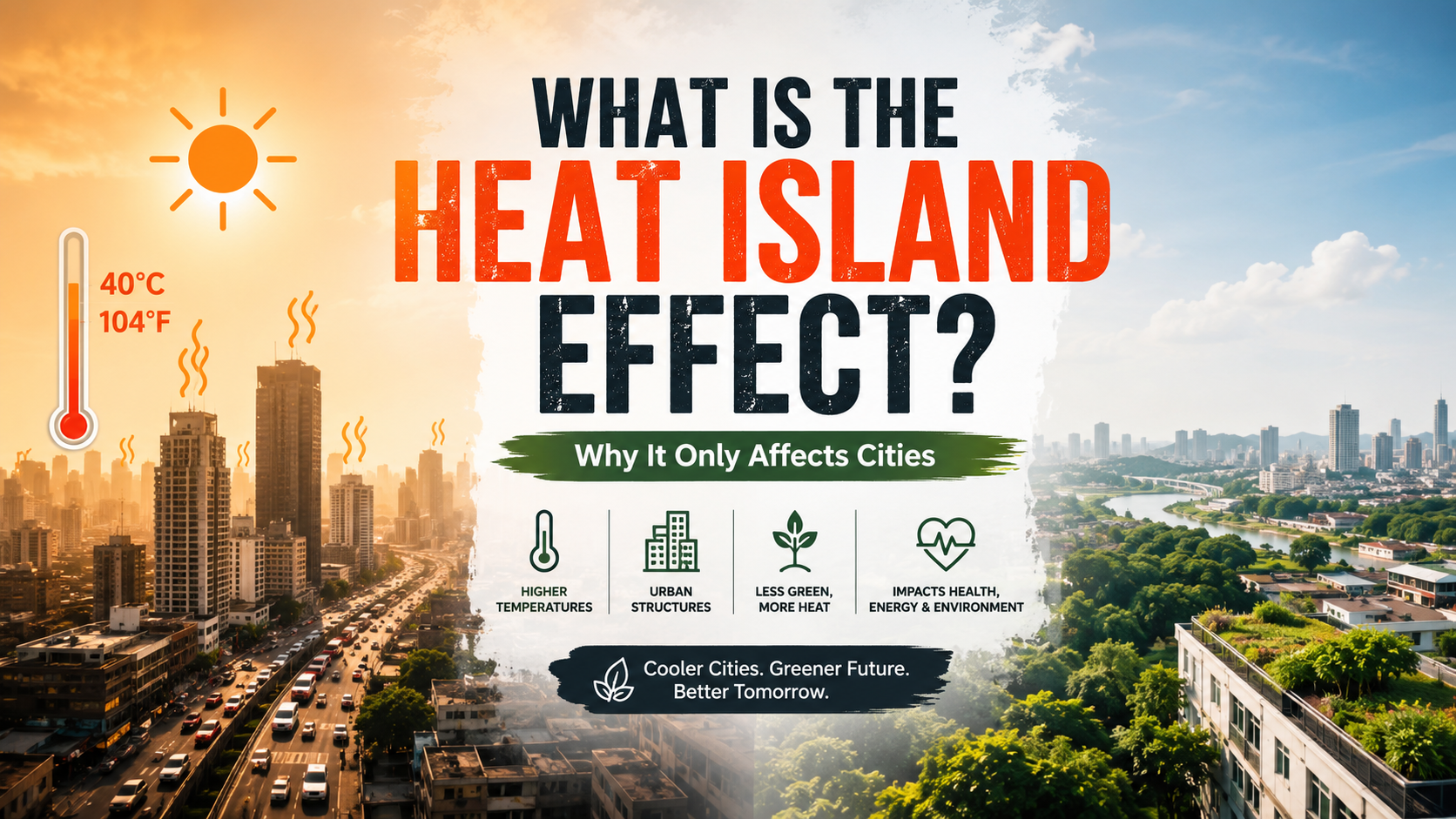
What Is The ‘Heat Island’ Effect, And Why Does It Only Affect Cities?
Have you ever noticed that a busy downtown area feels much hotter than a quiet country road? This temperature difference is not just your imagination. It is a proven scientific phenomenon known as the heat island effect. According to the United States Environmental Protection Agency (EPA), urban structures absorb and re-emit the sun’s heat much more intensely than natural landscapes. When summer temperatures spike, this effect quickly turns concrete jungles into literal ovens.
But why does this extreme heat specifically target urban areas? We will explore exactly why modern cities trap so much warmth. You will discover the science behind rising urban temperatures and why rural areas stay naturally cooler. We will also look at the real-world health, energy, and environmental consequences of living in hot cities.
Cities often experience drastically higher temperatures during the day. However, they struggle even more to cool down at night. Buildings and roads hold onto thermal energy for hours. After the sun sets, they slowly release this stored heat back into the surrounding air. This continuous cycle prevents the local environment from finding any meaningful relief.
Understanding the heat island effect matters now more than ever. As global temperatures continue to rise, urban populations face increasing risks. Let’s dive into the core causes of this urban phenomenon and learn how we can build cooler, safer, and greener neighborhoods.
What Causes the Heat Island Effect in Cities?
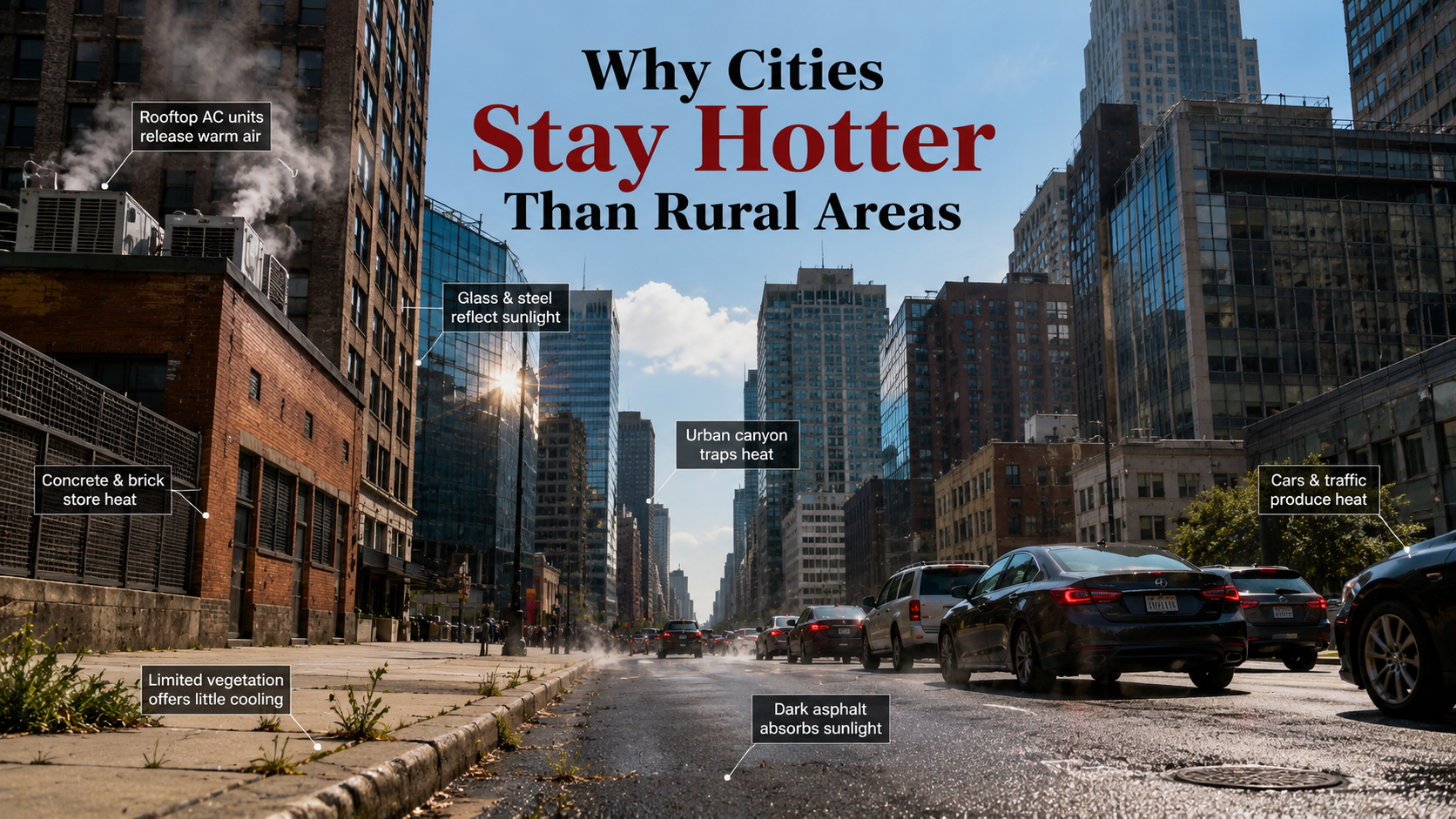
The urban heat island effect occurs because cities absorb, store, and generate far more heat than surrounding rural areas. Natural landscapes with trees, grass, and soil are replaced by buildings, roads, and parking lots made from concrete, asphalt, and other dense materials. These surfaces absorb large amounts of solar radiation during the day instead of reflecting it or cooling through natural evaporation.
After sunset, the stored heat is released slowly into the surrounding air, keeping cities warmer throughout the night. Human activities add even more heat to the urban environment. Air conditioners, vehicles, industrial facilities, and electrical equipment constantly release waste heat into the atmosphere. In addition, tall buildings reduce airflow by blocking natural wind patterns. Limited vegetation also reduces shade and evapotranspiration, making it harder for cities to cool naturally. Together, these factors create higher temperatures that define the urban heat island effect.

Human Activities and Energy Consumption
Human activity is one of the biggest contributors to the urban heat island effect. Every vehicle engine, factory, and air conditioning system produces waste heat that warms nearby air. As cities grow, energy consumption rises, increasing the amount of heat released into the environment.
Dense neighborhoods with heavy traffic and large commercial buildings generate heat throughout the day and night. Air conditioning systems create a cycle by cooling indoor spaces while releasing hot air outdoors. Industrial operations and public transportation also contribute to higher urban temperatures. Since this waste heat never fully disappears, cities remain significantly warmer than nearby rural areas, especially after sunset. Reducing energy use, improving building efficiency, and adopting cleaner technologies can help lower this additional heat.
What Cities Are Most Affected by Heat Islands?
Cities with dense development, extensive concrete surfaces, and limited green space experience the strongest urban heat island effect. Large metropolitan areas in warm climates often record temperatures several degrees higher than nearby rural regions. Urban expansion replaces natural vegetation with roads, buildings, and parking lots that absorb and retain solar heat throughout the day.
Cities such as Phoenix, Houston, and New York frequently experience significant urban warming because of their size, population density, and built environments. Heavy traffic, tall buildings, and limited tree cover further increase heat retention. Coastal cities face additional challenges because high humidity reduces the body’s ability to cool through sweating. During prolonged heatwaves, these combined factors increase health risks, energy demand, and pressure on local infrastructure. Expanding green spaces and improving urban design remain essential for reducing excessive heat.
The Role of Urban Density and Concrete Sprawl
Urban density strongly influences how much heat a city retains. Closely packed buildings, wide highways, and large parking areas create vast surfaces that absorb solar radiation. Concrete and asphalt release this stored heat slowly, keeping temperatures elevated long after sunset.
Limited tree canopy and shrinking green spaces reduce natural cooling through shade and evapotranspiration. Tall buildings also restrict airflow, preventing cooler air from circulating effectively. As cities continue expanding, these conditions intensify the urban heat island effect. Increasing tree cover, preserving parks, and using reflective building materials can significantly reduce heat buildup across densely developed neighborhoods.
How to reduce heat island effect?
Mitigating urban warming requires intentional design choices that cool down built environments. Urban planners and property owners can implement several strategies to lower surface and air temperatures effectively. Planting trees and creating expansive green spaces provide natural shade and cooling through evapotranspiration. Installing green roofs on commercial and residential buildings absorbs less solar radiation than traditional dark roofs. Cool pavements made from reflective materials also prevent surfaces from retaining excessive solar heat. Additionally, expanding community gardens and utilizing light-colored paint on exterior walls helps deflect sunlight away from neighborhoods. These combined interventions successfully lower ambient temperatures, improve neighborhood comfort, and reduce overall municipal energy demands during peak summer cooling seasons.
Implementing Cool Roofs and Reflective Pavements
Reflective roofing materials and cool pavements play a critical role in lowering urban surface temperatures. Traditional building materials absorb up to ninety percent of sunlight, converting it into thermal energy. By retrofitting structures with high-albedo coatings and laying down permeable, light-colored asphalt, cities reflect solar radiation back into the atmosphere. This simple technological shift prevents heat absorption, significantly decreasing the intensity of local microclimates and improving neighborhood climate resilience.
How do heat islands affect people?
Elevated urban temperatures create serious health and economic challenges for city residents. Vulnerable populations, including older adults, children, and outdoor workers, face heightened risks during prolonged heatwaves. High ambient temperatures increase the frequency of heat-related illnesses such as heat exhaustion and heatstroke, which can lead to emergency hospitalizations. Furthermore, soaring temperatures drive up residential electricity bills as air conditioning units work overtime to maintain indoor comfort. This financial strain disproportionately affects low-income households that may lack efficient cooling systems. Additionally, trapped heat worsens mental well-being and disrupts normal sleep patterns, lowering overall community productivity and standard of living during peak summer months.
Public Health Risks and Heat-Related Illnesses
Extended exposure to extreme urban heat triggers severe physiological stress on the human body. When nighttime temperatures remain unusually high due to thermal mass retention, the body fails to recover from daytime heat. This continuous thermal stress exacerbates pre-existing cardiovascular and respiratory conditions. Public health officials emphasize that proactive warning systems and accessible cooling centers are crucial interventions to protect vulnerable urban communities from dangerous medical emergencies.
What is meant by the heat island effect?
The heat island effect refers to metropolitan areas that become significantly warmer than their surrounding rural peripheries. This temperature disparity occurs because human construction materials replace natural vegetation and soil. Concrete, brick, asphalt, and dark roofing materials readily absorb and store solar radiation throughout the day. After sunset, these dense materials slowly release the accumulated heat into the surrounding air, keeping urban night temperatures elevated. Anthropogenic heat generated by vehicles, air conditioning units, and industrial facilities further intensifies this microclimatic anomaly. Consequently, cities develop distinct thermal domes that set them apart climatologically from adjacent undeveloped countryside landscapes and agricultural fields.
Urban Geometry and Thermal Mass Retention
The physical layout of a city significantly contributes to local temperature retention. Narrow streets flanked by tall buildings create urban canyons that trap solar radiation and restrict airflow. This dense geometry prevents efficient wind cooling and reduces surface heat loss through thermal radiation at night. As buildings absorb and store massive amounts of energy, the collective thermal mass sustains high ambient temperatures, making the urban core noticeably warmer than open rural areas.
What is the heat island effect on the environment?
Urban warming exerts profound pressures on surrounding ecosystems, local weather patterns, and natural resource availability. Higher temperatures accelerate the chemical reactions that form ground-level ozone, degrading air quality and harming regional flora. Elevated stormwater runoff from hot impervious surfaces flows into nearby streams and rivers, raising water temperatures and threatening aquatic life. These thermal shifts disrupt local wildlife habitats, altering migration and blooming patterns for various plant and animal species. Furthermore, urban heat islands can modify local precipitation patterns, occasionally triggering heavier downpours and severe thunderstorms downwind of major metropolitan centers as warm air plumes rise into the atmosphere.
Impacts on Water Quality and Aquatic Ecosystems
Stormwater flowing over scorching city surfaces picks up thermal energy before draining into local aquatic ecosystems. Elevated water temperatures in rivers and lakes reduce dissolved oxygen levels, stressing native fish populations and encouraging harmful algal blooms. This ecological imbalance threatens biodiversity within urban waterways, highlighting the urgent need for sustainable stormwater management practices that incorporate natural filtration, bioswales, and shaded retention ponds to protect delicate aquatic habitats.
What Is the Urban Heat Island Effect or Affect?
The correct term is urban heat island effect, not “urban heat island affect.” The confusion comes from the similar spelling of the words, but they serve different grammatical purposes. Effect is a noun that describes the result or outcome of something, while affect is usually a verb that means to influence or change something.
In climate science, the urban heat island effect refers to the measurable increase in temperatures within cities compared to surrounding rural areas. It describes the physical result of replacing natural landscapes with heat-absorbing buildings and pavement. Using the correct term improves scientific accuracy and avoids confusion in discussions about urban planning, climate adaptation, and environmental policy. Understanding this distinction also helps readers communicate clearly when learning about urban climatology and sustainable city development.
Linguistic Accuracy in Climate Science
Using precise terminology improves communication among researchers, policymakers, and the public. Referring to the urban heat island effect correctly shows an accurate understanding of environmental science concepts and climate-related discussions.
Incorrect word choices can create unnecessary confusion, especially in educational materials and policy documents. Clear language helps communities better understand scientific findings and supports informed decision-making. Whether discussing climate adaptation, sustainable cities, or environmental planning, using effect instead of affect ensures consistency and improves the credibility of the information being shared.
Is the Urban Heat Island Effect Getting Worse?
Research shows that the urban heat island effect is becoming more intense in many parts of the world. Rapid urbanization continues to replace forests, farmland, and open spaces with roads, buildings, and other heat-absorbing infrastructure. At the same time, global climate change is increasing average temperatures, creating a combined effect that makes cities even hotter.
Nighttime temperatures are rising faster than before because urban materials continue releasing stored heat after sunset. This lack of overnight cooling increases heat stress for residents and raises demand for air conditioning, which produces even more waste heat. Without effective mitigation measures, urban temperatures are expected to continue increasing. Expanding tree cover, installing cool roofs, improving energy efficiency, and using reflective building materials can help reduce future warming and make cities more resilient to extreme heat.
Climate Change and Rapid Urban Expansion
Climate change and rapid urban growth reinforce each other, increasing the severity of the urban heat island effect. Rising global temperatures create warmer baseline conditions, while expanding cities add more concrete, asphalt, and buildings that trap additional heat.
As natural landscapes disappear, cities lose important cooling mechanisms such as shade and evapotranspiration. Growing populations also increase energy use, transportation, and industrial activity, all of which release additional heat into the environment. Addressing this challenge requires coordinated urban planning, expanded green infrastructure, sustainable architecture, and long-term climate adaptation strategies that reduce heat while improving the quality of urban life.
FAQ
How does vegetation reduce urban heat?
Trees and plants reduce urban temperatures through evapotranspiration, a natural process where plants release water vapor into the air. This cools the surrounding environment much like natural air conditioning.
Vegetation also provides shade for roads, sidewalks, and buildings, preventing them from absorbing excessive solar heat. Increasing tree canopy is one of the most effective ways to reduce the urban heat island effect.
What are cool roofs and how do they help?
Cool roofs use highly reflective materials that bounce more sunlight away than traditional dark roofing. They absorb less heat and help keep buildings cooler during hot weather.
Lower indoor temperatures reduce air conditioning demand, saving energy and decreasing the amount of waste heat released outdoors. Widespread use of cool roofs can lower neighborhood temperatures and improve urban comfort.
Can individuals do anything to reduce heat islands?
Yes. Homeowners can plant shade trees, install cool roofs, and replace traditional pavement with permeable materials. These changes reduce heat absorption and improve natural cooling.
People can also lower electricity use during peak hours, support local tree-planting initiatives, and create rain gardens. Small actions across many households can collectively reduce the urban heat island effect.
How does urban heat impact public health?
Extreme urban heat increases the risk of heat exhaustion, dehydration, and heatstroke, especially for older adults, children, and people with existing medical conditions.
Because cities stay warmer overnight, residents often receive little relief after hot days. Continuous heat exposure places additional strain on the cardiovascular system, worsens air quality, and increases the likelihood of heat-related illnesses during prolonged heatwaves.
Conclusion
The heat island effect remains one of the most pressing challenges facing modern urban development. As we replace natural landscapes with concrete, asphalt, and steel, we unintentionally create massive heat traps that absorb solar radiation during the day and release it slowly at night.
The consequences extend far beyond physical discomfort. Rising urban temperatures increase energy consumption, place greater strain on power grids, worsen air and water quality, and create serious health risks during extreme summer heat.
Fortunately, effective solutions already exist. Planting more trees, installing reflective cool roofs, using permeable and light-colored paving materials, and embracing sustainable building practices can significantly reduce urban heat. If you’re planning a new construction or renovation, choosing an eco-friendly roofing system is another impactful step. Learn more about how to select a sustainable roof system to improve energy efficiency and help combat the urban heat island effect.
Every community can contribute to cooler, healthier cities. Whether you support local tree-planting initiatives, advocate for green infrastructure, or encourage sustainable construction, your actions matter. By understanding the heat island effect and adopting climate-conscious solutions, we can build more resilient urban environments for future generations.