
How to Become a Web Developer in 2026: A Complete Guide
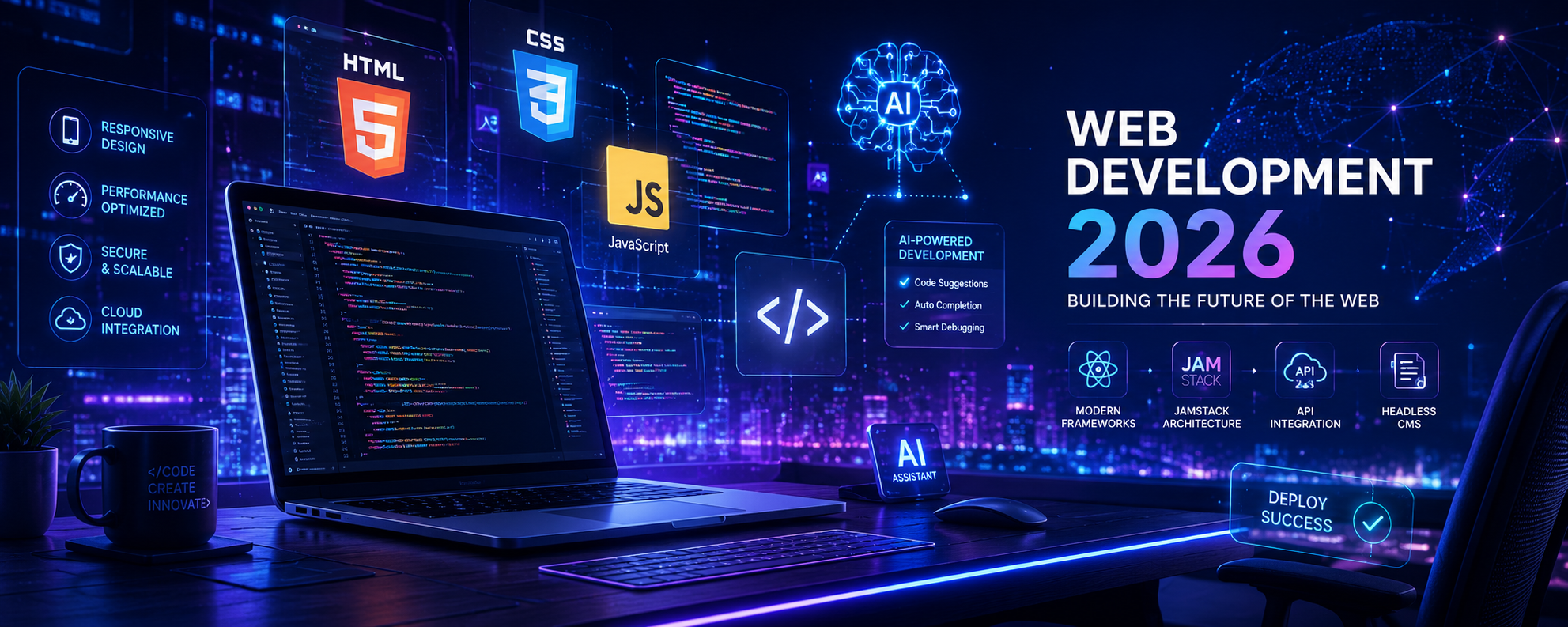
If you are wondering how to become a web developer in 2026, this guide will help you understand the complete roadmap in a simple and practical way. In 2026, web development continues to be one of the most in-demand career paths because companies increasingly depend on websites and web applications for growth.
Moreover, learning how to become a web developer in 2026 is now easier than ever due to online learning platforms, AI tools, and beginner-friendly frameworks. However, success still depends on mastering core fundamentals and building real projects.
What is Web Development?
Web development is the process of building and maintaining websites and web applications. In other words, it includes everything from simple static pages to advanced platforms like online stores and dashboards.
Additionally, if you are learning how to become a web developer in 2026, understanding this foundation is essential before moving forward.
Learn basics here: MDN Web Development Guide
1. Front-End Development (User Interface)

Front-end development focuses on everything users see and interact with on a website.
Core Skills:
- HTML
- CSS
- JavaScript
- Git & GitHub
Practice coding: freeCodeCamp Front-End Curriculum
For example, buttons, layouts, animations, and page design all come under front-end development. Furthermore, front-end developers ensure websites work smoothly on all devices.
2. Back-End Development (Server Side)

Back-end development manages everything behind the scenes.
For instance, it handles databases, user authentication, and server communication. In addition, it ensures that data flows correctly between systems.
Key Skills:
- Python, Java, Node.js, PHP
- MySQL, PostgreSQL, MongoDB
- APIs and server management
Learn backend fundamentals: Node.js Official Docs
Consequently, back-end development is critical for powering dynamic websites.
3. Full-Stack Development
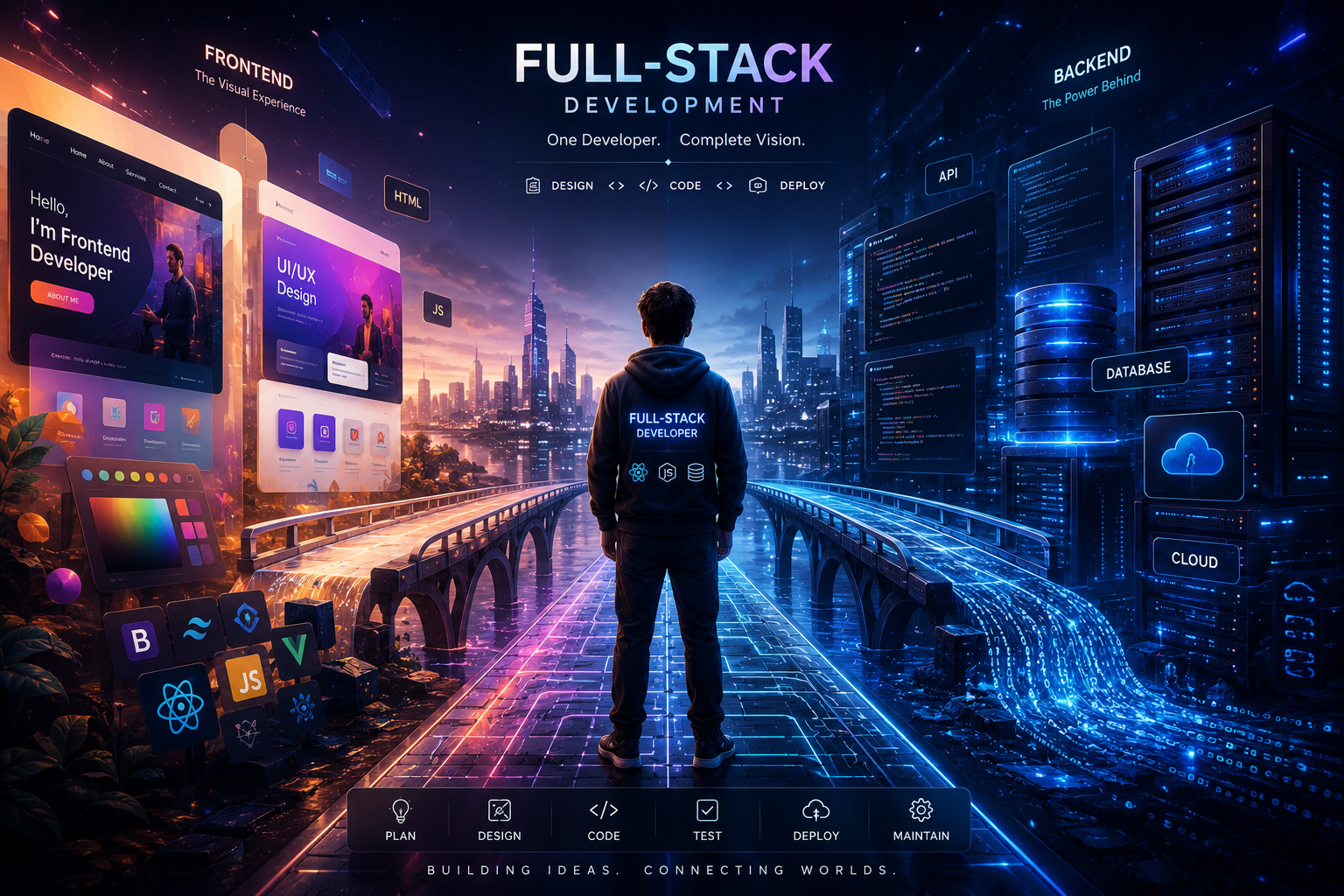
Full-stack developers work on both front-end and back-end development.
Because of this, they are highly valued in the industry. Moreover, they can build complete applications independently, making them very versatile professionals.
Full-stack learning resources: freeCodeCamp Full Stack Guide
What Do Web Developers Do?
Web developers build, test, and maintain websites and applications.
1. Building Websites
First of all, developers turn ideas into working websites.
- Front-end handles design
- Back-end handles logic
- Full-stack manages both
As a result, complete digital products are created.
2. Writing Code
Developers use programming languages to build features.
- HTML for structure
- CSS for design
- JavaScript for interactivity
- Backend languages for server logic
Additionally, each language plays a specific role.
3. Performance Optimization
Web developers improve speed and performance. For example, they compress images and optimize code. Therefore, websites load faster and perform better.
4. Testing and Debugging
Before launching a website, developers test it thoroughly. If any bugs are found, they are fixed immediately. Moreover, testing ensures compatibility across browsers and devices.
5. Maintenance and Updates
Even after launch, websites require continuous updates. For instance, developers add new features and fix security issues. In addition, they ensure long-term stability.
Step-by-Step Guide: How to Become a Web Developer in 2026
If you want to learn how to become a web developer in 2026, follow this roadmap:
Step 1: Learn the Basics First
Start with:
- HTML
- CSS
- JavaScript
These languages form the foundation of web development.
For beginner-friendly learning and hands-on practice, you can use W3Schools Web Tutorials to easily understand HTML, CSS, and JavaScript step by step.
Step 2: Choose a Learning Path
There are multiple ways to learn:
- Self-learning: YouTube, freeCodeCamp, blogs
- Bootcamps: Fast-track structured learning
- Degree programs: Computer science foundation
However, your skills matter more than your degree.
Step 3: Build Core Skills
In addition to basics, learn:
- Responsive design
- React or Vue
- Backend development
- APIs and databases
- Git & GitHub
As a result, you become job-ready faster.
Step 4: Build Real Projects
Most importantly, practice by building projects.
For example:
- Portfolio website
- E-commerce store
- Blog platform
Not only does this improve your skills, but it also builds your portfolio.
Step 5: Learn Modern Tools
After that, learn advanced technologies:
- React / Next.js
- Node.js / Django
- MongoDB / MySQL
Meanwhile, continue practicing consistently.
Step 6: Build a Strong Portfolio
Finally, create a portfolio website that includes:
- Live projects
- GitHub links
- Project descriptions
Therefore, employers can easily evaluate your skills.
Frequently Asked Questions
What qualifications do I need to become a web developer?
You do not strictly need a traditional computer science degree to succeed today. Many highly successful web developers are completely self-taught programmers or coding bootcamp graduates. Modern tech employers care mostly about your practical project portfolio and your actual coding skills. You must focus intensely on building functional, real-world software projects. Mastering modern technologies like React, Node.js, or Python matters much more than formal university education. If you can solve complex digital problems and write clean code, you can easily secure a great tech job.
How long does it take to learn web development?
With highly dedicated, full-time study, you can comfortably learn the essential coding basics in three to six months. However, becoming truly proficient and job-ready usually takes about one full year of consistent daily practice. Technology constantly evolves, making modern web development a continuous, lifelong learning process. You should start by building small, simple projects. Gradually increase their complexity as your coding confidence naturally grows. Your overall learning speed depends entirely on your daily time commitment and focused study habits.
Is coding difficult to learn for complete beginners?
Coding can definitely feel intimidating at first, much like learning a completely new spoken language. However, software programming relies heavily on structured logic rather than advanced, pure mathematics. Modern interactive tutorials and intelligent AI coding assistants make learning far easier than ever before. If you patiently break complex technical problems down into much smaller, manageable steps, you will progress steadily. Daily consistency proves far more important than any natural, raw talent. Anyone who practices diligently can absolutely master web development over time.
Do web developers frequently work from home?
Yes, remote work remains incredibly common throughout the entire global tech industry. Many modern software companies offer highly flexible, hybrid, or completely remote job positions. You essentially only need a highly reliable internet connection and a modern computer to do your job well. This incredible flexibility allows skilled developers to work seamlessly for major international clients. Consequently, you can often earn much higher salaries while living comfortably anywhere in the world. Remote tech work also provides a vastly superior work-life balance.
Which programming language should I learn first?
You should always start with HTML and CSS to completely understand basic website structure and visual styling. Immediately after grasping those tools, you must learn JavaScript. JavaScript remains absolutely essential because it adds dynamic interactivity to otherwise boring, static web pages. It proudly stands as the most widely used programming language in the world today. Once you thoroughly master plain JavaScript, you can easily transition to learning modern, powerful frameworks. Solidifying these core front-end languages first builds an unbreakable foundation for your career.
Conclusion
The tech industry offers incredible, life-changing opportunities for those willing to learn continuously. Understanding how to become a web developer in 2026 involves embracing powerful new AI tools while mastering core programming languages. Global demand for highly skilled tech professionals remains exceptionally strong, and modern salaries clearly reflect this immense value.
Do not let the rapid rise of artificial intelligence intimidate your long-term career goals. Instead, use these intelligent coding tools to learn faster and write vastly better software. You must start with the fundamental coding basics, build a robust personal portfolio, and keep updating your technical knowledge daily. Take your first exciting step today by writing your very first line of HTML code. Your highly rewarding new digital career eagerly awaits you.
Learn more about AI’s role in web development here: Impact of Artificial Intelligence on Web Development