How Long Do Solar Panels Last With Proper Maintenance?
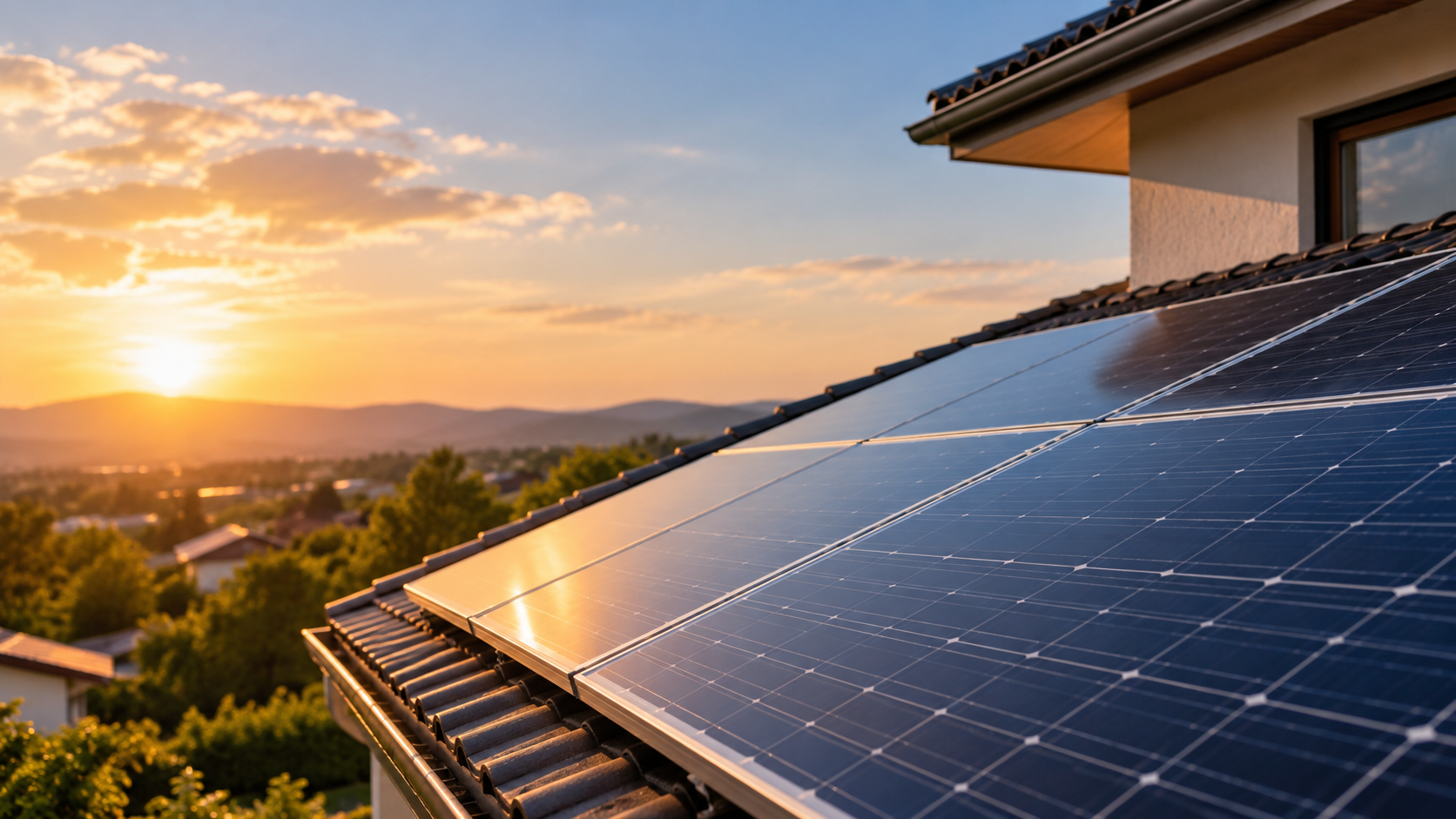
With proper care and routine inspections, modern residential solar panels typically last 25 to 35 years. Many panels can continue producing usable electricity beyond that period.
Solar photovoltaic (PV) modules have no moving parts. This makes them relatively durable compared with many mechanical systems. They do not suddenly stop working when they reach a specific age. Instead, their electricity output gradually declines over time.
The U.S. Department of Energy notes that modern solar modules are expected to last 25 years or more while continuing to produce more than 80% of their original power. U.S. Department of Energy: Solar Photovoltaic Cell Basics
This gradual decline is called solar panel degradation. UV exposure, temperature changes, moisture, weather, and other environmental stresses can affect long-term performance.
Most manufacturers provide performance warranties lasting around 25 years. These warranties define a minimum level of expected power output rather than an expiration date. Proper maintenance can help protect the panels, wiring, mounting system, and other equipment.
For homeowners, the practical question is not simply how long panels work. It is whether they still produce enough electricity to justify continued operation.
Do Solar Panels Stop Working After 25 Years?
Solar panels do not automatically stop producing electricity after 25 years. The 25-year milestone usually refers to a manufacturer’s performance warranty rather than the panel’s physical expiration date.
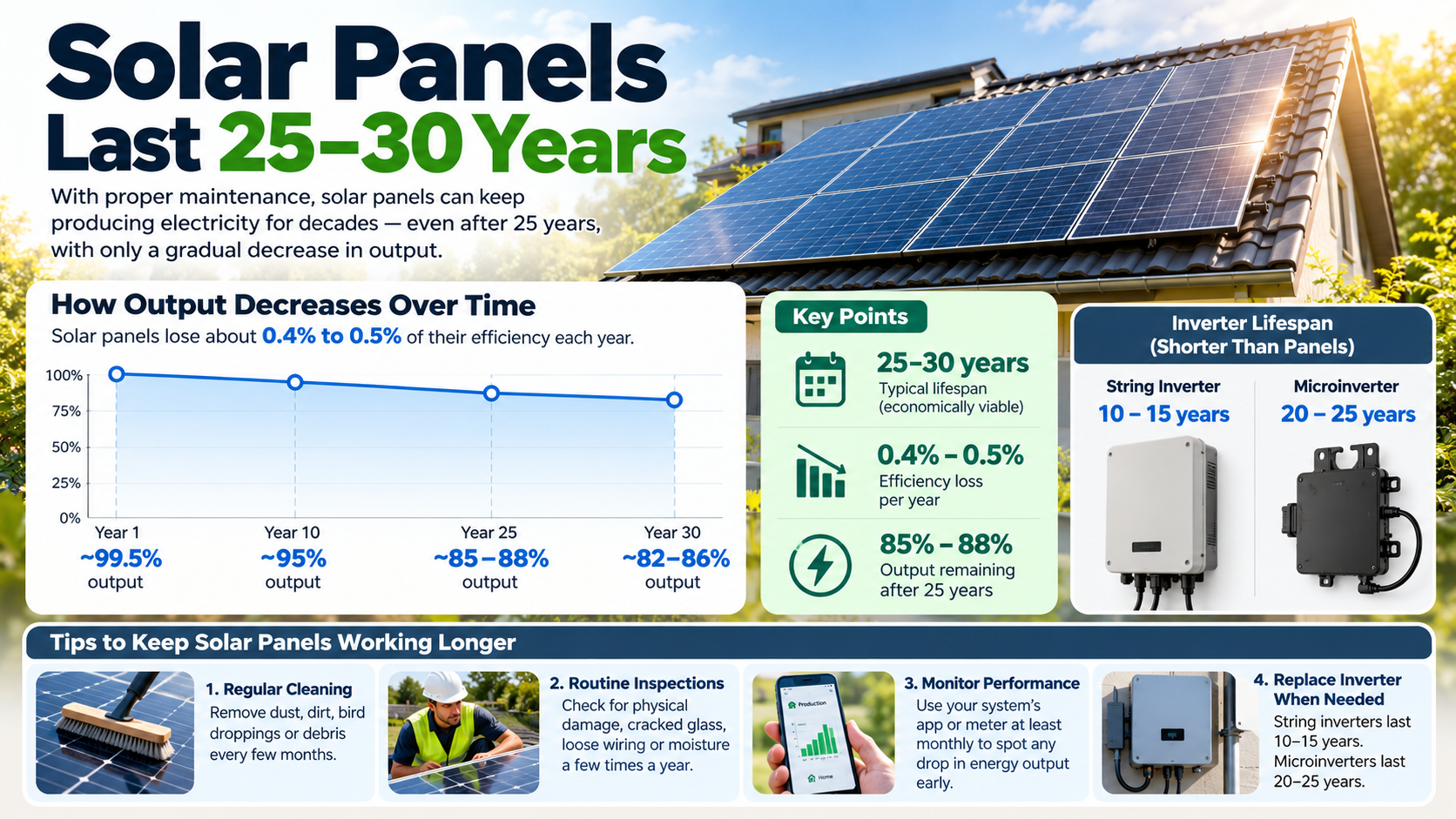
Solar modules gradually lose some generating capacity as they age. NREL research has found considerable variation between systems and technologies. A commonly used benchmark is around 0.5% degradation per year, although actual performance varies by technology, climate, installation quality, and other factors.
Performance warranties commonly guarantee that a panel will retain a specified percentage of its original output after 25 years. The exact guarantee depends on the manufacturer and model.
A panel can therefore remain operational after its warranty ends. However, its output may be lower than when it was new.
Homeowners may eventually replace panels for several reasons. Newer modules can offer higher efficiency, better warranties, or greater output from the same roof area. Replacement can therefore become an economic decision rather than a technical necessity.
How Much Do Solar Panels Degrade Over Time?
Solar panel performance normally declines gradually rather than suddenly. The rate depends on the module technology, manufacturing quality, installation environment, climate, and other conditions.
NREL’s research shows that reported degradation rates vary substantially. Its reviews have identified a median rate around 0.5% per year, while the historical average was higher at about 0.8% per year. Most reported rates were below 1% annually.
Using a simple 0.5% annual degradation assumption gives an approximate illustration:
| System Age | Approximate Output Remaining |
|---|---|
| Year 1 | About 99.5%* |
| Year 10 | About 95% |
| Year 25 | About 88% |
| Year 30 | About 86% |
*Actual first-year performance can differ because some modules experience initial light-induced degradation.
These figures are estimates, not guarantees. A particular panel may degrade faster or slower.
The important point is that degradation is usually gradual. A 25-year-old system can still generate substantial electricity if the modules and supporting equipment remain in good condition.
How Often Need Maintenance?
Solar panels generally require less routine maintenance than many mechanical home systems. They have no moving parts, so homeowners usually do not need frequent servicing.
A professional inspection can help identify problems before they reduce system performance. The exact maintenance schedule depends on the installation, climate, roof conditions, and manufacturer’s instructions. For homeowners planning a new system, a residential solar panel installation guide can also help explain the equipment and installation process.
A professional inspection can examine:
- Wiring and connections for damage, loose connections, or signs of overheating.
- Racking and fasteners for movement, corrosion, or other installation problems.
- Inverter performance and diagnostic warnings.
- Panel surfaces for cracks, heavy dirt, shading, or other visible issues.
- Roof conditions around mounting points and penetrations.
Cleaning is not always necessary. Rain can remove ordinary dust and light debris from tilted panels. More frequent cleaning may help where panels accumulate dust, pollen, bird droppings, or other deposits.
If cleaning is required, follow the manufacturer’s instructions. For homeowners considering household cleaning solutions, guidance on whether you can use vinegar to clean solar panels can help you choose a suitable approach without damaging the panel surface.
When Should You Clean?
Solar panels do not automatically need frequent cleaning. Whether cleaning improves production depends heavily on the local environment and how much material accumulates on the panel surface.
Cleaning may be more useful when panels are exposed to:
- Dusty or arid conditions with long dry periods.
- Agricultural areas where airborne particles accumulate.
- Heavy tree cover that creates pollen, leaves, sap, or bird-dropping buildup.
- Roof designs where debris remains on the panel surface.
- Areas with limited rainfall or frequent dry weather.
Before cleaning, check the manufacturer’s instructions. Avoid abrasive materials that can damage the panel surface.
A soft brush or non-abrasive cleaning method is generally preferable to aggressive equipment. Tesla recommends rinsing its panels with water or using soapy water with a non-abrasive sponge.
You should also avoid climbing onto a roof unless you are trained and equipped to do so safely. Roof work creates fall risks that can exceed the value of cleaning the panels yourself.
In many homes, occasional inspection and cleaning when visibly necessary are more practical than following a rigid cleaning schedule.
What Is the 20% Rule for Solar Panels?
The 20% rule can be confusing because people use similar terminology for different solar topics.
When discussing panel lifespan, it can refer to a performance warranty that guarantees a panel will retain at least 80% of its original rated output after a specified period, often 25 years. The exact warranty threshold varies by manufacturer and product.
For example, if a 400-watt panel has an 80% end-of-warranty guarantee, its guaranteed output would be 320 watts under the warranty’s specified testing conditions.
This does not mean the panel suddenly loses 20% of its power at year 25. Degradation normally happens gradually.
The 120% rule is a different electrical-design concept. It relates to how solar equipment can be connected to certain electrical service panels under applicable electrical-code requirements. It should not be confused with the panel lifespan or degradation benchmark.
Because electrical requirements depend on the installation and applicable code edition, homeowners should have system sizing and interconnection decisions reviewed by a qualified solar or electrical professional.
How Long Do Tesla Solar Panels Last?
Tesla solar panels are covered by a 25-year performance warranty, but the warranty period should not be interpreted as the panel’s guaranteed physical lifespan. Tesla states that its solar panels and qualifying third-party panels are guaranteed by their manufacturers to retain at least 80% of nameplate power capacity for at least 25 years.
Tesla’s current solar-panel documentation also provides model-specific performance information. Its published panel datasheet lists a 25-year product and performance warranty, with at least 87.2% of nominal power through 25 years for that particular panel specification.
Tesla also sells a separate Solar Roof product. Its current U.S. warranty provides 25 years of product and weatherization coverage, with a separate module performance schedule.
Therefore, Tesla Solar Panels and Tesla Solar Roof should not be treated as identical products.
As with other PV systems, actual service life depends on climate, installation quality, maintenance, environmental exposure, and component condition.
What Is the Biggest Drawback of Solar Panels?
The biggest practical drawbacks of solar panels depend on the homeowner’s circumstances. Upfront cost, variable electricity production, and component replacement are among the most important considerations.
Solar systems require an initial investment for equipment, installation, permitting, and related work. The financial return also depends on electricity prices, incentives, financing costs, solar resource, and local utility rules. Homeowners comparing renewable-energy options can also examine solar vs wind costs before deciding which system fits their needs.
Solar generation is also variable. Panels produce electricity from sunlight, so output changes throughout the day and across seasons. Clouds, storms, snow, shading, and other conditions can reduce production. This is especially important for homeowners asking whether they can run a house on solar power completely.
Another consideration is the lifespan of supporting equipment. Solar panels can operate for decades, while some other components may require service or replacement sooner.
For example, an inverter can have a shorter service life than the panels. Battery storage also has its own warranty, degradation pattern, and replacement considerations.
Finally, a standard grid-connected solar system generally does not keep a home powered during a utility outage. Solar systems are designed to shut down during outages unless the installation includes appropriate backup equipment and controls.
Conclusion
Solar panels can last 25 to 35 years or longer when they are properly installed, monitored, and maintained. Reaching the 25-year mark does not mean your panels suddenly stop working. Instead, their electricity output gradually decreases as the modules age.
Regular inspections, appropriate cleaning, and prompt repairs can help protect your system and maintain reliable performance. It is also important to monitor supporting components, such as inverters, wiring, and mounting equipment, because they may need attention before the panels themselves reach the end of their useful life.
If you are wondering how long do solar panels last, the better question is how much useful electricity they can continue producing over time. Even older panels can remain productive beyond their warranty period. However, replacing an aging system may eventually make financial sense when newer technology offers significantly better efficiency or output.
With realistic expectations and proper care, solar panels can remain a valuable source of renewable electricity for decades.