Understanding How 8D Audio Works and Transforms Music Listening
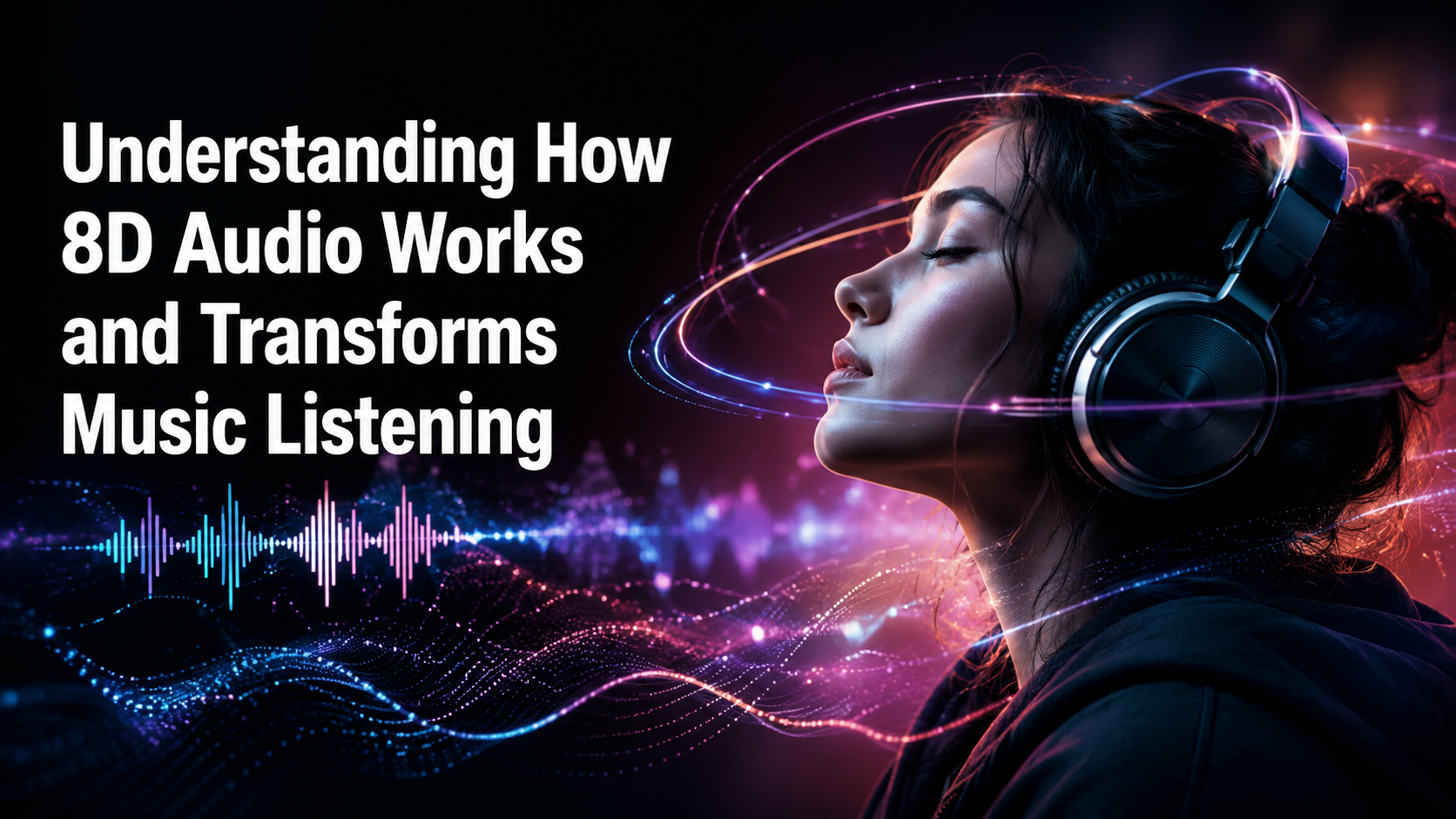
Music technology has changed how people experience their favorite songs. If you have wondered how 8D audio works, the answer involves clever audio processing. This popular effect creates the illusion that music moves around your head while you listen through headphones.
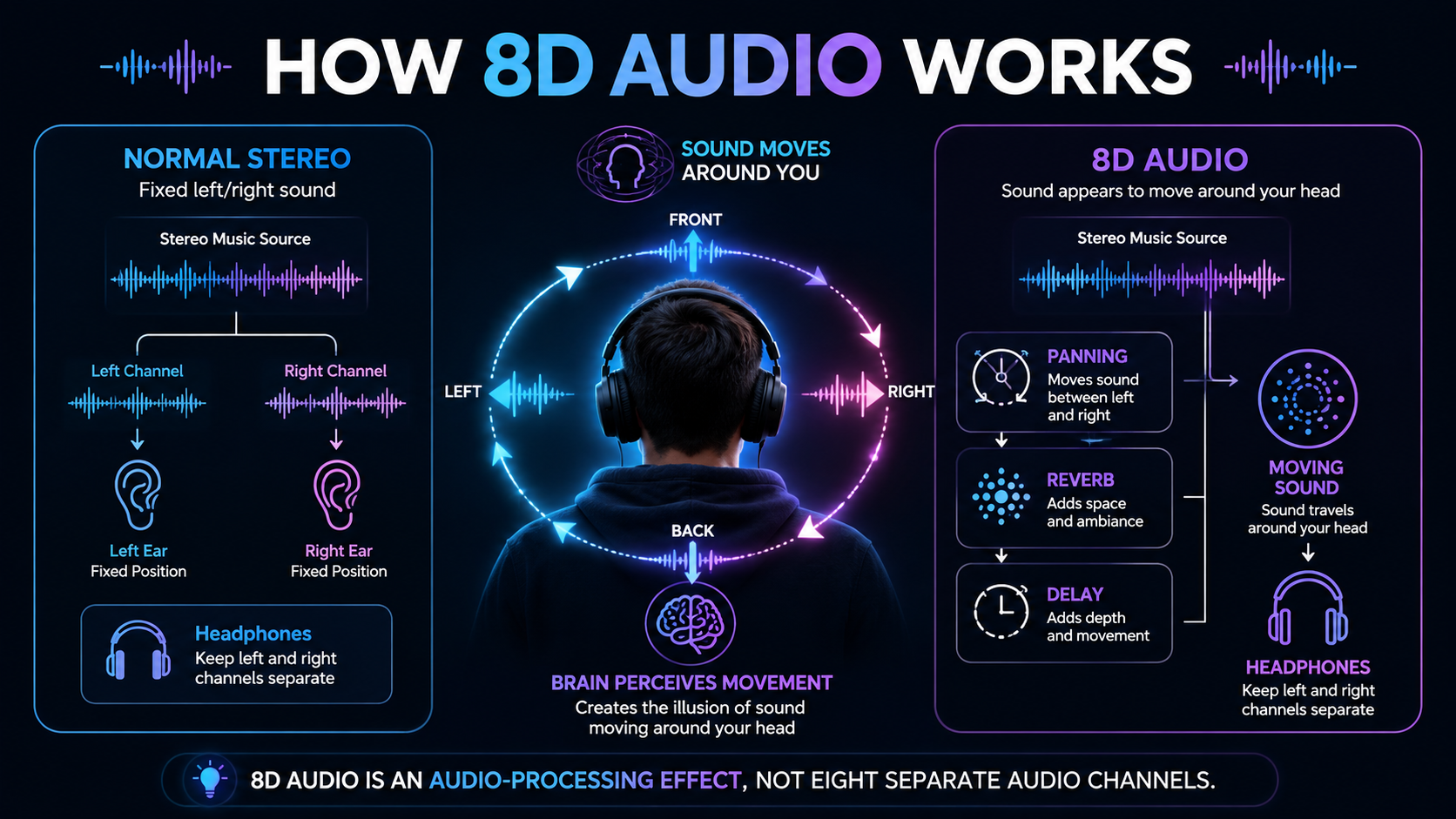
8D audio does not use eight separate audio channels. Instead, producers manipulate stereo signals with panning, reverb, delay, equalization, and phase-related techniques. These changes influence how your brain interprets the location and movement of sound.
According to Sound On Sound, spatial audio processing techniques manipulate phase and equalization to trick the human brain.
Audio engineering techniques can create convincing spatial effects by changing timing, volume, and frequency between your ears. This article explains whether 8D audio is good or bad and how producers create it. We also cover its possible relationship with ADHD, how to hear it correctly, and how to convert music on your phone.
Is 8D Audio Good or Bad for Your Listening Experience?
Whether 8D audio is good or bad depends largely on personal preference. Many listeners enjoy the effect because it makes familiar songs feel new. The moving sound can create an immersive experience that resembles music traveling around your head. For more on how sound can affect the mind and body, explore music therapy and how sound heals.
However, the effect can also have drawbacks. Heavy reverb, aggressive panning, or poor processing may reduce clarity. Vocals can sound distant, while instruments may lose their original balance. Some listeners may also experience dizziness or discomfort after extended sessions.
A well-produced track should preserve musical detail while creating movement. Poor conversions often prioritize dramatic effects over sound quality.
Balancing Immersion and Audio Quality
8D audio works best as an alternative listening experience rather than a replacement for stereo music. Its exaggerated movement can become tiring when used for long periods. If you are interested in getting more from your listening setup, learn how to choose the right noise-cancelling headphones.
For a better experience:
- Keep the listening volume moderate.
- Take regular breaks during longer sessions.
- Choose well-produced 8D mixes.
- Stop listening if you feel dizzy or uncomfortable.
- Compare the 8D version with the original stereo mix.
The best choice ultimately depends on your ears, preferences, and listening environment.
How Do They Make 8D Music?
Creating 8D music starts with a normal stereo recording. Producers then use a digital audio workstation and spatial processing tools to create the impression of movement. The process does not actually place music in eight physical directions. These techniques are part of the broader world of spatial listening, similar to how noise cancellation works to shape what you hear.
Instead, producers automate changes between the left and right channels. They may also adjust volume, timing, equalization, reverb, and delay. These changes affect the cues your brain uses to locate sounds.
When these effects change smoothly, a sound can appear to move around your head. Reverb can add a sense of space, while volume changes can suggest distance. Producers may process vocals, instruments, or complete mixes separately.
Essential Tools for Spatial Production
Professional producers can use binaural panning tools, automation, and spatial audio plugins. These tools provide control over movement, timing, and perceived position. For listeners rather than producers, how to clean and maintain premium headphones is also important for preserving a quality listening experience.
A typical workflow may include:
- Starting with a clean stereo mix or available stems.
- Automating left-to-right and right-to-left movement.
- Adding controlled reverb and delay.
- Adjusting equalization to preserve clarity.
- Testing the finished mix on several headphones.
Careful monitoring matters because headphones reproduce spatial effects differently. Good production keeps the movement noticeable without overwhelming the original music.
Is 8D Audio Real for ADHD and Focus?
Claims about 8D audio for ADHD have become common across social media. Some listeners say moving sounds help them stay engaged while studying or working. The changing soundstage may provide stimulation that makes background listening more interesting.
However, this does not mean 8D audio treats ADHD. There is not enough evidence to establish 8D audio as an ADHD treatment. Individual responses can also vary considerably.
Some people may find moving audio helpful because it provides a consistent sensory stimulus. Others may find the constant movement distracting or overwhelming. Personal sensory preferences can strongly influence the experience.
Finding Focus Through Novelty Soundscapes
If you want to test 8D audio while working, treat it as a personal listening experiment. Do not consider it a medical intervention.
You can compare it with other background sounds, such as music that uses rhythm to improve memory and focus:
- Standard instrumental music
- White or brown noise
- Ambient soundscapes
- Nature recordings
- Traditional stereo music
Notice whether the sound helps you maintain attention or creates distraction. If movement becomes tiring, switch to a simpler audio format. Focus depends on many factors, so no single sound works for everyone.
How to Hear 8D Audio Correctly
Learning how to hear 8D audio is simple. You mainly need headphones that keep the left and right channels separate. The effect depends on delivering different signals to each ear.
Over-ear and in-ear headphones can both work well. Regular speakers are less effective because sound from each speaker reaches both ears. That acoustic crossover can weaken the intended spatial illusion.
Before listening, check your device’s audio settings. Make sure mono audio is disabled. Mono playback combines the channels and can significantly reduce the effect.
Optimizing Your Listening Environment
A quiet environment can make subtle movement easier to notice. Closing your eyes may also help you concentrate on changes in sound direction.
For the best experience:
- Use comfortable stereo headphones or earphones.
- Keep mono audio turned off.
- Choose a quiet listening space.
- Keep the volume at a comfortable level.
- Avoid extended listening without breaks.
You can find 8D versions of songs on popular music platforms. Search for the song title followed by “8D audio.” The exact quality will vary between different uploads and producers.
Can I Convert Music to 8D on My Phone?
Yes, you can convert music to 8D audio on your phone. Mobile apps and web-based audio tools can apply panning, reverb, delay, and other effects automatically. This makes experimenting with how 8D audio works simple, even without professional audio software. Once you’re exploring different ways to listen to music, you can also compare Spotify and Apple Music to see which service better suits your listening habits.
Some tools let you upload an audio file or choose music stored on your device. Others provide controls for movement speed, reverb strength, and spatial intensity. The available features depend on the specific app or service.
Automated conversion is convenient, but it may not produce professional results. Simple algorithms can apply too much reverb or create unnatural movement. They may also reduce vocal clarity or affect the original frequency balance.
Choosing the Right Mobile Conversion Tools
When choosing a conversion tool, consider its controls, supported formats, and privacy practices. Avoid uploading personal recordings to services you do not trust.
Useful features can include:
- Adjustable panning speed
- Reverb intensity controls
- Export options for common audio formats
- Preview functions
- Clear privacy information
Mobile conversion is useful for experimenting with spatial sound. Professional producers usually have greater control because they can process individual stems and automate effects more precisely.
Frequently Asked Questions
What Is the Difference Between 8D Audio and Normal Stereo?
Normal stereo uses left and right channels to create a fixed sense of width and placement. 8D audio changes those signals over time to create the impression of movement.
The sound may appear to travel from one side to another or circle around your head. Producers create this effect through panning and other spatial processing techniques.
Does 8D Audio Damage Your Hearing?
8D audio is not inherently more damaging than ordinary music at the same volume. Hearing damage mainly depends on factors such as loudness and listening duration.
Because spatial effects can make sounds seem distant, some listeners may increase the volume unnecessarily. Keep playback at a comfortable level and take regular breaks.
Why Do Some Songs Sound Worse in 8D?
Poor conversions can use excessive reverb, extreme panning, or unsuitable processing. These choices may make vocals sound muddy and reduce instrumental detail.
Professional spatial mixing requires careful control of the original recording. Not every song benefits from heavy spatial effects.
Can You Listen to 8D Audio Without Headphones?
You can play an 8D track through speakers, but the intended effect may be greatly reduced. Headphones provide better channel separation, which helps preserve the spatial illusion.
For the clearest experience, use stereo headphones or earphones.
Conclusion
Understanding how 8D audio works reveals how simple stereo recordings can create convincing spatial movement. The effect relies on audio processing rather than eight separate sound channels.
Producers use panning, reverb, delay, equalization, and automation to influence how the brain perceives sound. Headphones make the effect easier to experience because they provide stronger separation between the two channels.
8D audio can make familiar music feel fresh and immersive. However, it does not suit everyone, and it should not be treated as an ADHD treatment. Its benefits are mainly subjective and depend on individual preferences.
If you want to explore spatial music, try a few well-produced tracks with comfortable headphones. Keep the volume moderate and take breaks during longer sessions. With safe listening habits, 8D audio can offer a fun and unusual way to experience your favorite music.