Google NotebookLM Is Now Gemini Notebook: What You Need to Know
Google has officially announced that Google NotebookLM is now Gemini Notebook as part of a broader AI product strategy. The rebrand marks an important shift in how Google organizes its artificial intelligence tools.
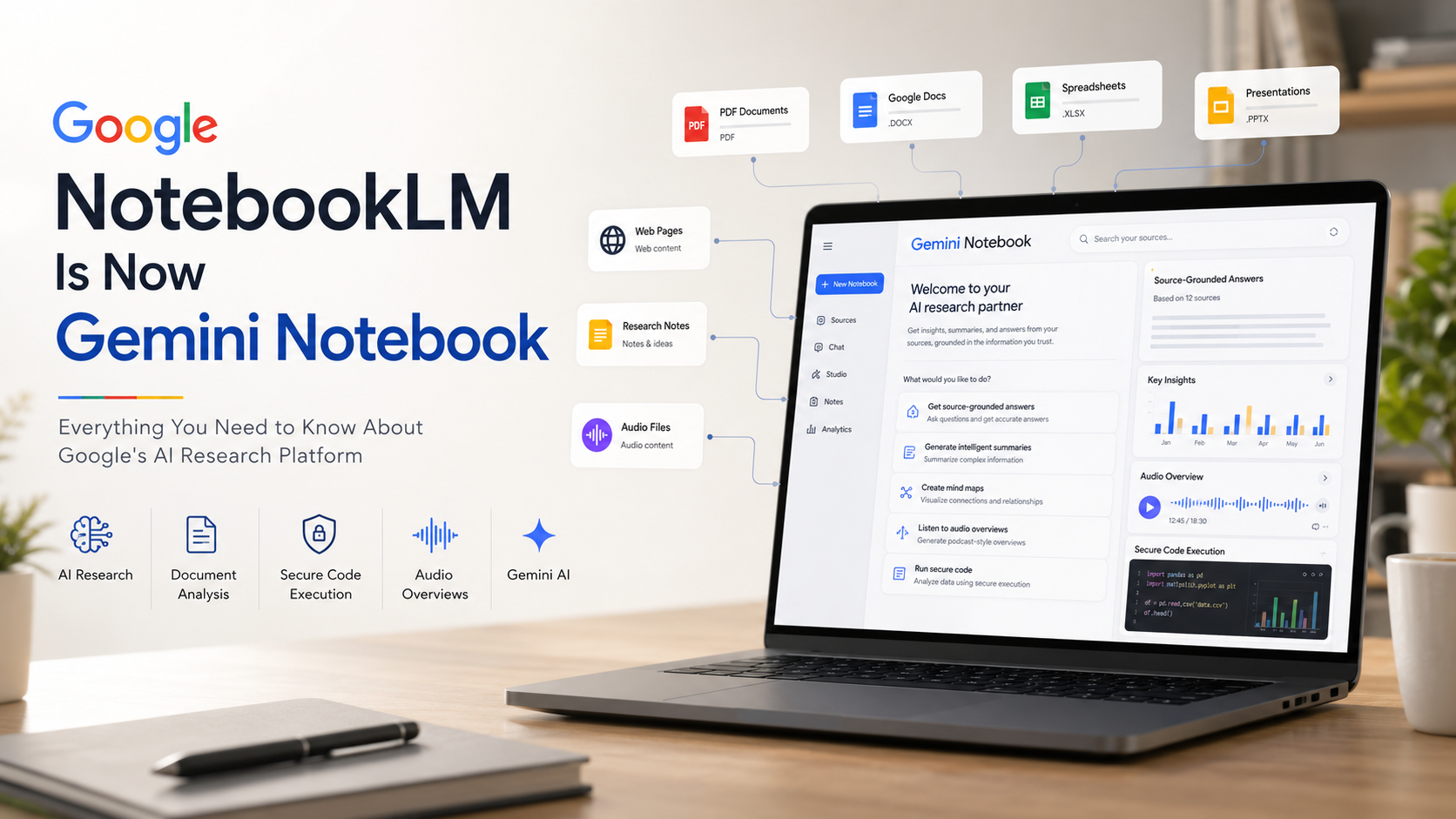
For existing users, the experience remains familiar. You can still upload documents, analyze information, create summaries, generate audio discussions, and build research materials. The core features that made NotebookLM popular continue to work.
The biggest change is the connection with Google’s growing Gemini AI ecosystem. Previously, NotebookLM operated as a separate AI research tool. Now, it joins Google’s wider family of Gemini-powered products, creating a more consistent experience across Google services.
This update helps users access document-based AI tools more easily. It also prepares Gemini Notebook for deeper connections with Google Search, Workspace applications, and future AI features.
In this guide, we explain what changed, what stayed the same, and how Gemini Notebook can improve research, learning, and professional workflows.
Is Google notebook LM using Gemini?
Yes, Google NotebookLM is now Gemini Notebook, and it uses Gemini models as the foundation behind its AI capabilities. The platform works as a specialized research assistant that uses Google’s advanced AI technology to analyze and understand user-provided information.
When people ask, “Does Google NotebookLM use Gemini?” the answer is yes. The rebranded Google NotebookLM is now Gemini Notebook experience combines NotebookLM’s source-based research features with Google’s powerful Gemini AI architecture.
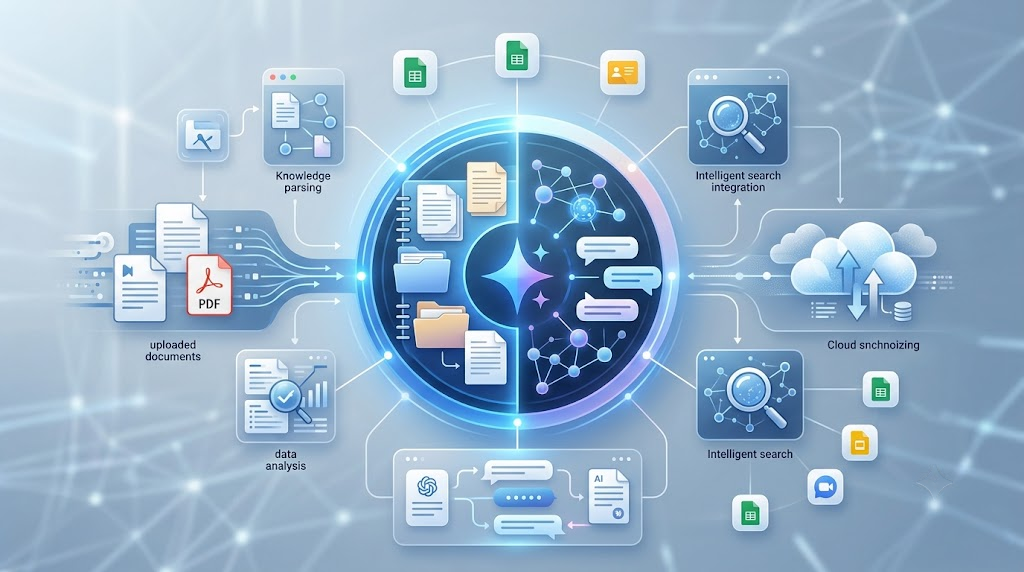
Instead of working like a general chatbot, Gemini Notebook focuses on documents, files, and sources uploaded by users. When you add PDFs, Google Docs, websites, or audio files, the system analyzes those materials and generates responses based on the available information.
This source-focused approach makes Gemini Notebook different from traditional AI assistants. It does not mainly depend on broad internet knowledge. Instead, it creates a focused research environment built around your selected resources.
The connection with Gemini allows Google NotebookLM is now Gemini Notebook to support advanced tasks, including:
- Summarizing lengthy documents
- Creating study guides
- Answering questions about uploaded sources
- Generating audio discussions
- Finding connections between different research materials
Powered by Gemini’s Multimodal AI Capabilities
The transition from NotebookLM to Gemini Notebook improves the platform’s ability to process different types of content. Users can analyze text documents, presentations, images, audio files, and other research materials in one workspace.
Because Google NotebookLM is now Gemini Notebook, users benefit from Gemini’s multimodal capabilities while keeping NotebookLM’s original source-grounded approach. This means the AI can understand information across multiple formats while staying connected to the materials provided.
For example, users can upload research papers, presentation slides, or recorded discussions. The system can then organize insights and provide answers based on those files.
One of NotebookLM’s strongest advantages remains source-based accuracy. Responses include references to original materials, making it easier to verify information and avoid unsupported answers.
For researchers, students, and professionals, this creates a faster workflow. Instead of manually searching through hundreds of pages, users can ask questions and receive targeted insights from their own knowledge library.
Why was Google Notebook discontinued?
Google Notebook was not discontinued. The confusion comes from changes in product names, branding updates, and Google’s expanding AI ecosystem.
The original platform began as Project Tailwind, an experimental Google Labs project. It later became NotebookLM, a name that represented its ability to work with language models and personal documents.
The move to Google NotebookLM is now Gemini Notebook represents a rebranding and feature expansion rather than the shutdown of the service. Google continues to develop the platform and introduce new AI capabilities.
Technology products often change names as they mature. Google updated the branding to show that NotebookLM is now connected more closely with the wider Gemini family.
From Experimental Tool to Core Google AI Product
The transition shows how Google has moved NotebookLM from an early experiment into a more established AI productivity platform.
Existing users do not need to recreate their workspaces. Their notebooks, uploaded sources, notes, and generated content remain available after the transition.
The main change involves branding and ecosystem integration. The purpose remains the same: helping users analyze, organize, and understand their own information.
For businesses, educators, and researchers, Google NotebookLM is now Gemini Notebook represents Google’s continued focus on AI-powered knowledge management and document-based research tools.
What is the difference between Google Notebook and Gemini?
Google NotebookLM and Gemini serve different purposes, even though both use Google’s AI technology. The main difference is how they handle information and what type of tasks they are designed to complete.
Gemini is a general-purpose AI assistant. It can answer broad questions, help with writing, assist with coding, generate ideas, and provide information across many topics.
NotebookLM, now known as Gemini Notebook, works as a focused research assistant. It is designed to analyze the specific documents and sources that users provide.
The biggest difference is the information source. Gemini can use its general AI knowledge, while NotebookLM creates answers based mainly on your uploaded materials.
This makes NotebookLM especially useful for:
- Academic research
- Business reports
- Legal documents
- Training materials
- Personal study notes
- Long-form content analysis
Source Grounding vs Open-Ended AI Responses
The key advantage of NotebookLM is source grounding. The AI focuses on your selected information instead of creating answers from general knowledge alone.
For example, a student can upload lecture notes and research papers. NotebookLM can then create summaries, explain concepts, and answer questions using only those materials.
A professional can upload company reports, product documents, or meeting notes. The tool can help identify important details without manually reviewing every file.
Standard Gemini is better suited for open-ended tasks. It works well when you need brainstorming, general explanations, creative assistance, or quick answers.
NotebookLM is better when accuracy, references, and document-based analysis matter most.
What is a Google LM notebook?
Gemini Notebook, formerly known as NotebookLM, functions as an AI-powered research and thinking partner designed to synthesize information strictly from user-provided sources. Instead of hallucinating facts from the open web, the system grounds every summary, chat response, and audio overview in the exact files you upload. You can feed the platform PDFs, Google Docs, copied text, websites, and YouTube links to build a customized knowledge base. This unique grounding mechanism prevents inaccuracies and makes complex document analysis significantly faster. Whether you are studying dense academic papers or compiling corporate strategy reports, the interface organizes your materials into distinct digital notebooks for effortless navigation.
Grounding Research in User Sources
The core engine relies entirely on your uploaded text rather than generalized internet data, ensuring maximum reliability. Users can generate study guides, briefing docs, and interactive audio overviews directly from their custom material. This guarantees that every output remains completely relevant to your specific project goals.
Is NotebookLM free with Gemini Pro?
Access to Gemini Notebook is tiered depending on your account type and subscription level within the Google ecosystem. A core version of the platform remains available for personal accounts, allowing everyday users to upload sources and build customized notebooks at no direct cost. However, advanced computational features—such as native code execution via a secure cloud computer—are rolling out gradually to higher tiers like Google AI Ultra and specialized Workspace business accounts. Standard AI Pro subscribers receive web-based access to core functions and upcoming updates incrementally. Existing links, shared notebooks, and basic research capabilities continue to function seamlessly through automatic redirects regardless of your specific tier.
Exploring Subscription Tiers and Features
Different account types unlock varying levels of analytical power and deeper cross-app synchronization features. While free users enjoy standard research and audio summary tools, premium tiers add robust data analysis capabilities and direct integration inside the primary mobile and web applications.
Frequently Asked Questions About Gemini Notebook
Is Gemini Notebook Free to Use?
Yes, Gemini Notebook offers free access for many individual users. Anyone with a Google account can create notebooks, upload supported files, and use several AI-powered research features.
Additionally, the free version provides access to core capabilities, including document analysis and source-based answers. Users can upload research materials and create organized notebooks without paying for a subscription.
However, some advanced features may require premium Google AI plans or eligible Workspace subscriptions. These options provide additional access to newer AI models, higher usage limits, and expanded capabilities.
For most students, researchers, and casual users, the free version provides enough tools to explore the platform. As a result, users can improve everyday research tasks without needing an immediate upgrade.
Will My Old NotebookLM Links Still Work?
Yes, existing NotebookLM links continue to work after the transition to Gemini Notebook.
Fortunately, Google designed the update to avoid disrupting existing workflows. Previously shared notebooks, saved projects, and research materials remain accessible through the updated platform.
In addition, users do not need to recreate notebooks or manually move their information. The transition happens automatically through Google’s updated interface.
Because of this, individuals, teams, and organizations can continue using their existing research materials without interruption.
Overall, your saved work remains available while the platform gains new Gemini-based features and improved AI capabilities.
How Does Gemini Notebook Protect User Data?
Google has designed Gemini Notebook with privacy controls to protect uploaded information.
To achieve this, the platform focuses on analyzing user-provided materials rather than freely combining them with unrelated information. Source-based responses help keep answers connected to the documents users choose.
Furthermore, organizations using Google Workspace can use administrative controls to manage access and protect company information.
However, users should always review the privacy settings and terms associated with their Google account and subscription plan. These settings determine how information is handled within Google’s AI services.
Ultimately, Gemini Notebook aims to provide useful AI assistance while helping users maintain control over personal and professional documents.
What File Types Can I Upload to Gemini Notebook?
Gemini Notebook supports many different source formats, allowing users to work with various types of information.
For example, supported sources include:
- PDF documents
- Google Docs files
- Google Slides presentations
- Text files
- Web pages
- YouTube links
- Audio recordings
Additionally, users can combine multiple sources inside one notebook. This allows Gemini Notebook to analyze information across different materials and provide connected answers.
As a result, the platform becomes useful for research projects, business analysis, and learning activities.
Instead of switching between multiple applications, users can manage their information in a single AI-powered workspace.
Can Gemini Notebook Still Create Audio Podcasts?
Yes, the popular Audio Overview feature remains available in Gemini Notebook.
Previously known as a NotebookLM feature, this tool converts uploaded documents into an AI-generated podcast-style conversation. Two virtual hosts discuss important ideas from the provided sources in a natural format.
Because of this approach, users can understand complex information through an engaging listening experience. Students can review lessons while commuting, and professionals can quickly understand reports during busy schedules.
Moreover, users can customize the focus of discussions and explore information in a more interactive way.
Overall, Audio Overview remains one of the platform’s most unique features because it transforms traditional documents into engaging learning experiences.
Conclusion: The Future of Google NotebookLM as Gemini Notebook
The transition confirming that Google NotebookLM is now Gemini Notebook represents an important step in Google’s AI strategy.
By bringing NotebookLM under the Gemini brand, Google creates a more connected experience across its artificial intelligence products. Users can expect stronger links between research tools, search experiences, and Workspace applications.
The most important point is that the original NotebookLM experience remains. Users can still analyze documents, generate summaries, create audio discussions, and build research materials from their own sources.
New improvements, including secure code execution, enhanced Gemini model support, and expanded AI capabilities, make the platform more powerful.
For students, professionals, researchers, and creators, Gemini Notebook offers a practical way to organize information and work more efficiently.
As Google continues expanding its AI ecosystem, services like Gemini Notebook may become increasingly connected with broader digital tools and identity solutions. You can also explore how Google is improving online experiences through innovations like Google Wallet’s digital identity features in our detailed guide on Google Wallet Could Solve Digital Identity.
If you have not used the platform recently, this update provides a good opportunity to explore its improved features and discover how AI-powered research can simplify your workflow.